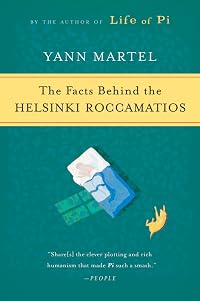
The Facts Behind the Helsinki Roccamatios
by Yann Martel
On This Page
Description
Here are four unforgettable stories by the author of Life of Pi. In the exquisite title novella, a very young man dying of AIDS joins his friend in fashioning a story of the Roccamatio family of Helsinki, set against the yearly march of the twentieth century whose horrors and miracles their story echoes. In "The Time I Heard the Private Donald J. Rankin String Concerto with One Discordant Violin, by the American composer John Morton," a Canadian university student visits Washington, D.C., show more and experiences the Vietnam War and its aftermath through an intense musical encounter. In "Manners of Dying," variations of a warden's letter to the mother of a son he has just executed reveal how each life is contained in its end. The final story, "The Mirror Machine", is about a young man who discovers an antique mirror-making machine in his grandmother's attic. The man's fascination with the object is juxtaposed with the longwinded reminiscences it evokes from his grandmother. Written earlier in Martel's career, these tales are as moving as they are thought-provoking, as inventive in form as they are timeless in content. They display that startling mix of dazzle and depth that have made Yann Martel an international phenomenon. show lessTags
Recommendations
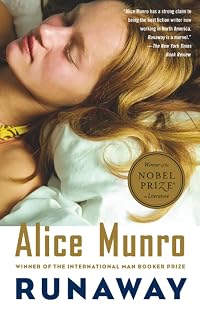
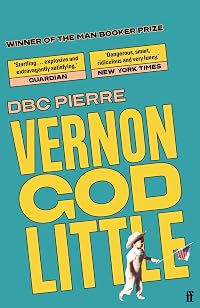
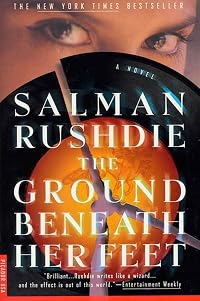

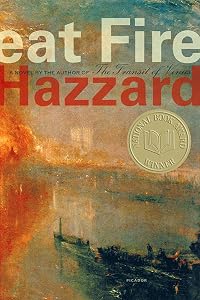







Member Recommendations
Member Reviews
Warning: I'm going to talk about the content of the four stories making up this early steffort by Martel.
I do wonder at the notion we have of marking a line between artists whose commitment involves a profound continuing investigation of a Thing, and commercial hacks who are formula writing for no more than mere money. How do you tell which is which? How do I know that my friend Petrus who spent years making pots, dashing them to the ground and then sticking the pieces back together was of the former class? Is it that if you fail to make money at it, this failure maintains your integrity?
This book comprises four stories which explore the act of repetition. I guess it is a vital part of successful writing, to be able to repeat one's show more self without the audience getting restless.
The title story is about the narrator watching a close friend die of AIDS. The repetition is in the horrific detail of his decline. It was strangely gripping and I wished I hadn't been in a cafe at the point where it had me in tears.
rest here: https://alittleteaalittlechat.wordpress.com/2017/10/25/the-facts-behind-the-hels... show less
I do wonder at the notion we have of marking a line between artists whose commitment involves a profound continuing investigation of a Thing, and commercial hacks who are formula writing for no more than mere money. How do you tell which is which? How do I know that my friend Petrus who spent years making pots, dashing them to the ground and then sticking the pieces back together was of the former class? Is it that if you fail to make money at it, this failure maintains your integrity?
This book comprises four stories which explore the act of repetition. I guess it is a vital part of successful writing, to be able to repeat one's show more self without the audience getting restless.
The title story is about the narrator watching a close friend die of AIDS. The repetition is in the horrific detail of his decline. It was strangely gripping and I wished I hadn't been in a cafe at the point where it had me in tears.
rest here: https://alittleteaalittlechat.wordpress.com/2017/10/25/the-facts-behind-the-hels... show less
short stories — weird
Letter from prison warden to mother?
Inventive in form and timeless in content, each story is moving and thought-provoking. A Canadian university student visiting Washington, D.C., experiences the Vietnam War through an intense musical encounter. Variations of a warden's letter to the mother of a man he has just executed reveal how each life is contained in its end. A young man's fascination with the mirror-making machine he finds in his grandmother's attic is juxtaposed with the reminiscences it evokes from his grandmother. And, in the exquisite title story, a young man dying of AIDS joins his friend in fashioning a story of the Roccamatio family of Helsinki, set against the yearly march of the twentieth century.
Letter from prison warden to mother?
Inventive in form and timeless in content, each story is moving and thought-provoking. A Canadian university student visiting Washington, D.C., experiences the Vietnam War through an intense musical encounter. Variations of a warden's letter to the mother of a man he has just executed reveal how each life is contained in its end. A young man's fascination with the mirror-making machine he finds in his grandmother's attic is juxtaposed with the reminiscences it evokes from his grandmother. And, in the exquisite title story, a young man dying of AIDS joins his friend in fashioning a story of the Roccamatio family of Helsinki, set against the yearly march of the twentieth century.
From the title novella to the ending story, Martel's work here is graceful and fascinating. His introduction might note that these are early and less masterful works than that which has made him famous, but they are excellent and worthwhile nontheless. Each story shows an adept understanding of how conflicting ideas and threads might be woven together, and gracefully draws together narratives and experiments that bring each page to life. Simply, once you pick this up, you won't put it down. Even my mother, whom I've never known to read short stories, began the first one on a whim...and soon finished the collection.
Absolutely recommended for any reader.
Absolutely recommended for any reader.
"The facts behind the Helsinki Roccamatios" is a collection of four rather long short stories. The structure and typography of three of these stories is experimental ("blah-blah-blah-blah") and irritating to read. "Manners of Dying" consists of nine letters by a prison warden to the mother of an inmate telling her how her son died. The letters suggest that there are at least 96, the number of the last letter is 96, ways of dying.
The longest and most interesting story is the title story "The facts behind the Helsinki Roccamatios". "I'm not going to talk about what AIDS does to a human body." (p.10) is what the narrator tells us at the beginning of the story. However, that is what the story is all about, and that is also what the narrator show more tells us. The narrator and his friend tell each other stories about the imaginary Roccamatio family from Helsinki, and the history of the family throughout the Twentieth Century. However, these stories are not included in the narrative. The reader will only find the facts behind the story, which are plain historical facts from the 20th century, such as the rise of Hitler. Since these facts are so familiar and boring, the reader has no other choice but to concentrate on the declining health and the progessive stages of the AIDS patient, i.e. the other character in the story.
The author goes to great length to emphasize that the character is the story contracted AIDS through a blood transfusion after an accident, and that he is not gay.
The experimental structure and programmatic nature of particularly the title story make for a weak and uninteresting collection. show less
The longest and most interesting story is the title story "The facts behind the Helsinki Roccamatios". "I'm not going to talk about what AIDS does to a human body." (p.10) is what the narrator tells us at the beginning of the story. However, that is what the story is all about, and that is also what the narrator show more tells us. The narrator and his friend tell each other stories about the imaginary Roccamatio family from Helsinki, and the history of the family throughout the Twentieth Century. However, these stories are not included in the narrative. The reader will only find the facts behind the story, which are plain historical facts from the 20th century, such as the rise of Hitler. Since these facts are so familiar and boring, the reader has no other choice but to concentrate on the declining health and the progessive stages of the AIDS patient, i.e. the other character in the story.
The author goes to great length to emphasize that the character is the story contracted AIDS through a blood transfusion after an accident, and that he is not gay.
The experimental structure and programmatic nature of particularly the title story make for a weak and uninteresting collection. show less
This is a collection of four long short stories. While I didn’t think that they lived up to Martel’s well-known novel Life of Pi, and the collection is uneven, it is certainly readable. The strongest two stories are the first two, the title story and the one that follows up, which has too long a title to type out here. The title story is about a college student who is watching his young friend die of AIDS. To help divert him, he invents a game where they each have to tell a story about a fictional family—the Helsinki Roccamatios—and each story must relate to an important event in a subsequent year of the 20th century up to the present. The narrator does not provide the stories they told, only the historical events behind them. I show more have to admit that I couldn’t always see how this related to the main storyline, and it is a complicated conceit, but it’s a moving story nonetheless.
The stories that weren’s so successful were a lot more obvious and ham-fisted about the emotions they were trying to elicit. They were also experimental in form, in a way that I didn’t think contributed much to the story. You can see that Martel is learning his craft in this collection, and while I found it entertaining enough, I would probably recommend just reading (or rereading) Life of Pi instead. show less
The stories that weren’s so successful were a lot more obvious and ham-fisted about the emotions they were trying to elicit. They were also experimental in form, in a way that I didn’t think contributed much to the story. You can see that Martel is learning his craft in this collection, and while I found it entertaining enough, I would probably recommend just reading (or rereading) Life of Pi instead. show less
I don't generally pick up "stories" to read but this was an audio with a description at the beginning, by Yann Martel, of how these were some of the early and favorite stories of his that he wrote---and oh my goodness did he write, between odd jobs and living with his parents so that he "could" write, because, as he says, he just had to. And yes, you could see how Life of Pi sort of came together with the incredible variation in the way this author thinks--often with an autobiographical portion. Although I enjoyed all four of the stories in this collection, I think I was "most enchanted" with the Mirror story. He is a fascinating author and I am very curious about his newest book.
Darkly eloquent, deeply saddening. Modernist in overall structure that never detracts from the compassionate content.
Members
- Recently Added By
Lists

Books Read in 2008
336 works; 8 members

Least favourite books of 2013
10 works; 2 members

Books With Place Names in the Title
315 works; 12 members

Canada
42 works; 3 members
Author Information

12+ Works 52,809 Members
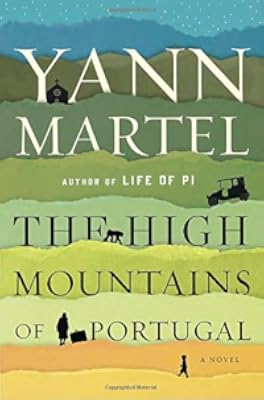
Yann Martel was born in Salamanca, Spain on June 25, 1963. After studying philosophy at Trent University in Peterborough, Ontario, he worked at odd jobs and travelled widely before turning to writing. His works include Seven Stories, What Is Stephen Harper Reading?, and Beatrice and Virgil. He was awarded the Journey Prize for the title story in show more The Facts Behind the Helsinki Roccamatios. His second novel, Life of Pi, won numerous awards including the 2002 Man Booker. He continued to make the bestseller list in 2018 with his title, The High Mountains of Portugal. (Bowker Author Biography) show less
Some Editions
Awards and Honors
Awards
Distinctions
Common Knowledge
- Canonical title*
- Paul en Finlande
- Original title
- The facts behind the Helsinki Roccomatios
- Original publication date
- 1993
- Important places*
- Helsinki, Finland
- Dedication
- pour J. G.
- First words
- When I was in my second year in university, aged nineteen, my studies ground to a halt.
- Last words
- (Click to show. Warning: May contain spoilers.)I often take it out and look at it and try to imagine all the words I so stupidly ignored.
*Some information comes from Common Knowledge in other languages. Click "Edit" for more information.
Classifications
Statistics
- Members
- 1,103
- Popularity
- 23,174
- Reviews
- 27
- Rating
- (3.39)
- Languages
- 12 — Chinese, Czech, Dutch, English, Finnish, French, German, Hungarian, Polish, Russian, Spanish, Swedish
- Media
- Paper, Audiobook, Ebook
- ISBNs
- 40
- UPCs
- 2
- ASINs
- 12