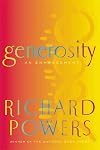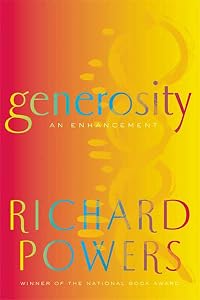
Generosity: An Enhancement
by Richard Powers
On This Page
Description
The National Book Award-winning author of The Echo Maker proves yet again that "no writer of our time dreams on a grander scale or more knowingly captures the zeitgeist." (The Dallas Morning News). What will happen to life when science identifies the genetic basis of happiness? Who will own the patent? Do we dare revise our own temperaments? Funny, fast, and magical, Generosity celebrates both science and the freed imagination. In his most exuberant book yet, Richard Powers asks us to show more consider the big questions facing humankind as we begin to rewrite our own existence. A New York Times Book Review Notable Book of the Year. show lessTags
Recommendations







Member Reviews
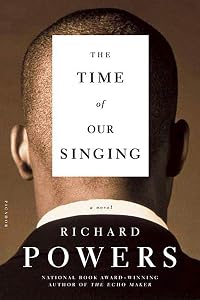
I really want to like Powers, but just about every book winds up falling flat for me. As far as I recall, The Time of our Singing is the only one (of the half dozen or so that I've read) that really knocked my socks off, and the rest have been sort of a bad mashup of mediocre genre fiction and attempted (failed) literary fiction -- and have disappointed at both ends.
Generosity read to me like something written by an alien who had access to Earth's culture, science, technology, and social interactions only via a few outdated television programs. There's not an authentic feeling moment in the book. I can forgive so-so character development if there's interesting science fiction. I can forgive so-so science fiction and character show more development if the style is great (I can forgive almost anything if the style is great or the approach novel). But this book is at the very best so-so on all counts.
Powers tries to blend science writing with literary fiction and happens to do neither particularly well. I wish he'd commit to one or the other and do it well. The subtitle of the book was, for me, a misnomer. Had it been named as I ultimately received it (Generosity: A Disappointment), I might have saved myself some frustration. show less
Generosity read to me like something written by an alien who had access to Earth's culture, science, technology, and social interactions only via a few outdated television programs. There's not an authentic feeling moment in the book. I can forgive so-so character development if there's interesting science fiction. I can forgive so-so science fiction and character show more development if the style is great (I can forgive almost anything if the style is great or the approach novel). But this book is at the very best so-so on all counts.
Powers tries to blend science writing with literary fiction and happens to do neither particularly well. I wish he'd commit to one or the other and do it well. The subtitle of the book was, for me, a misnomer. Had it been named as I ultimately received it (Generosity: A Disappointment), I might have saved myself some frustration. show less
Russell Stone is a jaded writer teaching a creative nonfiction class in Chicago. He becomes fascinated by one of his students, Thassa Amzwar, an Algerian refugee with a seemingly boundless capacity for happiness. The class nicknames her “Generosity.” Eventually her perpetual joy attracts attention from scientists, media, and corporations, and the storyline morphs into an evaluation of whether happiness is a genetic trait that could be identified and potentially replicated. She is discussed online and the unwanted notoriety challenges even her seemingly endless supply of kindness.
This book explores themes of happiness, genetics, and ethics. It challenges readers to consider what might be gained or lost if happiness were a product of show more genetics. Richard Powers excels at delving into the ramifications of science-related topics. His prose is elegant, and the reader will be able to tell he enjoys wordplay. In this book, he frequently breaks the fourth wall, making observations about writing the novel, providing insight into the authorial process. Recommended to readers interested in bioethics, the nature of happiness, and the ever-blurring boundary between humanity and technology. show less
This book explores themes of happiness, genetics, and ethics. It challenges readers to consider what might be gained or lost if happiness were a product of show more genetics. Richard Powers excels at delving into the ramifications of science-related topics. His prose is elegant, and the reader will be able to tell he enjoys wordplay. In this book, he frequently breaks the fourth wall, making observations about writing the novel, providing insight into the authorial process. Recommended to readers interested in bioethics, the nature of happiness, and the ever-blurring boundary between humanity and technology. show less
Written years before winning the Pulitzer for "The Overstory" Powers displays a different style of narrative with this book whose theme raises the question, "Is happiness genetic, learned, or something else?"
We first meet Russell Stone, an award winning journalist who takes a job teaching creative writing at a night school. Among the students is Thassa, a twenties Algerian girl whose happiness knows no bounds. A class of miscreants and oddballs, her ebullience wins the nickname, Generosity. Stone finds her writing intriguing as she does his, and an unusual friendship blooms. When Tonia Schiff, an investigative TV reporter hears a rumor, Thassa is invited to her show to discuss her predilection with the renown genetic pioneer and founder show more of Truecyte, Thomas Kurton. Fascinated by her behavior, she's invited to his company for testing.
Perplexed by Thassa, Stone consults with Candace Weld, the school's psychologist. What follows is the most unlikely of friendships which over time, deepens. Engaging, informative and well paced, the story moves the reader deeper into the inquiry with each chapter as word of the 'happiness gene' spreads globally. But when Thassa gain celebrity status, the emotional impact takes its toll.
Powers approaches all his stories with third person POV, which when added to his encyclopedic knowledge, characters of depth and plot makes for an evocative, informative experience. Powers has made it to my top twenty list of authors due to his meticulous care of storytelling, masterful skill at character development and themes that educate, inspire and raise questions. Highly recommended for those who seek 'something different'. show less
We first meet Russell Stone, an award winning journalist who takes a job teaching creative writing at a night school. Among the students is Thassa, a twenties Algerian girl whose happiness knows no bounds. A class of miscreants and oddballs, her ebullience wins the nickname, Generosity. Stone finds her writing intriguing as she does his, and an unusual friendship blooms. When Tonia Schiff, an investigative TV reporter hears a rumor, Thassa is invited to her show to discuss her predilection with the renown genetic pioneer and founder show more of Truecyte, Thomas Kurton. Fascinated by her behavior, she's invited to his company for testing.
Perplexed by Thassa, Stone consults with Candace Weld, the school's psychologist. What follows is the most unlikely of friendships which over time, deepens. Engaging, informative and well paced, the story moves the reader deeper into the inquiry with each chapter as word of the 'happiness gene' spreads globally. But when Thassa gain celebrity status, the emotional impact takes its toll.
Powers approaches all his stories with third person POV, which when added to his encyclopedic knowledge, characters of depth and plot makes for an evocative, informative experience. Powers has made it to my top twenty list of authors due to his meticulous care of storytelling, masterful skill at character development and themes that educate, inspire and raise questions. Highly recommended for those who seek 'something different'. show less
I loved Gold Bug Variations and liked Galatea 2.2, both for their geekiness. Generosity has similar elements, but diluted geekiness; the science is mood rather than mind, a specific set of genes rather than an abstract code.
Russell Stone is a writer, or was a writer until a series of essays had repercussions. With career derailed, and a demoralizing job editing inspirational stories for a self-actualization magazine, he takes a temporary position teaching a creative non-fiction course at an art college in Chicago. The students are mostly stock characters, but one has the title role: Thassadit Amzwar, nicknamed Miss Generosity for her exuberant, expansive, embracing personality. She reveals through assignments that she is a refugee from show more Algeria, dislocated and orphaned during civil war. A prime candidate for PTSD, she seems instead not merely unaffected but blissful.
Russell is concerned enough about the disconnect to seek advice from college psychologist Candace Weld. The word hyperthymia is uttered, and in a local report of a campus incident the word gets out. It is caught by the news filter of a scientist whose startup company researches genetic correlations with traits. A battery of tests and a journal article later, it is amplified in a TV interview: anonymous subject C3-16f holds the genetic key to happiness. Then in a student blog the word is linked to the name, Oona (more Os than Oprah) swoops in, and the pursuit of happiness goes viral. Thassa is bombarded by requests for her presence, her help, her secret, her eggs.
I had a bunch of problems with the book. #1 is what’s so great about happiness? #2 is Algeria; I doubt I’m uniquely ignorant among readers, and the historical facts were barely sketched, so it serves more to accessorize Thassa with exotic charm. #3 is the narrator, writing about writing the novel, an underdeveloped metalayer of creative non-fiction. The combined consequence was emotional distance, not much visceral response to the plot. And as noted above, not much intellectual response either. Oh well. An OK book with appealing moments and people, just didn’t really grab hold. show less
Russell Stone is a writer, or was a writer until a series of essays had repercussions. With career derailed, and a demoralizing job editing inspirational stories for a self-actualization magazine, he takes a temporary position teaching a creative non-fiction course at an art college in Chicago. The students are mostly stock characters, but one has the title role: Thassadit Amzwar, nicknamed Miss Generosity for her exuberant, expansive, embracing personality. She reveals through assignments that she is a refugee from show more Algeria, dislocated and orphaned during civil war. A prime candidate for PTSD, she seems instead not merely unaffected but blissful.
Russell is concerned enough about the disconnect to seek advice from college psychologist Candace Weld. The word hyperthymia is uttered, and in a local report of a campus incident the word gets out. It is caught by the news filter of a scientist whose startup company researches genetic correlations with traits. A battery of tests and a journal article later, it is amplified in a TV interview: anonymous subject C3-16f holds the genetic key to happiness. Then in a student blog the word is linked to the name, Oona (more Os than Oprah) swoops in, and the pursuit of happiness goes viral. Thassa is bombarded by requests for her presence, her help, her secret, her eggs.
I had a bunch of problems with the book. #1 is what’s so great about happiness? #2 is Algeria; I doubt I’m uniquely ignorant among readers, and the historical facts were barely sketched, so it serves more to accessorize Thassa with exotic charm. #3 is the narrator, writing about writing the novel, an underdeveloped metalayer of creative non-fiction. The combined consequence was emotional distance, not much visceral response to the plot. And as noted above, not much intellectual response either. Oh well. An OK book with appealing moments and people, just didn’t really grab hold. show less
Richard Powers' writing prowess is a delight. So while I have complaints that strike to the heart of the novel, they seemed trivial in the face of the most powerful prose I've read in a long time. Generosity is one of the tightest novels I've ever read. Every sentence is honed to perfection - imagery, flow, scanning, and purpose in the overall story. His commentary is both timely on the matters of genetic engineering, the growing expanse of the internet and culture globalization and timeless on the matters of what it truly means to be happy and what we should be searching for in life, any way. The research is also impeccable, down to the percentage of the human genome that is patented as of his writing.
The flaws? The first is the title, show more and overall the theme of "generosity" - I know that Powers is using it for the wordplay potential, in that Genetics and Generosity share a Latin root; however, Congeniality might be a better bang for the same pun-based buck. Nowhere does he show that Thassa is generous, despite her label of "Miss Generosity." In fact, the primary flaw is that he does not really show Thassa, the congenitally happy woman, to be much of anything at all. So while other characters run about fawning over her, the reader is still struggling to "get it."
In a lesser writers hands, these flaws would be fatal. In Powers' case it's merely an annoyance, in an otherwise superb novel. show less
The flaws? The first is the title, show more and overall the theme of "generosity" - I know that Powers is using it for the wordplay potential, in that Genetics and Generosity share a Latin root; however, Congeniality might be a better bang for the same pun-based buck. Nowhere does he show that Thassa is generous, despite her label of "Miss Generosity." In fact, the primary flaw is that he does not really show Thassa, the congenitally happy woman, to be much of anything at all. So while other characters run about fawning over her, the reader is still struggling to "get it."
In a lesser writers hands, these flaws would be fatal. In Powers' case it's merely an annoyance, in an otherwise superb novel. show less
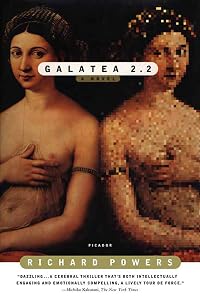
Generosity is an interesting choice of title for a book about happiness. Thassa, a refugee from the Algerian civil war, is incurably happy, so much so that her creative nonfiction teacher, Russell, asks a campus counselor, Candace, about her. Then scientist Thomas Kurton wants to find out what makes her tick. This is a book about nature vs. nurture, choice vs. chance, and fiction vs. fact. It's about the possibilities of genetic engineering and how far humans would, could, and should go. Like Powers' other work (The Overstory, Galatea 2.2), the writing is dense and beautiful; the ideas are deep and nuanced.
Generosity offers plenty of oblique references in the first pages, then moves on to a really
intriguing creative nonfiction teaching night class. Teacher comes across as timid, nervous, lame, and lacking courage,
while students show a wide variety of wild, mellow, shy, captivating, intriguing and strange personalities.
Their conflicts are engaging! Then, Kabylie and Thassa Anzwar steal the show.
Thomas Kurton and his never-ending genome are boring, Grace references are a downer,
and why does a mystery narrator keeps interrupting with vagaries...?
Had to look up "punding."
How did Stone manage to avoid jail?
Sure wish the narrator had imagined a more redemptive ending for Stone.
Yet, after Candace's hateful message, maybe they deserve each other.
intriguing creative nonfiction teaching night class. Teacher comes across as timid, nervous, lame, and lacking courage,
while students show a wide variety of wild, mellow, shy, captivating, intriguing and strange personalities.
Their conflicts are engaging! Then, Kabylie and Thassa Anzwar steal the show.
Thomas Kurton and his never-ending genome are boring, Grace references are a downer,
and why does a mystery narrator keeps interrupting with vagaries...?
Had to look up "punding."
How did Stone manage to avoid jail?
Sure wish the narrator had imagined a more redemptive ending for Stone.
Yet, after Candace's hateful message, maybe they deserve each other.
Members
- Recently Added By
Published Reviews
ThingScore 88
At times, one can’t help wondering if Powers’s sympathies, and his sensibilities, lie entirely in the scientific camp — if he doesn’t perhaps agree with Thomas Kurton’s critique of fiction, rejecting “the whole grandiose idea that life’s meaning plays out in individual negotiations.” But Powers is, when he chooses to be, an engaging storyteller (though he would probably wince show more at the word), and even as he questions the conventions of narrative and character, “Generosity” gains in momentum and suspense. In the end, he wants to have it both ways, and he comes very close to succeeding. show less
added by Shortride
Powers is a brilliantly imaginative writer, working here with a lightness of touch, a crisp sense of pace, and a distinct warmth. What's more, this is real literature—so we know happiness can't last. In unfolding his inevitable outcome, Powers shows both his reach as a student of humanity and his mastery as a storyteller.
added by Shortride
Lists

2008-2012 Notable Books for Adults
127 works; 10 members

Books Read in 2020
4,379 works; 123 members

Arthur C. Clarke Award Winners and Shortlisted Books
219 works; 14 members
Author Information

21+ Works 22,459 Members
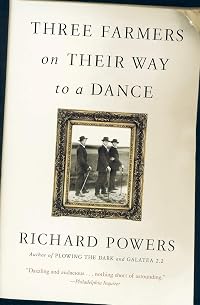
Richard Powers was born on June 18, 1957 in Evanston, Illinois. He received bachelor's and master's degrees in English from the University of Illinois at Urbana-Champaign. After graduation, he moved to Boston, Massachusetts and worked as a computer programmer and freelance data processor. One day he saw August Sander's 1914 black-and-white show more photograph of three Westerwald farm boys heading to a dance at the Museum of Fine Arts. This photograph inspired Powers to quit his job and try writing a novel. Three Farmers on Their Way to a Dance was published in 1985. His other works include Prisoner's Dilemma, The Gold Bug Variations, Operation Wandering Soul, Galatea 2.2, Plowing the Dark, The Time of Our Singing, and Generosity: An Enhancement. He received numerous awards including the James Fenimore Cooper Prize for Best Historical Fiction for Gain, the National Book Award for The Echo Maker, and Pulitzer Prize in fiction for The Overstory: A Novel. (Bowker Author Biography) show less
Awards and Honors
Awards
Common Knowledge
- Canonical title*
- Das größere Glück
- Original title
- Generosity
- Original publication date
- 2009
- People/Characters*
- Stone, Russell; Weld, Candace; Amzwar, Thassadit (Thassa); Schiff, Tonia
- Important places*
- Chicago, Illinois, USA; Tunis, Tunesien; Boston, Massachusetts, USA
- First words
- A man rides backward in a packed subway car.
- Last words
- (Click to show. Warning: May contain spoilers.)And for a while, before this small shared joy, too, disappears back into fact, we sit and watch the Atlas go dark.
*Some information comes from Common Knowledge in other languages. Click "Edit" for more information.
Classifications
Statistics
- Members
- 710
- Popularity
- 40,169
- Reviews
- 33
- Rating
- (3.78)
- Languages
- 7 — Dutch, English, Finnish, French, German, Italian, Japanese
- Media
- Paper, Audiobook, Ebook
- ISBNs
- 28
- ASINs
- 10