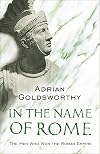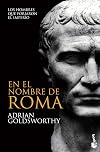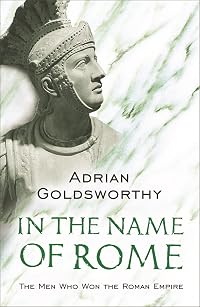
In the Name of Rome: The Men Who Won the Roman Empire
by Adrian Goldsworthy
On This Page
Description
A definitive history of the great commanders of ancient Rome, from bestselling author Adrian Goldsworthy. "In his elegantly accessible style, Goldsworthy offers gripping and swiftly erudite accounts of Roman wars and the great captains who fought them. His heroes are never flavorless and generic, but magnificently Roman. And it is especially Goldsworthy's vision of commanders deftly surfing the giant, irresistible waves of Roman military tradition, while navigating the floating logs, reefs, show more and treacherous sandbanks of Roman civilian politics, that makes the book indispensable not only to those interested in Rome and her battles, but to anyone who finds it astounding that military men, at once driven and imperiled by the odd and idiosyncratic ways of their societies, can accomplish great deeds." -J. E. Lendon, author of Soldiers and Ghosts: A History of Battle in Classical Antiquity show lessTags
Recommendations



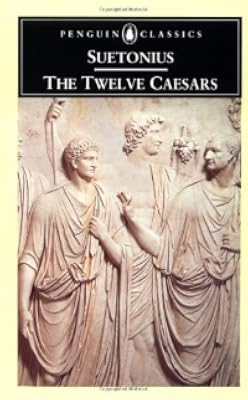
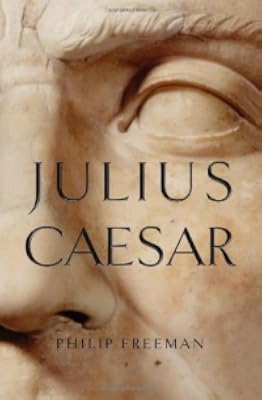
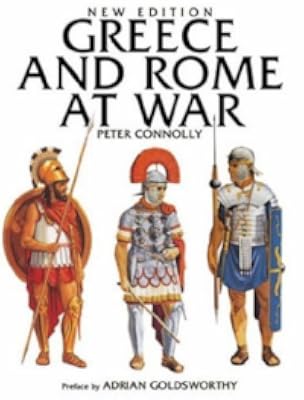
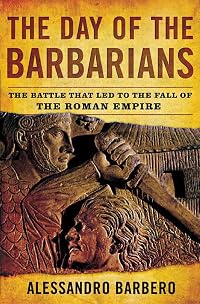



Member Recommendations
Member Reviews
Goldsworthy's book is informative, entertaining, comprehensive and thoroughly researched - it's a shame I can't think of many people who would enjoy it.
In 16 chapters he covers Roman Generals from Fabius to the fall of Rome in the east, and finds plenty of space to outline the major political and social changes, as well as detailed descriptions of the major battles and campaigns, all referenced with discussions of the various sources, where appropriate. It's a concise summary of what I imagine must represent years of scholarship.
The middle chapters, probably the most familiar to the general audience (and the reason I bought the book) cover Marius, Pompey and Caesar, but I was particularly taken with one of the later chapters covering show more Trajan's conquest of Dacia, which used descriptions of the inscriptions on Trajan's column in Rome. Goldsworthy does a great job of piecing together a readable narrative from what we can reconstruct, whilst at the same time maintaining an academic tone and not degenerating into speculative storytelling.
The breadth of material covered means the reader sometimes has to work a little hard to keep up. New names of legions, notable figures, and places were introduced often enough that I found myself keeping google open while I read. Goldworthy's determination to cover all relevant material 30 page chapters makes me wonder whether someone new to the subject matter would enjoy reading it, or whether too much information is presented, too quickly.
Goldsworthy makes clear in the introduction that he didn't intend a general recipe book for military success, even less so a guide for those seeking a Roman road to leadership quality. It's a little too broad in approach to appeal to those seeking academic insights. For people like me, who have a rusty memory of a university course taken years ago, it's perfect. I just hope there are enough people who fit into this category to make sure Goldsworthy's books continue to be a commercial success. show less
In 16 chapters he covers Roman Generals from Fabius to the fall of Rome in the east, and finds plenty of space to outline the major political and social changes, as well as detailed descriptions of the major battles and campaigns, all referenced with discussions of the various sources, where appropriate. It's a concise summary of what I imagine must represent years of scholarship.
The middle chapters, probably the most familiar to the general audience (and the reason I bought the book) cover Marius, Pompey and Caesar, but I was particularly taken with one of the later chapters covering show more Trajan's conquest of Dacia, which used descriptions of the inscriptions on Trajan's column in Rome. Goldsworthy does a great job of piecing together a readable narrative from what we can reconstruct, whilst at the same time maintaining an academic tone and not degenerating into speculative storytelling.
The breadth of material covered means the reader sometimes has to work a little hard to keep up. New names of legions, notable figures, and places were introduced often enough that I found myself keeping google open while I read. Goldworthy's determination to cover all relevant material 30 page chapters makes me wonder whether someone new to the subject matter would enjoy reading it, or whether too much information is presented, too quickly.
Goldsworthy makes clear in the introduction that he didn't intend a general recipe book for military success, even less so a guide for those seeking a Roman road to leadership quality. It's a little too broad in approach to appeal to those seeking academic insights. For people like me, who have a rusty memory of a university course taken years ago, it's perfect. I just hope there are enough people who fit into this category to make sure Goldsworthy's books continue to be a commercial success. show less
Mr. Goldsworthy is the best modern author as regards ancient Roman history. His work on Julius Caesar is the definitive biography- wonderfully written and comprehensively researched. In the Name of Rome is also an excellent work covering various generals throughout the Republic and Imperial eras. Each chapter discusses a different leader by presenting background information for context and details of a particular campaign. Once again, the author's writing style is very readable.
In the Name of Rome: The Men Who Won the Roman Empire takes us through the Roman Republic and Empire, introducing generals and commanders that left a mark on history. From Cincinnatus saving the early Republic, to why Pompey earned the sobriquet "The Great" even though he was the celebrated loser of a civil war against Julius Caesar, to Germanicus, Trajan, Hadrian and other champions of the empire, Roman historian Adrian Goldsworthy hits most of them in this sweeping narrative. My only complaint is that some of these commanders led such extraordinary careers as to be the subjects of many books just on themselves -- this overview is necessarily brief and having read more detailed biographies on many of these generals, seems a little show more incomplete. But this is an enjoyable read for anyone with casual interest on the subject. show less
A very odd book really, Roman history told via the battles of fifteen of its greatest generals. I enjoyed it immensely, but there's a lot of repetition because of the fragmentary nature of the historical records. I think the politics of Rome come through much more strongly than does the composition and ordering of the military. Highly recommended none the less.
In this volume Goldsworthy reviews the successful Roman generals that led to the Empire. Without clear guidance and training, Roman leaders were on their own and accumulated military expertise by first-hand observation and often no more than common sense. What Goldsworthy points out though is how the successful generals developed appropriate strategy and tactics for their particular situation. Fabius may appears tentative and hesitant but confronted with a superior Carthaginian army, not to mention a first-rate general, Fabius correctly concluded the best thing a Roman army should do, despite opposition from his own ranks, was to delay and harass Hannibal.
He surveys fifteen subjects--Fabius, Marcellus, Scipio Africanus, Aemillius show more Paullus, Scipio Aemilianus, Caius Marius, Sertorius, Pompey the Great, Caesar, Germanicus, Corbulo, Titus, Trajan, Julian, and Belisarius--with very little peace both in peace and in war, most of them met with violent opposition or death. Goldsworthy proffers that Roman generalship has much to teach us in that large, deadly Western armies are confronted with weaker opponents practicing asymmetrical warfare. show less
He surveys fifteen subjects--Fabius, Marcellus, Scipio Africanus, Aemillius show more Paullus, Scipio Aemilianus, Caius Marius, Sertorius, Pompey the Great, Caesar, Germanicus, Corbulo, Titus, Trajan, Julian, and Belisarius--with very little peace both in peace and in war, most of them met with violent opposition or death. Goldsworthy proffers that Roman generalship has much to teach us in that large, deadly Western armies are confronted with weaker opponents practicing asymmetrical warfare. show less
An interesting selection of military figures. Each biography is situated with in the changes that defined the Roman military. For example the chapter on the Emperor Julian also describes the declining importance of Rome as a political centre as the making and unmaking of emperors shifts to the army. This makes the process of obtaining the purple much easier, but as a consequence harder to retain as military units tended to back claimants that they felt would reward them.
Absolutely absorbing.
Absolutely absorbing.
Kejsare och generaler beskriver de femton främsta romerska härförarna, deras egenskaper, deras slag och deras segrar. Många av dem är kända än i dag: Pompejus den romerske Alexander den store som var minst lika framgångsrik i politik som i krigföring och den aggressive och karismatiske Julius Caesar, som ledde sina arméer till otaliga vinster.
Här beskrivs även några mindre kända krigsherrar; Aemilius Paullus, Makedoniens erövrare och Sertorius som byggde upp ett välde i Spanien och som mördades av Pompejus.
Boken skildrar också den romerska krigföringen, de bittra striderna om Karthago, krigen mot den framgångsrika Hannibal på 200-talet och det sista, desperata försöket att vinna tillbaka västra delen av show more kejsardömet på 500-talet. show less
Här beskrivs även några mindre kända krigsherrar; Aemilius Paullus, Makedoniens erövrare och Sertorius som byggde upp ett välde i Spanien och som mördades av Pompejus.
Boken skildrar också den romerska krigföringen, de bittra striderna om Karthago, krigen mot den framgångsrika Hannibal på 200-talet och det sista, desperata försöket att vinna tillbaka västra delen av show more kejsardömet på 500-talet. show less
Members
- Recently Added By
Published Reviews
ThingScore 88
Author Information

41+ Works 9,306 Members
Adrian Goldsworthy is an award-winning historian of the classical world. He is the author of numerous books about ancient Rome, including Hadrian's Wall, Caesar, How Rome Fell, Pax Romana, and Augustus. Goldsworthy lives in South Wales.
Some Editions
Series
Belongs to Publisher Series
Common Knowledge
- Canonical title
- In the Name of Rome: The Men Who Won the Roman Empire
- Original publication date
- 2003
- People/Characters
- Scipio Africanus; Julius Caesar; Julian the Apostate; Augustus Caesar; Quintus Fabius Maximus Cunctator; Marcus Claudius Marcellus (show all 16); Aemilius Paullus; Scipio Aemilianus; Caius Marius; Sertorius; Pompey the Great; Germanicus; Gnaeus Domitius Corbulo; Titus Flavius Vespasianus; Trajan; Belisarius
- Important places*
- Roma, Imperio Romano; Germania, Imperio Romano; Judea, Imperio Romano; Galia, Imperio Romano; Cartago; Hispania, Imperio Romano (show all 9); Britannia, Imperio Romano; Macedonia, Imperio Romano; Dacia, Imperio Romano
- Dedication
- En memoria del Capitán William Walker RFA"Tío Bill", buen amigo y auténtico líder (1933 - 2002)
In memory of Captain William Walker RFA (retired) / 'Uncle Bill' / A good friend and a true leader / 1933 - 2002 - First words*
- Éste es el único lugar en que se pueden aprender las cualidades inherentes a la jefatura.
- Last words*
- (Click to show. Warning: May contain spoilers.)Quizá sea en la manera en que se condujeron esas operaciones, más que en las famosas batallas contra cartagineses o macedonios, donde debemos buscar lecciones para el día de hoy.
- Blurbers
- Massie, Allan
*Some information comes from Common Knowledge in other languages. Click "Edit" for more information.
Classifications
- Genres
- History, Nonfiction, General Nonfiction, Biography & Memoir
- DDC/MDS
- 937.06 — History & geography History of ancient world (to ca. 499) Italian Peninsula to 476 and adjacent territories to 476 Empire 31 B.C.-476 A.D.
- LCC
- U35 .G6497 — Military Science Military science (General) History of military science
- BISAC
Statistics
- Members
- 814
- Popularity
- 33,849
- Reviews
- 14
- Rating
- (3.91)
- Languages
- 5 — English, Finnish, Portuguese, Spanish, Swedish
- Media
- Paper, Audiobook, Ebook
- ISBNs
- 23
- ASINs
- 10