
Duino Elegies
by Rainer Maria Rilke
On This Page
Description
A new translation of Rilke's great work with close readings of each of the ten elegies elucidating how their poetic attributes constitute their meaning.Tags
Recommendations











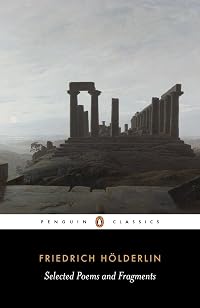
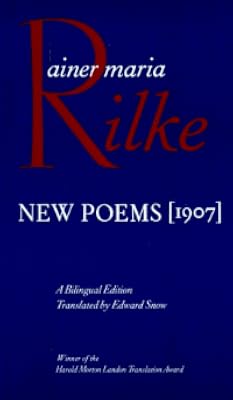
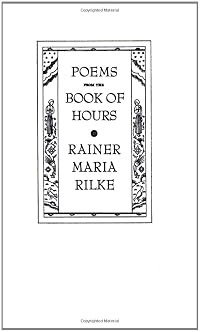
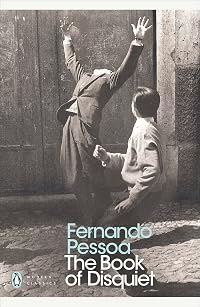


Member Recommendations

Member Reviews
Ever since I lost my faith years ago, I’ve been on a path to try and reconstruct the kind of framework or guide I once had. The form of faith I’d been raised in and discarded was intolerant and harmful, to self and others, and I’ve been trying to find the kind of sustenance I could have had through different practices–mostly mindfulness and meditation, and also through poetry. Not that fiction or the other forms of prose don’t have illuminative qualities that could help a person find solace, meaning, and appreciation for life and, even, death. But there’s a pristine nature to poetry, that even in its elusiveness and moments of not understanding, that feels–despite cringing at the word at times–spiritual. And Rilke’s show more poetry, as I’ve recently found out, could be described as all this.
Of the destructive nature of beauty:
…For beauty is
nothing
But the beginning of terror, which we can
just barely endure,
and we stand in awe of it as it coolly
disdains
to destroy us. Every angel is terrifying.
Of destiny:
From the eighth elegy
That’s what destiny is: being opposite
and nothing else but that and always
opposite.
This stunning part on the manner in which human beings perceive the world and life:
And we: Spectators, always, everywhere,
looking at, never out of, everything!
It overfills us. We arrange it. It falls apart.
We rearrange it, and fall apart ourselves.
Who has turned us around like this, so that
always, no matter what we do, we’re in the
stance
of someone just departing? As he,
on the last hill that shows him all his valley
one last time, turns, stops, lingers—,
we live our lives, forever taking leave.>
Of the demanding nature of life and its transience:
But because life compels us, and
because everything here
seems to need us, all this fleetingness
that strangely entreats us. Us, the most
fleeting…
Wisdom brims throughout this book with its captivating imagery and the incredible story-telling (that bit of the Land of Pain and Laments in the end), makes for an unforgettable reading experience. show less
Of the destructive nature of beauty:
…For beauty is
nothing
But the beginning of terror, which we can
just barely endure,
and we stand in awe of it as it coolly
disdains
to destroy us. Every angel is terrifying.
Of destiny:
From the eighth elegy
That’s what destiny is: being opposite
and nothing else but that and always
opposite.
This stunning part on the manner in which human beings perceive the world and life:
And we: Spectators, always, everywhere,
looking at, never out of, everything!
It overfills us. We arrange it. It falls apart.
We rearrange it, and fall apart ourselves.
Who has turned us around like this, so that
always, no matter what we do, we’re in the
stance
of someone just departing? As he,
on the last hill that shows him all his valley
one last time, turns, stops, lingers—,
we live our lives, forever taking leave.>
Of the demanding nature of life and its transience:
But because life compels us, and
because everything here
seems to need us, all this fleetingness
that strangely entreats us. Us, the most
fleeting…
Wisdom brims throughout this book with its captivating imagery and the incredible story-telling (that bit of the Land of Pain and Laments in the end), makes for an unforgettable reading experience. show less
My deutsch wird worse, no question, but the gnarled syntax didn't make things any easier for me here, and then when I powered through I found a bunch of death-and-the-ineffable-obsessed, mistful pomposity. The kind of shit that makes you want to blow a raspberry or make a jerkoff motion. I was ready to write the guy off, but then I got to the Tenth Elegy, which is, of course, magnificent, phantasmagoric, Eurydicean, everything I wanted the others to be. Not a fretting on neurosis, but a vision of the Underworld that is this world.
Und wir, die an steigendes Glück
denken, empfänden die Rührung,
die uns beinah bestürzt,
wenn ein Glückliches fällt.
Und wir, die an steigendes Glück
denken, empfänden die Rührung,
die uns beinah bestürzt,
wenn ein Glückliches fällt.
Rilke's masterpiece (I think it's his masterpiece) had moments where I had to rest on the page and contemplate questions of eternity, like an existential stop-sign. Being real, I did feel like most of the time I was reading it to read it and so I appreciated the moments where I had my attention fixed, less on angels and more on the focus on human struggles.
"Wer, wenn ich schriee, hörte mich denn aus der Engel Ordnungen?"
So begins Rilke's cry to heaven, and he stays with this theme throughout the Elegies. Rilke understands more than most that the encroachment of the divine is a thing of beauty, but he also understand that beauty is indeed terrifying, if we are really paying attention. At least, the beauty of angels is terrifying.
Rilke is a poet for the head and the heart, and in about equal amounts. His writing is durable...not always a thing of beauty in and of itself, but if he cannot always portray it, he leads you to it, time and time again.
So begins Rilke's cry to heaven, and he stays with this theme throughout the Elegies. Rilke understands more than most that the encroachment of the divine is a thing of beauty, but he also understand that beauty is indeed terrifying, if we are really paying attention. At least, the beauty of angels is terrifying.
Rilke is a poet for the head and the heart, and in about equal amounts. His writing is durable...not always a thing of beauty in and of itself, but if he cannot always portray it, he leads you to it, time and time again.
Not a penultimate favorite, but this kind of poetry definitely sucks you deep inside the marrow of the bones of its message. It's a very flowing format and the words wrap around you slowly like ribbons to take into every sensation of it.
I almost devoured the whole thing in one sitting.
I almost devoured the whole thing in one sitting.
Exactamente lo que dice la imagen, aunque tengo mis sospechas de que tanto la traducción como la distribución del texto en la edición que leí pudieron ir en detrimento del disfrute de esta obra. De todas formas, hubo pasajes que resonaron de manera en extremo notable en mi cabeza, sobretodo las elegías primera y última. Trataré de releerlo en el futuro.
Sumamente recomendado para quienes gusten de la poesía, en especial si pueden conseguir otra versión.
In these 8 elegies, Rilke demonstrates his lyrical talents and combines them with philosophical musings about human life and death.
Members
- Recently Added By
Lists

German Literature
518 works; 56 members

Blue Pyramid 1,276 Best Books of All Time
1,248 works; 32 members

Trinity College Booklist (1951): Class Nine, Foreign Literatures
161 works; 3 members

Favourite Books
1,820 works; 316 members

20th Century Literature
1,161 works; 55 members

Poetry Collections
79 works; 6 members

Books Read in 2018
4,360 works; 110 members

In and About the 1920s
181 works; 31 members

Greatest Books, allegedly
484 works; 9 members

Philip Ward's Lifetime Reading Plan
592 works; 22 members

Javier Marías: 10 libros que me han cambiado la vida
12 works; 1 member

.
396 works; 1 member
Talk Discussions
Past Discussions
Rainer Maria Rilke in Someone explain it to me... (April 2015)
Author Information

More than any other modern German writer, Rainer Maria Rilke seems to match our romantic idea of what a poet should be, though, as with many writers, separating artistry from affectation is often difficult. Restless, sensitive, reverent, yet egotistical, Rilke often seems to hover in his poems like a sort of ethereal being. He was born in 1875 to show more a wealthy family in Prague. After a few years devoted to the study of art and literature, he spent most of his adult life wandering among the European capitals and devoting himself single-mindedly to poetry. His early poems reflect his interest in the visual and plastic arts, as he tries to lose himself in contemplation of objects such as an antique torso of Apollo.His later books of poetry, such as Duino Elegies (1923) and Sonnets to Orpheus (1923), on the contrary, focus intently on internal realms. The poetry of Rilke is noted, above all, for metaphysical and psychological nuances. (Bowker Author Biography) show less
Some Editions
Awards and Honors
Series
Belongs to Publisher Series
Work Relationships
Common Knowledge
- Canonical title*
- Duineser Elegien
- Original title
- Duineser Elegien
- Original publication date
- 1923 (2006) (2006)
- Important places
- Duino Castle
- Dedication
- Aus dem Besitz der Furstin Marie von Thurn und Taxis-Hohenlohe.
The Property of Princess Marie von Thurn und Taxis-Hohenlohe
This translation dedicated to Rodney Kent Albin (1940-1985) "To have been as one, though but the once, with this world, never can be undone." - First words
- Who, though I cry aloud, would hear me in the angel orders?
[Translator's Preface] How reframe the silhouettes of angels, snipped from fog, stuck starlike on a concave cloudscape where Rilke rides with silent spurs in a black bandana, disguised as night? - Last words
- (Click to show. Warning: May contain spoilers.)Then we, who have known joy only as it escapes us, rising to the sky, would receive the overwhelming benediction of happiness descending.
- Blurbers
- Constantine, David
- Canonical DDC/MDS
- 831.912
*Some information comes from Common Knowledge in other languages. Click "Edit" for more information.
Classifications
Statistics
- Members
- 1,960
- Popularity
- 10,887
- Reviews
- 18
- Rating
- (4.36)
- Languages
- 18 — Catalan, Czech, Dutch, English, Estonian, Finnish, French, German, Irish, Hungarian, Italian, Multiple languages, Norwegian (Nynorsk), Russian, Spanish, Swedish, Turkish, Portuguese (Portugal)
- Media
- Paper, Ebook
- ISBNs
- 126
- UPCs
- 1
- ASINs
- 45