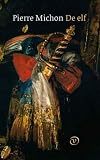
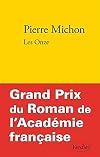
The Eleven
by Pierre Michon
On This Page
Description
In The Eleven, Michon lets us into the world of Corentin, a painter shaped by--and who eventually shapes--history. Brought up among provincial aristocracy to become a favorite of Parisian society--his paintings are commissioned by Louis XV's mistress--Corentin's career rides the Tides of the French Revolution. His masterpiece, "The Eleven," is an enigmatic Last Supper, representing the eleven members of the Committee of Public Safety (including Robespierre and Saint Just) during the Reign of show more Terror. Corentin and company, his work of art, and the historical tableau of the French Revolution come to life in dazzling, even painterly, detail. A potent blend of fact and fiction, The Eleven is a beautifully written, astute meditation on the nature of history itself and the artist's role in it. show lessTags
Recommendations













Member Reviews
In the month of Nivôse, in Year II of the Revolution, the artist Corentin was summoned by a quartet of Sans Culottes in the middle of the night and taken to local revolutionary headquarters. After several hours of anxious contemplation, he was surprised to discover the reason for the summons: a commission to paint the eleven, the members of The Committee of Public Safety. The trio who offered this commission had two conditions: it must be kept completely secret until the completed painting was collected from the artist, and Robespierre, Saint-Just and Couthon must be the focal figures.
This is a beautifully written work, a meditation on art and history, on how artistic style shapes the images of History. It is the tale of Corentin as he show more was forged by the history of his forbearers into the artist he was to become. The language is pure imagery. The nameless narrator is speaking to a present day visitor to the Louvre, come to see its most important work, The Eleven. The narrator supplies the information that those printed descriptions in galleries never provide. He tells of Corentin and the Limousin, the Enlightenment and the proletariat, of Venetian cherubs and German princelings, weaving them all together into a fable.
Michon skilfully uses paradox and contrast to give a fictional discussion of reality, where each of us can view the same object,
This is a beautifully written work, a meditation on art and history, on how artistic style shapes the images of History. It is the tale of Corentin as he show more was forged by the history of his forbearers into the artist he was to become. The language is pure imagery. The nameless narrator is speaking to a present day visitor to the Louvre, come to see its most important work, The Eleven. The narrator supplies the information that those printed descriptions in galleries never provide. He tells of Corentin and the Limousin, the Enlightenment and the proletariat, of Venetian cherubs and German princelings, weaving them all together into a fable.
Michon skilfully uses paradox and contrast to give a fictional discussion of reality, where each of us can view the same object,
but it was not the same, not in the same place, because each real thing exists many times, as many times perhaps as there are individuals on this earth.If this is so, how can we have History? History in fact is its very representation and so changes constantly as we see different representations. What The Eleven represent are the powers, yet at the same time, these eleven men, "fixed in the dread and slow expectancy of beasts" eventually became the hunted.
This is Lascaux, Sir. The forces. The powers. The Commissioners.show less
And the powers... are called History.
 This review was written for LibraryThing Early Reviewers.
The Eleven, was at first hard to understand, then hard to put down, then one of those books I had to read twice. It is a fine novel, almost poetry, disguised as art history, disguised as lecture. Pierre Michon takes on the French Revolution, art as history, class culture, social mobility, politics, the love of a mother for her son, and the role of chance in life. He covers these and many more topics in 97 pages of beautifuly translated text. This he does by inventing then discussing what his narrator describes as the most famous painting in the world, a large group portrait of eleven figures from the infamous Committee of Public Safety during the tumult of 1794.
Without internet research, this would have been slow going for me, but I show more think even if I could not have grasped some of the context, the book would have still entranced by its pure, clean and expansive language. show less
Without internet research, this would have been slow going for me, but I show more think even if I could not have grasped some of the context, the book would have still entranced by its pure, clean and expansive language. show less
This review was written for LibraryThing Early Reviewers.Pure pure poetry deliciously rendered and beautifully translated - an enormous labor considering the intricacies of the text. I love all things that have to do with the French Revolution but this approached aspects of that time in such wonderful ways that it left me quite astonished.
This review was written for LibraryThing Early Reviewers."The Eleven is not a painting of History, it is History."
More than 200 years after its creation, an unnamed narrator stands alongside his voiceless subject in the Louvre as they study The Eleven, "the world's most famous painting". Created by François-Élie Corentin in 1794, the painting portrays the eleven members of the Committee for Public Safety led by Robespierre, as they stand around a table filled with four-pound loaves of bread and Clamart wine. The French historian Michelet described the painting as a "secular last supper" in his 1852 work History of the French Revolution, and his 12 page description of The Eleven in his book has stood as the definitive interpretation of the masterpiece since then.
The narrator of this novel show more discusses the painting with his subject, and claims that there is much more to its creation than Michelet's flawed description of it. He briefly describes the life of Corentin, who grew up the river town of Combleux and flourished under the undying devotion of his mother and grandmother; his father, a failed poet; and the reason for the painting's commission during the Reign of Terror which followed the French Revolution. The Terror, which lasted from 1793-94, was a time in which a power struggle between Robespierre, Danton and Hébert led to the execution of tens of thousands of French citizens deemed enemies of the Revolution. The narrator describes the actions and motivations of the eleven members of the Committee for Public Safety, and portrays the difficult position that many supporters of its leading members found themselves in.
The Eleven, which was originally published as Les Onze and won the prestigious Grand Prix du roman de l'Académie française in 2009, is a deliberate and nonlinear short novel, which was a tedious read at times but ultimately gelled into an interesting and worthwhile story at its end. I suspect that the book is far more rewarding in its original language, but the patient reader of the English version may enjoy it as well. show less
More than 200 years after its creation, an unnamed narrator stands alongside his voiceless subject in the Louvre as they study The Eleven, "the world's most famous painting". Created by François-Élie Corentin in 1794, the painting portrays the eleven members of the Committee for Public Safety led by Robespierre, as they stand around a table filled with four-pound loaves of bread and Clamart wine. The French historian Michelet described the painting as a "secular last supper" in his 1852 work History of the French Revolution, and his 12 page description of The Eleven in his book has stood as the definitive interpretation of the masterpiece since then.
The narrator of this novel show more discusses the painting with his subject, and claims that there is much more to its creation than Michelet's flawed description of it. He briefly describes the life of Corentin, who grew up the river town of Combleux and flourished under the undying devotion of his mother and grandmother; his father, a failed poet; and the reason for the painting's commission during the Reign of Terror which followed the French Revolution. The Terror, which lasted from 1793-94, was a time in which a power struggle between Robespierre, Danton and Hébert led to the execution of tens of thousands of French citizens deemed enemies of the Revolution. The narrator describes the actions and motivations of the eleven members of the Committee for Public Safety, and portrays the difficult position that many supporters of its leading members found themselves in.
The Eleven, which was originally published as Les Onze and won the prestigious Grand Prix du roman de l'Académie française in 2009, is a deliberate and nonlinear short novel, which was a tedious read at times but ultimately gelled into an interesting and worthwhile story at its end. I suspect that the book is far more rewarding in its original language, but the patient reader of the English version may enjoy it as well. show less
This review was written for LibraryThing Early Reviewers.This is a book one feels more than reads as Michon sweeps one's rational self away and seduces the reader into a poetic frame of mind under the influence of his stream of conscious-like prose that is lyric and fluid. The serene beauty of his writing is in stark and deceptive contrast to the foreboding central "character" of the novel -- a fictitious work of art titled, "The Eleven" that looms over the novel like la Terreur it represents.
In all, while dark in atmosphere, the writing is as rich as haute cuisine in flavor and will be enjoyed by Francophile readers.
In all, while dark in atmosphere, the writing is as rich as haute cuisine in flavor and will be enjoyed by Francophile readers.
This review was written for LibraryThing Early Reviewers.This book is filled with lush imagery and complex prose. It demands a careful and deliberate reading that will not appeal to everyone. The book is best enjoyed by letting yourself get carried away by the atmosphere and tone without worrying too much about the story.
This review was written for LibraryThing Early Reviewers.I was a little stunned when I found out this book was awarded a prize from l'Académie française, although upon reflection, it does fall in the tradition of the very pedantic vieille France, so it seems a good fit.
I struggled from the start and was relieved that it was a short book. As much as I tried to be interested in events and characters, the pretentious address, the distancing from the characters (their feeling, emotions, growth), the glimpses into history with no context and continuity constantly rebuked me. I just didn't care.
When I saw that the painting didn't exist, it further alienated me from the story though it did give me an appreciation for the literary quality: I really was taken by the authenticity of both the painter show more and picture (made me feel better that I couldn't remember it from my numerous visits to the Louvre!).
Overall a disappointing read. Not one that I would recommend due to its lack of an engaging quality. show less
I struggled from the start and was relieved that it was a short book. As much as I tried to be interested in events and characters, the pretentious address, the distancing from the characters (their feeling, emotions, growth), the glimpses into history with no context and continuity constantly rebuked me. I just didn't care.
When I saw that the painting didn't exist, it further alienated me from the story though it did give me an appreciation for the literary quality: I really was taken by the authenticity of both the painter show more and picture (made me feel better that I couldn't remember it from my numerous visits to the Louvre!).
Overall a disappointing read. Not one that I would recommend due to its lack of an engaging quality. show less
This review was written for LibraryThing Early Reviewers.Members
- Recently Added By
Lists

Top Five Books of 2013
1,562 works; 721 members
Author Information

38+ Works 1,337 Members
Some Editions
Awards and Honors
Series
Belongs to Publisher Series
Common Knowledge
- Canonical title
- The Eleven
- Original title
- Les Onze
- Original publication date
- 2009 (original French) (original French); 2013 (English: Golding & Deshays) (English: Golding & Deshays)
- Important events
- French Revolution; Reign of Terror
- Epigraph
- It is a great pleasure to take up residence in numbers. - Baudelaire
- First words
- He was not tall, unobtrusive, but he held your attention with his feverish silence, his dark cheer, his alternately arrogant and oblique manner--- grim, as they said.
- Quotations
- "The Eleven is not a painting of History, it is History."
Classifications
- Genres
- General Fiction, Fiction and Literature, Historical Fiction
- DDC/MDS
- 843.914 — Literature & rhetoric French Literature French fiction 1900- 20th Century 1945-1999
- LCC
- PQ2673 .I298 .O6913 — Language and Literature French, Italian, Spanish and Portuguese literatures French literature Modern literature 1961-2000
- BISAC
Statistics
- Members
- 230
- Popularity
- 141,484
- Reviews
- 32
- Rating
- (3.18)
- Languages
- 7 — Catalan, Dutch, English, French, German, Italian, Spanish
- Media
- Paper, Ebook
- ISBNs
- 12
- ASINs
- 2