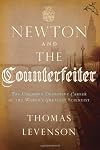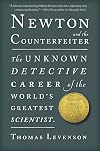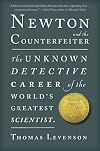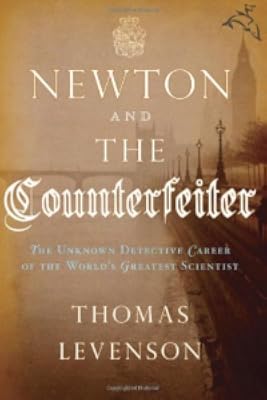
Newton and the Counterfeiter: The Unknown Detective Career of the World's Greatest Scientist
by Thomas Levenson
On This Page
Description
In 1695, Isaac Newton, already renowned as the greatest mind of his age, made a surprising career move.Tags
Recommendations








Member Recommendations
Member Reviews
Isaac Newton was a complex man. Every student learns of (but few master) the laws bearing his name that govern the motion of objects from bullets to planets. Many know that the same great mind invented calculus along the way toward his Principia Mathematica. But Newton was also intrigued with alchemy throughout his life, and filled notebook after notebook with descriptions of experimental results. He may even have had a mental breakdown as a consequence of depression after a promising route to transmutation collapsed. Newton never married, and little is known of any life we would call "personal", but Thomas Levenson has unearthed a rich trove of original material related to Newton's job in later life, Warden of the Mint. At the time show more (1687-1702), England was fighting a war with France while her currency was both being counterfeited and undermined by silver/gold arbitrage. The greatest physicist turned into a relentless and ferocious defender of the coin of the realm. He used intense coercion to induce counterfeiters to turn on one another and often obtained the death penalty for those convicted. Levenson focuses on a particular notorious culprit, William Chaloner, but it was clear that Newton was fighting a host of clever counterfeiters, and that he waged an effective, ferocious defense of England's money. show less
Thomas Levenson's Newton and the Counterfeiter: The Unknown Detective Career of the World's Greatest Scientist (Houghton Mifflin Harcourt, 2009) highlights a little-known entry on Isaac Newton's C.V., his time as Warden of the Royal Mint in the late 1690s. Levenson contrasts Newton with one William Chaloner, a big-time counterfeiter whose downfall Newton eventually secured, but not until Chaloner had managed to tweak the strings of justice a few times.
The book works. Levenson provides capsule histories of Newton's scientific and alchemical careers, plus the English financial, political and criminal justice systems (particularly as relevent to counterfeiting). He puts the existing sources to good use in trying to suss out details about show more Chaloner's life and activities (plus those of other forgers, coiners and rogues). The way he manages to bring the two together was effective, and carried off very well. It's the kind of story that would make a good novel, but which written by the right person works even better as history.
I'll quibble, as usual, that the notes (which are very good) are not indicated in the text. The bibliography is extensive, and useful. Overall, a fine read, and one I'll happily recommend.
http://philobiblos.blogspot.com/2009/07/book-review-newton-and-counterfeiter.htm... show less
The book works. Levenson provides capsule histories of Newton's scientific and alchemical careers, plus the English financial, political and criminal justice systems (particularly as relevent to counterfeiting). He puts the existing sources to good use in trying to suss out details about show more Chaloner's life and activities (plus those of other forgers, coiners and rogues). The way he manages to bring the two together was effective, and carried off very well. It's the kind of story that would make a good novel, but which written by the right person works even better as history.
I'll quibble, as usual, that the notes (which are very good) are not indicated in the text. The bibliography is extensive, and useful. Overall, a fine read, and one I'll happily recommend.
http://philobiblos.blogspot.com/2009/07/book-review-newton-and-counterfeiter.htm... show less
In 1695, Sir Isaac Newton--gravity's tamer, master mathematician, and secret alchemist--left Cambridge for London to take up a new job: Warden of the English Mint. While most were content to farm out the day-to-day work to clerks, Newton brought his considerable skills to bear on the dual problem of the dwindling amount of English metal currency in circulation and the opposite and equally increasing amount of counterfeit coins being produced by London's criminal underworld. It is in the latter cause that Newton met his Moriarty--William Chaloner. Thomas Levenson does a very good job of weaving the stories of these two men together. Part biography, part detective novel, the book is an excellent read and illuminates a part of Newton's show more life that is woefully under-documented. show less
Everyone knows about Sir Isaac Newton's great scientific discoveries, but few know about his later career as an official working for the English mint. He took the job at a time when the English economy was in a serious crisis. They were literally running out of money, due in large part to the fact that the silver in English coins could be melted down and sold for a profit in France where silver prices where higher, and a shocking number of the coins still left in circulation were in fact counterfeit. Part of Newton's job was to ferret out and prosecute counterfeiters, a job he apparently took very seriously. This book focuses largely on that part of his life, and particularly on his pursuit of an especially notorious and wily show more counterfeiter named William Chaloner. It's not an action-packed detective story, really, but that's fine. The background on Newton's life and career (or, rather, careers) and on the economic problems and criminal doings of the time is all extremely interesting. And Chaloner is an entertainingly audacious criminal, although the amusement value in watching him and Newton try to outmaneuver each other is mitigated a bit by the knowledge that counterfeiting carried the death penalty at the time.
All in all, this is a nicely written, interesting look at an odd little corner of history. show less
All in all, this is a nicely written, interesting look at an odd little corner of history. show less
Mention Isaac Newton and people will talk of his work on gravity, optics and the calculus. All these achievements ocurred in his early and middle years. What most do not know is in later life Newton was the Warden of the Mint in London and achieved great results in re-coining the English currency, raising its value by stabilising it and driving down the level of counterfeiting.
Levenson’s book, ‘Newton and the Counterfeiter’, covers this period at the Mint, centering the narrative on a battle with William Chaloner, considered a great counterfeiter of the time. This book has a strong narrative flow that reads almost like a thriller. For me it never quite makes it to that level.
The first third of the book covers Newton’s life show more before he became Warden. This period is covered in great detail in many other biographies of Newton and Levenson never really shows the relevance of what Newton knew or became to his work at the Mint.
Levenson admits the sources of information about Chaloner are few and unreliable. He also tells us that Newton wrote thousands of words of notes about his time and activities at the Mint. The book is very sparse on Newton’s own words with more quotes from the archives on Chaloner than on Newton. I would have liked more quotes from the man himself.
This is a readable book covering an interesting and little known perod of Newton’s life, but it left me wanting more rather than feeling I had been given a definitive picture. show less
Levenson’s book, ‘Newton and the Counterfeiter’, covers this period at the Mint, centering the narrative on a battle with William Chaloner, considered a great counterfeiter of the time. This book has a strong narrative flow that reads almost like a thriller. For me it never quite makes it to that level.
The first third of the book covers Newton’s life show more before he became Warden. This period is covered in great detail in many other biographies of Newton and Levenson never really shows the relevance of what Newton knew or became to his work at the Mint.
Levenson admits the sources of information about Chaloner are few and unreliable. He also tells us that Newton wrote thousands of words of notes about his time and activities at the Mint. The book is very sparse on Newton’s own words with more quotes from the archives on Chaloner than on Newton. I would have liked more quotes from the man himself.
This is a readable book covering an interesting and little known perod of Newton’s life, but it left me wanting more rather than feeling I had been given a definitive picture. show less
Newton and the Counterfeiter is an engaging, informative look at a little known slice of history: Sir Isaac Newton as the Warden of the Royal Mint and his battle with a professional counterfeiter named William Chaloner. At age 53 with his great scientific achievements behind him, Newton employed his unique mental powers and indefatigable nature to work on behalf of King William at time of crisis for England’s currency and economy.
At the time, all English currency was metallic. (Paper money was just about to make its first appearance and later plays a key role in the story.) English coins were relatively simple and crude with rounded edges and imprints hammered by hand. The coins were easily subject to clipping. “Coiners” literally show more clipped the edges off coins and melted the cuttings. That product could then be diluted with less valuable metals and used to manufacture new counterfeit money.
England faced an even more difficult problem: precious metals had a higher value on the continent. Thus melted English coins could be taken to continental Europe and used to acquire coins of greater value than the original English coins. Multitudinous repetition of this process left England with virtually no money in circulation. With no money to fuel commerce, the economy ground to a halt.
Newton’s job then was two-fold: to produce large quantities of new edged coins and to catch, convict, and punish the counterfeiters. Chaloner was at the top of London’s counterfeiting underworld. He had a fine mind, a genius for counterfeiting, and an audacious character. Politics and religion provided a backdrop to the battle. Jacobite supports of former King James II were still active and Chaloner aligned with them. Gathering enough evidence to put Chaloner was not easy.
English juries were often hesitant to convict the accused in large measure because of the brutal punishments that they knew would result. Counterfeiting was treason and treason called not merely for the death penalty, but for drawing and quartering. The gruesome process called for the prisoner to be strangled by hanging (the neck was not to be broken by hanging), taken down while still living and disemboweled - the “privy member” being also removed. The bowels would then be set afire in front of the prisoner’s eyes, and only then would the prisoner’s head be mercifully separated from the body. It took Newton two tries, but in the end he got his man. Fortuitously for Chaloner, by the time of his execution counterfeiters would be strangled to death before being disemboweled and burned.
The crime that led to Chaloner’s downfall was counterfeiting Malt Lottery Tickets. The lottery had originally been intended to raise hard cash for the Crown, but then they failed to sell, the Crown turned them into 10 pound notes and forced sailors to accept them as pay. These tickets were one of the very first forms of paper money in England. They were treated as paper money, but also as bonds to be gambled – err, invested. Successful counterfeiting of paper money posed an especially dangerous dual threat: to the financial markets paying for the Crown’s wars and to the acceptance of its currency for the small daily transactions.
Newton’s battle with counterfeiters is an interesting slice of history and well-told by Levenson. Along the way he also gives the reader a view into the extremes of life in 17th century London (Samuel Pepys makes an appearance) and some insight into Newton the man. Highly recommended.
Readers may also enjoy a fictionalized version of Newton’s life as an agent of the law in Phillip Kerr’s book.
Post on Levenson’s blog about the book (pre-publication):
http://inversesquare.wordpress.com/2008/03/21/friday-isaac-newton-blogging-how-m...
The tale of Chaloner’s execution also by Levenson:
http://www.executedtoday.com/2009/03/22/1699-william-chaloner-isaac-newton-count...
Newton’s Mint reports:
http://www.pierre-marteau.com/editions/1701-25-mint-reports.html show less
At the time, all English currency was metallic. (Paper money was just about to make its first appearance and later plays a key role in the story.) English coins were relatively simple and crude with rounded edges and imprints hammered by hand. The coins were easily subject to clipping. “Coiners” literally show more clipped the edges off coins and melted the cuttings. That product could then be diluted with less valuable metals and used to manufacture new counterfeit money.
England faced an even more difficult problem: precious metals had a higher value on the continent. Thus melted English coins could be taken to continental Europe and used to acquire coins of greater value than the original English coins. Multitudinous repetition of this process left England with virtually no money in circulation. With no money to fuel commerce, the economy ground to a halt.
Newton’s job then was two-fold: to produce large quantities of new edged coins and to catch, convict, and punish the counterfeiters. Chaloner was at the top of London’s counterfeiting underworld. He had a fine mind, a genius for counterfeiting, and an audacious character. Politics and religion provided a backdrop to the battle. Jacobite supports of former King James II were still active and Chaloner aligned with them. Gathering enough evidence to put Chaloner was not easy.
English juries were often hesitant to convict the accused in large measure because of the brutal punishments that they knew would result. Counterfeiting was treason and treason called not merely for the death penalty, but for drawing and quartering. The gruesome process called for the prisoner to be strangled by hanging (the neck was not to be broken by hanging), taken down while still living and disemboweled - the “privy member” being also removed. The bowels would then be set afire in front of the prisoner’s eyes, and only then would the prisoner’s head be mercifully separated from the body. It took Newton two tries, but in the end he got his man. Fortuitously for Chaloner, by the time of his execution counterfeiters would be strangled to death before being disemboweled and burned.
The crime that led to Chaloner’s downfall was counterfeiting Malt Lottery Tickets. The lottery had originally been intended to raise hard cash for the Crown, but then they failed to sell, the Crown turned them into 10 pound notes and forced sailors to accept them as pay. These tickets were one of the very first forms of paper money in England. They were treated as paper money, but also as bonds to be gambled – err, invested. Successful counterfeiting of paper money posed an especially dangerous dual threat: to the financial markets paying for the Crown’s wars and to the acceptance of its currency for the small daily transactions.
Newton’s battle with counterfeiters is an interesting slice of history and well-told by Levenson. Along the way he also gives the reader a view into the extremes of life in 17th century London (Samuel Pepys makes an appearance) and some insight into Newton the man. Highly recommended.
Readers may also enjoy a fictionalized version of Newton’s life as an agent of the law in Phillip Kerr’s book.
Post on Levenson’s blog about the book (pre-publication):
http://inversesquare.wordpress.com/2008/03/21/friday-isaac-newton-blogging-how-m...
The tale of Chaloner’s execution also by Levenson:
http://www.executedtoday.com/2009/03/22/1699-william-chaloner-isaac-newton-count...
Newton’s Mint reports:
http://www.pierre-marteau.com/editions/1701-25-mint-reports.html show less
The bookshop had incorrectly filed Thomas Levenson's book under Crime Fiction. That is very wrong as it is fact not fiction, but the book is not easy to classify; it is Biography, English History, History of Science, of Alchemy, of Crime, and of State Finances, with Religion, European Dynastic History and War Studies thrown in for good measure. However it is classified, this is an illuminating window into the celebrated Isaac Newton's move from academe in Cambridge to the Royal Mint in the Tower of London, and the challenges both the English currency and coinage were under as they developed towards the model familiar to us until the arrival of the internet. The story's focus is the battle of wits between the Royal Mint and the men and show more women making and circulating fake coinage, which Newton can be said to have won by dogged and systematic hard work, albeit not applying anything like Queensberry Rules. It is sobering to find that even Newton would lose heavily to another financial enterprise, the South Sea Bubble. show less
Members
- Recently Added By
Published Reviews
ThingScore 75
As Thomas Levenson explains in his engaging book Newton and the Counterfeiter, the government turned to an unlikely hero to save the nation from financial calamity — Isaac Newton.
added by jlelliott
Lists

The Enlightened Economist
107 works; 1 member
Author Information

16 Works 1,598 Members
Thomas Levenson is an award-winning television producer and the author of one previous book, Ice Time. He lives in Cambridge, Massachusetts.
Awards and Honors
Awards
Distinctions
Common Knowledge
- Original publication date
- 2009
- People/Characters
- Isaac Newton; William Chaloner; Jethro Tull; Erasmus Darwin; Jonathan Wild; Samuel Quested (show all 36); Mary Quested; Thomas Taylor; Robert Boyle; Humphrey Newton; Nicolas Fatio de Duillier; Johann Bernoulli; William Lowndes; Thomas Neale; Hopton Haynes; Charles Montague; Peter Cooke; Thomas White; Benjamin Maris; Charles Maris; Bodenham Rewse; John Gibbons; Samuel Bond; Thomas Holloway; Aubrey Price; Thomas Carter; David Davis; James Vernon; Robert Morris; John Abbot; Elizabeth Holloway; John Whitfield; John Ignatius Lawson; Katherine Coffee; Salathiel Lovell; Katharine Carter
- Dedication
- For Henry
who added years to the writing and joy to the years
(as your grandfather once wrote in a similar context)
&nb... (show all)sp; &
for Katha, always - First words
- (Preface) In early February 1699, a middle-ranking government official found himself a quiet corner of the Dogg pub.
(Chapter 1) JUNE 4, 1661, CAMBRIDGE.
The tower of Great St. Mary’s catches what daylight remains as a young man passes the town boundaries. - Last words
- (Click to show. Warning: May contain spoilers.)The phrase can be translated, "If you doubt there was such a man, this monument bears witness."
- Publisher's editor
- Saletan, Rebecca; Belton, Neil
- Blurbers
- Greene, Brian; Ferris, Timothy; Stephenson, Neal; Díaz, Junot; Isaacson, Walter
Classifications
Statistics
- Members
- 683
- Popularity
- 41,942
- Reviews
- 38
- Rating
- (3.72)
- Languages
- English, Russian, Spanish
- Media
- Paper, Audiobook, Ebook
- ISBNs
- 10
- ASINs
- 9