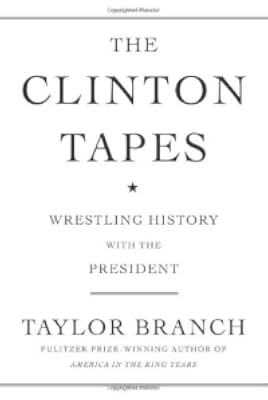
The Clinton Tapes: Wrestling History with the President
by Taylor Branch
On This Page
Description
While still a sitting president, Bill Clinton initiated a project to preserve for historians an unfiltered record of presidential experience. Clinton talks intimately over seven years to his long-time friend, a Pulitzer Prize-winning historian, about what it's like to be president, highlighting major events from Clinton's two terms, including war in Bosnia, the anti-deficit crusade, health reform failure, anti-terrorist strikes, peace initiatives, the 1996 re-election campaign, and show more Whitewater investigations culminating in his 1999 impeachment trial.--Publisher description. show lessTags
Recommendations





Member Reviews
Expertly written, Taylor Branch’s memoir of his taping sessions with the president is fascinating history in its own right. It took me longer to read than I had originally anticipated; as a journal of his experiences, the only intact narrative thread is chronological. Subjects veer off and disappear to be replaced at random with new (and often entirely unrelated) segues and fleeting impressions. It’s something of a revelation that this kind of patchwork journalism does, in fact, leave the reader with a clear and vibrant portrait of both Clinton and his presidency.
While the gossipy anecdotes are sure to provide fodder for cocktail conversation, the substance of the book can be found principally in the extended descriptions of show more Clinton’s forays in international diplomacy. Governing, in some respects, is much more about politics than we often realize; a reality at odds with the conventional view that the “permanent campaign” pitfalls of a 24-hour news environment have corrupted the political process. In other words, the sympathetic view of Clinton presented in this book is a natural consequence of high political stakes being met by a first-class political mind.
For those who might think that Taylor Branch is too sympathetic to Clinton to be able to write about him objectively, I suggest that they read his civil rights trilogy. He’s too smart to allow himself to be cast as a blatantly sycophantic propagandist; he acquits himself here with grace, intelligence and an appropriate level of deference. show less
While the gossipy anecdotes are sure to provide fodder for cocktail conversation, the substance of the book can be found principally in the extended descriptions of show more Clinton’s forays in international diplomacy. Governing, in some respects, is much more about politics than we often realize; a reality at odds with the conventional view that the “permanent campaign” pitfalls of a 24-hour news environment have corrupted the political process. In other words, the sympathetic view of Clinton presented in this book is a natural consequence of high political stakes being met by a first-class political mind.
For those who might think that Taylor Branch is too sympathetic to Clinton to be able to write about him objectively, I suggest that they read his civil rights trilogy. He’s too smart to allow himself to be cast as a blatantly sycophantic propagandist; he acquits himself here with grace, intelligence and an appropriate level of deference. show less
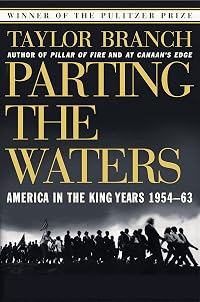
After being elected President in 1992, Bill Clinton reached out to a Pulitzer Prize-winning historian that he had last seen 20 years before, Taylor Branch. Both men had worked for the 1972 George McGovern presidential campaign, but had drifted apart. While Clinton gained prominence in politics, Branch only become widely noticed when he published the first volume of his trilogy on the Civil Rights Era, "Parting the Waters," which was a much recognized best-seller.
Thinking about the legacy of his presidency even before his inauguration, Clinton contacted Branch to feel him out on finding a way of preserving the raw material of his presidency in the electronic age. After sporadic contact, they eventually decided to create an oral history show more of Clinton's presidency, with Branch acting as interviewer. Despite the fear of recording audio tapes, especially after the Watergate era, the project began.
After the first session, Branch decided to preserve his own impressions and recollections of the experience, a practice he continued each time he met with the president. "The Clinton Tapes: Wrestling History with the President" is Branch's perspective of the entire oral history process, drawn from his personal post-interview tapes, not the actual oral history recordings, which Clinton himself kept.
While Branch is a fine historian, as his magisterial Civil Rights trilogy proves, he is far from an uninterested or impartial observer. Throughout, he is a devoted partisan supporter of the president, and it quickly becomes obvious that he personally likes Clinton. Beyond this, Branch's wife worked for the First Lady during the second term, which further blurs the personal and professional relationship. At times, this leads Branch to be defensive of Clinton, particularly regarding issues around the Monica Lewinsky scandal and impeachment.
While this is occasionally a weakness in the book, more often it is a surprising strength as the blurred relationship allowed Branch uncommon access to Clinton. Unlike some so-called "court memoirs" of White House staffers, this behind-the-scenes account offers snapshot glimpses into Clinton's presidency, haphazardly based on the few dozen times Branch was invited to meet with the president during his two terms. The portrait that emerges is intriguingly candid, especially about the more mundane parts of a president's life, such as his irregular eating schedule, telephone interruptions, stolen moments with family and friends, and his emotional outlook, frequently related to his fatigue level.
There is a wealth of material on Clinton's outlook on domestic policy and foreign affairs, and many instances of his unique political sensibilities. In particular, some of Clinton's contemporary assessments of various foreign leaders and attempts to shape the world are interesting. His comments about the large issues of his presidency, perhaps less noteworthy because they so frequently correspond to what has been reported elsewhere, still demonstrate the former's president's insatiable curiosity and love of politics.
Overall, the book is a valuable addition to similar volumes on Clinton's presidency. At times, Branch is a quirky guide, but more often he unveils a personal side to the 42nd president, whether through the various ways he encounters Clinton or in such things as Christmas gift exchanges. While future historians will greatly appreciate the oral history, whenever it is released, I imagine they will also glean much from the personal descriptions in "The Clinton Tapes." show less
Thinking about the legacy of his presidency even before his inauguration, Clinton contacted Branch to feel him out on finding a way of preserving the raw material of his presidency in the electronic age. After sporadic contact, they eventually decided to create an oral history show more of Clinton's presidency, with Branch acting as interviewer. Despite the fear of recording audio tapes, especially after the Watergate era, the project began.
After the first session, Branch decided to preserve his own impressions and recollections of the experience, a practice he continued each time he met with the president. "The Clinton Tapes: Wrestling History with the President" is Branch's perspective of the entire oral history process, drawn from his personal post-interview tapes, not the actual oral history recordings, which Clinton himself kept.
While Branch is a fine historian, as his magisterial Civil Rights trilogy proves, he is far from an uninterested or impartial observer. Throughout, he is a devoted partisan supporter of the president, and it quickly becomes obvious that he personally likes Clinton. Beyond this, Branch's wife worked for the First Lady during the second term, which further blurs the personal and professional relationship. At times, this leads Branch to be defensive of Clinton, particularly regarding issues around the Monica Lewinsky scandal and impeachment.
While this is occasionally a weakness in the book, more often it is a surprising strength as the blurred relationship allowed Branch uncommon access to Clinton. Unlike some so-called "court memoirs" of White House staffers, this behind-the-scenes account offers snapshot glimpses into Clinton's presidency, haphazardly based on the few dozen times Branch was invited to meet with the president during his two terms. The portrait that emerges is intriguingly candid, especially about the more mundane parts of a president's life, such as his irregular eating schedule, telephone interruptions, stolen moments with family and friends, and his emotional outlook, frequently related to his fatigue level.
There is a wealth of material on Clinton's outlook on domestic policy and foreign affairs, and many instances of his unique political sensibilities. In particular, some of Clinton's contemporary assessments of various foreign leaders and attempts to shape the world are interesting. His comments about the large issues of his presidency, perhaps less noteworthy because they so frequently correspond to what has been reported elsewhere, still demonstrate the former's president's insatiable curiosity and love of politics.
Overall, the book is a valuable addition to similar volumes on Clinton's presidency. At times, Branch is a quirky guide, but more often he unveils a personal side to the 42nd president, whether through the various ways he encounters Clinton or in such things as Christmas gift exchanges. While future historians will greatly appreciate the oral history, whenever it is released, I imagine they will also glean much from the personal descriptions in "The Clinton Tapes." show less
A fascinating book, like none I've ever read. Taylor Branch, a brilliant historian best known for his trilogy on the civil rights era, taped a series of secret interviews with Bill Clinton throughout the latter's presidency that will be invaluable to future historians. This is Branch's story of the project, how he became reacquainted with Clinton after working with him briefly on the McGovern campaign, the complications involved in getting him into the White House on short notice for interviews, his dogged yet friendly approach to the sessions with Clinton. He's a brilliant writer who gives a unique portrait of himself as historian-at-work.
De Clinton Tapes plaatst het veelbesproken presidentschap van Bill Clinton in een geheel nieuw en verrassend licht. Tijdens de geheime gesprekken in het Witte Huis, 79 in totaal, spreekt de begenadigde en geplaagde president van de Verenigde Staten even persoonlijk als openhartig over wat hem bezighoudt. De Clinton Tapes, het verslag van deze gesprekken, gunt de lezer een exclusieve blik in de leefwereld van een wereldleider. Elke pagina bevat spontane observaties en persoonlijke details die politici normaal gesproken zorgvuldig buiten de publiciteit houden.
This is a lengthy but fascinating insider look at Clinton from an award-winning writer. You get the view behind the scenes inside the White House with Hillary and Chelsea taking on walk-on roles. The work formed the outsider's basis and reflection for Clinton's own biography, My Life.
In 1998, Clinton acknowledged the attacks on Osama bin Laden.
"In greater detail, the president recorded his rationale for the retaliatory strikes on August 20. A massive flight of 75 cruise missiles obliterated four training camps in remote Afghanistan, near Khost, and Jalalabad, but apparently they missed bin Laden himself. Clinton acknowledged skeptical postmortems about a second target--the Al-Shifa pharmaceutical plant in Khartoum, Sudan. Bin Laden did show more not actually own the building, as believed, but the president said he would stand on the ample intelligence, including soil samples, connecting an element in nerve gas found there and in Afghanistan at similarly high concentrations. In fact, he would've destroyed a second building nearby had it not been for the many unwitting employees who worked there on the night shift (p. 512)." show less
In 1998, Clinton acknowledged the attacks on Osama bin Laden.
"In greater detail, the president recorded his rationale for the retaliatory strikes on August 20. A massive flight of 75 cruise missiles obliterated four training camps in remote Afghanistan, near Khost, and Jalalabad, but apparently they missed bin Laden himself. Clinton acknowledged skeptical postmortems about a second target--the Al-Shifa pharmaceutical plant in Khartoum, Sudan. Bin Laden did show more not actually own the building, as believed, but the president said he would stand on the ample intelligence, including soil samples, connecting an element in nerve gas found there and in Afghanistan at similarly high concentrations. In fact, he would've destroyed a second building nearby had it not been for the many unwitting employees who worked there on the night shift (p. 512)." show less
Always loves me some Big Dawg— but Taylor Branch has now made me respect him even more.
A very long detailed account of conservations with Bill Clinton over major issues and minor problems. Can get bogged down in the details. These conversations took place over eight years. I began at the beginning then skipped to the end and began reading backwards. Recommend skimming this book.
Members
- Recently Added By
Published Reviews
ThingScore 81
The Clinton Tapes gives a view of the presidency as seen from the private quarters (where most of the recordings took place) rather than the West Wing.
added by Shortride
With its chronological account of Clinton's then contemporaneous comments on the Middle East peace process, his Republican opponents and just about everything else under the sun (except for Whitewater and, for the most part, the Monica Lewinsky scandal), this book will be a boon to historians. The casual reader, however, might delight more in Branch's glimpses of an unguarded President: show more cold-stricken and hunched over a kitchen table in boxer shorts, or discussing Bosnian air strikes while simultaneously filling in one of his ever present crossword puzzles. show less
added by Shortride
I cannot say that Branch has written this beautifully. In a passage of a few hundred words he manages to say "tenterhooks," "gauntlets," "crackdowns," "standoffs," "brokered," "key," and even "upped" (as in "ante"), and though I have an idea what "loggerhead" means, I cannot tell you how to visualize, let alone define, a "rock ribbed panacea." However, and perhaps partly because of its lack of show more adornment, Branch's rather touching volume may inaugurate a new form of oral history. show less
added by Shortride
Author Information

13+ Works 5,597 Members
Taylor Branch is the bestselling author of Parting the Waters: America in the King Years, 1954-63; Pillar of Fire: America in the King Years, 1963-65; At Canaan's Edge: America in the King Years, 1965-1968; and The Clinton Tapes. He has won the Pulitzer Prize, the National Book Critics Circle Award, the National Humanities Medal, and the Dayton show more Literary Peace Prize's Life-time Achievement Award. He lives in Baltimore with his wife, Christy Macy. show less
Awards and Honors
Common Knowledge
- Canonical title*
- Bill Clinton. Les enregistrements secrets
- Original publication date
- 2009
- People/Characters*
- Bill Clinton
*Some information comes from Common Knowledge in other languages. Click "Edit" for more information.
Classifications
- Genres
- History, Nonfiction, General Nonfiction, Biography & Memoir, Politics and Government
- DDC/MDS
- 973.929092 — History & geography History of North America United States 1901- Cold War, Vietnam War, Digital Age (1953-2001) Bill Clinton (1993-2001) North American Free Trade Agreement, Impeachment of Bill Clinton, Balanced Budget Surplus Era Standard subdivisions Biography
- LCC
- E886 .B73 — History of the United States United States Later twentieth century, 1961-2000 Clinton's administrations, 1993-2001
- BISAC
Statistics
- Members
- 408
- Popularity
- 76,481
- Reviews
- 7
- Rating
- (3.68)
- Languages
- 5 — Danish, Dutch, English, French, Spanish
- Media
- Paper, Audiobook, Ebook
- ISBNs
- 16
- ASINs
- 7