
Poland
by James A. Michener
On This Page
Description
Fiction. Literature. Thriller. Historical Fiction. HTML:In this sweeping novel, James A. Michener chronicles eight tumultuous centuries as three Polish families live out their destinies. The Counts Lubonski, the petty nobles Bukowksi, and the peasants Buk are at some times fiercely united, at others tragically divided. With an inspiring tradition of resistance to brutal invaders, from the barbarians to the Nazis, and a heritage of pride that burns through eras of romantic passion and show more courageous solidarity, their common story reaches a breathtaking culmination in the historic showdown between the ruthless Communists and rebellious farmers of the modern age. Like the heroic land that is its subject, Poland teems with vivid events, unforgettable characters, and the unfolding drama of an entire nation.Praise for Poland
“Engrossing . . . a page-turner in the grand Michener tradition.”—The Washington Post
“A Michener epic is far more than a bedtime reader, it’s an experience. Poland is a monumental effort, a magnificent guide to a better understanding of the country’s tribulations.”—Chicago Tribune
“Stunning . . . an unmatched overview of Polish history . . . The families themselves come very much alive, and through them, Poland itself.”—USA Today
“A titanic documentary novel.”—The Wall Street Journal. show less
Tags
Recommendations



















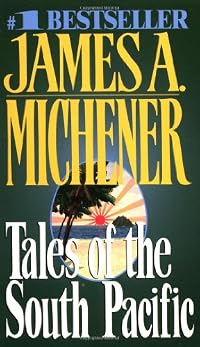



Member Recommendations

Member Reviews
Poland was challenging and something of a slog. The first half was more historical than fictional. It actually got better if harder to read as Michener dug deep into Poland's suffering in the wars, but mostly under the Nazi occupation during World War II. He did not ignore the plight of the Jews, one of the criticisms of the novel when it was published, but it was not the priority in his storytelling so there was no mention of the Warsaw ghetto, for instance. In the chapter on the war, entitled The Terror, he moved his focus to the fictional characters who were either killed outright or made to serve the Germans as they were systematically starved to death. Michener does mention other minorities such as the gypsies who were targets.
The show more powerful message of the second half of the book is the violence and oppression that comes with authoritarian regimes from women being hung for hiding their grain mills to outlawing of languages to just random acts of violence used to keep everyone else in line. The Polish people in the book could represent the treatment of other marginalized communities who are considered inferior to those in the ruling class and thus open to any amount of humiliation and suppression. Michener published the book in 1984 in the midst of the Solidarity movement, and his last chapter puts us in the midst of this long struggle. show less
The show more powerful message of the second half of the book is the violence and oppression that comes with authoritarian regimes from women being hung for hiding their grain mills to outlawing of languages to just random acts of violence used to keep everyone else in line. The Polish people in the book could represent the treatment of other marginalized communities who are considered inferior to those in the ruling class and thus open to any amount of humiliation and suppression. Michener published the book in 1984 in the midst of the Solidarity movement, and his last chapter puts us in the midst of this long struggle. show less
Here's what I wrote when I read in 1985: "Since the 1100's Poland has been invaded by neighbors envious of its land and has been rebuilt by the people of its soil, the peasants. A disheartening history, brought alive by Mitchener's characterizations of magnates, gentry, and peasants. Why could the three not bind together and protect their homeland?" That final question seems naively simple and un-informed today.
I admire Michener's approach to research: the immersiveness and broad, interdisciplinary study of history, politics, geography, and culture can create a fully dimensional picture of a place and time. Michener's best works are the product of this research effort and it shines through with vivid portrayals of the landscape, music, cuisine and in people that wear their history and politics in their speech and actions. Poland has some of that but it is not as clear or consistent. The bookend chapters are characters debating issues in a way that literally just tells aspects of Polish history.
Nevertheless, this history of Poland is interesting. The story of early foreign invasion, christianization by force, an unusual system of show more self-governance, and becoming the eventual focal point of geo-political unrest did move me forward. Throughout, Poland is consistently portrayed as the underdog. Is that an apologist's approach to history? I don't know. I can think of other Michener books that take the same approach to controversial history. But history is complicated. Rarely are there purely good or evil forces driving world events. Instead, there are just various levels of organized motive from the individual level up through governments. And motives are messy and complicated, shot through with good intentions, bad intentions, heroism, cravenness, greed, and altruism. But with a long enough time period to tell a complicated story, through characters that draw us in, an author like Michener can draw a through line and not end up under- or over-correcting the story in one way or another.
In Poland, however, the characters just aren't there to carry the story as well as in other books. The through line is not as clear. There are times that the characters do manage however: some of the Buks and Bukowskis and especially the matrons of those households stand out. By contrast, the Lubonskis are not strong contributors to the story. Neither is the town of Bukowo, invented to be a non-human character in this story. It has history ... or rather it has longevity, but it does not really bear the impression of history or geography that I think it is placed there to do. It's just another flat character.
Despite the criticism, I did often enjoy reading the book. For about 250 pages in the middle I wasn't so sure, but overall, I enjoyed the experience. It wasn't Michener's best but it was solidly alright. show less
Nevertheless, this history of Poland is interesting. The story of early foreign invasion, christianization by force, an unusual system of show more self-governance, and becoming the eventual focal point of geo-political unrest did move me forward. Throughout, Poland is consistently portrayed as the underdog. Is that an apologist's approach to history? I don't know. I can think of other Michener books that take the same approach to controversial history. But history is complicated. Rarely are there purely good or evil forces driving world events. Instead, there are just various levels of organized motive from the individual level up through governments. And motives are messy and complicated, shot through with good intentions, bad intentions, heroism, cravenness, greed, and altruism. But with a long enough time period to tell a complicated story, through characters that draw us in, an author like Michener can draw a through line and not end up under- or over-correcting the story in one way or another.
In Poland, however, the characters just aren't there to carry the story as well as in other books. The through line is not as clear. There are times that the characters do manage however: some of the Buks and Bukowskis and especially the matrons of those households stand out. By contrast, the Lubonskis are not strong contributors to the story. Neither is the town of Bukowo, invented to be a non-human character in this story. It has history ... or rather it has longevity, but it does not really bear the impression of history or geography that I think it is placed there to do. It's just another flat character.
Despite the criticism, I did often enjoy reading the book. For about 250 pages in the middle I wasn't so sure, but overall, I enjoyed the experience. It wasn't Michener's best but it was solidly alright. show less
Michener's characterization and human interest are never very good, but his gimmick is history, and _that_ he does well. I learned more about Eastern European history from this novel and subsequent research along its lines than I have from any other source. It is astonishing that one can make it through American high school (or even college!) without once hearing about the Siege of Vienna...
Update: reading /With Fire and Sword/, I discovered something about this book: it's Polish propaganda. Its history is trite and misunderstood (the Crimean Tatars, for example, didn't just ride off into the steppe; and there was not, for a very long time, a homogenous Germany to interact with Poland); it has nothing to say about the startling cruelty show more of the Polish aristocracy towards its peasants; and it tries to pretend that the Polish aristocracy was egalitarian and popular rather than oversized and predatory...
It also neglects to call the reader's attention to how there was something wrong on the Polish side too, when the Nazis rolled into a Poland which still had hand querns and dirt floors. Absentee landlordism is bad; but the author passes over it with a smile, at least when Poles are doing it; /With Fire and Sword/ has a more accurate, much darker, picture... show less
Update: reading /With Fire and Sword/, I discovered something about this book: it's Polish propaganda. Its history is trite and misunderstood (the Crimean Tatars, for example, didn't just ride off into the steppe; and there was not, for a very long time, a homogenous Germany to interact with Poland); it has nothing to say about the startling cruelty show more of the Polish aristocracy towards its peasants; and it tries to pretend that the Polish aristocracy was egalitarian and popular rather than oversized and predatory...
It also neglects to call the reader's attention to how there was something wrong on the Polish side too, when the Nazis rolled into a Poland which still had hand querns and dirt floors. Absentee landlordism is bad; but the author passes over it with a smile, at least when Poles are doing it; /With Fire and Sword/ has a more accurate, much darker, picture... show less
Prompted by current events in Europe, I have been compelled to read up on history. I have read several of James A. Michener's books in the past and found all of them informative, historically accurate, and easy to read—this book did not disappoint. Through intriguing characters and often humorous legends, the author gives a glimpse into the world of resilient people that had to fight many, many wars just to exist. This epic story of Poland's tumultuous history covers seven centuries, from 1204 when Genghis Khan ruled Aisa to the Twentieth century when Poland was still under communist rule. Poland is now a unitary parliamentary representative democratic republic. As I watch the horrific carnage of the Russian invasion of Ukraine, I show more worry that since Ukraine and Poland were both parts of the Russian Empire at one time, Vladimir Putin might invade Poland next. As I learned from this book, the world's ruthless autocrats have a relentless habit of sacrificing innocents for their own gain. I hope this war ends soon. show less
between 1 and 1.5 but it ended on the higher note so i'm leaning 1.5.
this took me forever to read. it is so slow and not nearly as well done as his usual. he dwells on the least interesting of details while ignoring the truly fascinating, over and over again. this could have (and should have) been a much more intriguing book. it even could have been longer and that would have been ok, but instead we have an overlong book that focuses on the wrong stories, until the end. the penultimate section is about the holocaust; i'd never read an accounting of the holocaust from the polish perspective and it was genuinely interesting and illuminating. i also did, in spite of it all, learn about poland's history. i had no idea that twice poland was show more technically eliminated, literally taken off the map, only to come back strong.
the parts of this that were interesting, were so interesting. they were just too few and far between. show less
this took me forever to read. it is so slow and not nearly as well done as his usual. he dwells on the least interesting of details while ignoring the truly fascinating, over and over again. this could have (and should have) been a much more intriguing book. it even could have been longer and that would have been ok, but instead we have an overlong book that focuses on the wrong stories, until the end. the penultimate section is about the holocaust; i'd never read an accounting of the holocaust from the polish perspective and it was genuinely interesting and illuminating. i also did, in spite of it all, learn about poland's history. i had no idea that twice poland was show more technically eliminated, literally taken off the map, only to come back strong.
the parts of this that were interesting, were so interesting. they were just too few and far between. show less
Filled with names I couldn't pronounce and places I've never heard of, this tells the story of the country of Poland through a few families. The magnates that ruled the country with absolute confidence that it was their right to control everything and the peasants who were tied to the land and were also confident that was their lot in life. The story opens with a political standoff between a rural farmer and the Minister of Agriculture who are at odds over the rights of the farmer verses the control of the Communist government. The final chapter brings the story full circle. The chapters between beginning in the 1200's lay the foundation for the beliefs and positions of each man.
Complicated and historically accurate, Michener has show more managed to provide the history of the country of Poland through the lives of several families. The horrors of the Nazi control and concentration camps are told in gripping detail.
Another wonderful Michener book. show less
Complicated and historically accurate, Michener has show more managed to provide the history of the country of Poland through the lives of several families. The horrors of the Nazi control and concentration camps are told in gripping detail.
Another wonderful Michener book. show less
Members
- Recently Added By
Lists

Best Historical Fiction
620 works; 261 members

Historical Fiction
889 works; 91 members

Global Reads: Books Set in Eastern Europe
45 works; 10 members

Best family sagas
244 works; 33 members

Top Five Books of 2016
795 works; 228 members

Time-Sweep Novels
28 works; 3 members

Books Read in 2002
195 works; 8 members
Author Information

206+ Works 49,214 Members
James A. Michener, 1907 - 1997 James Albert Michener was born on February 3, 1907 in Doylestown, Pa. He earned an A.B. from Swarthmore College, an A.M. from Colorado State College of Education, and an M.A. from Harvard University. He taught for many years and was an editor for Macmillan Publishing Company. His first book, "Tales of the South show more Pacific," derived from Michener's service in the Pacific in World War II, won the 1947 Pulitzer Prize for Fiction and was the basis for the Rodgers and Hammerstein Broadway musical South Pacific, which won the 1950 Pulitzer Prize for Drama. Michener completed close to 40 novels. Some other epic works include "Hawaii," "Centennial," "Space," and "Caribbean." He also wrote a significant amount of nonfiction including his autobiography "The World Is My Home." Among his many other honors, James Michener received the Presidential Medal of Freedom in 1977. He was married to Patti Koon in 1935; they divorced in 1948. He married Vange Nord in 1948 (divorced 1955) and Mari Yoriko Sabusawa in 1955 (deceased 1994). He died in 1997 in Austin, Texas. (Bowker Author Biography) show less
Awards and Honors
Distinctions
Series
Belongs to Publisher Series
Knaur Taschenbuch (1513)
Work Relationships
Is contained in
Contains
Has as a supplement
Has as a student's study guide
Common Knowledge
- Canonical title
- Poland
- Original title
- Poland
- Original publication date
- 1983
- People/Characters
- Pope John Paul II; Jan Sobieski; Kara Mustafa; Orda Khan; Henry II the Pious (Poland); Jagiello (show all 10); Jadwiga of Poland; Semyon Budenny; Hans Frank; Lech Walesa
- Important places
- Jasna Góra Monastery, Częstochowa, Silesia, Poland; Warsaw, Poland; Zamość, Lublin, Poland; Kraków, Lesser Poland, Poland; Vienna, Austria; Malbork Castle, Malbork, Pomerania, Poland (show all 12); Lublin, Lublin, Poland; Majdanek concentration camp, Lublin, Lublin, Poland; Under the Clock, Lublin, Lublin, Poland (Nazi torture centre); Bukowo Village, Poland (fictional); Forest of Szczek, Poland (fictional); Poland
- Important events
- Mongol Invasion of Europe; Battle of Legnica (1241); Battle of Grunwald (1410); The Deluge (1655 | 1660); Siege of Jasna Góra (1655); Battle of Vienna (1683) (show all 8); Partitioning of Poland; World War II (1939 | 1945)
- Dedication
- Christmas 1984
Love
to my son Eddie Ruiz Healy
Mom
Josephine Healy Ruiz - First words
- In a small Polish farm community, during the fall planting season of 1981, events occurred which electrified the world, sending reverberations of magnitude to capitals as diverse as Washington, Peking and especially Moscow.
- Last words
- (Click to show. Warning: May contain spoilers.)But for the time being the Russian tanks remained well hidden, deep within the Forest of Szczek.
- Original language
- English
- Disambiguation notice
- Buk means 'beech' (tree)
Szczek means 'bark' (of a tree)
Classifications
Statistics
- Members
- 2,633
- Popularity
- 7,085
- Reviews
- 30
- Rating
- (3.72)
- Languages
- 11 — Danish, Dutch, English, Finnish, French, German, Italian, Korean, Polish, Spanish, Swedish
- Media
- Paper, Audiobook, Ebook
- ISBNs
- 48
- ASINs
- 27