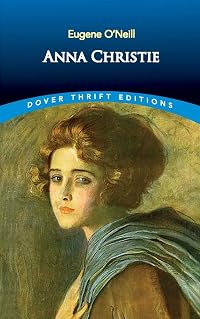
Anna Christie
by Eugene O'Neill
On This Page
Description
Anna Christie is a play in four acts, which won O'Neill the 1922 Pulitzer Prize for Drama.Anna makes contact with the father she has not seen since her infancy, and he takes her on board his coal barge. There she falls in love with a man they rescue from a shipwreck, but trouble arises when she tells them she has been working as a prostitute.
.
Tags
Recommendations













Member Reviews
ALL SPOILERS: A woman reconnects with her estranged, seaman father because she is seeking some rest. She has an unknown illness and reluctantly boards with him on his barge and comes to enjoy it, even meeting and falling in love with an Irish sailor. It all comes to a head when the Irishman proposes and Anna refuses spilling the details of her past. When her father left her to be raised with her cousins on the farm the youngest son began to rape her and to escape it she turned to prostitution. How could anyone want to marry that? The father and Irishman go on land to escape this shocking news. But quickly come around, Matt'll marry her only if she swears on this catholic cross that she never loved any of the other men. GAH gimme a show more break.
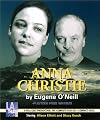
I listened to the L.A. Theater works audio recording. All the swapping of y's for j's was getting to me at the end but it was well produced and well acted. show less
I listened to the L.A. Theater works audio recording. All the swapping of y's for j's was getting to me at the end but it was well produced and well acted. show less
There is a reason why this is a classic.
Full cast recording was marvelous & really helped me with O'Neill's written accents.
Cast
"Johnny-the-priest": Nullifidian
First Longshoreman/Voice: jwg
Second Longshoreman/Johnson: Marty Kris
Postman: Max Korlinge
Larry: Matthew Reece
Chris Christopherson: Lars Rolander
Marthy Owen: Pat Redstone
Anna Christopherson: Elizabeth Klett
Mat Burke: Tadhg Hynes
Narrator: David Goldfarb
Cast
"Johnny-the-priest": Nullifidian
First Longshoreman/Voice: jwg
Second Longshoreman/Johnson: Marty Kris
Postman: Max Korlinge
Larry: Matthew Reece
Chris Christopherson: Lars Rolander
Marthy Owen: Pat Redstone
Anna Christopherson: Elizabeth Klett
Mat Burke: Tadhg Hynes
Narrator: David Goldfarb
Setting: Johnny-the-Priest's saloon, near South Street, New York City. The stern of the barge of the "Simeon Winthrop" at anchor in the outer harbor of Provincetown, Mass. Interior of a cabin of the "Simeon Winthrop" at dock in Boston harbor. 1912. The plot involves Anna returning to her father after 15 years abroad. Her father, who is a captain on a barge, is happy to see her, even though she's acting a bit cagey. She soon falls in love with a grizzled seaman, who also notices that something, a barrier if you will, is holding her back. Anyways, the two fellows don't particularly like each other and soon come to blows. This is a play that doesn't go beyond creaky melodrama.
Mar 3, 2025Portuguese (Brazil)
Anna Christie è una ex prostituta che si innamora di un marinaio che lavora con il padre. Non sa però come svelare ad entrambi il suo difficile passato...
Oct 22, 2013Italian
Ratings
Members
- Recently Added By
Lists

Trinity College Booklist (1951): Class Ten, English Literature
358 works; 5 members

Authors from the United States
245 works; 3 members

Recommended Reading : 600 Classics Reviewed, Editors of Salem Press, 2015
634 works; 6 members

My Play Collection
769 works; 3 members

Best literature ever!
39 works; 1 member
Author Information

285+ Works 13,300 Members
Eugene O'Neill was born in New York City on October 16, 1888, the son of popular actors James O'Neill and Ellen Quinlan. As a young child, he frequently went on tour with his father and later attended a Catholic boarding school and a private preparatory school. He entered Princeton University but stayed for only a year. He took a variety of jobs, show more including prospecting for gold, shipping out as a merchant sailor, joining his father on the stage, and writing for newspapers. In 1912, he was hospitalized for tuberculosis and emotional exhaustion. While recovering, he read a great deal of dramatic literature and, after his release from the sanitarium, began writing plays. O'Neill got his theatrical start with a group known as the Provincetown Players, a company of actors, writers, and other theatrical newcomers, many of whom went on to achieve commercial and critical success. His first plays were one-act works for this group, works that combined realism with experimental forms. O'Neill's first commercial successes, Beyond the Horizon (1920) and Anna Christie (1921) were traditional realistic plays. Anna Christie is still frequently performed. It is the story of a young woman, Anna, whose hard life has led her to become a prostitute. Anna comes to live with her long-lost father, who is unaware of her past, and she falls in love with a sailor, who is also unaware. When Anna finds the two men fighting over her as though she were property, she is so angry and disgusted that she insists on telling them the truth. The man she loves rejects her at first, but then later returns to marry her. Soon O'Neill began to experiment more, and over the next 12 years used a wide variety of unusual techniques, settings, and dramatic devices. It is no exaggeration to say that, virtually on his own, O'Neill created a tradition of serious American theater. His influence on the playwrights who followed him has been enormous, and much of what is taken today for granted in modern American theater originated with O'Neill. A major legacy has been the nine plays he wrote between 1924 and 1931, tragedies that made heavy use of the new Freudian psychology just coming into fashion. His one comedy, Ah, Wilderness (1933), was the basis for the musical comedy, Oklahoma!, itself a groundbreaking event in American theater. O'Neill later began to write the intense, brooding, and highly autobiographical plays that are now considered to his best work. The Iceman Cometh (1946) is set in a bar in Manhattan's Bowery, or skid-row district. In the course of the play, a group of apparently happy men are forced to recognize the true emptiness of their lives. In A Long Day's Journey into Night (1956), O'Neill examines his own family and their tormented lives, a subject he continues in A Moon for the Misbegotten (1957). O'Neill's work was highly honored. He was awarded the Nobel Prize for literature in 1936 and Pulitzer Prizes for Anna Christie, Beyond the Horizon, Strange Interlude (1928), and A Long Day's Journey Into Night, which also received the New York Drama Critics Circle Award. O'Neill died in Room 401 of the Sheraton Hotel on Bay State Road in Boston, on November 27, 1953, at the age of 65. He was also born in a hotel room in Times Square, NYC. (Bowker Author Biography) show less
Some Editions
Awards and Honors
Awards
Notable Lists
Series
Belongs to Publisher Series
Work Relationships
Is contained in
Has the adaptation
Has as a student's study guide
Common Knowledge
- Canonical title
- Anna Christie
- Original publication date
- 1921
- People/Characters
- Anna Christie; Burke; Chris
- Related movies
- Anna Christie (1930 | IMDb); Anna Christie (1923 | IMDb); Anna Christie (1931 | IMDb)
Classifications
Statistics
- Members
- 163
- Popularity
- 201,643
- Reviews
- 5
- Rating
- (3.43)
- Languages
- English
- Media
- Paper, Audiobook, Ebook
- ISBNs
- 45
- UPCs
- 1
- ASINs
- 8