
On This Page
Description
A high-ranking scientist has been kidnapped, and a secret British intelligence agency has just recruited Deighton's iconic unnamed protagonist-later christened Harry Palmer-to find out why. His search begins in a grimy Soho club and brings him to the other side of the world. When he ends up amongst the Soviets in Beirut, what seemed a straightforward mission turns into something far more sinister. With its sardonic, cool, working-class hero, Len Deighton's sensational debut and first show more bestseller The Ipcress File broke the mold of thriller writing and became the defining novel of 1960s London. show lessTags
Recommendations












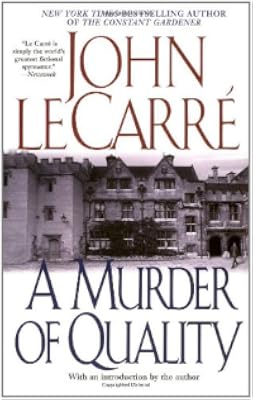
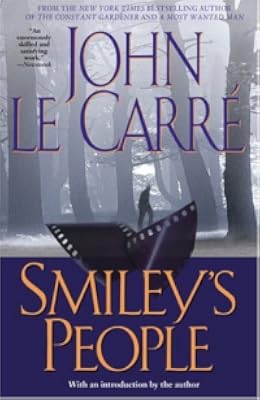

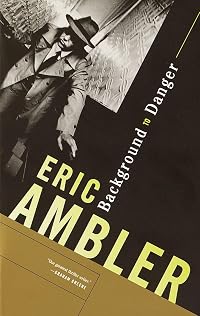

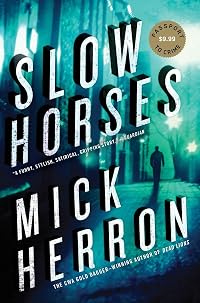


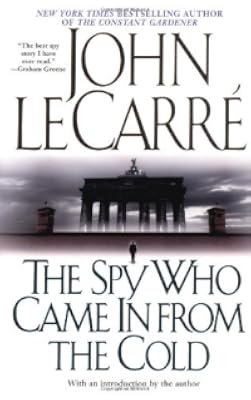


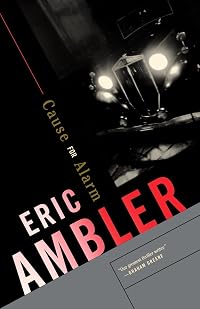
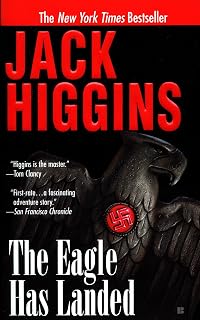





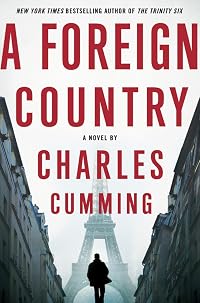








Member Recommendations

by Jen7r


nessreader spycraft without a martini in sight, all office files and backstabbing. ipcress is 60s London; horses is 201? london
Member Reviews
I decided to re-read 'The IPCRESS File' because it's sixty years old this year. It's been forty-seven years since I last read and enjoyed this book. At the time, my eighteen-year-old self was struck by how sordid and grubby Deighton's world of espionage was but I took the rest of the Cold War context - the nuclear arms race, the permanence of the Iron Curtain, the inevitability of the British upper-class running everything and making a mess of it - for granted. I'd grown up in the Cold War and, in 1975, there were no signs that it would end anytime soon. More than a decade after 'The IPCRESS File', in my first year at university, I would still occasionally be asked by mostly well-meaning tutors who were trying to slot me into the right show more context 'What does your father do?' (what my mother did never evoked the same level of curiosity) and I knew that the answer would give them a moment's pause as they processed that, despite the impression talking to me had made, I was a working-class lad from the North of England.
Re-reading the book in 2022, I wasn't surprised that I'd missed the taken-for-granted, casual but all-pervasive sexism the first time around. It was a blindness common at the time. I was surprised that the first thing that caught my attention wasn't the content of the book but the way in which it was written.
The narrative style was distinctive but hard for me to label. It was a kind of impersonal first-person. account. This narrative style isn't just about carrying the plot forward, it's a way of building the character of our nameless narrator as an emotionally distant, insightful but unempathetic, socially dislocated, secretive, untrusting, loner. The narrative also tells the story in an oddly abbreviated way, leaving things out or passing over them or not explaining them, making the narrative more of a gestalt built by the reader's expectations rather than something assembled brick by brick by the writer. This narrator is not so much unreliable as mischievously unhelpful as he challenges the reader to piece the plot together from what seems like a series of cryptic crossword puzzle clues.
Even now, this narrative style feels modern to the point of being experimental. Back in 1962, it must have had all that 'The Shock Of The New' energy of Modern Art.
Yet the narrative seems conventional compared to dialogue. There is one wonderfully chaotic scene where our spy is talking to someone on the phone while surrounded by multiple and overlapping sets of people talking to each other and him. It wasn't easy to read but it lit up my imagination. It's the dialogue equivalent of Warhol's split screen in 'Chelsea Girls'
I realised on this re-read, that the sordid grubbiness that shocked me on my first read was just the surface representation of the seediness at the heart of the plot. I thought the plot was one of the main strengths of the novel. It tells a story of betrayal, blurred lines of loyalty and ruthless selfishness against a backdrop of the threat of global nuclear war, mostly carried out by men who still carry the scars of the last World War. I enjoyed the up close and personal way the reveals were done, especially the exposure of what the IPCRESS file referred to and who was behind it.
I also enjoyed the way Deighton juxtaposed the excessive extravagance of the American Nuclear Test Site with the unthinkably large scale of destruction they were all focused on achieving. It felt like an indictment and a warning, even though there was no overt criticism.
The IPCRESS concept itself has aged about as badly as a comment made by one of the bad guys as he explains the Realpolitiks of the Cold War and says something like. 'Do you expect communism simply to implode one day while capitalism continues on in its evil ways?'
This time around, I was much more aware of how clearly our nameless spy could see all the small ways that he didn't fit in with the Establishment types who ran the Service. He knew he could never be one of them. He also knew that he had no desire to be a working-class warrior. He was just going to win with the cards he was dealt, even though he and everyone else was cheating.
The Nameless-Spy-Explains-It-All ending felt a little weak to me. The last few chapters felt like the CliffsNotes summary of the plot for any reader who either hadn't been paying attention or was too dumb to keep up. I wondered whether Deighton added these chapters at the behest of an editor who felt a need to tidy everything up. show less
Re-reading the book in 2022, I wasn't surprised that I'd missed the taken-for-granted, casual but all-pervasive sexism the first time around. It was a blindness common at the time. I was surprised that the first thing that caught my attention wasn't the content of the book but the way in which it was written.
The narrative style was distinctive but hard for me to label. It was a kind of impersonal first-person. account. This narrative style isn't just about carrying the plot forward, it's a way of building the character of our nameless narrator as an emotionally distant, insightful but unempathetic, socially dislocated, secretive, untrusting, loner. The narrative also tells the story in an oddly abbreviated way, leaving things out or passing over them or not explaining them, making the narrative more of a gestalt built by the reader's expectations rather than something assembled brick by brick by the writer. This narrator is not so much unreliable as mischievously unhelpful as he challenges the reader to piece the plot together from what seems like a series of cryptic crossword puzzle clues.
Even now, this narrative style feels modern to the point of being experimental. Back in 1962, it must have had all that 'The Shock Of The New' energy of Modern Art.
Yet the narrative seems conventional compared to dialogue. There is one wonderfully chaotic scene where our spy is talking to someone on the phone while surrounded by multiple and overlapping sets of people talking to each other and him. It wasn't easy to read but it lit up my imagination. It's the dialogue equivalent of Warhol's split screen in 'Chelsea Girls'
I realised on this re-read, that the sordid grubbiness that shocked me on my first read was just the surface representation of the seediness at the heart of the plot. I thought the plot was one of the main strengths of the novel. It tells a story of betrayal, blurred lines of loyalty and ruthless selfishness against a backdrop of the threat of global nuclear war, mostly carried out by men who still carry the scars of the last World War. I enjoyed the up close and personal way the reveals were done, especially the exposure of what the IPCRESS file referred to and who was behind it.
I also enjoyed the way Deighton juxtaposed the excessive extravagance of the American Nuclear Test Site with the unthinkably large scale of destruction they were all focused on achieving. It felt like an indictment and a warning, even though there was no overt criticism.
The IPCRESS concept itself has aged about as badly as a comment made by one of the bad guys as he explains the Realpolitiks of the Cold War and says something like. 'Do you expect communism simply to implode one day while capitalism continues on in its evil ways?'
This time around, I was much more aware of how clearly our nameless spy could see all the small ways that he didn't fit in with the Establishment types who ran the Service. He knew he could never be one of them. He also knew that he had no desire to be a working-class warrior. He was just going to win with the cards he was dealt, even though he and everyone else was cheating.
The Nameless-Spy-Explains-It-All ending felt a little weak to me. The last few chapters felt like the CliffsNotes summary of the plot for any reader who either hadn't been paying attention or was too dumb to keep up. I wondered whether Deighton added these chapters at the behest of an editor who felt a need to tidy everything up. show less
This was a groundbreaker in its day; a grittier, darker, more morally ambiguous kind of spy thriller than the glamorous escapist fantasies of James Bond. The unnamed protagonist is notoriously not called Harry Palmer as he is in the film (he specifically denies being called Harry), nor is he the young Michael Caine's chirpy cockney (he's from Burnley). He's not particularly likeable either, but then neither is anybody else, very much. It's a murky old world and it's impossible to tell who's a goodie and who is a baddie. Nothing is so clear-cut.
Reading it today it feels dated. It's long been eclipsed by the cerebral spies of John le Carré. It was an enjoyable read but no more. I'd suggest that you'd do better to stick to the films. If show more you do go ahead, don't expect an easy read; it's pretty dense and you need to pay attention because it twists and turns more than the roads blasted out of the atoll where so much of the action takes place. show less
Reading it today it feels dated. It's long been eclipsed by the cerebral spies of John le Carré. It was an enjoyable read but no more. I'd suggest that you'd do better to stick to the films. If show more you do go ahead, don't expect an easy read; it's pretty dense and you need to pay attention because it twists and turns more than the roads blasted out of the atoll where so much of the action takes place. show less
Len Deighton opens this classic spy story with a quotation from Shakespeare’s Henry IV, Part 1:
And now I will unclasp a secret book,
And to your quick-conceiving discontents
I'll read you matter deep and dangerous...
When the book (Deighton’s first) was published in 1962, it was welcomed as painting a more realistic picture of the world of espionage than did the fantasy world of James Bond. Whether it is actually a true picture or not, Deighton certainly makes you FEEL as if you are getting a glimpse of the real spy world.
I first read this book 50 years ago, when I was 15 years old. (As well as having the book on Kindle, I’ve still got my 1966 Panther Crimeband paperback edition, which has pictures of Michael Caine and Nigel Green show more from the film version on the cover.) I thought at the time that the author had a great writing style, and that he seemed to be really knowledgeable and COOL. And re-reading the book now (for about the fifth time over the years), my opinion is just the same.
In my view, Deighton’s first few spy novels are by far his best: “The Ipcress File”; “Horse Under Water”; and “Funeral in Berlin”. I feel that after this period Deighton went downhill, losing the lightness of touch and sharpness that characterise these early books.
It has been rightly pointed out that the nameless narrator (who becomes Michael Caine’s “Harry Palmer” in the films) is reminiscent of Raymond Chandler’s private detective, Philip Marlowe, but transferred from the world of crime to the world of espionage. The two characters certainly both have the same mixture of wise-cracking humour, cynicism, sharpness of mind, and integrity. (Though with Deighton’s character there is less emphasis on the last of these – his job involves more deviousness than Marlowe’s.)
The other “realistic” spy story writer who came along at about the same time as Deighton was John Le Carre. But I’ve always preferred Deighton (at least the early Deighton), as I find Le Carre’s books rather humourless and bleak. (Though the TV version of “Tinker, Tailor, Soldier, Spy” with Alec Guinness is brilliant.)
Although Deighton’s leading character (like Deighton himself, presumably) is on the side of the West, these books convey a cynicism about both sides in the Cold War. I am reminded of what someone once said: “The Free World is not really free, and the Communist World is not really communist.” This fits with my view, which is that big capitalists rule in the West; and that the so-called communist countries were/are in fact bureaucratic state capitalist regimes that had/have nothing to do with genuine Marxism (which advocates workers’ democracy).
“The Ipcress File” is excellent entertainment, but we also need to remember that the real world of secret services is a nasty one. They do not just spy on each other. They spy on (and often persecute) dissenting voices within their own countries, and they conduct dirty tricks such as the toppling of elected governments (as the CIA did in Chile). There are no heroes or “good guys” in the real secret world: just villains on both sides. show less
And now I will unclasp a secret book,
And to your quick-conceiving discontents
I'll read you matter deep and dangerous...
When the book (Deighton’s first) was published in 1962, it was welcomed as painting a more realistic picture of the world of espionage than did the fantasy world of James Bond. Whether it is actually a true picture or not, Deighton certainly makes you FEEL as if you are getting a glimpse of the real spy world.
I first read this book 50 years ago, when I was 15 years old. (As well as having the book on Kindle, I’ve still got my 1966 Panther Crimeband paperback edition, which has pictures of Michael Caine and Nigel Green show more from the film version on the cover.) I thought at the time that the author had a great writing style, and that he seemed to be really knowledgeable and COOL. And re-reading the book now (for about the fifth time over the years), my opinion is just the same.
In my view, Deighton’s first few spy novels are by far his best: “The Ipcress File”; “Horse Under Water”; and “Funeral in Berlin”. I feel that after this period Deighton went downhill, losing the lightness of touch and sharpness that characterise these early books.
It has been rightly pointed out that the nameless narrator (who becomes Michael Caine’s “Harry Palmer” in the films) is reminiscent of Raymond Chandler’s private detective, Philip Marlowe, but transferred from the world of crime to the world of espionage. The two characters certainly both have the same mixture of wise-cracking humour, cynicism, sharpness of mind, and integrity. (Though with Deighton’s character there is less emphasis on the last of these – his job involves more deviousness than Marlowe’s.)
The other “realistic” spy story writer who came along at about the same time as Deighton was John Le Carre. But I’ve always preferred Deighton (at least the early Deighton), as I find Le Carre’s books rather humourless and bleak. (Though the TV version of “Tinker, Tailor, Soldier, Spy” with Alec Guinness is brilliant.)
Although Deighton’s leading character (like Deighton himself, presumably) is on the side of the West, these books convey a cynicism about both sides in the Cold War. I am reminded of what someone once said: “The Free World is not really free, and the Communist World is not really communist.” This fits with my view, which is that big capitalists rule in the West; and that the so-called communist countries were/are in fact bureaucratic state capitalist regimes that had/have nothing to do with genuine Marxism (which advocates workers’ democracy).
“The Ipcress File” is excellent entertainment, but we also need to remember that the real world of secret services is a nasty one. They do not just spy on each other. They spy on (and often persecute) dissenting voices within their own countries, and they conduct dirty tricks such as the toppling of elected governments (as the CIA did in Chile). There are no heroes or “good guys” in the real secret world: just villains on both sides. show less
My cue to read this volume came from Charles Stross, who characterized his opening Laundry novel (The Atrocity Archive) as something of an homage to Deighton. By all accounts, Deighton's first novel The Ipcress File was the place to start with this author. I'm not sure what similarities I expected to encounter, but I found a lot of what made Stross's book enjoyable to me: the syncopated plot, sardonic attitude, and partial disclosure in first-person reportage to convey the tension felt by the speaker in the events described. As a newcomer to the genre, Deighton signals his willingness to chuck its conventions in the opening pages:
"Find him?" I said. "How would we start?"
"How would you start?" asked Dalby.
"Haven't the faintest," I said. show more "Go to laboratory, wife doesn't know what's got into him lately, discover dark almond-eyed woman. Bank manager wonders where he's been getting all that money. Fist fight through darkened lab. Glass tubes that would blow the world to shreds. Mad scientist back to freedom holding phial--flying tackle by me. Up grams Rule Brittania."
Dalby gave me a look calculated to have me feeling like an employee. (15)
Another similarity to Stross was the morass of au courant cultural and technological allusions--like the verb "grams" in the preceding quote. Some of these, set in the UK a little before I was born, were pretty opaque to me, though I didn't bother to use the 21st-century Internet overmind to puzzle through them. In other cases, Deighton would provide explanation for things that were then cutting edge or semi-secret, but are now just common knowledge. It is certainly a book that has aged strangely. (Fault the world, not the text!)
The denouement and epilogue cleverly alternate silver linings with touches of gun-metal gray. I had thought to rush afterward to a viewing of the 1965 cinematic version of the story, but the fact that it's not streaming on Netflix at the moment stayed my spectacles. I'd probably rather read one or two of the sequels without being constrained by the precedent of a screen interpretation anyhow. show less
"Find him?" I said. "How would we start?"
"How would you start?" asked Dalby.
"Haven't the faintest," I said. show more "Go to laboratory, wife doesn't know what's got into him lately, discover dark almond-eyed woman. Bank manager wonders where he's been getting all that money. Fist fight through darkened lab. Glass tubes that would blow the world to shreds. Mad scientist back to freedom holding phial--flying tackle by me. Up grams Rule Brittania."
Dalby gave me a look calculated to have me feeling like an employee. (15)
Another similarity to Stross was the morass of au courant cultural and technological allusions--like the verb "grams" in the preceding quote. Some of these, set in the UK a little before I was born, were pretty opaque to me, though I didn't bother to use the 21st-century Internet overmind to puzzle through them. In other cases, Deighton would provide explanation for things that were then cutting edge or semi-secret, but are now just common knowledge. It is certainly a book that has aged strangely. (Fault the world, not the text!)
The denouement and epilogue cleverly alternate silver linings with touches of gun-metal gray. I had thought to rush afterward to a viewing of the 1965 cinematic version of the story, but the fact that it's not streaming on Netflix at the moment stayed my spectacles. I'd probably rather read one or two of the sequels without being constrained by the precedent of a screen interpretation anyhow. show less
I see some reviews claim that The IPCRESS File is a "classic" of its genre, the spy thriller. I'm not so sure that I agree, simply because it is one of the best examples I have yet seen of a work that captures the essential flavor and atmosphere of its times, the very few years of the late 50s and very early 60s. Unlike a "classic," it seems only identifiable with its era. For if ever there was a "beatnik" spy novel, this is it. And it's a masterpiece of its form, with a subversive comic rhythm and challenge to authority hitherto unimaginable in polite establishment precincts of power. At least this is all true from the Americanization part of the equation adopted by Deighton, the jazz themes, the detached and humorous and sudden show more shifting of the narrative, and the "beat" of the wordplay. Oh, and, yes, the continual allusions to popular culture of the time (try asking a millennial about Steve Reeves). The fact is, it's so very easy to imagine someone in a coffee shop, wearing sandals and a turtleneck, along with a goatee, and a set of bongo drums in their lap, reading along about British spies on a South Pacific atoll watching for the test of an American neutron bomb.
Comedy on one end, then. But then there is the flip side to the cultural imprint, the far more thoroughly British one. A great deal of the humor and sadness of the novel goes hand in hand with exposing the inefficient, often doltish ways of the British elite, and the suspicion naturally directed towards someone of The IPCRESS Files' unnamed protagonist's background, from the ranks who came from a market town in Lancashire. There is more than an echo of the Angry Young Man in this novel. In fact, it sometimes seems as if Alan Sillitoe's Arthur Seaton had somehow graduated from the bicycle factory to Military Intelligence, bringing his mocking, individualistic attitude with him, always avowing, "Don't let the bastards grind you down."
So I guess that these two sides, the two cultural contexts, give the novel its final form, a work of tragicomedy. And there is nothing more difficult to pull off than tragicomedy. Deighton does it. The sort of funky anti-establishment humor of the American beat generation, especially with the word choices and the (almost) elliptical storytelling. And the drab sadness of some hidebound British traditions, which are their own worst enemy. The IPCRESS File is a snapshot of a brief moment in history, Bikini Atoll, Steve Reeves--Herculeeze, Burgess and Maclean, the Rosenbergs, and right when we were all about to be brainwashed. show less
Comedy on one end, then. But then there is the flip side to the cultural imprint, the far more thoroughly British one. A great deal of the humor and sadness of the novel goes hand in hand with exposing the inefficient, often doltish ways of the British elite, and the suspicion naturally directed towards someone of The IPCRESS Files' unnamed protagonist's background, from the ranks who came from a market town in Lancashire. There is more than an echo of the Angry Young Man in this novel. In fact, it sometimes seems as if Alan Sillitoe's Arthur Seaton had somehow graduated from the bicycle factory to Military Intelligence, bringing his mocking, individualistic attitude with him, always avowing, "Don't let the bastards grind you down."
So I guess that these two sides, the two cultural contexts, give the novel its final form, a work of tragicomedy. And there is nothing more difficult to pull off than tragicomedy. Deighton does it. The sort of funky anti-establishment humor of the American beat generation, especially with the word choices and the (almost) elliptical storytelling. And the drab sadness of some hidebound British traditions, which are their own worst enemy. The IPCRESS File is a snapshot of a brief moment in history, Bikini Atoll, Steve Reeves--Herculeeze, Burgess and Maclean, the Rosenbergs, and right when we were all about to be brainwashed. show less
I had a bagful of preconceptions about this legendary 'spy novel' but it was markedly different from what I was expecting. This is not a 'gripping', plot-driven airport thriller; the plot is minimal and deliberately foggy. What is really interesting about the novel is its 'voice'; what it chooses to describe (or not describe) and how it sets about describing it. The unnamed narrator is a self-consciously proletarian (though highly educated) spy moving in an ambit he feels is defined by the old boy network. His meanderings through mid-century London's Italian coffee shops, his oblique asides brimming with implications that take the place of dialogue, and his idle comments on men's tailoring are what make this novel really interesting – show more plot is a secondary concern. show less
The WOOC(P) Files
Review of the Penguin Modern Classics paperback edition (April, 2021) of the original Hodder & Stoughton hardcover (1962)
I read pretty much all of Deighton's spy fiction in the 1970s to 1990s shortly after most of it was published. Deighton's nameless secret agent (aka Harry Palmer in the film series with Michael Caine) in the Secret Files, his Bernard Samson in the Samson triple trilogy, Adam's Hall's Quiller and John le Carré's George Smiley were my go-to espionage thrillers, after the obligatory James Bonds of Ian Fleming & the several continuation writers of course.
The fall show more of the Soviet Union, the end of the Cold War and Deighton's retirement from writing novels after the conclusion of the Faith, Hope & Charity trilogy with Charity (1996) put all that out of mind for a few decades as new reading interests took over. I recently learned of the Penguin Modern Classics republication of all of Deighton's works being planned over the course of 2021 in an online article Why Len Deighton's Spy Stories are set to Thrill a New Generation (Guardian/Observer May 2, 2021). I couldn't resist a few re-reads to see how the books stood the test of time.
Deighton's nameless protagonist works for a similarly unnamed British secret intelligence service known only by its never explained initials WOOC(P). I found that I also couldn't resist inventing a source for that and thought of it as War Office Operations Centre (Provisional). Unlike the true life spy backgrounds of some of his fellow espionage writers (e.g. Fleming & Carré), Deighton's career had previously been in art and design. He tends to go in for over-complexity in bureaucracy and acronym bafflegab to compensate. The whole case is in fact overly complex and I spent most of the book wondering what was going on. The explanation and the reason for the title does not become clear until the final few chapters clear it up. This is somewhat paralleled in the plot by the agent's perpetual lack of success in completing a crossword puzzle that his boss's secretary subsequently dashes off.
The agent's working class origins are played up in most of the publicity of the Deighton books. This was accentuated by Michael Caine's cockney accent in the movies. This doesn't stand out very much on the page, instead of beer, the agent's go-to drink appears to be Tio Pepe sherry, sometimes Dubonnet with bitters. I did still enjoy the banter and gibes between the agent and his boss and other head office staff:
This is followed up later with:
So overall I did enjoy the re-read, but I do wonder how long it will be before annotated editions will be required to explain long expired businesses such as IBM and BOAC and/or other late 50s/early 60s pop culture references such as Steve Reeves and Danny Kaye.
Trivia and Links
The IPCRESS File was famously filmed as one of actor Michael Caine's first major onscreen roles in The Ipcress File (1965) directed by Sidney J. Furie.
The quality of the film clips in this DVD movie review are much better than those in the dated trailer above. show less
Review of the Penguin Modern Classics paperback edition (April, 2021) of the original Hodder & Stoughton hardcover (1962)
'Now my name isn't Harry, but in this business it's hard to remember whether it ever had been.' - the nameless protagonist in The IPCRESS File
I read pretty much all of Deighton's spy fiction in the 1970s to 1990s shortly after most of it was published. Deighton's nameless secret agent (aka Harry Palmer in the film series with Michael Caine) in the Secret Files, his Bernard Samson in the Samson triple trilogy, Adam's Hall's Quiller and John le Carré's George Smiley were my go-to espionage thrillers, after the obligatory James Bonds of Ian Fleming & the several continuation writers of course.
The fall show more of the Soviet Union, the end of the Cold War and Deighton's retirement from writing novels after the conclusion of the Faith, Hope & Charity trilogy with Charity (1996) put all that out of mind for a few decades as new reading interests took over. I recently learned of the Penguin Modern Classics republication of all of Deighton's works being planned over the course of 2021 in an online article Why Len Deighton's Spy Stories are set to Thrill a New Generation (Guardian/Observer May 2, 2021). I couldn't resist a few re-reads to see how the books stood the test of time.
Deighton's nameless protagonist works for a similarly unnamed British secret intelligence service known only by its never explained initials WOOC(P). I found that I also couldn't resist inventing a source for that and thought of it as War Office Operations Centre (Provisional). Unlike the true life spy backgrounds of some of his fellow espionage writers (e.g. Fleming & Carré), Deighton's career had previously been in art and design. He tends to go in for over-complexity in bureaucracy and acronym bafflegab to compensate. The whole case is in fact overly complex and I spent most of the book wondering what was going on. The explanation and the reason for the title does not become clear until the final few chapters clear it up. This is somewhat paralleled in the plot by the agent's perpetual lack of success in completing a crossword puzzle that his boss's secretary subsequently dashes off.
I found the crossword puzzle I had been working on. Alice had completed it. I had got ten down correct. It was EAT. ... DITHYRAMBE had been quite wrong. I don't know why I'd ever thought it otherwise.
The agent's working class origins are played up in most of the publicity of the Deighton books. This was accentuated by Michael Caine's cockney accent in the movies. This doesn't stand out very much on the page, instead of beer, the agent's go-to drink appears to be Tio Pepe sherry, sometimes Dubonnet with bitters. I did still enjoy the banter and gibes between the agent and his boss and other head office staff:
'Think you can handle a tricky little special assignment?'
'If it doesn't demand a classical education. I might be able to grope around it.'
Dalby said, 'Surprise me. do it without complaint or sarcasm.'
'It wouldn't be the same,' I said.
This is followed up later with:
'You are a bit stupid, and you haven't had the advantage of a classical education.'
Dalby was having a littler genteel fun with me. 'But I am sure you will be able to overcome your disadvantages.'
'Why think so? You never overcame your advantages.'
So overall I did enjoy the re-read, but I do wonder how long it will be before annotated editions will be required to explain long expired businesses such as IBM and BOAC and/or other late 50s/early 60s pop culture references such as Steve Reeves and Danny Kaye.
Trivia and Links
The IPCRESS File was famously filmed as one of actor Michael Caine's first major onscreen roles in The Ipcress File (1965) directed by Sidney J. Furie.
The quality of the film clips in this DVD movie review are much better than those in the dated trailer above. show less
Members
- Recently Added By
Published Reviews
ThingScore 100
10 of the Greatest Cold War Spy Novels
“The nameless secret agent here may lack the name ‘Harry Palmer,’ but he is very the much the deceptively ordinary bureaucrat-with-a-gun of the classic 1965 Michael Caine film. A womanizer and a gourmet cook, he has no great love for his superiors and secretly prepares an exit strategy, should things in the spy world go awry. In his assignment to show more locate missing scientists, he uncovers a secret brainwashing scheme that marks him for the next victim, due to betrayal from the ranks of the superiors he already distrusts. By any name, Deighton’s working-class spy is the ideal anti-Bond.” show less
“The nameless secret agent here may lack the name ‘Harry Palmer,’ but he is very the much the deceptively ordinary bureaucrat-with-a-gun of the classic 1965 Michael Caine film. A womanizer and a gourmet cook, he has no great love for his superiors and secretly prepares an exit strategy, should things in the spy world go awry. In his assignment to show more locate missing scientists, he uncovers a secret brainwashing scheme that marks him for the next victim, due to betrayal from the ranks of the superiors he already distrusts. By any name, Deighton’s working-class spy is the ideal anti-Bond.” show less
added by feeling.is.first
Lists

The Guardian's 1000 Novels Everyone Must Read
1,005 works; 550 members

Best Spy Fiction
153 works; 102 members

Read the book and saw the movie
1,170 works; 195 members

The Top 100 Crime Novels of All Time
100 works; 15 members

Top Five Books of 2013
1,562 works; 721 members
Best Espionage (Fiction)
55 works; 20 members

Top 100 Mystery Novels of All Time
98 works; 9 members

Best Books Set in London
157 works; 42 members

Books mentioned in Julian Symons’ Bloody Murder
438 works; 6 members

The 100 Best Crime Novels and Thrillers since 1945
100 works; 6 members

Books We Love to Reread
688 works; 296 members

Reading LIst
648 works; 1 member
Author Information

79+ Works 24,300 Members
Len Deighton was born in London, England on February 18, 1929. He served in the Royal Air Force Special Investigations Branch and graduated from the Royal College of Art in 1955. Before becoming the master of the modern spy thriller, he worked as an airline steward and as an illustrator. His first novel, The Ipcress File, was published in 1962. show more His other novels include Funeral in Berlin, Berlin Game, Mexico Set, London Match, Spy Hook, Spy Line, and Spy Sinker. He also writes television plays and cookbooks. (Bowker Author Biography) show less
Some Editions
Awards and Honors
Series

Belongs to Publisher Series
Work Relationships
Is contained in
Has the adaptation
Is abridged in
Inspired
Common Knowledge
- Canonical title*
- Aksjon hjernevask
- Original title
- The Ipcress File
- Original publication date
- 1962
- People/Characters
- Ross; Dalby; Jay; Alice Bloom; Jean Tonnesen; Skip Henderson (show all 7); Housemartin
- Important places
- Charlotte Street, London, England, UK
- Related movies
- The Ipcress File (1965 | IMDb); The Ipcress File (2022 | IMDb)
- Epigraph
- And now I will unclasp a secret book, and to your quick-conceiving discontents I'll read you matter deep and dangerous.
Henry IV
Though it must be said that every species of birds has a manner peculiar to itself, yet there is somewhat in most genera at least that at first sight discriminates them, and enables a judicious observer to pronounce upon them... (show all) with some certainty.
Gilbert White - The Natural History of Selborne - Dedication
- To the late J.B.F. upon whom the character of Cavendish was based
- First words
- They came through on the hot line at about half past two in the afternoon. The Minister didn't quite understand a couple of points in the summary. Perhaps I could see the Minister.
- Quotations
- Now my name isn't Harry, but in this business it's hard to remember whether it ever had been.
- Last words
- (Click to show. Warning: May contain spoilers.)This, too, was a spy's insurance policy.
- Blurbers
- Condon, Richard
- Original language
- English
- Disambiguation notice
- The novel's main character's name is not revealed; 'Harry Palmer' was adopted for the film version.
*Some information comes from Common Knowledge in other languages. Click "Edit" for more information.
Classifications
Statistics
- Members
- 1,528
- Popularity
- 15,077
- Reviews
- 45
- Rating
- (3.63)
- Languages
- 11 — Danish, Dutch, English, Finnish, French, German, Italian, Norwegian (Bokmål), Norwegian, Russian, Swedish
- Media
- Paper, Audiobook, Ebook
- ISBNs
- 62
- ASINs
- 45