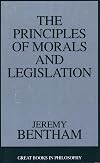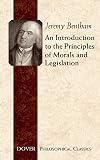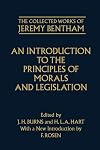
An Introduction to the Principles of Morals and Legislation
by Jeremy Bentham
On This Page
Description
An Introduction to the Principles of Morals and Legislations, Jeremy Bentham's best-known work, is a classic text in modern philosophy and jurisprudence. First published in 1789, it contains the important statement of the foundations of utilitarian philosophy and a pioneering study of crimeand punishment, both of which remain at the heart of contemporary debates in moral and political philosophy, economics, and legal theory. A new introduction by the leading Bentham scholar F. Rosen, show more specially written for this edition, provides students with a helpful survey of Bentham's main ideasand an extensive bibliographical study of recent critical work on Bentham. show lessTags
Recommendations

















Member Reviews
There's a certain delight to be got from following the turnings of a highly intelligent mind at work, even if they take you through the twisted turnings on the way there. I got the same delight out of reading this book that I did reading Darwin's Origin. His explanation of utilitarianism is (to my amateur philosopher self, anyway) well-argued and compelling, as is his call for a science of government (not that that's worked out the way that he hoped). Of course, it gets boring in Part III when he just ends up classifying laws, but then I just turned to aggressive skim-reading and made it through to the end.
Ratings
Members
- Recently Added By
Lists

GreatBooks Worldview Academy Lists
133 works; 4 members

How to Read a Book's Recommended Reading List
309 works; 10 members

Books Referenced by Izetbegovic's Islam Between East and West
233 works; 2 members

Philosophy, Politics and Economics
61 works; 1 member

Philip Ward's Lifetime Reading Plan
592 works; 22 members

In Our Time books
4,934 works; 2 members
Author Information

91+ Works 1,548 Members
Jeremy Bentham was born in London, on February 15, 1748, the son of an attorney. He was admitted to Queen's College, Oxford, at age 12 and graduated in 1763. He had his master's degree by 1766 and passed the bar exam in 1769. An English reformer and political philosopher, Bentham spent his life supporting countless social and political reform show more measures and trying as well to create a science of human behavior. He advocated a utopian welfare state and designed model cities, prisons, schools, and so on, to achieve that goal. He defined his goal as the objective study and measurement of passions and feelings, pleasures and pains, will and action. The principle of "the greatest happiness of the greatest number," set forth in his Introduction to the Principles of Morals and Legislation, governed all of his schemes for the improvement of society, and the philosophy he devised, called utilitarianism, set a model for all subsequent reforms based on scientific principles. Bentham also spoke about complete equality between the sexes, law reform, separation of church and state, the abolition of slavery, and animal rights. Bentham died on June 6, 1832, at the age of 84 at his residence in Queen Square Place in Westminster, London. He had continued to write up to a month before his death, and had made careful preparations for the dissection of his body after death and its preservation as an auto-icon. (Bowker Author Biography) show less
Some Editions
Awards and Honors
Notable Lists
Series
Belongs to Publisher Series
Work Relationships
Common Knowledge
- Canonical title
- An Introduction to the Principles of Morals and Legislation
- Original title
- The Principles of Moral and Legislation / System of Logic
- Original publication date
- 1789
Classifications
- Genres
- Philosophy, Politics and Government, Nonfiction, General Nonfiction, History
- DDC/MDS
- 340.112 — Society, government, & culture Law Law Theory Particular Topics Ethics; Natural Law
- LCC
- B1574 .B33 .I5 — Philosophy, Psychology and Religion Philosophy (General) By period Modern By region or country
- BISAC
Statistics
- Members
- 428
- Popularity
- 72,227
- Reviews
- 2
- Rating
- (3.25)
- Languages
- English, French, Italian, Portuguese
- Media
- Paper, Audiobook, Ebook
- ISBNs
- 41
- ASINs
- 19