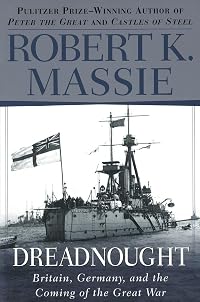
Dreadnought : Britain, Germany, and the Coming of the Great War
by Robert K. Massie
On This Page
Description
A gripping chronicle of the personal and national rivalries that led to the twentieth century’s first great arms race, from Pulitzer Prize winner Robert K. MassieWith the biographer’s rare genius for expressing the essence of extraordinary lives, Massie brings to life a crowd of glittery figures: the single-minded Admiral von Tirpitz; the young, ambitious Winston Churchill; the ruthless, sycophantic Chancellor Bernhard von Bülow; Britain’s greatest twentieth-century foreign show more secretary, Sir Edward Grey; and Jacky Fisher, the eccentric admiral who revolutionized the British navy and brought forth the first true battleship, the H.M.S. Dreadnought.
Their story, and the story of the era, filled with misunderstandings, missed opportunities, and events leading to unintended conclusions, unfolds like a Greek tragedy in this powerful narrative. Intimately human and dramatic, Dreadnought is history at its most riveting.
Praise for Dreadnought
“Dreadnought is history in the grand manner, as most people prefer it: how people shaped, or were shaped by, events.”—Time
“A classic [that] covers superbly a whole era . . . engrossing in its glittering gallery of characters.”—Chicago Sun-Times
“[Told] on a grand scale . . . Massie [is] a master of historical portraiture and anecdotage.”—The Wall Street Journal
“Brilliant on everything he writes about ships and the sea. It is Massie’s eye for detail that makes his nautical set pieces so marvelously evocative.”—Los Angeles Times. show less
Tags
Recommendations




















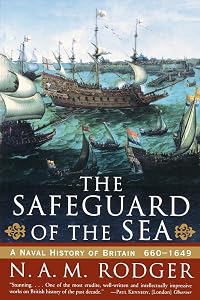
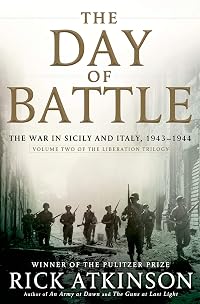















Member Recommendations
Member Reviews
I went into this book expecting a history of the Dreadnought type ship before WWI, and was shocked to realize that for the first third of the book Dreadnought is literally only mentioned once or twice. Instead the reader is given an extremely detailed account of the politics of England and Germany leading up to WWI, with brief bios for all the major characters, and not just the ones you learn about in your standard history books. I never realized that Britain and Germany flirted with an alliance in the early 1900s, which only fell apart as Germany thought it could get more from Britain before committing. Nor the many reforms of Jacky Fisher, and how the British navy cared more for how it looked than how it fought.
Now that list bit is show more probably something of an overstatement, but Massie definitely gives the impression that Fisher was a force that changed the British Navy for the better just in time before WWI to make the fleet worthy of itself, refocusing efforts on gunnery and useful seamanship skills. I am a bit curious what modern criticisms of Fisher would be as the book paints him in a very positive light. Ultimately once we reach the titular ship, it's just one ship, that does inspire a naval arms race between Britain and Germany that ultimately doomed any chance of alliance. One wonders what might have happened had Germany not cared so much about their Navy and dedicated itself to its army with the resources spent on ships.
I cannot state enough how much I enjoyed this book, but with a huge caveat that you have to enjoy very detailed histories. This is not a short summary of causes leading up to WWI, and it only focuses really on two countries! show less
Now that list bit is show more probably something of an overstatement, but Massie definitely gives the impression that Fisher was a force that changed the British Navy for the better just in time before WWI to make the fleet worthy of itself, refocusing efforts on gunnery and useful seamanship skills. I am a bit curious what modern criticisms of Fisher would be as the book paints him in a very positive light. Ultimately once we reach the titular ship, it's just one ship, that does inspire a naval arms race between Britain and Germany that ultimately doomed any chance of alliance. One wonders what might have happened had Germany not cared so much about their Navy and dedicated itself to its army with the resources spent on ships.
I cannot state enough how much I enjoyed this book, but with a huge caveat that you have to enjoy very detailed histories. This is not a short summary of causes leading up to WWI, and it only focuses really on two countries! show less
Massie's writing style is clear, and he organizes huge themes and complex topics in ways that are understandable to the non-specialized reader. Nevertheless, this is an extremely long book, and quite a commitment for anyone who is not totally obsessed with the topic. Also, Massie focuses on political and military aspects of history. The deeper social trends, how the experiences and views of the "unwashed masses" may have influenced events is simply not within his area of interest. Thus, for someone who, like me, is interested in how and to what extent these events influenced "ordinary" people, this book was often tough going. Still, I learned a great deal and will read more by this author.
A huge but highly readable account of the march towards the First World War. In spite of the title, only a relatively small part of the book focuses on the naval arms race, but it still seems totally apposite, with these huge ships of nations blundering towards, even welcoming, conflagration. Massie focuses very much on the personalities, using his undoubted writing skills and mastery of the small but vivid detail to bring both the key players and the period to life. Just occasionally, by looking at events from different viewpoints, there is some repetition, but that was almost inevitable given the approach, and it was made worthwhile by the sense of immediacy and involvement that it created. This approach meant that by the end, for the show more first time I really felt I had some understanding of why things panned out they way they did. One of the most enjoyable history books I have read in years, I am now very much looking forward to reading its sequel "Castles of Steel". show less
This is a very good narrative of the relationship between Britain and Germany in the run up to the First World War, tracing events back a whole century to the post-Napoleonic War Congress of Vienna and the marriage of Victoria and Albert. The arms race of the construction of the titular dreadnoughts forms only a relatively small portion of the narrative. The concluding two chapters "Road to Armageddon" in Berlin and then in London detail extensively and sombrely the final negotiations, misunderstandings and bravado statements and actions of the final days and weeks leading up to the outbreak of the war.
Robert Massie is an excellent writer of narrative history. However, the book is flawed in that it is simply too long and there is too show more much repetition and coverage of the same ground in different parts of the book. The lengthy biographical portraits, covering the lives of all the main protagonists, are both a strength and a weakness: they are often fascinating and entertaining, but are often too lengthy and stray too far from the main thrust of the narrative for too long. Much of this detail might usefully have been included in an appendix. show less
Robert Massie is an excellent writer of narrative history. However, the book is flawed in that it is simply too long and there is too show more much repetition and coverage of the same ground in different parts of the book. The lengthy biographical portraits, covering the lives of all the main protagonists, are both a strength and a weakness: they are often fascinating and entertaining, but are often too lengthy and stray too far from the main thrust of the narrative for too long. Much of this detail might usefully have been included in an appendix. show less
History the way it was meant to be written. Through the lens of the escalating naval arms race being conducted by Germany and Great Britain, Massie explores the continually morphing political situations of the two great nations prior to World War 1. Both nations were under the leadership of highly flawed individuals whose comedy of errors led the world down the path that was to come. Occasionally, one would rise above and preserve the peace for a brief while. However, as Massie demonstrates, the resultant war was bound to happen sooner or later, for both nations had spent the prior fifteen years preparing.
March Toward Armageddon
Despite the grand title, "Dreadnought" is not a maritime shoot-`em-up in the grand tradition of naval battles. The book's prologue, however, is about the battle of Trafalgar, the most significant naval confrontation of the nineteenth century, and thus sets the stage for the book's theme: maintaining Britain's mastery of the oceans at a time when Germany, the emerging economic center of gravity of the Continent, was beginning to establish an aggressive colonial policy.
This book should not be read solely to gain some insight about the battleship Dreadnought. Naval enthusiasts may be slightly disappointed because of the paucity of ship photographs and the relative deficiency of discussion regarding German naval show more matters. This colossal volume is, to a significant extent, about the building of the Dreadnought and the Anglo-German naval arms race. But most of the book is devoted to Machiavellian machinations among the major European and British players at the turn of the twentieth century. The crescendo of events leading to the Great War is made more accessible to the layman through biographical vignettes of the major personalities that shaped Continental and British diplomacy and public policy at the time.
The story begins four decades before the Great War. Bismarck, the Prussian premier whose politics were partly shaped by the events of 1848, initiated three wars--against Denmark in 1864, against Austria in 1866 and against France in 1870--with one ultimate objective in mind: German unification. Unification under the Prussian aegis set the stage for the `conservative modernization' of the German state. In turn, rapid industrialization allowed for the establishment of a robust military-industrial complex and facilitated a shift toward overseas adventurism. The rising economic might of the Empire would allow Kaiser William II to argue for Germany's "place under the sun"--and set her on a collision course with Britain.
The appearance of Mahan's book "The Influence of Sea Power Upon History" challenged accepted wisdom about the role of a navy in national affairs. Mahan argued that domination of the seas would be highly critical to national welfare. Given this impetus, the two major powers, Germany and Britain, began a naval buildup which would see the emergence of HMS Dreadnought.
Unfortunately for Europe, the arms race coincided with several diplomatic gaffes, regional conflicts, and errors of judgment: the expiration of Bismarck's Reinsurance Treaty with Russia; the 1905 Tangier crisis over Morocco's ties with France; the Russo-Japanese war; the Daily Telegraph affair; the 1911 Agadir crisis; and so on. Massie discusses all of these discordant, inauspicious events with all of the panache of a cinematic auteur. A front seat to the drama is provided for, and the thoughts and motivations of the various dramatis personae are laid out.
In view of the climate of distrust and the preponderance of secret alliances, all it would take to ignite this powder keg and usher in a conflict of a global scale would be a tiny spark. Bismarck himself foresaw that the struggle will begin in eastern Europe. Admiral Fisher, who oversaw the creation of HMS Dreadnought, was no less prescient: he predicted that the world war would begin in 1914 upon completion of the expansion of the Kiel Canal.
Was the First World War was an inexorable, Manichaean contest between democracy and autocracy? The book certainly gives the impression that, given the unique combination of personalities in the world stage at the time, and in view of the circumstances, a Great War was unavoidable. Austria's resolve to conduct a preemptive war against Serbia for its pan-Slavic nationalism, France's decisive defeat in the Franco-Prussian war which led to revanchism against Germany, Germany's professed entitlement to "a place under the sun," and Russia's aversion to intimidation and humiliation following its 1905 defeat in Asia all precluded a limited conflict.
This book is a magnificent jump-off point for a reexamination of the causes of World War One. Massie is indeed a fine writer, and I look forward to reading his account of the battle of Jutland, which Admiral Fisher termed "the battle of Armageddon," in "Castles of Steel." show less
Despite the grand title, "Dreadnought" is not a maritime shoot-`em-up in the grand tradition of naval battles. The book's prologue, however, is about the battle of Trafalgar, the most significant naval confrontation of the nineteenth century, and thus sets the stage for the book's theme: maintaining Britain's mastery of the oceans at a time when Germany, the emerging economic center of gravity of the Continent, was beginning to establish an aggressive colonial policy.
This book should not be read solely to gain some insight about the battleship Dreadnought. Naval enthusiasts may be slightly disappointed because of the paucity of ship photographs and the relative deficiency of discussion regarding German naval show more matters. This colossal volume is, to a significant extent, about the building of the Dreadnought and the Anglo-German naval arms race. But most of the book is devoted to Machiavellian machinations among the major European and British players at the turn of the twentieth century. The crescendo of events leading to the Great War is made more accessible to the layman through biographical vignettes of the major personalities that shaped Continental and British diplomacy and public policy at the time.
The story begins four decades before the Great War. Bismarck, the Prussian premier whose politics were partly shaped by the events of 1848, initiated three wars--against Denmark in 1864, against Austria in 1866 and against France in 1870--with one ultimate objective in mind: German unification. Unification under the Prussian aegis set the stage for the `conservative modernization' of the German state. In turn, rapid industrialization allowed for the establishment of a robust military-industrial complex and facilitated a shift toward overseas adventurism. The rising economic might of the Empire would allow Kaiser William II to argue for Germany's "place under the sun"--and set her on a collision course with Britain.
The appearance of Mahan's book "The Influence of Sea Power Upon History" challenged accepted wisdom about the role of a navy in national affairs. Mahan argued that domination of the seas would be highly critical to national welfare. Given this impetus, the two major powers, Germany and Britain, began a naval buildup which would see the emergence of HMS Dreadnought.
Unfortunately for Europe, the arms race coincided with several diplomatic gaffes, regional conflicts, and errors of judgment: the expiration of Bismarck's Reinsurance Treaty with Russia; the 1905 Tangier crisis over Morocco's ties with France; the Russo-Japanese war; the Daily Telegraph affair; the 1911 Agadir crisis; and so on. Massie discusses all of these discordant, inauspicious events with all of the panache of a cinematic auteur. A front seat to the drama is provided for, and the thoughts and motivations of the various dramatis personae are laid out.
In view of the climate of distrust and the preponderance of secret alliances, all it would take to ignite this powder keg and usher in a conflict of a global scale would be a tiny spark. Bismarck himself foresaw that the struggle will begin in eastern Europe. Admiral Fisher, who oversaw the creation of HMS Dreadnought, was no less prescient: he predicted that the world war would begin in 1914 upon completion of the expansion of the Kiel Canal.
Was the First World War was an inexorable, Manichaean contest between democracy and autocracy? The book certainly gives the impression that, given the unique combination of personalities in the world stage at the time, and in view of the circumstances, a Great War was unavoidable. Austria's resolve to conduct a preemptive war against Serbia for its pan-Slavic nationalism, France's decisive defeat in the Franco-Prussian war which led to revanchism against Germany, Germany's professed entitlement to "a place under the sun," and Russia's aversion to intimidation and humiliation following its 1905 defeat in Asia all precluded a limited conflict.
This book is a magnificent jump-off point for a reexamination of the causes of World War One. Massie is indeed a fine writer, and I look forward to reading his account of the battle of Jutland, which Admiral Fisher termed "the battle of Armageddon," in "Castles of Steel." show less
An excellent book that only loses a star as it was a little difficult to follow, particularly in the early stages given the author's method of concentrating on a character. I found this awkward at the start of each chapter and I suspect others who are not already well versed in the characters would too. For those who already know a reasonable amount about the period I doubt it would be an inconvenience.
I also found it took a long time to get to the ships, which was my main reason for reading the book, but bear with it dear reader...
The depth of research is evident on every page and given that this was written some time ago I find it incredible still that there are debates over who was to blame for the start of the war. Unless someone show more has shown Massie to be hugely at fault somehow and has confused his sources, then this veritable tome leaves the issue in no doubt.
The soft spot I already have for Churchill has become fully ripe as a result of this book and Sir Edward Grey emerges from what were shadows for me to be a man of great honour , tenacity and imagination who did everything possible to avoid the unavoidable.
If you are interested in royalty, politics, diplomacy, power, war in general or ships in particular, this book is a must read. show less
I also found it took a long time to get to the ships, which was my main reason for reading the book, but bear with it dear reader...
The depth of research is evident on every page and given that this was written some time ago I find it incredible still that there are debates over who was to blame for the start of the war. Unless someone show more has shown Massie to be hugely at fault somehow and has confused his sources, then this veritable tome leaves the issue in no doubt.
The soft spot I already have for Churchill has become fully ripe as a result of this book and Sir Edward Grey emerges from what were shadows for me to be a man of great honour , tenacity and imagination who did everything possible to avoid the unavoidable.
If you are interested in royalty, politics, diplomacy, power, war in general or ships in particular, this book is a must read. show less
Members
- Recently Added By
Lists

Best Naval History Books
40 works; 12 members

Ten books that most shaped your view of history
101 works; 13 members

World War I books
32 works; 8 members

Books about World War I
80 works; 14 members

Books Read in 2015
3,299 works; 126 members
Author Information

18+ Works 15,030 Members
Robert Kinloch Massie III (1929-) is an American historian, author, Pulitzer Prize recipient. He has devoted much of his career to studying the House of Romanov, Russia's royal family from 1613-1917. Massie was born in Lexington, Kentucky. He spent much of his youth in Nashville, Tennessee and currently resides in the village of Irvington, New show more York. He studied United States and modern European history at Yale and Oxford University, respectively, on a Rhodes Scholarship. Massie went to work as a journalist for Newsweek from 1959 to 1962 and then took a position at the Saturday Evening Post. In 1969 he wrote and published his breakthrough book, Nicholas and Alexandra. Massie was the president of the Authors Guild from 1987 to 1991, and he still serves as a council member. While president of the Guild, he famously called on authors to boycott any store refusing to carry Salman Rushdie's The Satanic Verses. His title Catherine the Great: Portrait of a Woman made The New York Times Best Seller List for 2012. (Bowker Author Biography) show less
Common Knowledge
- Canonical title
- Dreadnought : Britain, Germany, and the Coming of the Great War
- Original title
- Dreadnought
- Alternate titles
- Dreadnought. Britain, Germany, and the Coming of the Great War
- Original publication date
- 1991
- People/Characters
- Edward VII, King of the United Kingdom; Wilhelm II, German Kaiser and King of Prussia; H. H. Asquith; Arthur Balfour; Theobald von Bethmann-Hollweg; Otto von Bismarck (show all 14); Bernhard von Bülow; Joseph Chamberlain; Winston Churchill; Admiral of the Fleet Sir John Fisher; Edward Grey; Friedrich von Holstein; Alfred von Tirpitz; Victoria, Queen of the United Kingdom
- Important places
- United Kingdom; Germany
- Important events
- Origins of World War I
- Dedication
- Fir Kim Massie, Jack May, Charles Davis, and Edmund Keeley Amicis a Iuvenibus and for Deborah
Classifications
Statistics
- Members
- 1,927
- Popularity
- 11,101
- Reviews
- 31
- Rating
- (4.27)
- Languages
- English, German, Polish, Russian
- Media
- Paper, Audiobook, Ebook
- ISBNs
- 16
- ASINs
- 14