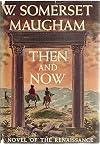
Then and Now
by W. Somerset Maugham 
On This Page
Description
Maugham found a parallel to the turmoil of our own times in the duplicity, intrigue and sensuality of the Italian Renaissance. Then and Now enters the world of Machiavelli, and covers three important months in the career of that crafty politician, worldly seducer and high priest of schemers.Tags
Recommendations

















Member Recommendations

anonymous user Maugham's two historical novels set in Renaissance Italy - and published within 48 years of each other! A rare opportunity for a comparison that no serious admirer of Maugham should miss. The late novel, Maugham's penultimate one actually, has a few dull descriptions of the political background, yet the plot, the writing and the characterisation are vastly superior to his youthful attempt along the same lines (his second novel actually, published when he was 24 years old).
Member Reviews
Then and Now, published in 1946, is I think it fair to say, is off Somerset Maugham's beat. This may be one reason for its lukewarm reception by the literary world. This work is an historical novel based on a diplomatic mission undertaken by Niccolo Machiavelli on behalf of his native Florence to Cesare Borgia, son of Pope Alexander VI, and the most powerful of all of the princes of the several city states into which Italy of the early modern period was divided. This was a political situation that rendered Italy subject to frequent foreign intervention, shifting alliances among the several princes, and internecine wars that more or less endured until the unification of Italy was completed with the defeat of the Papal States by Victor show more Emmanuel in 1870.
In 1502 it looked like Italian unification might be achieved under the auspices of the Papal States due to the power accumulated by Borgia combined with his political sagacity, his ability to outmaneuver friends and foes, and his amoral ruthlessness. It was Machiavelli's delicate task to avoid committing Florence to an alliance with Cesare without motivating him to regard Florence as an enemy that must be subdued by a military attack.
The meetings between Machiavelli and Il Valentino (Borgia) are entertaining and enlightening and bespeak a knowledge of Machiavelli's political thought that could only come from a close study of works such as The Prince, the Discourses and the Florentine Histories.
As Maugham was a prolific playwright as well as a novelist it would be natural for him to have read and studied Machiavelli's plays, specifically the Mandragola (The Mandrake Root). The sub-plot of Then and Now concerns a scheme hatched by Machiavelli to seduce the young wife of his middle-aged host in whose guest house Machiavelli is quartered while on his diplomatic mission. He enlists the mother of his intended conquest in his scheme along with a priest, Fra Timoteo, and his young aide Piero who has accompanied him since setting out from Florence. It transpires that the husband is infertile and this knowledge is employed both as a plot device and a motivation for the wife to give herself to Machiavelli's desires.
Ultimately, Machiavelli, who has left behind in Florence a pregnant wife who is devoted to his happiness, is frustrated in his quest to conquer the lovely Aurelia, wife of his benefactor and host, Bartolomeo. Without giving away the details of his defeat I will point out that Machiavelli decides to revenge himself in a determination to write a play based on the real life scenario. The play is, of course, The Mandragola with Machiavelli being the model for Callimacho and Bartolomeo the model for the deceived Messer Nicia.
In the meantime, Machiavelli's mission comes to an end as he is replaced by a new ambassador from Florence. It should be mentioned that he has impressed Cesare with his skills and was offered a position with Borgia that he turned down owing to his Florentine patriotism. Four years thereafter Cesare is killed in a skirmish owing in part to an uncharacteristically rash pursuit of his enemies without any supporting help from his troops. It is worth quoting Machiavelli's assessment of Cesare Borgia from the epilogue.
"Had he lived, had fortune continued to favor him, he might have driven the barbarians out of this unhappy country and given it peace and plenty. Then men would have forgotten by what crimes he had achieved power and he would have gone down to posterity as a great and good man. Who cares now that Alexander of Macedon was cruel and ungrateful, who remembers that Julius Caesar was perfidious? In this world it is only necessary to seize power and hold it and the means you have used will be judged honourable and will be praised by all. If Caesar Borgia is regarded as a scoundrel it is only because he didn't succeed. One of these days I shall write a book about him and what I learnt from the observations of his actions."
The response from his interlocutor is as follows. "My dear Niccolo, you're so impractical. Who d'you think would read it? You're not going to achieve immortality by writing a book like that." Five hundred years later and still going strong, The Prince is still read and studied by all serious students of political philosophy. On the other hand, Then and Now languishes in underserved obscurity. You have my word that this novel is deserving of a better fate. show less
In 1502 it looked like Italian unification might be achieved under the auspices of the Papal States due to the power accumulated by Borgia combined with his political sagacity, his ability to outmaneuver friends and foes, and his amoral ruthlessness. It was Machiavelli's delicate task to avoid committing Florence to an alliance with Cesare without motivating him to regard Florence as an enemy that must be subdued by a military attack.
The meetings between Machiavelli and Il Valentino (Borgia) are entertaining and enlightening and bespeak a knowledge of Machiavelli's political thought that could only come from a close study of works such as The Prince, the Discourses and the Florentine Histories.
As Maugham was a prolific playwright as well as a novelist it would be natural for him to have read and studied Machiavelli's plays, specifically the Mandragola (The Mandrake Root). The sub-plot of Then and Now concerns a scheme hatched by Machiavelli to seduce the young wife of his middle-aged host in whose guest house Machiavelli is quartered while on his diplomatic mission. He enlists the mother of his intended conquest in his scheme along with a priest, Fra Timoteo, and his young aide Piero who has accompanied him since setting out from Florence. It transpires that the husband is infertile and this knowledge is employed both as a plot device and a motivation for the wife to give herself to Machiavelli's desires.
Ultimately, Machiavelli, who has left behind in Florence a pregnant wife who is devoted to his happiness, is frustrated in his quest to conquer the lovely Aurelia, wife of his benefactor and host, Bartolomeo. Without giving away the details of his defeat I will point out that Machiavelli decides to revenge himself in a determination to write a play based on the real life scenario. The play is, of course, The Mandragola with Machiavelli being the model for Callimacho and Bartolomeo the model for the deceived Messer Nicia.
In the meantime, Machiavelli's mission comes to an end as he is replaced by a new ambassador from Florence. It should be mentioned that he has impressed Cesare with his skills and was offered a position with Borgia that he turned down owing to his Florentine patriotism. Four years thereafter Cesare is killed in a skirmish owing in part to an uncharacteristically rash pursuit of his enemies without any supporting help from his troops. It is worth quoting Machiavelli's assessment of Cesare Borgia from the epilogue.
"Had he lived, had fortune continued to favor him, he might have driven the barbarians out of this unhappy country and given it peace and plenty. Then men would have forgotten by what crimes he had achieved power and he would have gone down to posterity as a great and good man. Who cares now that Alexander of Macedon was cruel and ungrateful, who remembers that Julius Caesar was perfidious? In this world it is only necessary to seize power and hold it and the means you have used will be judged honourable and will be praised by all. If Caesar Borgia is regarded as a scoundrel it is only because he didn't succeed. One of these days I shall write a book about him and what I learnt from the observations of his actions."
The response from his interlocutor is as follows. "My dear Niccolo, you're so impractical. Who d'you think would read it? You're not going to achieve immortality by writing a book like that." Five hundred years later and still going strong, The Prince is still read and studied by all serious students of political philosophy. On the other hand, Then and Now languishes in underserved obscurity. You have my word that this novel is deserving of a better fate. show less
"Then and Now" is a novel covering three months of the year 1502 in the life of Niccolo Machiavelli. Machiavelli was born and raised in Florence during the great Italian Renaissance. He served under Cesare Borgia- the Duke of Romagna- as a political ambassador. He also wrote several books… the most famous being "The Prince", and his most recognized quote (and his general philosophy in life) is “the ends justifies the means”.
Machiavelli was highly respected for his diplomacy and his patriotism and he may have been a very intelligent man; sophisticated, handsome, and charismatic… but in this farce, all his negative qualities are accentuated. He was the founder of political science, and Maugham illustrates the very foundation of show more why the general public distrusts politicians. Machiavelli was sneaky, evasive, dishonest, and an egotistical pompous ass. In "Then and Now", his own elevated opinion of himself clouds his judgement and sets him up for the perfect dupe for his own schemes.
In the plot of "Then and Now", Machiavelli is sent on a diplomatic errand to the nearby city of Imola to establish a pact between Imola and the Republic of Florence and the Pope against other dangerous powers in Italy. While there, away from his pregnant wife, Machiavelli decides to have a brief one-night frivolous affair with the young and beautiful wife of the Count Bartolomeo Martelli of Imola.
He devises an intricate plot involving his traveling companion, a priest, and the young woman’s mother and uses all his most devious and persuasive techniques to insure the success of his seduction.
Halfway through the novel it is easy to guess the outcome. But that doesn’t lessen the enjoyment of the read. Quite the opposite, as the plot unfolds, Machiavelli’s embarrassing defeat is awaited with eager anticipation.
Machiavelli used the humiliating experience as the basis for his novel "The Mandrake".
Of course, “then”, when the fiasco was really happening, it had an unsatisfactory outcome. “Now” in his retelling, through his enhanced fictional account, Machiavelli twists the plot to his best advantage and presents his hero in a more favorable light.
If you are interested in Roman history, the historical culture and customs of Rome, or curious about Machiavelli, you may well find this an enjoyable read. show less
Machiavelli was highly respected for his diplomacy and his patriotism and he may have been a very intelligent man; sophisticated, handsome, and charismatic… but in this farce, all his negative qualities are accentuated. He was the founder of political science, and Maugham illustrates the very foundation of show more why the general public distrusts politicians. Machiavelli was sneaky, evasive, dishonest, and an egotistical pompous ass. In "Then and Now", his own elevated opinion of himself clouds his judgement and sets him up for the perfect dupe for his own schemes.
In the plot of "Then and Now", Machiavelli is sent on a diplomatic errand to the nearby city of Imola to establish a pact between Imola and the Republic of Florence and the Pope against other dangerous powers in Italy. While there, away from his pregnant wife, Machiavelli decides to have a brief one-night frivolous affair with the young and beautiful wife of the Count Bartolomeo Martelli of Imola.
He devises an intricate plot involving his traveling companion, a priest, and the young woman’s mother and uses all his most devious and persuasive techniques to insure the success of his seduction.
Halfway through the novel it is easy to guess the outcome. But that doesn’t lessen the enjoyment of the read. Quite the opposite, as the plot unfolds, Machiavelli’s embarrassing defeat is awaited with eager anticipation.
Machiavelli used the humiliating experience as the basis for his novel "The Mandrake".
Of course, “then”, when the fiasco was really happening, it had an unsatisfactory outcome. “Now” in his retelling, through his enhanced fictional account, Machiavelli twists the plot to his best advantage and presents his hero in a more favorable light.
If you are interested in Roman history, the historical culture and customs of Rome, or curious about Machiavelli, you may well find this an enjoyable read. show less
[From “Behind the Story”, Wings, June 1946; reprinted in A Traveller in Romance, ed. John Whitehead, Clarkson N. Potter, 1984, pp. 135-6:]
A good many years ago, getting on fifteen, I should think, I wrote a book called The Summing Up in the course of which, talking of the historical novel, I said that to write it an author needed a profound experience of men to create living characters out of the persons of a bygone day whose different manners and different notions at first sight make them so alien to us. To recreate the past, I added, needs not only much knowledge, but an effort of the imagination that is hardly to be expected from the young. I drew from this the conclusion that the novelist should turn to the historical novel show more towards the end of his career, when thought and the vicissitudes of his own life have brought him worldly wisdom, and when, having for years explored the personalities of the people with whom he has been brought in contact, he has acquired a sufficient knowledge of human nature to understand and so give life to the figures of a past age.[1]
Well, now I have followed my own advice and it is for the readers of Then and Now to judge whether I have in point of fact brought to life the persons with whom I have chosen to deal. This is a novel that I have had in mind for many years, for I have never been able to write either a novel or a short story without mulling it over in my mind for a very long time. Whenever I have set myself to write upon a subject that has recently occurred to me or upon a subject that was of topical interest and so had to be written without delay I have made a mess of it.
It is certainly fifty years ago since I first became acquainted with the main writings of Machiavelli. I found them very good reading and I found myself besides intensely interested in the character of the man who wrote them. I read a long life of him and it was then that I got an inkling that there was somewhere there the materials for a novel.
[…]
The rise of totalitarianism and the power achieved by unscrupulous upstarts revived my interest in The Prince and Machiavelli, and I found my thoughts more and more occupied with the novel I might possibly write. I decided to write it because it seemed to me that there was much that is apposite to the present day in those events that occurred in the sixteenth century and salutary lessons to be learnt from the reflections they occasioned in Machiavelli’s lucid brain. It is because the theme is actual that I have called my novel Then and Now.
[…]
[Machiavelli] was a great letter writer and many of his letters have been preserved. I discovered from reading them that he, like all of us, was not all of a piece. He was not only an industrious civil servant and an astute diplomat. He was a jovial fellow, who loved to tell a good story and who liked good living and pretty women. I discovered also that he was an ardent patriot. Thus have I tried to represent him. I have chosen for the period of my novel the exciting months he spent with Caesar Borgia, for it was in great part his experience at the court of that picturesque ruffian that gave him the material which he afterwards used in writing his most celebrated book. The moral he drew from the story, and a very sound one it is, I have given in the last brief speech I have put into the mouth of Machiavelli at the end of my book.[2]
But the first business of a novel is to entertain and a novelist is a fool if he writes something from which he himself does not also get entertainment. I did not want this book to be concerned only with plots, counterplots and political dissertations. I wanted some thread, some intrigue, which would hold the reader’s attention, portray those aspects of the hero’s character which do not appear in his published works and at the same time amuse me to describe. Fortunately for me Machiavelli wrote plays. One, called The Mandrake and very well translated into English by Stark Young, is considered by literary critics the best comedy the Italian theatre has produced. It is very bawdy, but since a pope and his cardinals laughed heartily when they saw it, there is no great reason for us small fry to be shocked by it. Now I also at one time of my life wrote plays[3] and they were generally the elaboration of some personal experience of my own. So I asked myself whether it was not possible that Machiavelli had got the idea of his play from something that had happened to himself and then I set myself to imagining what this thing might have been. What I thus imagined the reader will see when he reads my story. I am practically convinced that I have got the facts straight.
________________________________________________
[1] Cf. The Summing Up (1938), chapter 43. Although Maugham started the book in 1934, “getting on fifteen” is yet another example of his typically cavalier attitude to chronological matters. Ed.
[2] Quotes from the novel, including Machiavelli’s final speech, may be consulted here. Ed.
[3] Considerable understatement. Maugham wrote drama for at least 30 years of his life (1903–1933). During this time, 24 full-length plays were produced and published under his name. Ed. show less
A good many years ago, getting on fifteen, I should think, I wrote a book called The Summing Up in the course of which, talking of the historical novel, I said that to write it an author needed a profound experience of men to create living characters out of the persons of a bygone day whose different manners and different notions at first sight make them so alien to us. To recreate the past, I added, needs not only much knowledge, but an effort of the imagination that is hardly to be expected from the young. I drew from this the conclusion that the novelist should turn to the historical novel show more towards the end of his career, when thought and the vicissitudes of his own life have brought him worldly wisdom, and when, having for years explored the personalities of the people with whom he has been brought in contact, he has acquired a sufficient knowledge of human nature to understand and so give life to the figures of a past age.[1]
Well, now I have followed my own advice and it is for the readers of Then and Now to judge whether I have in point of fact brought to life the persons with whom I have chosen to deal. This is a novel that I have had in mind for many years, for I have never been able to write either a novel or a short story without mulling it over in my mind for a very long time. Whenever I have set myself to write upon a subject that has recently occurred to me or upon a subject that was of topical interest and so had to be written without delay I have made a mess of it.
It is certainly fifty years ago since I first became acquainted with the main writings of Machiavelli. I found them very good reading and I found myself besides intensely interested in the character of the man who wrote them. I read a long life of him and it was then that I got an inkling that there was somewhere there the materials for a novel.
[…]
The rise of totalitarianism and the power achieved by unscrupulous upstarts revived my interest in The Prince and Machiavelli, and I found my thoughts more and more occupied with the novel I might possibly write. I decided to write it because it seemed to me that there was much that is apposite to the present day in those events that occurred in the sixteenth century and salutary lessons to be learnt from the reflections they occasioned in Machiavelli’s lucid brain. It is because the theme is actual that I have called my novel Then and Now.
[…]
[Machiavelli] was a great letter writer and many of his letters have been preserved. I discovered from reading them that he, like all of us, was not all of a piece. He was not only an industrious civil servant and an astute diplomat. He was a jovial fellow, who loved to tell a good story and who liked good living and pretty women. I discovered also that he was an ardent patriot. Thus have I tried to represent him. I have chosen for the period of my novel the exciting months he spent with Caesar Borgia, for it was in great part his experience at the court of that picturesque ruffian that gave him the material which he afterwards used in writing his most celebrated book. The moral he drew from the story, and a very sound one it is, I have given in the last brief speech I have put into the mouth of Machiavelli at the end of my book.[2]
But the first business of a novel is to entertain and a novelist is a fool if he writes something from which he himself does not also get entertainment. I did not want this book to be concerned only with plots, counterplots and political dissertations. I wanted some thread, some intrigue, which would hold the reader’s attention, portray those aspects of the hero’s character which do not appear in his published works and at the same time amuse me to describe. Fortunately for me Machiavelli wrote plays. One, called The Mandrake and very well translated into English by Stark Young, is considered by literary critics the best comedy the Italian theatre has produced. It is very bawdy, but since a pope and his cardinals laughed heartily when they saw it, there is no great reason for us small fry to be shocked by it. Now I also at one time of my life wrote plays[3] and they were generally the elaboration of some personal experience of my own. So I asked myself whether it was not possible that Machiavelli had got the idea of his play from something that had happened to himself and then I set myself to imagining what this thing might have been. What I thus imagined the reader will see when he reads my story. I am practically convinced that I have got the facts straight.
________________________________________________
[1] Cf. The Summing Up (1938), chapter 43. Although Maugham started the book in 1934, “getting on fifteen” is yet another example of his typically cavalier attitude to chronological matters. Ed.
[2] Quotes from the novel, including Machiavelli’s final speech, may be consulted here. Ed.
[3] Considerable understatement. Maugham wrote drama for at least 30 years of his life (1903–1933). During this time, 24 full-length plays were produced and published under his name. Ed. show less
Not much like his other books, but very enjoyable all the same.
trad de erico veríssimo
H1,1,4
Jan 22, 2022Catalan
Ratings
Members
- Recently Added By
Lists

Best Historical Fiction
620 works; 261 members

Lives of the Poets (and Philosophers)
110 works; 5 members

real people in fiction circumstances
74 works; 10 members

The Novels of W. Somerset Maugham
22 works; 2 members
Author Information

701+ Works 46,647 Members
Writer William Somerset Maugham was born in Paris on January 25, 1874. He attended St. Thomas's Medical School in London. A prolific writer, Maugham produced novels, short stories, plays, and an autobiographical novel, "Of Human Bondage." Although he remains popular for his novels and short stories, when he was alive his plays, now dated, were show more also popular, and in 1908 four of his plays ran simultaneously. Maugham died in Nice, France, on December 16, 1965. (Bowker Author Biography) show less
W. Somerset Maugham has a Legacy Library. Legacy libraries are the personal libraries of famous readers, entered by LibraryThing members from the Legacy Libraries group.
Awards and Honors
Distinctions
Series
Belongs to Publisher Series
Work Relationships
Is contained in
Common Knowledge
- Alternate titles
- Fools and Their Folly; Тогава и сега [Bulgarian]; Damals und heute [German]
- Original publication date
- 1946-05-13; 1946
- People/Characters
- Niccolò Machiavelli; Cesare Borgia; Biaggio Buonaccorsi; Piero Giacomini; Monna Francesca; Monna Serafina (show all 16); Aurelia [Then and Now]; Bartolomeo Martelli; Monna Caterina; Agapito da Amalia; Pagolo Orsini; Jacopo Farinelli; Fra Timoteo; Vitellozzo Vitelli; Duke of Gravina; Oliverotto da Fermo
- Important places
- Florence, Tuscany, Italy; Romagna, Italy; Cesena, Italy; Senigallia, Italy
- Epigraph
- Plus ca change, plus c'est la meme chose.
- First words
- Biagio Buonaccorsi had had a busy day.
- Last words
- (Click to show. Warning: May contain spoilers.)He sighed and for the third time started reading: "A Street in Florence. Enter Callimaco and Ligurio..."
- Original language
- English
- Canonical LCC
- PR6025.A86
Classifications
Statistics
- Members
- 570
- Popularity
- 51,854
- Reviews
- 6
- Rating
- (3.54)
- Languages
- 13 — Catalan, Danish, Dutch, English, Finnish, French, German, Hungarian, Italian, Portuguese, Russian, Slovak, Spanish
- Media
- Paper, Audiobook, Ebook
- ISBNs
- 23
- ASINs
- 32