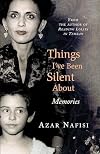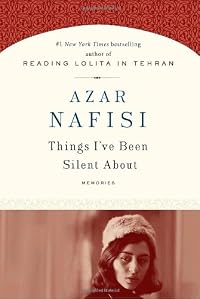
Things I've Been Silent About: Memories
by Azar Nafisi
On This Page
Description
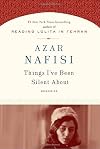
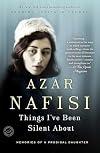
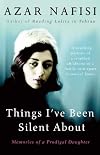
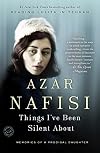
Azar Nafisi, author of the international bestseller Reading Lolita in Tehran, now gives readers a stunning personal story of growing up in a family in Iran, moving memories of her life lived in thrall to a powerful and difficult mother, against the background of Iran during a time of revolution and change.Tags
Recommendations












Member Reviews
Nafisi presents us simply with a memoir of herself and family. But complexity, trauma, depth, and nuance abound as is the long history of Iran to the present day. The psychological insights are many and profound and makes Freud's pronouncements look slow and dumb in comparison. Current politics claim their spot and are with vigor illuminating as is the lifetime of travail with her mother. Iranian poetry is a subject that recurs many times in this story and is greatly enriching. The result is a beautifully and tightly woven story with many points of interest.
Quotes: (page 31) “Esfahan was as different from Tehran as my father's side of the family was from my mother's. In Esfahan, layers of the ancient past existed side by side in a show more sort of asymetrical harmony: ruins of a Zoroastrian temple, the perfect blue dome of a mosque, monument to the glorious Safavid kings. Unlike Tabriz, Shiraz, or Hamedan, Tehran could boast of little history. It was a small village known for its orchards and fierce citizens until the founder of the Qajar dynasty, Agha Mohammed Khan, chose it for his capital in the eighteenth century. Tehran had little memory of ancient conquests or defeats and was only developed into a modern city in our time by Reza Shah Pahlavi and his son Mohammed Reza. Tehran was free of the weighty magnificense of Esfahan, creating the illusion that because it had no past to compete with, it could be transformed according to anyone's imagination. It played the reckless rogue to Esfahan's austere beauty.
Six of my father's seven brothers lived in Esfahan (his one sister was in Shiraz).”
(page 96) “Her friendship was so soothing, because on the surface---and I believe to a great degree in reality---her life was so much less complicated than mine. She knew what she wanted. She had kind parents who lived modestly, enjoyed each other's company, and seemed to be on the best of terms with themselves and with their children. She was very intelligent but at fourteen had already found a steady boyfriend who proposed to her; he was kicked out by her father. With no forced sense of obligation to her family and country, she was happy in a carefree manner that I never was. I always felt a little guilty about being happy, a little anxious. There was an uncomplicated straightforwardness about Barbara that I loved. Of course no life is straightforward, but that is how she appeared to me then.”
(page 270-271) “I had come to agree with him. In this manner the past intruded and now colluded with the present. Shirin Ebadi, the first woman to be named to the circuit court of Tehran, when defrocked by the new laws that barred women from becoming judges, would become a human-rights lawyer. Another woman, Mehrangiz Kar, who had been a successful journalist and lawyer, would not only fight in the courts but collaborate with a young cleric, Mohsen Saeedzadeh, in writing a series of inflammatory articles regarding women's rights which led to endless harassment of Kar and her family and to the defrocking and jailing of the cleric. A religious intellectual named Akbar Ganji, who in the first years of the revolution fought for Islamization of universities, the suppression of dissent, and celebrating the implementation of religious law, now, over a decade later found more affinities with a Jewish woman of German descent named Hannah Arendt, to whose work he would turn to describe the Islamic Republic. Or a filmmaker named Mohsen Makhmalbaf, who at the start of the revolution showed his films to political prisoners, hoping to convert them, and claimed in an interview that the older filmmakers who had been prominent during the Shah's time deserved to be executed, would now tell me of the change in his attitude and say 'Perhaps art can give us the possibility of living several times. Every individual can live only once, and only from one perspective. Art can create other and different perspectives.' Every time I think of this statement I think the Islamic Republic of Iran by depriving us of the pleasures on imagination, of love, and of culture it had directed us toward them. No power, no amount of force, could make this genie go back into the bottle.” show less
Quotes: (page 31) “Esfahan was as different from Tehran as my father's side of the family was from my mother's. In Esfahan, layers of the ancient past existed side by side in a show more sort of asymetrical harmony: ruins of a Zoroastrian temple, the perfect blue dome of a mosque, monument to the glorious Safavid kings. Unlike Tabriz, Shiraz, or Hamedan, Tehran could boast of little history. It was a small village known for its orchards and fierce citizens until the founder of the Qajar dynasty, Agha Mohammed Khan, chose it for his capital in the eighteenth century. Tehran had little memory of ancient conquests or defeats and was only developed into a modern city in our time by Reza Shah Pahlavi and his son Mohammed Reza. Tehran was free of the weighty magnificense of Esfahan, creating the illusion that because it had no past to compete with, it could be transformed according to anyone's imagination. It played the reckless rogue to Esfahan's austere beauty.
Six of my father's seven brothers lived in Esfahan (his one sister was in Shiraz).”
(page 96) “Her friendship was so soothing, because on the surface---and I believe to a great degree in reality---her life was so much less complicated than mine. She knew what she wanted. She had kind parents who lived modestly, enjoyed each other's company, and seemed to be on the best of terms with themselves and with their children. She was very intelligent but at fourteen had already found a steady boyfriend who proposed to her; he was kicked out by her father. With no forced sense of obligation to her family and country, she was happy in a carefree manner that I never was. I always felt a little guilty about being happy, a little anxious. There was an uncomplicated straightforwardness about Barbara that I loved. Of course no life is straightforward, but that is how she appeared to me then.”
(page 270-271) “I had come to agree with him. In this manner the past intruded and now colluded with the present. Shirin Ebadi, the first woman to be named to the circuit court of Tehran, when defrocked by the new laws that barred women from becoming judges, would become a human-rights lawyer. Another woman, Mehrangiz Kar, who had been a successful journalist and lawyer, would not only fight in the courts but collaborate with a young cleric, Mohsen Saeedzadeh, in writing a series of inflammatory articles regarding women's rights which led to endless harassment of Kar and her family and to the defrocking and jailing of the cleric. A religious intellectual named Akbar Ganji, who in the first years of the revolution fought for Islamization of universities, the suppression of dissent, and celebrating the implementation of religious law, now, over a decade later found more affinities with a Jewish woman of German descent named Hannah Arendt, to whose work he would turn to describe the Islamic Republic. Or a filmmaker named Mohsen Makhmalbaf, who at the start of the revolution showed his films to political prisoners, hoping to convert them, and claimed in an interview that the older filmmakers who had been prominent during the Shah's time deserved to be executed, would now tell me of the change in his attitude and say 'Perhaps art can give us the possibility of living several times. Every individual can live only once, and only from one perspective. Art can create other and different perspectives.' Every time I think of this statement I think the Islamic Republic of Iran by depriving us of the pleasures on imagination, of love, and of culture it had directed us toward them. No power, no amount of force, could make this genie go back into the bottle.” show less
This was my introduction to Azar Nafisi.
What can I even say about this powerful memoir? (Looking forward, apparently, a lot.) Azar details her life, from before she was born, up until the deaths of her parents. Most of it is very personal, things she had not felt she could share with both her parents alive, especially the turmoil she had been thrust in the middle of in their marriage.
Her mother was prone to flights of fancy in regard to her past. She always painted a fairytale picture of her first marriage and never let it go, despite getting remarried and having two children. When she would make undesirable choices, years later she would assert that she had felt differently or done differently, despite those around her knowing the show more truth. And she was often cruel and neglectful to Azar, making her daughter feel isolated and unloved.
Azar's father was different. They had a very close relationship with eachother, but too close. Azar herself says she had become her fathers confidant against her mother, and she had often lied for him when he would have affairs. But he was also her introduction to the life changing stories and education that put her on the path to being an educated woman in Iran, a teacher, and an author.
One thing about her story that sticks out to me, is the nuance of family. Her mother was hard to live with, and worse, for Azar. She talks about how for so long she wished her mother would call her less, talk to her less, when she had moved out of Iran with her family. But by the end of her mother's life, she found that her mother talked less, and she wished she could go back. On the other side, by the end of her father's life, they were all but alienated. She did not return his calls often, did not send him copies of her released books right away. He had remarried, and to a woman that seemed bent on making him suffer more than Azar's mother, and pushed for him to sell properties that were meant to go to his children. When he died, his widow refused to send Azar his writings and photographs.
The duality strikes me- to grow up constantly trying to run away from a woman she ended up wishing she had more time with, while also making excuses for and loving a man that she had to turn her back on later in life once she could really grasp the nature of his choices. Families are complicated, and rarely do things work out the way they're expected to.
However, it's really the overall theme that has struck me the most, and the part I would want others to really read or listen to this book for. Iran in the 80s, and before (the timeline was hard to follow at points) bears a striking resemblance to what is happening in America, and other countries, today, right now.
A faction within Iran pushed for religion to be inside of the government, in a way it wasn't before. Through this, women especially were being held down. Forced to cover their hair, could not wear makeup, could not drink etc- those who refused were harassed, imprisoned, acid thrown on them, and executed. Educational institutions were attacked; principals, teachers, and students who were 'undesirable' to the new regime (read: those who did not condone these changes or regulations being enforced) were also harassed, attacked, imprisoned, and executed. It is astounding to see the similarities to how fascism has taken control in my own country. History repeats itself, I suppose.
I'm not smart enough to really relay my point properly- I think you should read this book and come to your own conclusions.
The narration was great, I love Naila Azad's accent and feel she brought the right emotions to both Azar's story and her mother's words. show less
What can I even say about this powerful memoir? (Looking forward, apparently, a lot.) Azar details her life, from before she was born, up until the deaths of her parents. Most of it is very personal, things she had not felt she could share with both her parents alive, especially the turmoil she had been thrust in the middle of in their marriage.
Her mother was prone to flights of fancy in regard to her past. She always painted a fairytale picture of her first marriage and never let it go, despite getting remarried and having two children. When she would make undesirable choices, years later she would assert that she had felt differently or done differently, despite those around her knowing the show more truth. And she was often cruel and neglectful to Azar, making her daughter feel isolated and unloved.
Azar's father was different. They had a very close relationship with eachother, but too close. Azar herself says she had become her fathers confidant against her mother, and she had often lied for him when he would have affairs. But he was also her introduction to the life changing stories and education that put her on the path to being an educated woman in Iran, a teacher, and an author.
One thing about her story that sticks out to me, is the nuance of family. Her mother was hard to live with, and worse, for Azar. She talks about how for so long she wished her mother would call her less, talk to her less, when she had moved out of Iran with her family. But by the end of her mother's life, she found that her mother talked less, and she wished she could go back. On the other side, by the end of her father's life, they were all but alienated. She did not return his calls often, did not send him copies of her released books right away. He had remarried, and to a woman that seemed bent on making him suffer more than Azar's mother, and pushed for him to sell properties that were meant to go to his children. When he died, his widow refused to send Azar his writings and photographs.
The duality strikes me- to grow up constantly trying to run away from a woman she ended up wishing she had more time with, while also making excuses for and loving a man that she had to turn her back on later in life once she could really grasp the nature of his choices. Families are complicated, and rarely do things work out the way they're expected to.
However, it's really the overall theme that has struck me the most, and the part I would want others to really read or listen to this book for. Iran in the 80s, and before (the timeline was hard to follow at points) bears a striking resemblance to what is happening in America, and other countries, today, right now.
A faction within Iran pushed for religion to be inside of the government, in a way it wasn't before. Through this, women especially were being held down. Forced to cover their hair, could not wear makeup, could not drink etc- those who refused were harassed, imprisoned, acid thrown on them, and executed. Educational institutions were attacked; principals, teachers, and students who were 'undesirable' to the new regime (read: those who did not condone these changes or regulations being enforced) were also harassed, attacked, imprisoned, and executed. It is astounding to see the similarities to how fascism has taken control in my own country. History repeats itself, I suppose.
I'm not smart enough to really relay my point properly- I think you should read this book and come to your own conclusions.
The narration was great, I love Naila Azad's accent and feel she brought the right emotions to both Azar's story and her mother's words. show less
This is the second book I've read by this author, who also wrote Reading Lolita in Tehran. Though both books are nonfiction about her life in Iran, this one is much broader in scope than the first. Things I've Been Silent About focuses much more on her personal life, particularly her relationship with her parents. Written in roughly chronological order from before her parents were married through the early 2000s, the narrative covers many years in Iran and the U.S. with a very personal focus on historical and political events going on in the background. For those memories that seem particularly poignant, she lapses into the present tense taking the reader into the moment with her. Her memoirs are often sad, but beautifully written. Here show more is a sample of her writing, from the prologue when she discusses the meaning of the title: "There are so many different forms of silence: the silence that tyrannical states force on their citizens, stealing their memories, rewriting their histories, and imposing on them a state-sanctioned identity. Or the silence of witnesses who choose to ignore or not speak the truth, and of victims who at times become complicit in the crimes committed against them. Then there are the silences we indulge in about ourselves, our personal mythologies, the stories we impose upon our real lives" (xxi). This book speaks of all these types of silences. Highly recommended. show less
Azar Nafisi details her life, focusing on her imperfect relationship with her parents, the political unrest in Iran, and her love of literature. The excellent writing and engaging story makes the book impossible to put down once a reader has started.
A vast majority of readers can sympathize with Azar’s complicated relationship with her mother, Nezhat, who has a very “Jekyll and Hyde” personality. On one hand, Nezhat is bitter about all the challenges she has endured: her mother died young, her stepmother and father treated her badly and would not allow her education. Nezhat’s first husband (her true love) died 2 years after their wedding. On the other hand, Nezhat is no victim; she was an influential person in Tehran and was show more elected to Parliament. Azar’s does not claim her account of their relationship is accurate, but her perspective is clearly skewed. She is often too hard on her mother, but I can sympathize that the difficult relationship taints even the good times and memories.
Her account of her relationship with her father is equally flawed. Azar adores her father, the man who inspired her love of literature. This devotion causes her to overlook his shortcomings, in particular she aids in his extramarital affairs. Azar’s father is the Mayor of Tehran, and eventually he is arrested which breaks Azar’s heart. Azar is in her late teen years and making important decisions in her life regarding education and marriage, and without her presence, she is a lost and unanchored. This relationship will also be familiar to many readers.
On top of the challenges with her parents, Iran changes substantially while she is young: the Shah is overthrown, Ayatollah Khomeni’s institutes a strict and barbarous rule of law, and the Iran-Iraq war. Azar’s outspoken in her political thoughts, and the book really gives a good feeling for what it was like to live through the upheaval and chaos.
It’s a beautiful book. One I will surely read again. show less
A vast majority of readers can sympathize with Azar’s complicated relationship with her mother, Nezhat, who has a very “Jekyll and Hyde” personality. On one hand, Nezhat is bitter about all the challenges she has endured: her mother died young, her stepmother and father treated her badly and would not allow her education. Nezhat’s first husband (her true love) died 2 years after their wedding. On the other hand, Nezhat is no victim; she was an influential person in Tehran and was show more elected to Parliament. Azar’s does not claim her account of their relationship is accurate, but her perspective is clearly skewed. She is often too hard on her mother, but I can sympathize that the difficult relationship taints even the good times and memories.
Her account of her relationship with her father is equally flawed. Azar adores her father, the man who inspired her love of literature. This devotion causes her to overlook his shortcomings, in particular she aids in his extramarital affairs. Azar’s father is the Mayor of Tehran, and eventually he is arrested which breaks Azar’s heart. Azar is in her late teen years and making important decisions in her life regarding education and marriage, and without her presence, she is a lost and unanchored. This relationship will also be familiar to many readers.
On top of the challenges with her parents, Iran changes substantially while she is young: the Shah is overthrown, Ayatollah Khomeni’s institutes a strict and barbarous rule of law, and the Iran-Iraq war. Azar’s outspoken in her political thoughts, and the book really gives a good feeling for what it was like to live through the upheaval and chaos.
It’s a beautiful book. One I will surely read again. show less
I was hoping to learn from Nafisi's book something about life in Iran, practically a closed country to me and especially in the turbulent history of Iran's revolution and the Iraq-Iran War. All that is a back drop to Nafisi's memoir, which covers abuse and adoration of literature, her parents and her professional career despite them. An achingly honest telling, this is a very telling and human tale of a triumphant and difficult life against personal and political odds.
I heard her interviewed on NPR about this book, and didn't expect that the things she's been silent about would get such short shrift! I thought it was a clever way to recycle a lot of the stuff that was in Reading Lolita, but was disappointed to be rereading so much. I did get a better idea of her personality from this book - difficult, I'd say (it's hard to read a memoir when you find yourself thinking that).
I loved this book! I found that Nafisi doesn't pull punches when discussing her private life and the secrets of mysterious Iran. Her storytelling skills make this a much easier read than her other book, Reading Lolita In Tehran. Things I've Been Silent About reveals intimate details of an important, well-connected family as well as the moral struggles of young intellectuals squeezed by political times. Absolutely mesmerizing and informative.
Members
- Recently Added By
Lists

Donne e integralismo islamico
19 works; 1 member
Author Information

13+ Works 15,361 Members
AZAR NAFISI is a visiting professor and the director of the Dialogue Project at the Foreign Policy Institute of Johns Hopkins University. She has taught Western literature at the University of Tehran, the Free Islamic University, and the University of Allameh Tabatabai in Iran. In 1994 she won a teaching fellowship from Oxford University, and in show more 1997 she and her family left Iran for America. She has written for The New York Times, The Washington Post, The Wall Street Journal, and The New Republic and has appeared on radio and television programs. Azar's book, Reading Lolita in Tehran, was published in 2003 to wide acclaim. (Bowker Author Biography) show less
Awards and Honors
Notable Lists
Common Knowledge
- Canonical title
- Things I've Been Silent About: Memories
- Alternate titles
- Things I've Been Silent About: Memories of a Prodigal Daughter
- Original publication date
- 2008
- Important places
- Tehran, Iran
- Dedication
- In memory of my parents, Ahmad and Nezhat Nafisi To my brother, Mohammad Nafisi, and my family, Bijan, Negar, and Dara Naderi
- First words
- Most men cheat on their wives to have mistresses. My father cheated on my mother to have a happy family life. (Prologue)
I have often asked myself how much of my mother's account of her meeting with her first husband was a figment of her imagination. - Last words
- (Click to show. Warning: May contain spoilers.)It was only after their deaths that I came to realize that they each in their own way had given me a portable home that safeguards memory and is a constant resistance against the tyranny of man and time.
Classifications
- Genres
- Biography & Memoir, Literature Studies and Criticism
- DDC/MDS
- 820.9 — Literature & rhetoric English & Old English literatures English and Old English (Anglo-Saxon) literatures History, description, critical appraisal of works in more than one form
- LCC
- PE64 .N34 .A3 — Language and Literature English language English
- BISAC
Statistics
- Members
- 734
- Popularity
- 38,252
- Reviews
- 22
- Rating
- (3.40)
- Languages
- 9 — Dutch, English, French, Hebrew, Italian, Norwegian (Bokmål), Portuguese, Croatian, Spanish
- Media
- Paper, Audiobook, Ebook
- ISBNs
- 24
- ASINs
- 12