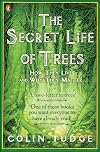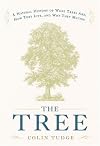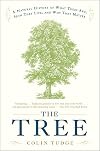
The Tree: A Natural History of What Trees Are, How They Live, and Why They Matter
by Colin Tudge
On This Page
Description
Looks at the world of trees, journeying around the world to explore the facts, characteristics, natural history, life cycles, evolution, and environmental impact of trees and forests.Tags
Recommendations



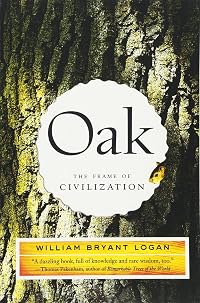

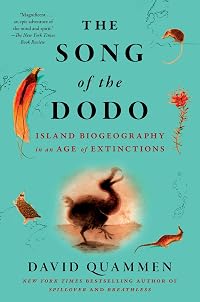
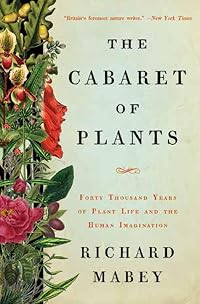
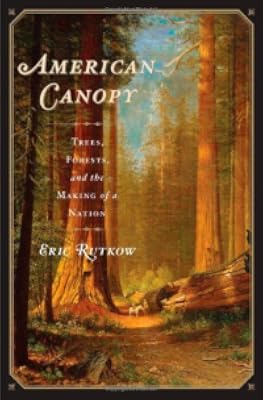
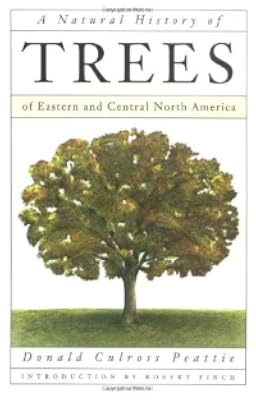
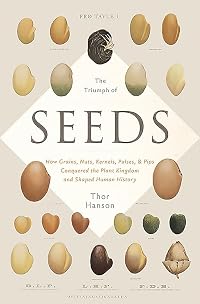
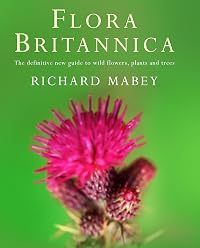
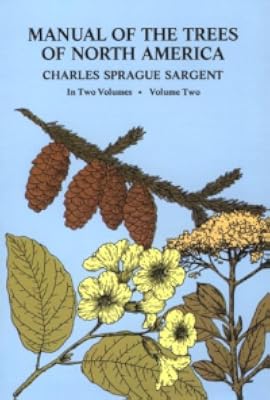
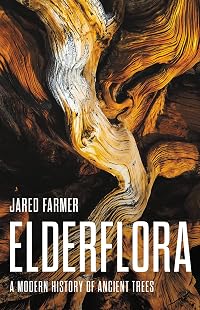






Member Recommendations
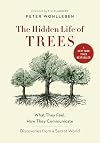
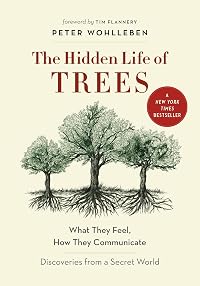
The Hidden Life of Trees: What They Feel, How They Communicate, Discoveries from a Secret World by Peter Wohlleben
Othemts Two great books about trees for the layperson.
Member Reviews
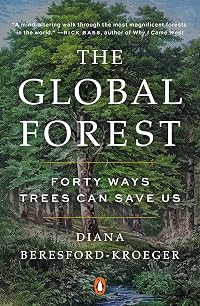
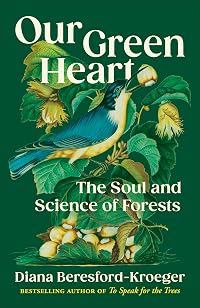
My current writing obsession is trees, which, of course, requires that I read about trees. I found Colin Tudge's compendium to be comprehensive & utterly fascinating (I admit to nodding off a bit while reading the more technical chapters in which he surveys trees as botanically classified into order, family, & genus--at the same time I was intrigued by many unexpected relationships among both herbaceous & woody species). Although Tudge doesn't mention Canadian tree ecologist Diana Beresford-Krueger, his comments on the necessity of intelligent forestry & sustainable tree cropping (past & future) & their foundational importance to human culture & sustenance on Planet Earth, reminded me of Beresford-Krueger's The Global Forest, another show more favorite read of recent times. Along with another recent read, Charles Mann's 1491, The Tree also caused me to pause & reconsider received notions of both wilderness & the human shaping & management of what we call Nature. I recalled a comment I read long ago (either one made by Joseph Chilton Pierce or Joseph Campbell) that humans' natural home is the Garden, not the Wilderness. Pushing that conclusion even further, I've had to consider the possibility that wilderness may be more mythical than "natural." At the same time, it is important to acknowledge that it is trees, not human beings, that are "ultimately controlling all life on land." show less
My original The Tree: A Natural History of What Trees Are, How They Live & Why They Matter audiobook review and many others can be found at Audiobook Reviewer.
The Tree: A Natural History of What Trees Are, How They Live, and Why They Matter by Colin Tudge doesn’t list that it is an ordered history of trees. But, the lack of order makes this book less a factual text than winding inquiry. If you’ve ever walked into a forest and started asking the big questions, and started answering them, you’ll get a feel for how this book works. At eight minutes shy of twenty hours, the book is comprehensive, but not cumbersome. I listened to the book on my way up and down a bike trail that stretches a marathon’s distance to a 13 story bridge show more that spans the Des Moines River valley. I started paying attention to the trees on the way up and down that trail in a different way. I didn’t start recognizing trees and start spouting Latinate names, but gained an appreciation for the difficulty one has in giving names to living things’ relationships.
The book asks direct questions with few words that lead to graduate-level philosophic answers rooted in facts. I’m paraphrasing, but some of the questions include: How do we define a tree? Why isn’t a banana plant a tree? Why are there different names for the same tree? Tudge is both thorough and clever with his answers. As I listened to the book I found myself longing to speak to other people and ask them what they thought. Where textbook chapters represent pieces of a large body of information, The Tree takes a single idea, and expands, builds, and welcomes divergent ideas.
One divergent idea is the move from appreciating trees as an environmentalist advocate might, because humans would die without them. Instead, like Muir, Tudge humanizes trees and their plight against other evils besides humans. We don’t often think trees have natural predators. Tudge adds a wisdom that trees have in working with other tree species and animal to survive. Trees are cooperative, dynamic, and on a time scale greater than our human lifetimes.
Should you invest in this book? It depends on what you hope to get out of a comprehensive history. If you want efficiency in learning about trees, the book will disappoint. It is not a textbook or guide. But if you can let go of efficiency, listen on headphones while walking through trees or closing your eyes in a concrete urban place, you will find yourself asking to bring others into the story. The book is vibrant with detail, soaked in clever language, and solid with a scientist’s backing. In short, The Tree is long on what makes audiobooks brilliant, a chance to relax and just let someone else talk without wanting or trying to interrupt.
After this long journey alone with The Tree, you may want to take the next audiobook trek with a human. I recommend Hiking Through by Paul Stutzman narrated by Mike Chamberlain or Lab Girl, written and narrated by Hope Jahren.
Narrator Review
Be prepared to relax, there is no hurry in this Scottish narrator’s voice and he takes his commas and periods seriously. At first, you’ll notice the narrator, his cadence contrasts that of most audiobooks, but gradually he becomes a cooling tree’s shadow. Most good books begin in media res, the middle of the action. With a book like this, Enn Reitel becomes the great asset, letting the listener know it is a twenty-hour hike, no need to sprint at the start. Soon after you put the headphones in, he becomes funny, in an understated way, hitting the scientific punchlines Tudge wrote expertly. You’re walking through the forest with your new best friend upset to leave at the end.
Audiobook was provided for review by the publisher. show less
The Tree: A Natural History of What Trees Are, How They Live, and Why They Matter by Colin Tudge doesn’t list that it is an ordered history of trees. But, the lack of order makes this book less a factual text than winding inquiry. If you’ve ever walked into a forest and started asking the big questions, and started answering them, you’ll get a feel for how this book works. At eight minutes shy of twenty hours, the book is comprehensive, but not cumbersome. I listened to the book on my way up and down a bike trail that stretches a marathon’s distance to a 13 story bridge show more that spans the Des Moines River valley. I started paying attention to the trees on the way up and down that trail in a different way. I didn’t start recognizing trees and start spouting Latinate names, but gained an appreciation for the difficulty one has in giving names to living things’ relationships.
The book asks direct questions with few words that lead to graduate-level philosophic answers rooted in facts. I’m paraphrasing, but some of the questions include: How do we define a tree? Why isn’t a banana plant a tree? Why are there different names for the same tree? Tudge is both thorough and clever with his answers. As I listened to the book I found myself longing to speak to other people and ask them what they thought. Where textbook chapters represent pieces of a large body of information, The Tree takes a single idea, and expands, builds, and welcomes divergent ideas.
One divergent idea is the move from appreciating trees as an environmentalist advocate might, because humans would die without them. Instead, like Muir, Tudge humanizes trees and their plight against other evils besides humans. We don’t often think trees have natural predators. Tudge adds a wisdom that trees have in working with other tree species and animal to survive. Trees are cooperative, dynamic, and on a time scale greater than our human lifetimes.
Should you invest in this book? It depends on what you hope to get out of a comprehensive history. If you want efficiency in learning about trees, the book will disappoint. It is not a textbook or guide. But if you can let go of efficiency, listen on headphones while walking through trees or closing your eyes in a concrete urban place, you will find yourself asking to bring others into the story. The book is vibrant with detail, soaked in clever language, and solid with a scientist’s backing. In short, The Tree is long on what makes audiobooks brilliant, a chance to relax and just let someone else talk without wanting or trying to interrupt.
After this long journey alone with The Tree, you may want to take the next audiobook trek with a human. I recommend Hiking Through by Paul Stutzman narrated by Mike Chamberlain or Lab Girl, written and narrated by Hope Jahren.
Narrator Review
Be prepared to relax, there is no hurry in this Scottish narrator’s voice and he takes his commas and periods seriously. At first, you’ll notice the narrator, his cadence contrasts that of most audiobooks, but gradually he becomes a cooling tree’s shadow. Most good books begin in media res, the middle of the action. With a book like this, Enn Reitel becomes the great asset, letting the listener know it is a twenty-hour hike, no need to sprint at the start. Soon after you put the headphones in, he becomes funny, in an understated way, hitting the scientific punchlines Tudge wrote expertly. You’re walking through the forest with your new best friend upset to leave at the end.
Audiobook was provided for review by the publisher. show less
The Tree is a wonderful, though at times tedious, book covering all the different trees of the world and why they are. I loved the first, third, and fourth parts of the book that described what trees are, where they live, and how humans live with trees. The second part of the book was a march through the phylogeny of trees. While much of this part was fascinating, there are some really surprising combinations of plants in the families, it was a bit overwhelming.
Overall I would recommend this book to anyone looking to gain an appreciation of trees and how they serve us on a daily basis. After reading this I wanted to go out and turn my yard into a forest.
Overall I would recommend this book to anyone looking to gain an appreciation of trees and how they serve us on a daily basis. After reading this I wanted to go out and turn my yard into a forest.
A surprisingly relaxing and enjoyable (even humorous) read given all the Latin/scientific terminology it contains. As the title implies, this book takes the layman through the evolutionary process that first brought us the marvel of trees, the many ways their presence has influenced our plants and humanity over the centuries, and some guesses and suggestions for what their future might entail. I would hazard to say that Mr Tudge's work could turn just about anyone into an aspiring botanist or, at the very least, an enthusiastic ecotourist. A definite recommend.
A reasonable read, which for me was in the wrong order. The depiction of the trees and their genera and taxonomy needed to come at the end of the book rather than discussing physiology after half way through. Some lovely illustrations and an interesting take on what could be the future of green economics as well as some wide ranging discussions on climate change
This is an ode to trees. It’s just not sung as well as it sounds it might.
This is an ode to trees. It’s just not sung as well as it sounds it might.
I like learning about trees but I have difficulty retaining any of the knowledge I learn about trees. I expect that will be the case after this detailed and fascinating study of trees. The bulk of this book is an encyclopedic breakdown of trees around the world by family, genus, and species. It's full of fascinating tidbits. My favorite section of the book, "The Life of Trees," is full of interesting stories of how trees function including a symbiotic relationship among fig trees, wasps, and nematodes. The book can be dry at times, but has enough interesting facts and anecdotes to keep it interesting for a dilettante.
Sometimes he did get bogged down in detail but overall I did enjoy this story of trees, what they are, how they divide and why they're important. Being the daughter of a woodwork teacher and having grown up around trees and wood I was baised towards this book before I started and I found it facinating, if occasionally a bit knotty.
Well worth reading, I did enjoy his writing style for the most part. Could have done with a few more illustrative diagrams.
Well worth reading, I did enjoy his writing style for the most part. Could have done with a few more illustrative diagrams.
Members
- Recently Added By
Author Information

27+ Works 2,665 Members
Colin Tudge is one of Britain's leading science writers. A research fellow at the Centre for Philosophy at the London School of Economics, he is the author of, most recently, "The Second Creation" (FSG, 2000) with Ian Wilmut & Keith Campbell. (Bowker Author Biography)
Series
Belongs to Publisher Series
Common Knowledge
- Original title
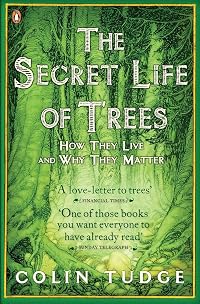
- The Secret Life of Trees (UK) (UK)
- Alternate titles
- The Tree (US) (US)
- Original publication date
- 2005
- Important places
- New Caledonia
- Dedication
- To my grandchildren
Classifications
- Genres
- Science & Nature, Nonfiction, General Nonfiction
- DDC/MDS
- 582.16 — Natural sciences & mathematics Plants (Botany) Plants noted for specific vegetative characteristics and flowers Herbaceous and woody plants, plants noted for their flowers Trees
- LCC
- QK475 .T83 — Science Botany Botany Spermatophyta. Phanerogams
- BISAC
Statistics
- Members
- 987
- Popularity
- 26,624
- Reviews
- 19
- Rating
- (3.61)
- Languages
- Dutch, English
- Media
- Paper, Audiobook, Ebook
- ISBNs
- 9
- UPCs
- 1
- ASINs
- 8