On This Page
Description
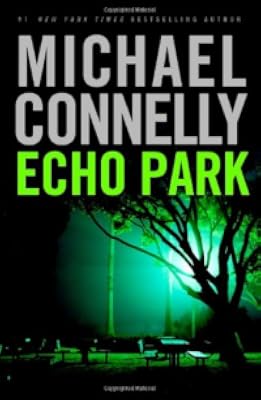
Detective Harry Bosch, now in the Open-unsolved Unit, receives a call from the DA telling him a serial killer has confessed to several murders. Harry must interview the man about a case he couldn't crack involving the murder of a 22-year-old woman whose body was never found.Tags
Recommendations



Member Reviews
When a book series hits the double digit number of installments it can sometimes fall victim to reader fatigue, or to repetition, but such is definitely not the case with Michael Connelly’s Harry Bosch series, at least not for me. I found myself at book 12 of this long-running series, faced with one narrative thread already explored in the TV show that led me to these books, and yet my immersion in the story never faltered for a single moment, confirming once again that the author’s skills are such that he can ensnare his readers with a masterful mix of action, mystery and character development. And keep doing so again and again.
In Echo Park, Bosch goes back to one of the unsolved cases that still haunt him, that of Marie Gesto, a show more young woman who disappeared more than ten years prior and whose body was never found - only her neatly folded clothes were discovered inside an abandoned car, and the lack of further clues prevented the investigators from successfully closing the case. No one is more surprised than Bosch to be called by the office of the District Attorney for an unexpected development: a man has been recently apprehended with the remains of a victim inside his van, and eager to commute the death penalty with a life sentence the killer, whose name is Raynard Waits, is ready to indicate the location for the bodies of other so far undisclosed victims - among them that of Marie Gesto.
The fly in this very intriguing ointment is that at the time of the original investigation Bosch and his partner might have overlooked a vital clue that could have led them to Waits, and so spared the life of the people he killed after Marie: ridden by guilt and by the suspicion that there might be more to Waits than what’s on the surface, Bosch retraces his steps in a frantic search for answers, while the usual political maneuverings and a convoluted plot cross inexorably with the cold case investigation…
What comes immediately to the fore in Echo Park is the stark reality of the story itself: the theme of the serial killer might be an often-used one in crime/thriller novels, but here it’s combined with the political dealings inherent in law enforcement and the need to present public figures in the best light possible in view of an election, so that even the sordid leverage offered by a multiple offender can be exploited by an individual’s ambition. The story goes through a number of false leads and red herrings that in the hands of a less skilled writer might have looked implausible, but that here manage to keep the narrative flow at a sustained pace and the tension at the highest levels. Not to mention that in real life that’s what does indeed happen as an investigation goes through a number of false starts and dead ends before (if ever) reaching the desired conclusion.
As for Bosch, this novel sees him almost at his wits’ end when it seems that Marie’s killer was within reach and he missed him by a proverbial hairbreadth: nothing could be worse for a relentless investigator such as he than realizing he did not pursue every little detail to its very end. This situation is something of a setback as far as his personality is concerned, because where the previous two books had shown a more sedated Harry Bosch, a man finally capable of thinking things through before charging headfirst into situations, here he seems to somehow revert to his older self, the “Lone Ranger cop” afflicted with tunnel vision. This relapse ends up affecting his renewed working and sentimental relationship with FBI agent Rachel Walling and souring the partnership with colleague Kiz Rider, who had so far proved to be a stabilizing influence on Bosch. With the former, one can see how it would be difficult - if not impossible - for him to maintain a stable emotional tie with a woman, since the drive to solve cases always becomes the main focus for his energies, shunting everything and everyone else to the sidelines. With the latter, he ends up breaking what is the necessary bond of trust between working teammates, jeopardizing safety and careers for them both, as Kiz points out with no little bitterness:
Maybe at some point you will trust me enough to ask my opinion before you go off and make decisions that affect both of us.
What I found once again surprising is how much Michael Connelly can keep me invested in this character’s journey even when I see how much his tunnel vision and self-centeredness can estrange him from the people around him: I enjoy reading about Bosch even though I don’t always like him - for me this is the mark of very skilled writing, indeed.
Probably, one of the most intriguing sides of this story comes from the parallels between Bosch and the killer Waits: both of them orphaned at a young age, both of them taken in by disinterested foster families, both of them spending some time in the same institution for troubled youths - and yet taking two opposite paths in life. Where Waits, as Bosch muses at the end of the investigation, picked his victims with the unconscious objective of killing his own mother over and over again, Bosch on the other hand tries to solve his mother’s murder over and over again by relentlessly seeking justice for the victims, particularly those no one seems to care about. And here the author offers a striking image for the theme of “nature vs. nurture” relaying the theory of the two “dogs” we have inside us, one good and one bad: the person we turn out to be depends on which “dog” we choose to feed. Meaning, probably, that the border between good and evil is even thinner than we can imagine…
As usual, the resolution is a very unexpected one, even though part of this story was already familiar to me thanks to the TV series: there might be something of an… embarrassment of riches, so to speak, in the plots within plots revealed in the ending, but it’s only a small crease in an otherwise very enjoyable tapestry. So… onward to the next one! show less
In Echo Park, Bosch goes back to one of the unsolved cases that still haunt him, that of Marie Gesto, a show more young woman who disappeared more than ten years prior and whose body was never found - only her neatly folded clothes were discovered inside an abandoned car, and the lack of further clues prevented the investigators from successfully closing the case. No one is more surprised than Bosch to be called by the office of the District Attorney for an unexpected development: a man has been recently apprehended with the remains of a victim inside his van, and eager to commute the death penalty with a life sentence the killer, whose name is Raynard Waits, is ready to indicate the location for the bodies of other so far undisclosed victims - among them that of Marie Gesto.
The fly in this very intriguing ointment is that at the time of the original investigation Bosch and his partner might have overlooked a vital clue that could have led them to Waits, and so spared the life of the people he killed after Marie: ridden by guilt and by the suspicion that there might be more to Waits than what’s on the surface, Bosch retraces his steps in a frantic search for answers, while the usual political maneuverings and a convoluted plot cross inexorably with the cold case investigation…
What comes immediately to the fore in Echo Park is the stark reality of the story itself: the theme of the serial killer might be an often-used one in crime/thriller novels, but here it’s combined with the political dealings inherent in law enforcement and the need to present public figures in the best light possible in view of an election, so that even the sordid leverage offered by a multiple offender can be exploited by an individual’s ambition. The story goes through a number of false leads and red herrings that in the hands of a less skilled writer might have looked implausible, but that here manage to keep the narrative flow at a sustained pace and the tension at the highest levels. Not to mention that in real life that’s what does indeed happen as an investigation goes through a number of false starts and dead ends before (if ever) reaching the desired conclusion.
As for Bosch, this novel sees him almost at his wits’ end when it seems that Marie’s killer was within reach and he missed him by a proverbial hairbreadth: nothing could be worse for a relentless investigator such as he than realizing he did not pursue every little detail to its very end. This situation is something of a setback as far as his personality is concerned, because where the previous two books had shown a more sedated Harry Bosch, a man finally capable of thinking things through before charging headfirst into situations, here he seems to somehow revert to his older self, the “Lone Ranger cop” afflicted with tunnel vision. This relapse ends up affecting his renewed working and sentimental relationship with FBI agent Rachel Walling and souring the partnership with colleague Kiz Rider, who had so far proved to be a stabilizing influence on Bosch. With the former, one can see how it would be difficult - if not impossible - for him to maintain a stable emotional tie with a woman, since the drive to solve cases always becomes the main focus for his energies, shunting everything and everyone else to the sidelines. With the latter, he ends up breaking what is the necessary bond of trust between working teammates, jeopardizing safety and careers for them both, as Kiz points out with no little bitterness:
Maybe at some point you will trust me enough to ask my opinion before you go off and make decisions that affect both of us.
What I found once again surprising is how much Michael Connelly can keep me invested in this character’s journey even when I see how much his tunnel vision and self-centeredness can estrange him from the people around him: I enjoy reading about Bosch even though I don’t always like him - for me this is the mark of very skilled writing, indeed.
Probably, one of the most intriguing sides of this story comes from the parallels between Bosch and the killer Waits: both of them orphaned at a young age, both of them taken in by disinterested foster families, both of them spending some time in the same institution for troubled youths - and yet taking two opposite paths in life. Where Waits, as Bosch muses at the end of the investigation, picked his victims with the unconscious objective of killing his own mother over and over again, Bosch on the other hand tries to solve his mother’s murder over and over again by relentlessly seeking justice for the victims, particularly those no one seems to care about. And here the author offers a striking image for the theme of “nature vs. nurture” relaying the theory of the two “dogs” we have inside us, one good and one bad: the person we turn out to be depends on which “dog” we choose to feed. Meaning, probably, that the border between good and evil is even thinner than we can imagine…
As usual, the resolution is a very unexpected one, even though part of this story was already familiar to me thanks to the TV series: there might be something of an… embarrassment of riches, so to speak, in the plots within plots revealed in the ending, but it’s only a small crease in an otherwise very enjoyable tapestry. So… onward to the next one! show less
Michael Connelly’s “Echo Park” returns readers to the streets of Los Angeles, with LAPD detective Harry Bosch once again at the center of a haunting case which involves a file Bosch could never truly let go.
Years later, new evidence in the form of a serial killer’s confession offers closure, but as is typical for Bosch, easy answers don’t satisfy him. This is classic Connelly territory: police work that’s both methodical and deeply personal, drawing readers into the emotional and ethical struggles of a detective haunted by the ones he couldn’t save.
While “Echo Park” references previous Bosch cases and relationships, it would “work” for newcomers to the series as well. Long-time fans, however, may notice it lacks show more some of the intensity and inventiveness of earlier series entries, such as “The Concrete Blonde” or “The Last Coyote”. The plot moves briskly, but certain character arcs - particularly Bosch’s relationships with colleagues - sometimes feel eclipsed by the procedural elements.
Still, Connelly’s skill is in crafting small, human moments that bring the characters to life.
»He started the car and pulled out, heading back to the freeway. They drove silently. When he got back to the 134 the flower vendor was still in the median. Rider looked down at the bouquet in her hand, realized that Bosch had gotten them as an afterthought and started laughing. Bosch joined in.«
These understated moments create space within the propulsive plot, grounding the story in relatable emotion.
The novel’s central ethical dilemma - what kind of detective Harry Bosch chooses to be - comes late but at a crucial point in the story:
»And, well, Harry, I guess this is the dog you chose to feed. I hope you’re happy with it. And I hope it fits in perfectly well with the way of the true detective.«
Bosch’s stubborn pursuit of justice, regardless of consequence or cost, defines him as a character and the series as a whole.
“Echo Park” may not reach the atmospheric heights of Connelly’s best work, but it remains a satisfying read: taut, engaging, and true to the spirit of its detective hero. If you like Bosch, you’ll enjoy this book.
Four stars out of five.
Blog | Goodreads | Hardcover | Facebook | Twitter | Mastodon | Instagram | Threads | StoryGraph | LibraryThing | Medium | Matrix | Tumblr
Ceterum censeo Putin esse delendam show less
Years later, new evidence in the form of a serial killer’s confession offers closure, but as is typical for Bosch, easy answers don’t satisfy him. This is classic Connelly territory: police work that’s both methodical and deeply personal, drawing readers into the emotional and ethical struggles of a detective haunted by the ones he couldn’t save.
While “Echo Park” references previous Bosch cases and relationships, it would “work” for newcomers to the series as well. Long-time fans, however, may notice it lacks show more some of the intensity and inventiveness of earlier series entries, such as “The Concrete Blonde” or “The Last Coyote”. The plot moves briskly, but certain character arcs - particularly Bosch’s relationships with colleagues - sometimes feel eclipsed by the procedural elements.
Still, Connelly’s skill is in crafting small, human moments that bring the characters to life.
»He started the car and pulled out, heading back to the freeway. They drove silently. When he got back to the 134 the flower vendor was still in the median. Rider looked down at the bouquet in her hand, realized that Bosch had gotten them as an afterthought and started laughing. Bosch joined in.«
These understated moments create space within the propulsive plot, grounding the story in relatable emotion.
The novel’s central ethical dilemma - what kind of detective Harry Bosch chooses to be - comes late but at a crucial point in the story:
»And, well, Harry, I guess this is the dog you chose to feed. I hope you’re happy with it. And I hope it fits in perfectly well with the way of the true detective.«
Bosch’s stubborn pursuit of justice, regardless of consequence or cost, defines him as a character and the series as a whole.
“Echo Park” may not reach the atmospheric heights of Connelly’s best work, but it remains a satisfying read: taut, engaging, and true to the spirit of its detective hero. If you like Bosch, you’ll enjoy this book.
Four stars out of five.
Blog | Goodreads | Hardcover | Facebook | Twitter | Mastodon | Instagram | Threads | StoryGraph | LibraryThing | Medium | Matrix | Tumblr
Ceterum censeo Putin esse delendam show less
I could say that Echo Park was my favourite Harry Bosch novel but I would be lying, they are all equally brilliant. Harry is back out of retirement working for the Open Unsolved Crimes Unit with the LAPD, cases that have gone cold and need a revaluation with fresh eyes. He is partnered with Kiz Ryder and one day they receive a call from the District Attorney's dept in respect of the case of Marie Gesto, an unsolved murder that has bitter memories for Bosch.
When a van driven by Raynard Waits is routinely stopped, and during the search body parts are discovered wrapped in black plastic, the resulting fallout brings into question the handling of the Gesto murder inquiry some 15 years ago. It would appear that Waits is prepared to admit show more his culpability in the Gesto homicide. As Bosch delves deeper into the records it becomes clear that a valuable piece of evidence had clearly been overlooked in the original investigation. The case is further complicated by the political ambitions of a future DA candidate Richard O'Shea and when a dangerous life threatening situation develops on a field trip Bosch is annoyed and confused over the lies and deceit directed towards him. At the same time Harry is presently surprised when he rekindles relationship with FBI agent Rachel Walling but it remains to be seen if the two have a future together.
Echo Park is an all consuming, edge of the seat thriller. Michael Connelly gives some great insights into the mindset of Bosch. He is an officer not accustomed or prepared to follow instructions or directions from his immediate superiors...."Bosch considered himself a true detective, one who took it all inside and cared. Everybody counts or nobody counts. That's what he always said.".....He always gets results but he is a maverick and as such his stubbornness and gung ho attitude creates dangerous and politically damaging situations for the LAPD
Rachel Walling must look within herself and question whether she is prepared to accept and indeed love a police officer who appears to go through each day without fully understanding how his dangerous conduct affects those around him..."Are you saying all is forgiven? There's nothing to forgive. The past is past and life's too short. You know, all of these clichés. She smiled and they sealed it with a kiss.".......
I am always astounded at the high quality of Connelly's writing his descriptions of the city of angels..."it was said that LA was a sunny place for shady people" and his deep understanding of a flawed but brilliant police officer so shaped by his difficult childhood and his experiences in the hell of Vietnam...."He had come many years and many miles but it seemed to him that he had never really left the tunnels behind, that his life had always been a slow movement through darkness and tight spaces on the way to a flickering light. He knew he was then, now, and forever a tunnel rat.".......Story telling of the highest order and highly highly recommend show less
When a van driven by Raynard Waits is routinely stopped, and during the search body parts are discovered wrapped in black plastic, the resulting fallout brings into question the handling of the Gesto murder inquiry some 15 years ago. It would appear that Waits is prepared to admit show more his culpability in the Gesto homicide. As Bosch delves deeper into the records it becomes clear that a valuable piece of evidence had clearly been overlooked in the original investigation. The case is further complicated by the political ambitions of a future DA candidate Richard O'Shea and when a dangerous life threatening situation develops on a field trip Bosch is annoyed and confused over the lies and deceit directed towards him. At the same time Harry is presently surprised when he rekindles relationship with FBI agent Rachel Walling but it remains to be seen if the two have a future together.
Echo Park is an all consuming, edge of the seat thriller. Michael Connelly gives some great insights into the mindset of Bosch. He is an officer not accustomed or prepared to follow instructions or directions from his immediate superiors...."Bosch considered himself a true detective, one who took it all inside and cared. Everybody counts or nobody counts. That's what he always said.".....He always gets results but he is a maverick and as such his stubbornness and gung ho attitude creates dangerous and politically damaging situations for the LAPD
Rachel Walling must look within herself and question whether she is prepared to accept and indeed love a police officer who appears to go through each day without fully understanding how his dangerous conduct affects those around him..."Are you saying all is forgiven? There's nothing to forgive. The past is past and life's too short. You know, all of these clichés. She smiled and they sealed it with a kiss.".......
I am always astounded at the high quality of Connelly's writing his descriptions of the city of angels..."it was said that LA was a sunny place for shady people" and his deep understanding of a flawed but brilliant police officer so shaped by his difficult childhood and his experiences in the hell of Vietnam...."He had come many years and many miles but it seemed to him that he had never really left the tunnels behind, that his life had always been a slow movement through darkness and tight spaces on the way to a flickering light. He knew he was then, now, and forever a tunnel rat.".......Story telling of the highest order and highly highly recommend show less
Harry is back in LA and back in the police - which makes the stories work a lot better. Not that I did not enjoy the Las Vegas and PI novels but something was missing in them - Harry, even when being his usual surly loner self, works better inside of the system than outside of it.
At the end of a previous novel, Kiz Rider not only convinced him to come back to the force (in the Open-Unsolved Unit - the LA police name for the usual Cold Cases department) but also transferred to become his partner as well. At the start of this novel, they get handed what looks like a present - a man confessing to multiple murders, including one which had been on Harry's mind since it happened more than a decade earlier.
Early in his return to the force, show more the chef of police warns Harry that his biggest obstacle will not be time but the police itself. That turns out to be almost prophetic - because the more he digs, the more he starts finding things which sound as if the original investigation was tainted and Harry and his then partner Edgar had missed a major clue. The investigation becomes not just a crusade to find the truth about a dead girl but also a rethinking of Harry's idea of himself as an investigator. It does not help that the case starts hinting at a racial angle and at least one member of the police having had reasons to hide some of the evidence.
As is usual for the novels in the series, the truth comes out at the end - in more than one way. One of the better novels in the series - I enjoy most of them anyway but that one is better than most of the rest. show less
At the end of a previous novel, Kiz Rider not only convinced him to come back to the force (in the Open-Unsolved Unit - the LA police name for the usual Cold Cases department) but also transferred to become his partner as well. At the start of this novel, they get handed what looks like a present - a man confessing to multiple murders, including one which had been on Harry's mind since it happened more than a decade earlier.
Early in his return to the force, show more the chef of police warns Harry that his biggest obstacle will not be time but the police itself. That turns out to be almost prophetic - because the more he digs, the more he starts finding things which sound as if the original investigation was tainted and Harry and his then partner Edgar had missed a major clue. The investigation becomes not just a crusade to find the truth about a dead girl but also a rethinking of Harry's idea of himself as an investigator. It does not help that the case starts hinting at a racial angle and at least one member of the police having had reasons to hide some of the evidence.
As is usual for the novels in the series, the truth comes out at the end - in more than one way. One of the better novels in the series - I enjoy most of them anyway but that one is better than most of the rest. show less
This Bosch story was one used in the first couple of seasons for the film series version of Bosch - the book is better, of course, but the series version holds its own.
Another case in the Open/Unsolved Unit for Bosch, and another one that relates back to a case that he and his then partner, J. Edgar, couldn't close. As always, there's some corruption and lazy police work on other's parts holding Bosch up in the past and in the moment here. Eventually, Bosch discovers a serial killer connection, after some help from recurring character, Rachel Walling. Walling is annoying, as per usual, but the ending here sours her on Bosch - she doesn't like his shark-like, always moving sensibilities, especially when that sends him into the teeth of show more danger. At the end, you sense that Walling may not be a phone-a-friend option for Bosch in the future.
4 1/2 bones !!!!! (Lost half a star for the appearance of Walling) show less
Another case in the Open/Unsolved Unit for Bosch, and another one that relates back to a case that he and his then partner, J. Edgar, couldn't close. As always, there's some corruption and lazy police work on other's parts holding Bosch up in the past and in the moment here. Eventually, Bosch discovers a serial killer connection, after some help from recurring character, Rachel Walling. Walling is annoying, as per usual, but the ending here sours her on Bosch - she doesn't like his shark-like, always moving sensibilities, especially when that sends him into the teeth of show more danger. At the end, you sense that Walling may not be a phone-a-friend option for Bosch in the future.
4 1/2 bones !!!!! (Lost half a star for the appearance of Walling) show less
What can I say about Bosch at this point? This book gives you a great mystery, politics, and finally someone just calling out Harry for the crap he keeps pulling when it comes to always doing things his way and his whole damn the consequences thing.
"Echo Park" is the 12th book in the Harry Bosch universe. With Harry now back working Open/Unsolved cases with his partner Kiz, he feels better than he has in a while. However, one of Harry's past cases which has haunted him is coming back in a big way with it looking like a serial killer may have been behind his victim's disappearance. What makes things even bigger this time for Harry is that this case could possibly lead to the LAPD being put under more of a microscope with regards to their show more actions due a possible change in the DA's office and the city council. I wish I could say that all of Harry's moves are going to go down easy this one, but they don't. I think that Connelly played it this way just to show even more that Harry's sense of right and wrong is skewed at times. If this was Biblical or even Medieval times I would be all for it. But he's still supposed to be a police officer and his job is to protect and serve. Not to make sure that karma/justice comes and gets people every time.
"Echo Park" opens with Harry and his former partner J. Edgar working a case about a missing young woman named Marie Gesto. She disappeared from the grocery store back to her place and her parents contacted the police. Harry and J. Edgar eventually find her car, but never do figure out what happened to Marie. Harry believes she's dead, but without a body or a perpetrator, he doesn't want to let the case go until he can tell her parents what happened to her. The book then fast fowards to Bosch in the present day working at Open/Unsolved. When a fellow officer contacts Bosch about the Marie Gesto murder book, Bosch refuses (of course he does) to turn it in until he is kept privy about why her case is being looked at. When Bosch and Kiz find out that a man the police have brought in via a routine traffic stop is connected to Marie and other murders, it looks like Bosch has got his man. However, things are not what they always appear, and this time through, a lot of stuff comes out in the wash in this one.
Bosch is feeling his age a bit and is lonely this time through. We know that his ex-wife and daughter are living in Hong Kong with Bosch apparently visiting his daughter between books. Every one of these books is about a year after the previous one, so we know it's been about a year since Harry has been back in Open/Unsolved with Kiz.
Bosch eventually reconnects with an old love interest, Rachel Walling. I skipped over the book introducing Rachel, so I don't have much to say about her besides I like her better than Eleanor Wish. I am probably now going to read that book "The Narrows" though I already have a feeling it's going to bug me because of the first person POV and third person POVs (why do authors do this in the same book?). I liked the profiling aspect of Rachel being involved. She definitely gives us more insight into the suspected serial killer. And I loved that she did not put up with Harry's crap and called him out when she saw how reckless and single minded he was being about things.
We get more details about Kiz's life as well and I am wondering due to the ending of this book how does this all shake up for her and Harry.
We have the specter of Irving rearing his head again. Even though the guy is gone from the LAPD, he is out to take them all down.
The writing is typical Connelly and he keeps the flow moving. I will say that this one played with so many elements I honestly didn't think it would all fit. But we have callbacks to Bosch's mother, his time spent in foster care and an orphanage, his prior cases, his other partners, etc. This whole book felt like a reckoning for Bosch, however, I don't think the lessons are going to take.
I love Connelly's Bosch series because it gives me that little taste of noir that I don't know I need until I have not read one of his books for a while. We see Connelly taking real world events (9/11, the war on terror, etc.) and including that into his plot. We get to see the overreach by the FBI and the LAPD in certain cases. What I like best about Connelly's books is you get to see the ending of a case and get to decide whether the ends justify the means. When I got to this ending, I definitely called BS like Rachel did. show less
"Echo Park" is the 12th book in the Harry Bosch universe. With Harry now back working Open/Unsolved cases with his partner Kiz, he feels better than he has in a while. However, one of Harry's past cases which has haunted him is coming back in a big way with it looking like a serial killer may have been behind his victim's disappearance. What makes things even bigger this time for Harry is that this case could possibly lead to the LAPD being put under more of a microscope with regards to their show more actions due a possible change in the DA's office and the city council. I wish I could say that all of Harry's moves are going to go down easy this one, but they don't. I think that Connelly played it this way just to show even more that Harry's sense of right and wrong is skewed at times. If this was Biblical or even Medieval times I would be all for it. But he's still supposed to be a police officer and his job is to protect and serve. Not to make sure that karma/justice comes and gets people every time.
"Echo Park" opens with Harry and his former partner J. Edgar working a case about a missing young woman named Marie Gesto. She disappeared from the grocery store back to her place and her parents contacted the police. Harry and J. Edgar eventually find her car, but never do figure out what happened to Marie. Harry believes she's dead, but without a body or a perpetrator, he doesn't want to let the case go until he can tell her parents what happened to her. The book then fast fowards to Bosch in the present day working at Open/Unsolved. When a fellow officer contacts Bosch about the Marie Gesto murder book, Bosch refuses (of course he does) to turn it in until he is kept privy about why her case is being looked at. When Bosch and Kiz find out that a man the police have brought in via a routine traffic stop is connected to Marie and other murders, it looks like Bosch has got his man. However, things are not what they always appear, and this time through, a lot of stuff comes out in the wash in this one.
Bosch is feeling his age a bit and is lonely this time through. We know that his ex-wife and daughter are living in Hong Kong with Bosch apparently visiting his daughter between books. Every one of these books is about a year after the previous one, so we know it's been about a year since Harry has been back in Open/Unsolved with Kiz.
Bosch eventually reconnects with an old love interest, Rachel Walling. I skipped over the book introducing Rachel, so I don't have much to say about her besides I like her better than Eleanor Wish. I am probably now going to read that book "The Narrows" though I already have a feeling it's going to bug me because of the first person POV and third person POVs (why do authors do this in the same book?). I liked the profiling aspect of Rachel being involved. She definitely gives us more insight into the suspected serial killer. And I loved that she did not put up with Harry's crap and called him out when she saw how reckless and single minded he was being about things.
We get more details about Kiz's life as well and I am wondering due to the ending of this book how does this all shake up for her and Harry.
We have the specter of Irving rearing his head again. Even though the guy is gone from the LAPD, he is out to take them all down.
The writing is typical Connelly and he keeps the flow moving. I will say that this one played with so many elements I honestly didn't think it would all fit. But we have callbacks to Bosch's mother, his time spent in foster care and an orphanage, his prior cases, his other partners, etc. This whole book felt like a reckoning for Bosch, however, I don't think the lessons are going to take.
I love Connelly's Bosch series because it gives me that little taste of noir that I don't know I need until I have not read one of his books for a while. We see Connelly taking real world events (9/11, the war on terror, etc.) and including that into his plot. We get to see the overreach by the FBI and the LAPD in certain cases. What I like best about Connelly's books is you get to see the ending of a case and get to decide whether the ends justify the means. When I got to this ending, I definitely called BS like Rachel did. show less
What can I say about Bosch at this point? This book gives you a great mystery, politics, and finally someone just calling out Harry for the crap he keeps pulling when it comes to always doing things his way and his whole damn the consequences thing.
"Echo Park" is the 12th book in the Harry Bosch universe. With Harry now back working Open/Unsolved cases with his partner Kiz, he feels better than he has in a while. However, one of Harry's past cases which has haunted him is coming back in a big way with it looking like a serial killer may have been behind his victim's disappearance. What makes things even bigger this time for Harry is that this case could possibly lead to the LAPD being put under more of a microscope with regards to their show more actions due a possible change in the DA's office and the city council. I wish I could say that all of Harry's moves are going to go down easy this one, but they don't. I think that Connelly played it this way just to show even more that Harry's sense of right and wrong is skewed at times. If this was Biblical or even Medieval times I would be all for it. But he's still supposed to be a police officer and his job is to protect and serve. Not to make sure that karma/justice comes and gets people every time.
"Echo Park" opens with Harry and his former partner J. Edgar working a case about a missing young woman named Marie Gesto. She disappeared from the grocery store back to her place and her parents contacted the police. Harry and J. Edgar eventually find her car, but never do figure out what happened to Marie. Harry believes she's dead, but without a body or a perpetrator, he doesn't want to let the case go until he can tell her parents what happened to her. The book then fast fowards to Bosch in the present day working at Open/Unsolved. When a fellow officer contacts Bosch about the Marie Gesto murder book, Bosch refuses (of course he does) to turn it in until he is kept privy about why her case is being looked at. When Bosch and Kiz find out that a man the police have brought in via a routine traffic stop is connected to Marie and other murders, it looks like Bosch has got his man. However, things are not what they always appear, and this time through, a lot of stuff comes out in the wash in this one.
Bosch is feeling his age a bit and is lonely this time through. We know that his ex-wife and daughter are living in Hong Kong with Bosch apparently visiting his daughter between books. Every one of these books is about a year after the previous one, so we know it's been about a year since Harry has been back in Open/Unsolved with Kiz.
Bosch eventually reconnects with an old love interest, Rachel Walling. I skipped over the book introducing Rachel, so I don't have much to say about her besides I like her better than Eleanor Wish. I am probably now going to read that book "The Narrows" though I already have a feeling it's going to bug me because of the first person POV and third person POVs (why do authors do this in the same book?). I liked the profiling aspect of Rachel being involved. She definitely gives us more insight into the suspected serial killer. And I loved that she did not put up with Harry's crap and called him out when she saw how reckless and single minded he was being about things.
We get more details about Kiz's life as well and I am wondering due to the ending of this book how does this all shake up for her and Harry.
We have the specter of Irving rearing his head again. Even though the guy is gone from the LAPD, he is out to take them all down.
The writing is typical Connelly and he keeps the flow moving. I will say that this one played with so many elements I honestly didn't think it would all fit. But we have callbacks to Bosch's mother, his time spent in foster care and an orphanage, his prior cases, his other partners, etc. This whole book felt like a reckoning for Bosch, however, I don't think the lessons are going to take.
I love Connelly's Bosch series because it gives me that little taste of noir that I don't know I need until I have not read one of his books for a while. We see Connelly taking real world events (9/11, the war on terror, etc.) and including that into his plot. We get to see the overreach by the FBI and the LAPD in certain cases. What I like best about Connelly's books is you get to see the ending of a case and get to decide whether the ends justify the means. When I got to this ending, I definitely called BS like Rachel did. show less
"Echo Park" is the 12th book in the Harry Bosch universe. With Harry now back working Open/Unsolved cases with his partner Kiz, he feels better than he has in a while. However, one of Harry's past cases which has haunted him is coming back in a big way with it looking like a serial killer may have been behind his victim's disappearance. What makes things even bigger this time for Harry is that this case could possibly lead to the LAPD being put under more of a microscope with regards to their show more actions due a possible change in the DA's office and the city council. I wish I could say that all of Harry's moves are going to go down easy this one, but they don't. I think that Connelly played it this way just to show even more that Harry's sense of right and wrong is skewed at times. If this was Biblical or even Medieval times I would be all for it. But he's still supposed to be a police officer and his job is to protect and serve. Not to make sure that karma/justice comes and gets people every time.
"Echo Park" opens with Harry and his former partner J. Edgar working a case about a missing young woman named Marie Gesto. She disappeared from the grocery store back to her place and her parents contacted the police. Harry and J. Edgar eventually find her car, but never do figure out what happened to Marie. Harry believes she's dead, but without a body or a perpetrator, he doesn't want to let the case go until he can tell her parents what happened to her. The book then fast fowards to Bosch in the present day working at Open/Unsolved. When a fellow officer contacts Bosch about the Marie Gesto murder book, Bosch refuses (of course he does) to turn it in until he is kept privy about why her case is being looked at. When Bosch and Kiz find out that a man the police have brought in via a routine traffic stop is connected to Marie and other murders, it looks like Bosch has got his man. However, things are not what they always appear, and this time through, a lot of stuff comes out in the wash in this one.
Bosch is feeling his age a bit and is lonely this time through. We know that his ex-wife and daughter are living in Hong Kong with Bosch apparently visiting his daughter between books. Every one of these books is about a year after the previous one, so we know it's been about a year since Harry has been back in Open/Unsolved with Kiz.
Bosch eventually reconnects with an old love interest, Rachel Walling. I skipped over the book introducing Rachel, so I don't have much to say about her besides I like her better than Eleanor Wish. I am probably now going to read that book "The Narrows" though I already have a feeling it's going to bug me because of the first person POV and third person POVs (why do authors do this in the same book?). I liked the profiling aspect of Rachel being involved. She definitely gives us more insight into the suspected serial killer. And I loved that she did not put up with Harry's crap and called him out when she saw how reckless and single minded he was being about things.
We get more details about Kiz's life as well and I am wondering due to the ending of this book how does this all shake up for her and Harry.
We have the specter of Irving rearing his head again. Even though the guy is gone from the LAPD, he is out to take them all down.
The writing is typical Connelly and he keeps the flow moving. I will say that this one played with so many elements I honestly didn't think it would all fit. But we have callbacks to Bosch's mother, his time spent in foster care and an orphanage, his prior cases, his other partners, etc. This whole book felt like a reckoning for Bosch, however, I don't think the lessons are going to take.
I love Connelly's Bosch series because it gives me that little taste of noir that I don't know I need until I have not read one of his books for a while. We see Connelly taking real world events (9/11, the war on terror, etc.) and including that into his plot. We get to see the overreach by the FBI and the LAPD in certain cases. What I like best about Connelly's books is you get to see the ending of a case and get to decide whether the ends justify the means. When I got to this ending, I definitely called BS like Rachel did. show less
Members
- Recently Added By
Lists

Books Read in 2012
816 works; 34 members

Serial Killer Thrillers
56 works; 6 members

Books Read in 2018
4,360 works; 110 members

Books - Connolly, Michael: Bosch
44 works; 1 member
Author Information

160+ Works 154,697 Members
Michael Connelly was born in Philadelphia, Pennsylvania on July 21, 1956. He graduated from the University of Florida in 1980 where he majored in journalism and minored in creative writing. After graduation, he worked at newspapers in Daytona Beach and Fort Lauderdale, Florida, specializing in the crime beat. In 1986, he interviewed survivors of a show more plane crash with two other reporters and the magazine story subsequently written on the crash was on the short list for the Pulitzer Prize for feature writing. This story led to a job as a crime reporter for the Los Angeles Times. After three years there, he began writing his first novel. His first novel, The Black Echo, was published in 1992 and won the Edgar Award for best first novel. He is the author of the Harry Bosch series, the Jack McEvoy series, and the Mickey Haller series. He has won numerous awards including the Anthony Award, Macavity Award, Shamus Award, Dilys Award, Nero Award, Barry Award, Ridley Award, Maltese Falcon Award (Japan), .38 Caliber Award (France), Grand Prix Award (France), Premio Bancarella Award (Italy), and the Pepe Carvalho Award (Spain). (Bowker Author Biography) show less
Some Editions
Awards and Honors
Awards
Distinctions
Series


Belongs to Publisher Series
Zilver Pockets (433)
Work Relationships
Is contained in
The Closers / Chasing the Dime / Echo Park / The Overlook / The Poet / The Last Coyote / The Concrete Blonde / Lost Light / The Black Echo by Michael Connelly
Rachel Walling Appearances: The Poet / The Narrows / Echo Park / The Overlook / The Scarecrow / The Reversal / The Black Box by Michael Connelly
The Black Echo / The Black Ice / The Concrete Blonde / The Last Coyote / The Poet / Trunk Music / Blood Work / Angels Flight / Void Moon / A Darkness More Than Night / City of Bones / Lost Light / The Narrows / The Closers / The Lincoln Lawyer / Echo Park / The Overlook / The Brass Verdict / Nine Dragons / The Reversal by Michael Connelly
Contains
Common Knowledge
- Canonical title
- Echo Park
- Original title
- Echo Park
- Original publication date
- 2006
- People/Characters
- Marie Gesto; Hieronymus 'Harry' Bosch; Raynard Waits; Maury Swann; Richard O'Shea 'Ricochet'; Rachel Walling (show all 15); Anthony Garland; Thomas Rex Garland 'T. Rex'; Freddy Olivas; Kizmin 'Kiz' Rider; Robert Saxon; Jerry Edgar; Keisha Russell; Abel Pratt; Jason Edgar
- Important places
- Los Angeles, California, USA; California, USA
- Epigraph
- [None]
- Dedication
- This is for Jane Wood—who keeps Harry Bosch
well fed and close to the heart. Many, many thanks. - First words
- It was the car they had been looking for.
- Last words
- (Click to show. Warning: May contain spoilers.)"I don't think I've ever had a guardian angel before."
Classifications
Statistics
- Members
- 5,294
- Popularity
- 2,570
- Reviews
- 108
- Rating
- (3.87)
- Languages
- 19 — Arabic, Bulgarian, Chinese, Czech, Danish, Dutch, English, Estonian, Finnish, French, German, Greek, Italian, Norwegian (Bokmål), Polish, Portuguese, Spanish, Swedish, Turkish
- Media
- Paper, Audiobook, Ebook
- ISBNs
- 110
- ASINs
- 30