The Collected Stories of Gogol
by Nikolai Gogol
On This Page
Tags
Recommendations










Member Reviews
Do you remember that bit in Through the Looking-glass where the Red Queen turns into a sheep?
‘Oh, much better!’ cried the Queen, her voice rising into a squeak as she went on. ‘Much be-etter! Be-etter! Be-e-e-etter! Be-e-ehh!’ The last word ended in a long bleat, so like a sheep that Alice quite started.
She looked at the Queen, who seemed to have suddenly wrapped herself up in wool. Alice rubbed her eyes, and looked again. She couldn't make out what had happened at all. Was she in a shop? And was that really – was it really a sheep that was sitting on the other side of the counter?
When I was a kid I was obsessed by this passage. That a writer should ‘make things up’ was something I accepted instinctively – nothing could show more be more natural than to invent incidents, people, even whole species, for a story. But that the basic preconditions of reality – the laws of physics, the relationship between senses and experience – that these could be simply ignored, or blended at will – that a queen could become a sheep, mid-sentence, with no explanation considered necessary…that just blew my mind.
I reread this little section endlessly, amazed by how I would fall for the sleight-of-hand even while aware of it. And that nonsensical line of speech (Be-etter! Be-e-e-etter! Be-e-ehh!) is, silly as this sounds, one of the most talismanic in all literature for me. It represents something fiction can do that cannot be done by any other medium.
Carroll had the device down perfectly, and I reckon that's why the Alice books, despite being written for children, have such a hold over literary history. It is easy to see that a queen becoming a sheep in 1871 is not far away from a salesman waking up as a giant insect forty-four years later. Reading Gogol's ‘The Nose’ (Нос) was therefore a bit of a join-the-dots moment for me, because here we have the literary ancestor of all such techniques. I especially loved that exquisite moment where our noseless narrator first glimpses a familiar figure in the streets of Petersburg:
Something inexplicable took place before his eyes: a carriage was stopping at the entrance, the carriage door flew open; a gentleman in uniform, bending down, sprang out and ran up the steps. What was the horror and at the same time amazement of Kovalyov when he recognised that this was his own nose! At this extraordinary spectacle it seemed to him that everything was heaving before his eyes; he felt that he could scarcely stand; but he made up his mind, come what may, to await the gentleman's return to the carriage, and he stood trembling all over as though in fever. Two minutes later the nose actually did come out. He was in a gold-laced uniform with a big stand-up collar; he had on chamois-leather breeches, at his side was a sword. From his plumed hat it might be gathered that he was of the rank of a civil councillor. Everything showed that he was going somewhere to pay a visit. He looked to both sides, called to the coachman to open the carriage door, got in and drove off.
What makes this so wonderful is the matter-of-fact prose: Kovalyov may be astonished, but the narrator is not. In the unlikely event that such a scene would even occur to any other writer, it's very easy to see that, in less skilful hands, paragraphs of description might be dedicated to convincing you of how a two-inch nose can have become a six-foot personage capable of wearing clothes and of moving of its own accord. Gogol makes no attempt whatever to convince, to persuade. He just relates the impossible.
For him, clearly, this epistemological malleability is something that has been inherited from folktales. The earliest stories in this collection are basically Ukrainian folk stories, and I found them mostly tiresome and overblown. Only later, when you get to the good stuff, do the earlier stories become more interesting in retrospect, because you can see where a lot of his techniques originated.
The unrestrained demonic hijinks of his earlier stories are gradually brought under control and funnelled into specific themes and ideas – as in ‘The Portrait’ (Портрет), for instance, where a strong element of supernaturalism is used as a means to comment on artistic integrity. Even in the straighter stories, though, an underlying uncertainty bubbles up into a sense of genuine weirdness, especially in the later works – there's an almost Nervalian, unhinged quality that manifests itself in odd little unexplained narrative devices. There is certainly something eerily convincing about ‘A Madman's Diary’ (Записки сумасшедшего), with its progressively insane dating system. ‘I don't remember the date,’ one entry is headed. ‘There was no month either.’
This collection culminates in the very influential ‘The Overcoat’ (Шинель), a story that oozes with proto-Freudianism and that seems, despite its comic-philosophical flourishes, to be papering over some underlying terror. Neverthless, ‘The Nose’ remains my favourite piece. It is just so odd, so resistant to any satisfactory interpretation, and the idea that it might just be intended at face value is almost frightening. ‘What is utterly nonsensical,’ Gogol asserts with appealing simplicity, ‘happens in this world.̀’
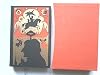
This particular edition from the Folio Society comes with eleven beautiful iconographic illustrations from Peter Suart. They complement Gogol's brand of formal weirdness perfectly. show less
‘Oh, much better!’ cried the Queen, her voice rising into a squeak as she went on. ‘Much be-etter! Be-etter! Be-e-e-etter! Be-e-ehh!’ The last word ended in a long bleat, so like a sheep that Alice quite started.
She looked at the Queen, who seemed to have suddenly wrapped herself up in wool. Alice rubbed her eyes, and looked again. She couldn't make out what had happened at all. Was she in a shop? And was that really – was it really a sheep that was sitting on the other side of the counter?
When I was a kid I was obsessed by this passage. That a writer should ‘make things up’ was something I accepted instinctively – nothing could show more be more natural than to invent incidents, people, even whole species, for a story. But that the basic preconditions of reality – the laws of physics, the relationship between senses and experience – that these could be simply ignored, or blended at will – that a queen could become a sheep, mid-sentence, with no explanation considered necessary…that just blew my mind.
I reread this little section endlessly, amazed by how I would fall for the sleight-of-hand even while aware of it. And that nonsensical line of speech (Be-etter! Be-e-e-etter! Be-e-ehh!) is, silly as this sounds, one of the most talismanic in all literature for me. It represents something fiction can do that cannot be done by any other medium.
Carroll had the device down perfectly, and I reckon that's why the Alice books, despite being written for children, have such a hold over literary history. It is easy to see that a queen becoming a sheep in 1871 is not far away from a salesman waking up as a giant insect forty-four years later. Reading Gogol's ‘The Nose’ (Нос) was therefore a bit of a join-the-dots moment for me, because here we have the literary ancestor of all such techniques. I especially loved that exquisite moment where our noseless narrator first glimpses a familiar figure in the streets of Petersburg:
Something inexplicable took place before his eyes: a carriage was stopping at the entrance, the carriage door flew open; a gentleman in uniform, bending down, sprang out and ran up the steps. What was the horror and at the same time amazement of Kovalyov when he recognised that this was his own nose! At this extraordinary spectacle it seemed to him that everything was heaving before his eyes; he felt that he could scarcely stand; but he made up his mind, come what may, to await the gentleman's return to the carriage, and he stood trembling all over as though in fever. Two minutes later the nose actually did come out. He was in a gold-laced uniform with a big stand-up collar; he had on chamois-leather breeches, at his side was a sword. From his plumed hat it might be gathered that he was of the rank of a civil councillor. Everything showed that he was going somewhere to pay a visit. He looked to both sides, called to the coachman to open the carriage door, got in and drove off.
What makes this so wonderful is the matter-of-fact prose: Kovalyov may be astonished, but the narrator is not. In the unlikely event that such a scene would even occur to any other writer, it's very easy to see that, in less skilful hands, paragraphs of description might be dedicated to convincing you of how a two-inch nose can have become a six-foot personage capable of wearing clothes and of moving of its own accord. Gogol makes no attempt whatever to convince, to persuade. He just relates the impossible.
For him, clearly, this epistemological malleability is something that has been inherited from folktales. The earliest stories in this collection are basically Ukrainian folk stories, and I found them mostly tiresome and overblown. Only later, when you get to the good stuff, do the earlier stories become more interesting in retrospect, because you can see where a lot of his techniques originated.
The unrestrained demonic hijinks of his earlier stories are gradually brought under control and funnelled into specific themes and ideas – as in ‘The Portrait’ (Портрет), for instance, where a strong element of supernaturalism is used as a means to comment on artistic integrity. Even in the straighter stories, though, an underlying uncertainty bubbles up into a sense of genuine weirdness, especially in the later works – there's an almost Nervalian, unhinged quality that manifests itself in odd little unexplained narrative devices. There is certainly something eerily convincing about ‘A Madman's Diary’ (Записки сумасшедшего), with its progressively insane dating system. ‘I don't remember the date,’ one entry is headed. ‘There was no month either.’
This collection culminates in the very influential ‘The Overcoat’ (Шинель), a story that oozes with proto-Freudianism and that seems, despite its comic-philosophical flourishes, to be papering over some underlying terror. Neverthless, ‘The Nose’ remains my favourite piece. It is just so odd, so resistant to any satisfactory interpretation, and the idea that it might just be intended at face value is almost frightening. ‘What is utterly nonsensical,’ Gogol asserts with appealing simplicity, ‘happens in this world.̀’
This particular edition from the Folio Society comes with eleven beautiful iconographic illustrations from Peter Suart. They complement Gogol's brand of formal weirdness perfectly. show less
Gogol's stories are generally acknowledged as the first realist Russian fiction but they still bear the marks of their surrealist roots. If you're looking for a good introduction to Gogol's work I can highly recommend 'Diary of a Madman' (sometimes translated as 'A Madman's Diary'), The Overcoat, and The Nose (a strange tale of a nose who strikes out on his own to become an independant being). Gogol blends tragedy with humour and pathos with contentment without ever making the reader feel there's anything unusual about combining these moods. A wonderful read!
Ratings
Members
- Recently Added By
Lists

Folio Society
831 works; 50 members
Author Information

600+ Works 29,078 Members
Nikolai Vasilevich Gogol was born in 1809 in the Ukraine. His father was an amateur playwright who had a small estate with a number of serfs. From the ages of 12 to 19, young Gogol attended a boarding school where he became known for his sharp wit and ability to amuse his classmates. After school he worked as a government clerk. He soon began show more writing memories of his childhood. His quaint depictions of the Ukrainian countryside marked his style and helped to make him famous. Gogol quickly gained fame and formed a friendship with the influential poet, Aleksandr Pushkin. Gogol is largely remembered for his realistic characterizations, his rich imagination, and his humorous style. His works include Mirgorod, a collection of short stories including Taras Bulba. Gogol's wit is evident in his short story, The Nose, where a man's nose wanders off around town in a carriage. Gogol's masterpiece is the novel Dead Souls. In this work, a swindler plots to buy from landowners their dead serfs. Towards the end of Gogol's life, his creative powers faded and he fled to Moscow. Here, he came under the power of a fanatical priest. Ten days before his death he burned some manuscripts of the second part of Dead Souls. He died of starvation in 1852, on the cusp of madness. (Bowker Author Biography) show less
Some Editions
Series
Belongs to Publisher Series
Common Knowledge
- Disambiguation notice
- This is "The Collected Stories" of Gogol, and should NOT be combined with "The Collected Tales" of Gogol.
Classifications
- Genres
- General Fiction, Fiction and Literature
- DDC/MDS
- 891.7 — Literature & rhetoric Literatures of other languages East Indo-European and Celtic literatures Russian and East Slavic languages
- LCC
- PG3333 — Language and Literature Slavic languages and literatures. Baltic languages. Albanian language Slavic. Baltic. Albanian Russian literature Individual authors and works 1800-1870 Gogol'
Statistics
- Members
- 142
- Popularity
- 231,382
- Reviews
- 2
- Rating
- (4.32)
- Media
- Paper
- ASINs
- 7