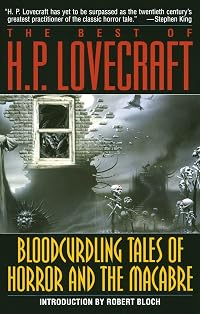
The Best of H. P. Lovecraft: Bloodcurdling Tales of Horror and the Macabre
by H. P. Lovecraft
On This Page
Description
This is the collection that true fans of horror fiction have been waiting for: sixteen of H.P. Lovecraft's most horrifying visions, including Lovecraft's masterpiece, The Shadow Out of Time-- the shocking revelation of the mysterious forces that hold all mankind in their fearsome grip. I think it is beyond doubt that H.P. Lovecraft has yet to be surpassed as the Twentieth Century's greatest practitioner of the classic horror tale.Tags
Recommendations











Member Recommendations

artturnerjr Lovecraft and Smith had many of the same philisophical and stylistic concerns, but Smith's probably the better writer of the two (or at least the better stylist).
30

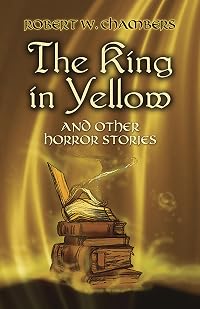
Arboreus Whom may have found the concept of documents which condemmn the reader to a dark fate appealing, will find in some of the stories of this work a bit of the inspiration behind Lovecraft. Reader beware, as The King in Yellow is not something to tread lightly.

Member Reviews
“Ph'nglui mglw'nafh Cthulhu R'lyeh wgah'nagl fhtagn”Try saying that backward (or forward, which is equally challenging).
H.P. Lovecraft is definitely the granddaddy of “Cosmic Horror” and Weird Fiction. He is often mentioned in science fiction / fantasy / horror related websites and forums, not to mention myriad other kinds of websites. Reading fans raving about his works and seeing the numerous fan arts online make many of us genre fiction enthusiasts want to start getting into his fiction to see what the fuss is all about. I suspect a lot of first-time readers of Lovecraft are disappointed at what they find. The way he goes about telling his stories is very idiosyncratic, he has a tendency to overwrite and be highly verbose. show more This can be very disappointing and off-putting if you choose the wrong story to start with and you were expecting a quick thrilling read.
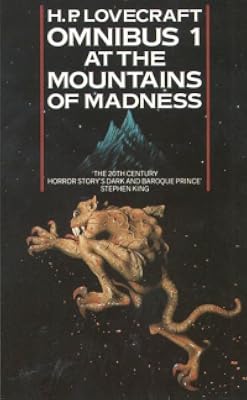
This is where the unwieldy titled The Best of H.P. Lovecraft: Bloodcurdling Tales of Horror and the Macabre comes in. This is a “greatest hits” type of anthology which is ideal for the uninitiated and of course fans who want their favorite stories all in one book. It does not include the novellas [b:At the Mountains of Madness|32767|At the Mountains of Madness|H.P. Lovecraft|https://d.gr-assets.com/books/1388341769s/32767.jpg|17342821] and [b:The Case of Charles Dexter Ward|129327|The Case of Charles Dexter Ward|H.P. Lovecraft|https://d.gr-assets.com/books/1385837737s/129327.jpg|124552], which is just as well as these are not so suitable starting places. I think it is better to get used to (and forgive) the author’s verbiage and appreciate the otherwise awesomeness of his stories.
A lot of the stories tend to be supernatural / sci-fi hybrids with witches and wizards summoning aliens from another planet or dimension by magic. Here is my quick run-through of the stories in this collection:
Introduction by [a:Robert Bloch|12540|Robert Bloch|https://d.gr-assets.com/authors/1208225228p2/12540.jpg] - Best known for [b:Psycho|156427|Psycho|Robert Bloch|https://d.gr-assets.com/books/1393286878s/156427.jpg|3279468], one of his protégés. A good intro to Lovecraft the man and his fiction. Don’t skip it.
The Rats in the Walls - As your very first Lovecraft story his convoluted prose style may take a while to get used to. The climax is spectacular but also a bit of a mess in the narrative department. The story is great though, worth a reread later on.
The Picture in the House - The book that drips blood; where the useless protagonist runs away just when things are heating up to a critical point, next time stay at home old chap! Nice, short and atmospheric though.
The Outsider - A story of self-discovery. Great twist at the end. Awesome in a most eldritch way.
Pickman’s Model - You are in for a treat with this one. Classic Lovecraft, one of his most popular and enduring stories. The colloquial writing style is rather unusual for Lovecraft I think. Possibly his most accessible story and a great starting point for new readers.
In the Vault - Break a leg! An amusing and rather inconsequential little story.
The Silver Key - Time traveling shenanigan featuring some Lovecraft’s patented awful faux-hillbilly dialog. A Twilight Zone-ish story.
The Music of Erich Zann - Featuring a man who is attracted by weird music. Next time just buy a Yoko Ono album. Actually one of HPL’s most popular stories. Doesn’t really do much for me, unfortunately. The bloody protagonist does a runner again just when things are getting interesting.
The Call of Cthulhu - The narrative is a little fragmented and the story is rather incohesive, but there is some tremendous world building going on in this story. The creepy atmosphere is very well done and for once the monster actually shows up in all its glory (HPL’s monsters generally prefer to lurk and mess with your head). This story is also often cited as evidence of his racism. According to [a:Robert Bloch|12540|Robert Bloch|https://d.gr-assets.com/authors/1208225228p2/12540.jpg] Lovecraft did become more mellow and tolerant of foreigners after marriage.
The Dunwich Horror - This is what newcomers to Lovecraft are probably looking for. A great, thrilling and creepy tale. That Wilbur Whateley reminds me of Damian in the Omen movies a bit to begin with. He changes later on though (not for the better of course)
The Whisperer in Darkness - Gives new meaning to “the Kodak moment”, talk about product placement! A very creepy story featuring weird floating monstrosities and a whispery ET.
The Colour Out of Space - This! Ladies and gentlemen. This! Lovecraft’s best story (IMO). For a change, the story is pure sci-fi, no chanting monks, witches, voodoo or Cthulhu. The poor Gardners’ family literal disintegration thanks to a meteor falling on their farm will surely give you the heebie-jeebies.
The Haunter of the Dark - Set in Italy. The story of a weird black church. If you spot a copy of the Necronomicon by “Mad Arab” Abdul Alhazred in a church head for the exit immediately.
The Thing on the Doorstep - This also! What a great body swap story, much better than Freaky Friday. Featuring the eponymous Thing on the Doorstep whose catchphrase is “Glub!”. Brrrr!
The Shadow Over Innsmouth - Oh my Gawd! A blasphemously amazing story of some very fishy folks. Set mainly in the creepiest town ever. Featuring a very cool twist.
The Dreams in the Witch-House Featuring a witch, a rat with a man’s face and a sort of hyperspace bypass. The narrative is a little rambling for my taste, but a great story is embedded in there.
The Shadow Out of Time - Another story of involuntary body swap. The Great Race aliens are almost benign by HPL’s standard, unauthorized body swap notwithstanding. It is a longish story (70 pages or so), it starts off very fascinating, but Lovecraft goes into his rambling mode in the second half of the story. An example of his overwriting. Still a great story though, one that will stay with you.
Due to his verbiage, thin characters and appalling dialogs Lovecraft’s dissenters often dismiss him as a bad writer. If so he is the most excellent bad writer of all time. The thing about his writing is that while some of the stories will have you nodding off while wading through the long winded prose, but once you get to the end of the stories you realize that they are actually quite good. Also when he is on top form, such as in The Colour Out of Space where the narrative is very evocative and the story is just right, he is unbeatable.
_______________________________
Notes:
The website Cthulhuchick has kindly put together a free e-book of the Complete Works of H.P. Lovecraft in several formats. The download link is on the main front page.
You can read any and all of Lovecraft's stories online at Dagonbytes.
Download links for free Lovecraft audiobooks. show less
I'm of two minds about H.P. Lovecraft. On the one hand, he's a classic, a master at creating grotesque, oppressive atmosphere, and I can see certain seeds of modern horror, science fiction, and even fantasy within his writing. But on the other hand, that writing is fixated on one set of ideas and themes, and his stories read as though they are slight variations on one another.
Only occasionally in this collection was I surprised by a turn of events or eager to see how Lovecraft would resolve a conflict. Most of the time, I knew exactly what was going to happen, who would be involved, and how it all would be described. There was only so much my appreciation for Lovecraft's technique and place in literary history could do to keep me show more engaged in the text.
So, five stars in respect for that technique and impact on the writers that followed, but minus one star for not quite having that impact on me. show less
Only occasionally in this collection was I surprised by a turn of events or eager to see how Lovecraft would resolve a conflict. Most of the time, I knew exactly what was going to happen, who would be involved, and how it all would be described. There was only so much my appreciation for Lovecraft's technique and place in literary history could do to keep me show more engaged in the text.
So, five stars in respect for that technique and impact on the writers that followed, but minus one star for not quite having that impact on me. show less
Where Poe is dark and brooding, Lovecraft is Mad and brooding. This is the first of a three part anthology that digs into his work. From the Rats in the Walls to the Colour out of space we are constantly reminded of our feeble grasp on reality and our place in it. Our fear is brought to a cosmic level without a sign of redemption. Lovecraft will remind us that just because we give up and die here our pain will not end and we will suffer in a place far beyond what anyone knows.
Entertaining enough, but account after account of earnest protagonists' encounters with stuff pertaining to Cthulu got old after a while. The best story in this collection? "The Rats in the Walls"-- where no Old Ones are to be found.
If how I love an author is based upon how fast I buy more books by them, Lovecraft may win. Before I was finished with this book, I went out and bought two more of his anthologies, and moved seamlessly from finishing this one and starting the next in the space of a train ride.
I've been told to read Lovecraft by just about everyone I know who knows what I like to read. Finally convinced, I picked up the only book I had (because reading the "Best Of" seems like a good place to start) and dove in.
I kicked and screamed when I had to rise for air.
From story to story, the rough beginning of reading the older writing style became easier and soon the little voice in my head that does my reading even deciphered the phonetic spelling with an show more accent of its own. I adored every creature I read about from the Mi-Go to the Elder Ones, and I yearned to hear more about the forbidden shoggoth while fearing them at the same time. Though Lovecraft's characters never disclose just what the creatures look like, we certainly know that they're dreadful.
What I also enjoyed is how big a role science plays into his stories. It's all physics and traveling through space on bat-like wings and visiting lands beyond the stars.While I abhor learning physics, I'll never hate reading about how we can twist it into helping us find the world of Yuggoth (which has recently been demoted, and I wonder how the Mi-Go feel about this...)
I recommend this collection to anyone who wants to see how Lovecraft influenced the horror masters of today. Or anyone wants to read a weird tale. show less
I've been told to read Lovecraft by just about everyone I know who knows what I like to read. Finally convinced, I picked up the only book I had (because reading the "Best Of" seems like a good place to start) and dove in.
I kicked and screamed when I had to rise for air.
From story to story, the rough beginning of reading the older writing style became easier and soon the little voice in my head that does my reading even deciphered the phonetic spelling with an show more accent of its own. I adored every creature I read about from the Mi-Go to the Elder Ones, and I yearned to hear more about the forbidden shoggoth while fearing them at the same time. Though Lovecraft's characters never disclose just what the creatures look like, we certainly know that they're dreadful.
What I also enjoyed is how big a role science plays into his stories. It's all physics and traveling through space on bat-like wings and visiting lands beyond the stars.While I abhor learning physics, I'll never hate reading about how we can twist it into helping us find the world of Yuggoth (which has recently been demoted, and I wonder how the Mi-Go feel about this...)
I recommend this collection to anyone who wants to see how Lovecraft influenced the horror masters of today. Or anyone wants to read a weird tale. show less
I am one of those people who finds Lovecraft's tale incredibly rewarding.
I loved them when I was a kid, but I've ended up loving them more now I'm not.
His narrative vision was -quite simply- astonishing. His often sublime creations prise him head and shoulders above many other practitioners of the weird tale, and the influences of Poe, Dunsany and Machen -although vast- are secondary to the wonderful instinct he had for how much to show and how little to reveal. As a result, the stories ask a reader to imagine along with Lovecraft; to piece together the jigsaw pieces of cosmic horror sometimes from scant hints and thin, but evocative, descriptions.
I know there is a lot to wince at in the canon: the inbred country-folk degenerating show more into savages, or worse; the often jaw-dropping racism that -although tempered in his later works- still provides the reader with an uncomfortable aftertaste; the uneven pace of some of the tales; the stubborn overuse of words like 'gibbous' and 'eldritch'.
But somehow Lovecraft's stories manage to transcend their myriad flaws and give us a science-horror that is breathtaking in its scope and depth.
You might think that they would have to be truly brilliant to overcome those flaws.
And they are. show less
I loved them when I was a kid, but I've ended up loving them more now I'm not.
His narrative vision was -quite simply- astonishing. His often sublime creations prise him head and shoulders above many other practitioners of the weird tale, and the influences of Poe, Dunsany and Machen -although vast- are secondary to the wonderful instinct he had for how much to show and how little to reveal. As a result, the stories ask a reader to imagine along with Lovecraft; to piece together the jigsaw pieces of cosmic horror sometimes from scant hints and thin, but evocative, descriptions.
I know there is a lot to wince at in the canon: the inbred country-folk degenerating show more into savages, or worse; the often jaw-dropping racism that -although tempered in his later works- still provides the reader with an uncomfortable aftertaste; the uneven pace of some of the tales; the stubborn overuse of words like 'gibbous' and 'eldritch'.
But somehow Lovecraft's stories manage to transcend their myriad flaws and give us a science-horror that is breathtaking in its scope and depth.
You might think that they would have to be truly brilliant to overcome those flaws.
And they are. show less
Knowledge brings pain. Madness offers release.
Lovecraft’s stories focus on the unknown, the alien, and the otherworldly. His stories confront everyday people with this hidden world, sometimes directly, more often through the accounts of the less fortunate. In Lovecraft’s world knowledge is a burden that drives many to madness. He is perhaps one of the most skilled writers when it comes to unreliable and unstable narrators; however, he also has shortcomings.
His stories start slowly and with excessive backstory. They only begin to achieve real momentum at the midpoint, before ending abruptly. He often hints at a larger narrative that remains unresolved. Of course this lack of resolution is also part of his general theme, there is no show more happy ending, and only those ignorant of the truth can live happily.
Within his own writing he is quite repetitive. His protagonists are often generic and somewhat flat, and his descriptions tend to be excessive, particularly when describing architecture. He has a bad habit of summarizing a scene rather than showing the reader what happened.
In spite of that he remains an accomplished author in the realm of horror, and a good read for anyone with the patience to persevere through the slow starts.
+Strong Suspense
+Strong Ideas
+Strong Descriptions
-Weak Plot
-Slow
2.5/5
The Rats in the Wall
A story of an ancient site, and a terrible secret. A prime example of “knowledge as a burden”. A slow mystery, this is one of the stronger ones in the anthology.
+Strong Descriptions
+Strong Suspense
*Slow but strong plot
3/5
The Picture in the House
A strange shack in the wilderness, with a strange owner.
+Strong Characters
-Weak Plot
-Slow
1.5/5
The Outsider
An unreliable narrator has been imprisoned for so long he doesn’t even remember why.
+Strong Descriptions
-Weak Plot
-Slow
1.5/5
Pickman’s Model
An artist with a unique gift for creating frightening images.
+Strong Descriptions
-abrupt ending
-slow
2/5
In the Vault
A dry dark comedy about a mortician.
+Strong Suspense
*Dark Humor
-Simple Plot
1.5/5
The Silver Key
A philosophical dialogue on the nature of reality, without the familiar fears of most of Lovecraft’s work.
+Strong Ideas
-Weak Plot
-Slow
1/5
The Music of Erich Zann
A strange neighbor who plays otherworldly music, and the secret behind it.
+Strong Descriptions
*Interesting Ideas
-Weak Plot
2/5
The Call of Cthulhu
Three stories stitched together by the narrator, with all the tropes of a good Lovecraft story; the occult, monsters, and conspiracy.
+Strong Characters
+Strong Descriptions
*Strong but Fragmented Plot
3/5
The Dunwich Horror
A slow story about a peculiar family, gradually growing into a supernatural thriller.
+Strong Plot
-Weak Characters
-Slow
2.5/5
The Whisperer in the Darkness
Through correspondence two characters unravel a local legend, of monsters living in the hills.
+Strong Plot
+Strong Characters
-Slow
2.5/5
The Colour Out of Space
A strange meteorite transforms the land and lives around it
+Strong Plot
-Weak Characters
-Weak Writing
2/5
The Haunter of the Dark
An artist is drawn to an abandoned building, where an ancient power sleeps.
+Strong Descriptions
-Weak Characters
-Weak Plot
1.5/5
The Thing on the Doorstep
Lovecraft’s take on an overbearing wife.
+Strong Characters
*Interesting Plot
-Slow
2/5
The Shadow over Innsmouth
A tourist learns a secret the town will kill to keep.
+Strong Plot
+Strong Setting
+Strong Narration
+Strong Suspense
-Lengthy Descriptions
3.5/5
The Dreams in the Witch-House
A mathematician tries to combine math and the occult, but is troubled by feverish dreams.
+Strong Descriptions
-Weak Writing
-Slow
1.5/5
The Shadow Out of Time
After five years of amnesia the protagonist regains himself. His friends share strange stories about his behavior, prompting him to investigate, and uncover a most otherworldly answer.
+Strong Ideas
-Weak Writing
-Slow
1.5/5 show less
Lovecraft’s stories focus on the unknown, the alien, and the otherworldly. His stories confront everyday people with this hidden world, sometimes directly, more often through the accounts of the less fortunate. In Lovecraft’s world knowledge is a burden that drives many to madness. He is perhaps one of the most skilled writers when it comes to unreliable and unstable narrators; however, he also has shortcomings.
His stories start slowly and with excessive backstory. They only begin to achieve real momentum at the midpoint, before ending abruptly. He often hints at a larger narrative that remains unresolved. Of course this lack of resolution is also part of his general theme, there is no show more happy ending, and only those ignorant of the truth can live happily.
Within his own writing he is quite repetitive. His protagonists are often generic and somewhat flat, and his descriptions tend to be excessive, particularly when describing architecture. He has a bad habit of summarizing a scene rather than showing the reader what happened.
In spite of that he remains an accomplished author in the realm of horror, and a good read for anyone with the patience to persevere through the slow starts.
+Strong Suspense
+Strong Ideas
+Strong Descriptions
-Weak Plot
-Slow
2.5/5
The Rats in the Wall
A story of an ancient site, and a terrible secret. A prime example of “knowledge as a burden”. A slow mystery, this is one of the stronger ones in the anthology.
+Strong Descriptions
+Strong Suspense
*Slow but strong plot
3/5
The Picture in the House
A strange shack in the wilderness, with a strange owner.
+Strong Characters
-Weak Plot
-Slow
1.5/5
The Outsider
An unreliable narrator has been imprisoned for so long he doesn’t even remember why.
+Strong Descriptions
-Weak Plot
-Slow
1.5/5
Pickman’s Model
An artist with a unique gift for creating frightening images.
+Strong Descriptions
-abrupt ending
-slow
2/5
In the Vault
A dry dark comedy about a mortician.
+Strong Suspense
*Dark Humor
-Simple Plot
1.5/5
The Silver Key
A philosophical dialogue on the nature of reality, without the familiar fears of most of Lovecraft’s work.
+Strong Ideas
-Weak Plot
-Slow
1/5
The Music of Erich Zann
A strange neighbor who plays otherworldly music, and the secret behind it.
+Strong Descriptions
*Interesting Ideas
-Weak Plot
2/5
The Call of Cthulhu
Three stories stitched together by the narrator, with all the tropes of a good Lovecraft story; the occult, monsters, and conspiracy.
+Strong Characters
+Strong Descriptions
*Strong but Fragmented Plot
3/5
The Dunwich Horror
A slow story about a peculiar family, gradually growing into a supernatural thriller.
+Strong Plot
-Weak Characters
-Slow
2.5/5
The Whisperer in the Darkness
Through correspondence two characters unravel a local legend, of monsters living in the hills.
+Strong Plot
+Strong Characters
-Slow
2.5/5
The Colour Out of Space
A strange meteorite transforms the land and lives around it
+Strong Plot
-Weak Characters
-Weak Writing
2/5
The Haunter of the Dark
An artist is drawn to an abandoned building, where an ancient power sleeps.
+Strong Descriptions
-Weak Characters
-Weak Plot
1.5/5
The Thing on the Doorstep
Lovecraft’s take on an overbearing wife.
+Strong Characters
*Interesting Plot
-Slow
2/5
The Shadow over Innsmouth
A tourist learns a secret the town will kill to keep.
+Strong Plot
+Strong Setting
+Strong Narration
+Strong Suspense
-Lengthy Descriptions
3.5/5
The Dreams in the Witch-House
A mathematician tries to combine math and the occult, but is troubled by feverish dreams.
+Strong Descriptions
-Weak Writing
-Slow
1.5/5
The Shadow Out of Time
After five years of amnesia the protagonist regains himself. His friends share strange stories about his behavior, prompting him to investigate, and uncover a most otherworldly answer.
+Strong Ideas
-Weak Writing
-Slow
1.5/5 show less
Members
- Recently Added By
Lists

Weird and Weirder Fiction
270 works; 35 members

Scary Stories for the Season
160 works; 94 members

75 Books Challenge Halloween Read "Official" Selections
71 works; 7 members

Books for Fans of Stranger Things
84 works; 7 members

Books That Go Bump in the Night
42 works; 6 members

Allie's Favourite 150 Books
145 works; 3 members

To Read - Horror
137 works; 14 members

What are your favourite books?
121 works; 11 members

Books Read in 2017
4,249 works; 129 members

Books
85 works; 1 member

Favorite Childhood Books
1,646 works; 518 members
Author Information

1,923+ Works 73,797 Members
Howard Phillips Lovecraft, 1890 - 1937 H. P. Lovecraft was born on August 20, 1890 in Providence, Rhode Island. His mother was Sarah Susan Phillips Lovecraft and his father was Winfield Scott Lovecraft, a traveling salesman for Gorham & Co. Silversmtihs. Lovecraft was reciting poetry at the age of two and when he was three years old, his father show more suffered a mental breakdown and was admitted to Butler Hospital. He spent five years there before dying on July 19, 1898 of paresis, a form of neurosyphillis. During those five years, Lovecraft was told that his father was paralyzed and in a coma, which was not the case. His mother, two aunts and grandfather were now bringing up Lovecraft. He suffered from frequent illnesses as a boy, many of which were psychological. He began writing between the ages of six and seven and, at about the age of eight, he discovered science. He began to produce the hectographed journals, "The Scientific Gazette" (1899-1907) and "The Rhode Island Journal of Astronomy" (1903-07). His first appearance in print happened, in 1906, when he wrote a letter on an astronomical matter to The Providence Sunday Journal. A short time later, he began writing a monthly astronomy column for The Pawtuxet Valley Gleaner - a rural paper. He also wrote columns for The Providence Tribune (1906-08), The Providence Evening News (1914-18), The Asheville (N.C.) Gazette-News (1915). In 1904, his grandfather died and the family suffered severe financial difficulties, which forced him and his mother to move out of their Victorian home. Devastated by this, he apparently contemplated suicide. In 1908, before graduating from high school, he suffered a nervous breakdown. He didn't receive a diploma and failed to get into Brown University, both of which caused him great shame. Lovecraft was not heard from for five years, re-emerging because of a letter he wrote in protest to Fred Jackson's love story in The Argosy. His letter was published in 1913 and caused great controversy, which was noted by Edward F. Daas, President of the United Amateur Press Association (UAPA). Daas invited Lovecraft to join the UAPA, which he did in early 1914. He eventually became President and Official Editor of the UAPA and served briefly as President of the rival National Amateur Press Association (NAPA). He published thirteen issues of his own paper, The Conservative (1915-23) and contributed poetry and essays to other journals. He also wrote some fiction which titles include "The Beast in the Cave" (1905), "The Alchemist" (1908), "The Tomb" and "Dagon" (1917). In 1919, Lovecraft's mother was deteriorating, mentally and physically, and was admitted to Butler Hospital. On May 24, 1921, his mother died from a gall bladder operation. While attending an amateur journalism convention in Boston, Lovecraft met his future wife Sonia Haft Greene, a Russian Jew. They were married on March 3, 1924 and Lovecraft moved to her apartment in Brooklyn. Sonia had a shop on Fifth Avenue that went bankrupt. In 1925, Sonia went to Cleveland for a job and Lovecraft moved to a smaller apartment in the Red Hook district of Brooklyn. In 1926, he decided to move back to Providence. Lovecraft had his aunts bar his wife, Sonia, from going to Providence to start a business because he couldn't have the stigma of a tradeswoman wife. They were divorced in 1929. After his return to Providence, he wrote his greatest fiction, which included the titles "The Call of Cthulhu" (1926), "At the Mountains of Madness" (1931), and "The Shadow Out of Time" (1934-35). In 1932, his aunt, Mrs. Clark, died; and he moved in with his other aunt, Mrs. Gamwell, in 1933. Suffering from cancer of the intestine, Lovecraft was admitted to Jane Brown Memorial Hospital and on March 15, 1937 he died. (Bowker Author Biography) show less
All Editions
Awards and Honors
Work Relationships
Contains
Inspired
Common Knowledge
- Original publication date
- 1963
- People/Characters
- Randolph Carter; Dr. Henry Armitage; John R. Legrasse; Nathaniel Wingate Peaslee; Wingate Peaslee; Richard Upton Pickman
- Important places
- Arkham, Massachusetts, USA (fictional); Australia; Dunwich, Massachusetts, USA (fictional); Innsmouth, Massachusetts, USA (fictional); Kingsport, Massachusetts, USA (fictional); Massachusetts, USA (show all 8); Miskatonic University, Arkham, Massachusetts, USA (fictional); New Orleans, Louisiana, USA
- First words
- On July 16, 1923, I moved into Exham Priory after the last workman had finished his labors.
- Last words
- (Click to show. Warning: May contain spoilers.)They were, instead, the letters of our familiar alphabet, spelling out the words of the English language in my own handwriting.
- Disambiguation notice
- Ballantine Books/Del Rey/Science Fiction Book Club edition
ISBN: 0345294688; 9780345294685; 0345350804; 9780345350800
Contents: Rats in the walls -- Picture in the house -- Outsider -- Pickman's model -- In the vault --... (show all) Silver key -- Music of Erich Zann --Call of Cthulhu -- Dunwich horror -- Whisperer in darkness -- Colour out of space -- Haunter of the dark -- Thing on the doorstep -- Shadow over Innsmouth -- Dreams in the witch-house -- Shadow out of time
Please do not combine with editions with differing contents.
CreateSpace edition
ISBN: 9781453875100; 1453875107
Contents: The call of Cthulhu -- The Dunwich horror -- The whisperer in darkness -- The thing on the doorstep -- The shadow over Innsmouth -- The shadow out of time
Please do not combine with editions with differing contents.
Classifications
Statistics
- Members
- 3,116
- Popularity
- 5,623
- Reviews
- 31
- Rating
- (4.20)
- Languages
- English
- Media
- Paper, Ebook
- ISBNs
- 5
- ASINs
- 10