
The King in Yellow
by Robert W. Chambers
On This Page
Description
The King in Yellow is a book of short stories by American writer Robert W. Chambers, first published in 1895. The book is named after a play with the same title which recurs as a motif through some of the stories. The first half of the book features highly esteemed weird stories, and the book has been described by critics as a classic in the field of the supernatural. There are ten stories, the first four of which ("The Repairer of Reputations", "The Mask", "In the Court of the Dragon", and show more "The Yellow Sign") mention The King in Yellow, a forbidden play which induces despair or madness in those who read it. "The Yellow Sign" inspired a film of the same name released in 2001. show lessTags
Recommendations


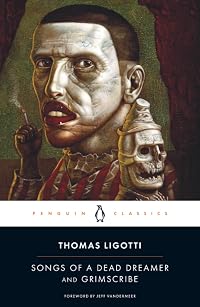
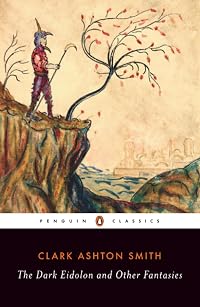
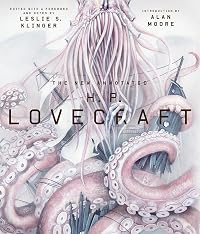
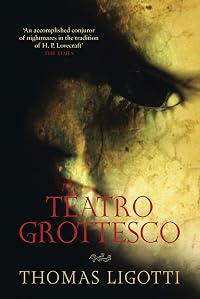



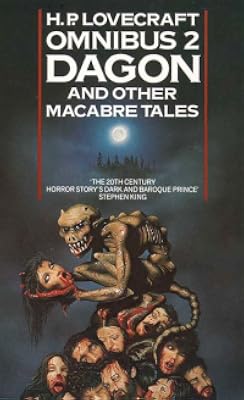
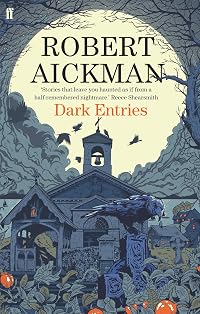

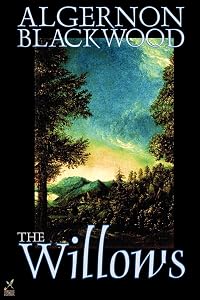

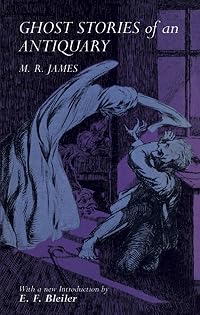


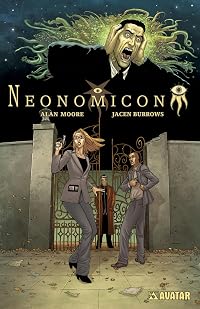
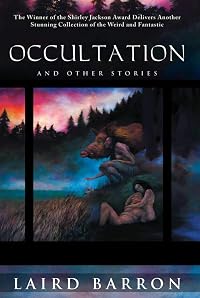
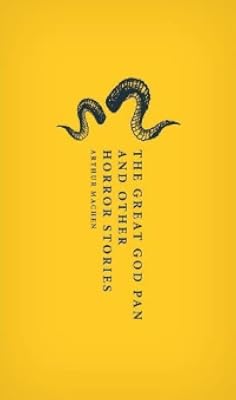
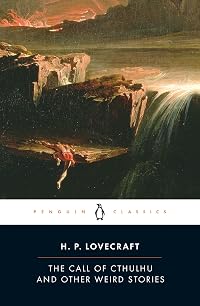


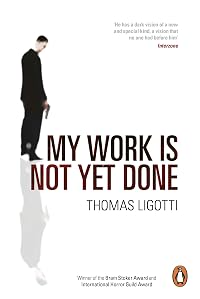
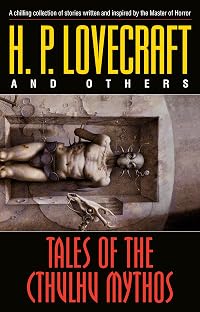
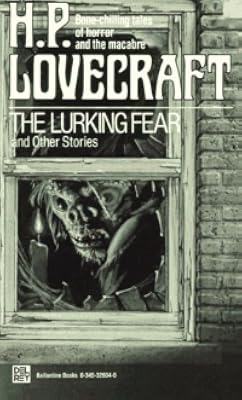
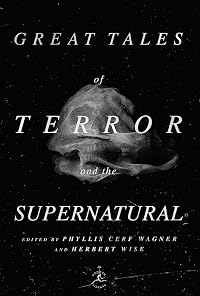
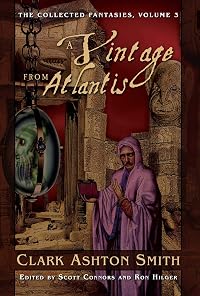
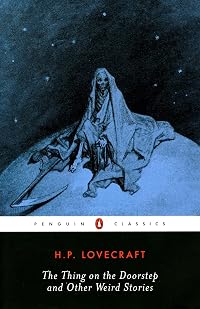
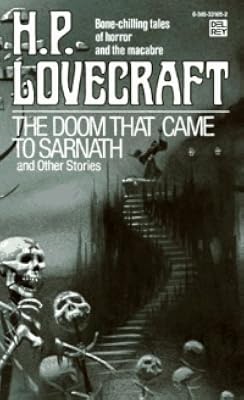
Member Recommendations

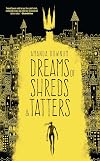
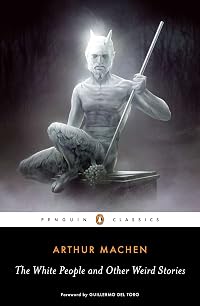
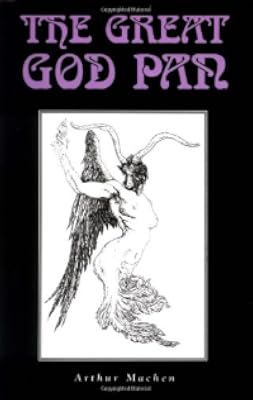
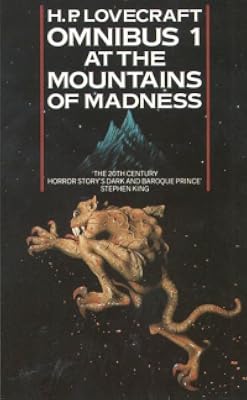
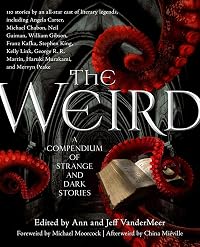
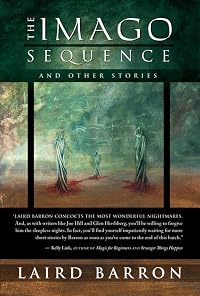
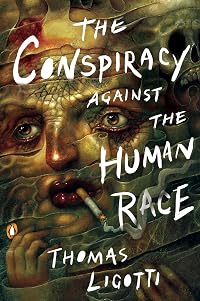
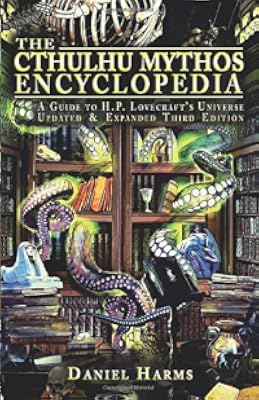
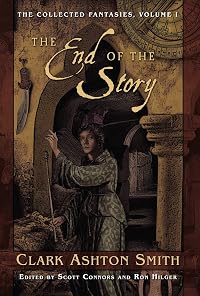
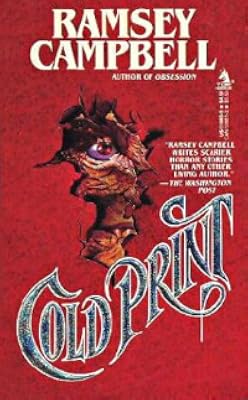
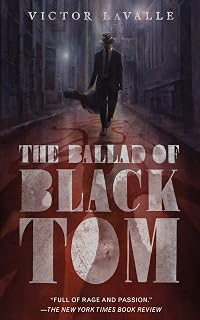
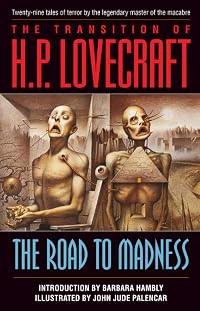
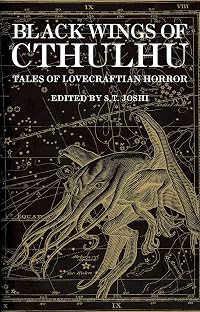
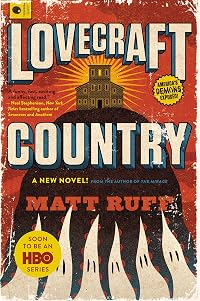
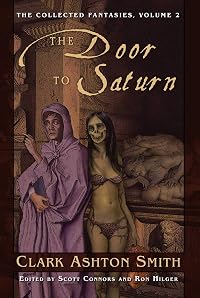
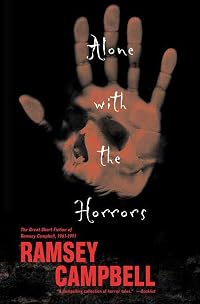
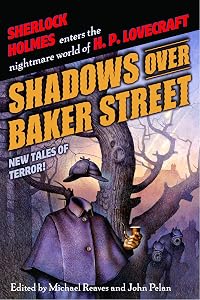
cmc More adventures of the Yellow King.
Member Reviews
‘It is a fearful thing to fall into the hands of the living god.’
The King in Yellow is a book containing ten short stories, four of which are interrelated (and the subject of this review); they are, ‘The Repairer of Reputations,’ ‘The Mask,’ ‘In the Court of the Dragon,’ and ‘The Yellow Sign.’ The remaining five tales range from a set of hallucinatory prose poems ('The Prophet's Paradise') to a predictably supernatural love story ('The Demoiselle d'Ys') to a series of wooden, Francophile romances that have absolutely nothing to do with the first half of the book, save perhaps their loosely thematic consideration of the hazards of knowledge; and while the variable—and often dreadfully stale—latter half of the book show more contains very little of interest, the four interrelated narratives that comprise its opening half (the King in Yellow cycle, proper) are some of the more astoundingly original pieces of short fiction in all of American literature.
Within this quartet, Robert W. Chambers—a man of remarkable, if briefly employed, vision—sustains a sense of dread only occasionally matched by the great talents he would inspire several decades later. Written in the fin de siècle period and gently touched by the influences of Bierce, Wilde, and Poe, Chambers’ near-revolutionary breed of cosmic terror is so bleak, atmospheric, and saturated with the cloak of doom that to dip into The King in Yellow is almost to taste the madness described therein: for this profound influence on the work of Lovecraft and what would come to be known as Weird Fiction begins with one of the more elemental of Gothic premises: a book that poisons. The King in Yellow, you see, is actually not a collection of stories at all; it is a play within a collection of stories—a play suppressed by governments and denounced entirely by both 'pulpit and press', a play capable of opening the mind to truths of such wicked import that to look upon them once is to look upon the face of madness. This play trickles through the skeleton of each narrative in the King in Yellow cycle: a constant and sweetly sinister miasma that corrupts body, mind, and the very ethers of soul and sanity; and while we are offered occasional glimpses at its pages—a line here or a line there—it is a particularly effective hand that shies away from giving us much more than a taste of what exactly is contained within the cursed pages of The King in Yellow.
The fevered descent that Chambers has titled ‘The Repairer of Reputations’ is the most successful story in the cycle and opens it, establishing its necessary mythology and tone; in many ways it simultaneously foreshadows not only the horror work of Lovecraft or Clark Ashton Smith, but also the dystopian nightmares of Orwell and Huxley, which is indicative of a general trend: the vision that reverberates throughout the entire King in Yellow cycle is startlingly prophetic, in both content and style, lending a strange timelessness to its pages that approximates, in its impressions, the same insidious hypnosis the play described therein is reputed to induce. The opening story is a brilliant piece of fiction in and of itself, with subtle hints throughout the tale suggesting its jarring and brutally ambiguous ending early on, but it is the echo of its varied motifs, and the way they interweave with the remainder of the collection, that elevates 'The Repairer of Reputations' to a higher plane of literature than many similar fictions can claim.
The remainder of the cycle picks up where ‘The Repairer of Reputations’ leaves off, examining situations that occasionally make subtle reference to each other without ever explicitly crossing-over: ‘The Mask,’ which is the most accessible of the quartet, echoes Wilde with more insistence; ‘In the Court of the Dragon’ is dream-like and terrifyingly sinister, dealing with mysteries that are perhaps unfathomable; the closing story of the cycle, ‘The Yellow Sign,’ is the most popular with anthologists and was the most influential on later authors; it is the grimmest, most thoroughly desolate piece in the volume.
Chambers’ prolific literary output has largely been forgotten (excepting this, his masterpiece): and perhaps this is rightly so, given most of his work’s insipid, if highly-profitable, triviality. The menace he nourishes to such success in The King in Yellow is entirely absent in his other fictions—including, even, several of the stories that comprise the latter pages of the The King in Yellow itself. But the quartet of stories that outline the mythology of The King in Yellow is enough to ensure Chambers' durability: there are so few works of entirely visionary genius in the canon of spectral literature that to identify truly pioneering work is really quite simple—and Chambers’ genius ranks alongside Walpole, Poe, and Maturin for sheer mettle and originality: despite the stodgy ineffectuality of the second half of the book, ultimately, the King in Yellow cycle itself is intelligent, haunting, and exquisitely unnerving in ways few ‘story cycles’ are able to maintain.
A product of the same decade that spawned Dracula, The Picture of Dorian Gray, The Turn of the Screw, The Island of Dr. Moreau, Salome, The Adventures of Sherlock Holmes, The Sorrows of Satan, Torture Garden, Bruges-La-Morte, and À Rebours, The King in Yellow is one of the few works of the 1890s to remain entirely unclassifiable: it is at once decadent and austere, anarchic and conventional, sagacious and utterly indolent: a kind of saturnine mirror of its own content. And it will haunt you, certainly—but that breath of contagion is sweet; the empyrean heights to which it aspires—the heights that Lovecraft would shatter some time later—are as full of humbling gloom as that later luminary’s work, and just as insistent in the totality of their vision. Unlike Lovecraft, however, Chambers’ opus marvels in the sheer ambiguity of cosmic terror, never shedding an appreciable light upon its subjects or delving too deeply into the complexity of mythology that the Lovecraftian throng would explore several decades later. But this is not a weakness—if anything, the curt laconicism of the King in Yellow quartet is an important part of its beauty and overall success: it is the blueprint of an entire movement—a real-life parallel of the terrors posited within its pages. show less
The King in Yellow is a book containing ten short stories, four of which are interrelated (and the subject of this review); they are, ‘The Repairer of Reputations,’ ‘The Mask,’ ‘In the Court of the Dragon,’ and ‘The Yellow Sign.’ The remaining five tales range from a set of hallucinatory prose poems ('The Prophet's Paradise') to a predictably supernatural love story ('The Demoiselle d'Ys') to a series of wooden, Francophile romances that have absolutely nothing to do with the first half of the book, save perhaps their loosely thematic consideration of the hazards of knowledge; and while the variable—and often dreadfully stale—latter half of the book show more contains very little of interest, the four interrelated narratives that comprise its opening half (the King in Yellow cycle, proper) are some of the more astoundingly original pieces of short fiction in all of American literature.
Within this quartet, Robert W. Chambers—a man of remarkable, if briefly employed, vision—sustains a sense of dread only occasionally matched by the great talents he would inspire several decades later. Written in the fin de siècle period and gently touched by the influences of Bierce, Wilde, and Poe, Chambers’ near-revolutionary breed of cosmic terror is so bleak, atmospheric, and saturated with the cloak of doom that to dip into The King in Yellow is almost to taste the madness described therein: for this profound influence on the work of Lovecraft and what would come to be known as Weird Fiction begins with one of the more elemental of Gothic premises: a book that poisons. The King in Yellow, you see, is actually not a collection of stories at all; it is a play within a collection of stories—a play suppressed by governments and denounced entirely by both 'pulpit and press', a play capable of opening the mind to truths of such wicked import that to look upon them once is to look upon the face of madness. This play trickles through the skeleton of each narrative in the King in Yellow cycle: a constant and sweetly sinister miasma that corrupts body, mind, and the very ethers of soul and sanity; and while we are offered occasional glimpses at its pages—a line here or a line there—it is a particularly effective hand that shies away from giving us much more than a taste of what exactly is contained within the cursed pages of The King in Yellow.
The fevered descent that Chambers has titled ‘The Repairer of Reputations’ is the most successful story in the cycle and opens it, establishing its necessary mythology and tone; in many ways it simultaneously foreshadows not only the horror work of Lovecraft or Clark Ashton Smith, but also the dystopian nightmares of Orwell and Huxley, which is indicative of a general trend: the vision that reverberates throughout the entire King in Yellow cycle is startlingly prophetic, in both content and style, lending a strange timelessness to its pages that approximates, in its impressions, the same insidious hypnosis the play described therein is reputed to induce. The opening story is a brilliant piece of fiction in and of itself, with subtle hints throughout the tale suggesting its jarring and brutally ambiguous ending early on, but it is the echo of its varied motifs, and the way they interweave with the remainder of the collection, that elevates 'The Repairer of Reputations' to a higher plane of literature than many similar fictions can claim.
The remainder of the cycle picks up where ‘The Repairer of Reputations’ leaves off, examining situations that occasionally make subtle reference to each other without ever explicitly crossing-over: ‘The Mask,’ which is the most accessible of the quartet, echoes Wilde with more insistence; ‘In the Court of the Dragon’ is dream-like and terrifyingly sinister, dealing with mysteries that are perhaps unfathomable; the closing story of the cycle, ‘The Yellow Sign,’ is the most popular with anthologists and was the most influential on later authors; it is the grimmest, most thoroughly desolate piece in the volume.
Chambers’ prolific literary output has largely been forgotten (excepting this, his masterpiece): and perhaps this is rightly so, given most of his work’s insipid, if highly-profitable, triviality. The menace he nourishes to such success in The King in Yellow is entirely absent in his other fictions—including, even, several of the stories that comprise the latter pages of the The King in Yellow itself. But the quartet of stories that outline the mythology of The King in Yellow is enough to ensure Chambers' durability: there are so few works of entirely visionary genius in the canon of spectral literature that to identify truly pioneering work is really quite simple—and Chambers’ genius ranks alongside Walpole, Poe, and Maturin for sheer mettle and originality: despite the stodgy ineffectuality of the second half of the book, ultimately, the King in Yellow cycle itself is intelligent, haunting, and exquisitely unnerving in ways few ‘story cycles’ are able to maintain.
A product of the same decade that spawned Dracula, The Picture of Dorian Gray, The Turn of the Screw, The Island of Dr. Moreau, Salome, The Adventures of Sherlock Holmes, The Sorrows of Satan, Torture Garden, Bruges-La-Morte, and À Rebours, The King in Yellow is one of the few works of the 1890s to remain entirely unclassifiable: it is at once decadent and austere, anarchic and conventional, sagacious and utterly indolent: a kind of saturnine mirror of its own content. And it will haunt you, certainly—but that breath of contagion is sweet; the empyrean heights to which it aspires—the heights that Lovecraft would shatter some time later—are as full of humbling gloom as that later luminary’s work, and just as insistent in the totality of their vision. Unlike Lovecraft, however, Chambers’ opus marvels in the sheer ambiguity of cosmic terror, never shedding an appreciable light upon its subjects or delving too deeply into the complexity of mythology that the Lovecraftian throng would explore several decades later. But this is not a weakness—if anything, the curt laconicism of the King in Yellow quartet is an important part of its beauty and overall success: it is the blueprint of an entire movement—a real-life parallel of the terrors posited within its pages. show less
The four central Jauniste stories seem relatively simple upon finishing, but on second look (third...) each reveals cross-references to other(s); knowing nods to offstage characters or events; more side characters than are recalled upon finishing the first time. In short: misleadingly simple. A surprising level of detail can be uncovered on re-reads, from facts & names "hidden in plain sight", to plot tangents, suggestive character memories, or confessions.
The title figure is similarly enigmatic. Playtext or personage, the King in Yellow never receives extended description or clear definition, yet what little is revealed seems to exert a gravitational pull. That pull is to be observed first operating on characters, which kindles show more curiosity and then allows a metatextual force to begin working on the reader.
What of those twin suns and many moons? How could they rise in front of the towers of Carcosa? Are the Phantom of Truth and the Pallid Mask one and the same? Do the stars truly shine black? So many questions, so little in the way of answers.
That such oblique storytelling could be so compelling is perhaps counterintuitive. Yet I keep reading.
//
My Pushkin Press edition includes only the central four "King in Yellow" stories, inexplicably omitting the six "Other Stories" included in most editions, as well as the indispensable epigraph, "Cassilda's Song". At minimum two omitted stories make reference to the Yellow Mythos, however glancingly:
● THE DEMOISELLE D'YS: Jeanne D'ys is a cryptic pun, and one of her falconers is named Hastur
● THE PROPHETS' PARADISE mentions a Phantom, a white mask, a song & seeking "her" show less
The title figure is similarly enigmatic. Playtext or personage, the King in Yellow never receives extended description or clear definition, yet what little is revealed seems to exert a gravitational pull. That pull is to be observed first operating on characters, which kindles show more curiosity and then allows a metatextual force to begin working on the reader.
What of those twin suns and many moons? How could they rise in front of the towers of Carcosa? Are the Phantom of Truth and the Pallid Mask one and the same? Do the stars truly shine black? So many questions, so little in the way of answers.
That such oblique storytelling could be so compelling is perhaps counterintuitive. Yet I keep reading.
//
My Pushkin Press edition includes only the central four "King in Yellow" stories, inexplicably omitting the six "Other Stories" included in most editions, as well as the indispensable epigraph, "Cassilda's Song". At minimum two omitted stories make reference to the Yellow Mythos, however glancingly:
● THE DEMOISELLE D'YS: Jeanne D'ys is a cryptic pun, and one of her falconers is named Hastur
● THE PROPHETS' PARADISE mentions a Phantom, a white mask, a song & seeking "her" show less
I read this book many years ago and had forgotten its odd structure. Hearing it, I learned that the ten stories fell into two groups. The last six stories involve Americans in France, usually in the Latin Quarter of Paris. They are interesting and sometimes better than that, but I don’t think many read the book for them. I didn’t.
No, The King in Yellow is famous for the first four stories. They are not only great horror stories in themselves but historically important. Chambers used an imaginary land, Carcosa, created by Ambrose Bierce, and added a new trope, that of the accursed book that ruins the lives of its readers by connecting them to hidden and malign spiritual forces. H. P. Lovecraft was greatly influenced by Chamber’s show more work, as, oddly to me, was the creator of the HBO series of True Detective. Chamber’s horror stories are still original and disturbing, with only his Brahim snobbery to irritate.
Stefan Rudnicki was one of the first readers I recognized as a star when I started listening to audiobooks. He has a very strong voice, excellent diction, and much energy. He is on rare occasions and other recordings too stiff, so I was happy to find him at his best here. Not only was his narration smooth, but when he read conversations, I almost thought I was listening to a cast recording, and he handled women’s voices very well. Gabrielle de Cuir read the quotations Chambers inserted between the title and the story, many of them in French, and added a touch of class and sweetness to the recording. show less
No, The King in Yellow is famous for the first four stories. They are not only great horror stories in themselves but historically important. Chambers used an imaginary land, Carcosa, created by Ambrose Bierce, and added a new trope, that of the accursed book that ruins the lives of its readers by connecting them to hidden and malign spiritual forces. H. P. Lovecraft was greatly influenced by Chamber’s show more work, as, oddly to me, was the creator of the HBO series of True Detective. Chamber’s horror stories are still original and disturbing, with only his Brahim snobbery to irritate.
Stefan Rudnicki was one of the first readers I recognized as a star when I started listening to audiobooks. He has a very strong voice, excellent diction, and much energy. He is on rare occasions and other recordings too stiff, so I was happy to find him at his best here. Not only was his narration smooth, but when he read conversations, I almost thought I was listening to a cast recording, and he handled women’s voices very well. Gabrielle de Cuir read the quotations Chambers inserted between the title and the story, many of them in French, and added a touch of class and sweetness to the recording. show less
This book is chiefly known for its opening quartet of stories of eldritch horrors and macabre dystopias. Some works contain only those four, which may well satisfy the majority of readers who (like myself) are drawn to it due to the thread it weaves through the works of others, most famously H.P. Lovecraft. However that does the author a disservice. Chambers collected these stories together and intended them to be read as a complete work.
Doing that, you appreciate the arc he takes from the futurist dystopia of The Repairer of Reputations, with its claustrophobic feeling of paranoia, through the subsequent alchemical and supernatural tales, onto the fifth story, a folkloric fairytale, a short set of Gibran-like (though simultaneously show more unlike) prose poems, and so gradually into the historical world of everyday reality, with its wars and romance, comedy and pathos. An expert writer who deserves recognition for more than horror. show less
Doing that, you appreciate the arc he takes from the futurist dystopia of The Repairer of Reputations, with its claustrophobic feeling of paranoia, through the subsequent alchemical and supernatural tales, onto the fifth story, a folkloric fairytale, a short set of Gibran-like (though simultaneously show more unlike) prose poems, and so gradually into the historical world of everyday reality, with its wars and romance, comedy and pathos. An expert writer who deserves recognition for more than horror. show less
It's hard to rate this collection. The first four stories were quite good. I enjoyed them as a precursor to the Lovecraftian style of horror. The fifth one was okay, reminded me a bit of Lord Dunsany but not as good. The sixth one was just odd, it made no sense as a narrative. Perhaps the individual sections could be seen as prose poems. The last four were kind of...romances? Slice of life in Paris? Except boring and very slow going with uninteresting characters. I would re-read the first four, maybe the fifth, but not the others.
I've heard so much about this piece of fiction from so many different places, and I wish I'd read it sooner. Not because I enjoyed it all, I definitely did not, but because I can see what it means for horror today.
For those uninformed, The King in Yellow is a short story collection that spins tales of people being driven mad by reading a play titled "The King in Yellow." It convinces them of any number of awful things, usually having to do with the entity of the King himself making his presence known to the readers. I love the concept, and I see the top-down influence this had on horror. From Lovecraft to the SCP foundation, this is influential. But that doesn't make it good.
These stories have such a cool concept that they do very show more little with. There is so much more time spent on French society than the play, among other things. Which is a shame. I did not enjoy the reading of this, and it doesn't help that a lot of the collections titled "The King in Yellow" include stories that have nothing to do with the play or the king. Do your own research into what is worth reading from this, but I promise that not all of it is worthy of the time. show less
For those uninformed, The King in Yellow is a short story collection that spins tales of people being driven mad by reading a play titled "The King in Yellow." It convinces them of any number of awful things, usually having to do with the entity of the King himself making his presence known to the readers. I love the concept, and I see the top-down influence this had on horror. From Lovecraft to the SCP foundation, this is influential. But that doesn't make it good.
These stories have such a cool concept that they do very show more little with. There is so much more time spent on French society than the play, among other things. Which is a shame. I did not enjoy the reading of this, and it doesn't help that a lot of the collections titled "The King in Yellow" include stories that have nothing to do with the play or the king. Do your own research into what is worth reading from this, but I promise that not all of it is worthy of the time. show less
This starts off promisingly enough, but eventually it’s as though Chambers completely runs out of ideas for cosmic horror and just thinks, “Well, I guess I’ll just write vague microfiction¹... or maybe a war story?² Oh god, I still have so many pages to fill... uh... what about romance!³”
So, needless to say, shit goes off the rails pretty quickly. Chambers loses sight entirely of the central thread he’d been following; several stories in the second half of the collection feature no disturbing elements or references to The King in Yellow at all, which is a shame, because I love the idea of this eldritch book being a sort of mind virus that infects the subconscious of any who read it.
Skip this one. If you’d like a taste of show more the best Chambers has to offer, the only two stories worth reading are “The Mask” and “The Yellow Sign.”
____________________
¹ “The Prophets’ Paradise”
² “The Street of the First Shell”
³ “The Street of Our Lady of the Fields” and “Rue Barée” show less
So, needless to say, shit goes off the rails pretty quickly. Chambers loses sight entirely of the central thread he’d been following; several stories in the second half of the collection feature no disturbing elements or references to The King in Yellow at all, which is a shame, because I love the idea of this eldritch book being a sort of mind virus that infects the subconscious of any who read it.
Skip this one. If you’d like a taste of show more the best Chambers has to offer, the only two stories worth reading are “The Mask” and “The Yellow Sign.”
____________________
¹ “The Prophets’ Paradise”
² “The Street of the First Shell”
³ “The Street of Our Lady of the Fields” and “Rue Barée” show less
Members
- Recently Added By
Lists

Classics you know you should have read but probably haven't
421 works; 407 members

Best Horror Books
281 works; 85 members

Weird and Weirder Fiction
270 works; 35 members

Best books about books
209 works; 106 members

Favorite Short Fiction
228 works; 99 members

Books that contain themselves
12 works; 4 members

Lovecraft's 'Supernatural Horror in Literature' Reading List
216 works; 8 members

Stephen King's Biggest Influences
46 works; 3 members

Most Disturbing Books
124 works; 27 members

Books with Noble Titles
179 works; 11 members

Books Read in 2017
4,249 works; 130 members

Best Horror Mega-List
342 works; 6 members

Otherland Book Club
36 works; 2 members

SOPA Book Recommendations
19 works; 1 member

Books Read in 2018
4,360 works; 110 members

Jones and Newman's Horror: The 100 Best Books
100 works; 4 members

Books Read By artturnerjr - 2016
30 works; 1 member

A Rainbow of Books: Colors in the Title
570 works; 24 members

Favorite Books
6 works; 1 member

Books Read in 2025
4,128 works; 98 members
Talk Discussions
Past Discussions
Reading Group #14 ('The Repairer of Reputations') in Gothic Literature (February 2020)
THE DEEP ONES: "The Repairer of Reputations" by Robert W. Chambers in The Weird Tradition (April 2019)
THE KING IN YELLOW Discussion Thread in TBR Challenge (October 2016)
THE DEEP ONES: "The Yellow Sign" by Robert Chambers in The Weird Tradition (February 2012)
Author Information

150+ Works 4,782 Members
Some Editions
Awards and Honors
Awards
Notable Lists
Series
Belongs to Publisher Series
Work Relationships
Is contained in
Contains
Has the adaptation
Is abridged in
Common Knowledge
- Canonical title*
- Le Roi en jaune
- Original title
- The King in Yellow
- Original publication date
- 1895
- People/Characters
- The King in Yellow; Jeanne d'Ys
- Important places
- Paris, France; Aldebaran; Carcosa; New York, USA; Brittany, France; Ys
- Dedication
- The King in Yellow
is dedicated to my brother - First words
- "Ne raillons pas les fous; leur folie dure plus longtemps que la nôtre.... Voila toute la différence."
(Do not mock the mad; their madness lasts longer than ours .... That is the only difference.) - Last words
- (Click to show. Warning: May contain spoilers.)Through this he passed with his rose.
- Disambiguation notice
- This work is for editions collecting 11 of Chambers' stories. Please do not combine works containing different selections of stories.
*Some information comes from Common Knowledge in other languages. Click "Edit" for more information.
Classifications
Statistics
- Members
- 2,855
- Popularity
- 6,377
- Reviews
- 68
- Rating
- (3.58)
- Languages
- 11 — Catalan, Dutch, English, Estonian, Finnish, French, German, Italian, Portuguese, Spanish, Swedish
- Media
- Paper, Audiobook, Ebook
- ISBNs
- 248
- UPCs
- 3
- ASINs
- 83