Désirée
by Annemarie Selinko
On This Page
Description
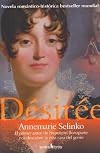
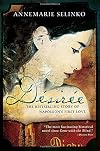
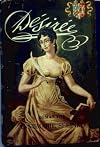
"An epic love story...irresistible reading." -Chicago Tribune To be young, in France, and in love: fourteen year old Desiree can't believe her good fortune. Her fiance, a dashing and ambitious Napoleon Bonaparte, is poised for battlefield success, and no longer will she be just a French merchant's daughter. She could not have known the twisting path her role in history would take, nearly breaking her vibrant heart but sweeping her to a life rich in passion and desire. A love story, but so show more much more, D sir e explores the landscape of a young heart torn in two, giving readers a compelling true story of an ordinary girl whose unlikely brush with history leads to a throne no one would have expected. An epic bestseller that has earned both critical acclaim and mass adoration, D sir e is at once a novel of the rise and fall of empires, the blush and fade of love, and the heart and soul of a woman. "This is a fascinating panorama, from the blood-and-sawdust reek of Robespierre's guillotine to the final collapse of the Hundred Days." -New York Times What Readers Are Saying "An absolutely marvelous story about a courageous woman in a difficult time who made difficult choices... one of the best books I have ever read." "D sir e seems to come alive when I read, and I become her. This book is so romantic, so colorful and full of adventure." "This book has meant so much to so many women." "History has never before been as human as it is here, told through the pages of D sir e's (fictitious) diary." show lessTags
Recommendations



























Member Recommendations

Member Reviews
A novelised biography of Desiree Clary Bernadotte (1777-1860), in the style of Jean Plaidy. German author AnneMarie Selinko penned this fictional account of Desiree's life in the 1940s, and both the translation and age of the writing show, but also add to the credibility of the narrative. I usually hate the 'Dear Diary' format employed here, but grew to love 'Desiree's voice - honest, forthright and sympathetic.
Born Bernadine Eugenie Desiree Clary, daughter of a Marseilles silk merchant, Desiree is one of those incredible real life characters who are in the right place at the right time - or the wrong time, perhaps - to get caught up forever in the pages of the history books. Desiree was engaged as a young girl to Napoleon Bonaparte - show more and became his sister-in-law, through the marriage of her sister to his brother - but eventually wed one of his generals, Jean-Baptiste Bernadotte, and became Queen Desideria of Sweden! You couldn't make this stuff up. Being slow on the uptake, I didn't even realise until halfway into the novel, that Desiree is not a fictional romance heroine (although some of the facts and dates have necessarily been 'embroidered' by Selinko) - finding her Wikipedia page made reading her story all the more exciting.
That said, the pace does flag in places - particularly towards the closing chapters - and Desiree's reporting of Napoleon's doings is slightly clunky at times, but all in all, an incredible life story well told. I might risk watching the film version, with Marlon Brando and Jean Simmons! show less
Born Bernadine Eugenie Desiree Clary, daughter of a Marseilles silk merchant, Desiree is one of those incredible real life characters who are in the right place at the right time - or the wrong time, perhaps - to get caught up forever in the pages of the history books. Desiree was engaged as a young girl to Napoleon Bonaparte - show more and became his sister-in-law, through the marriage of her sister to his brother - but eventually wed one of his generals, Jean-Baptiste Bernadotte, and became Queen Desideria of Sweden! You couldn't make this stuff up. Being slow on the uptake, I didn't even realise until halfway into the novel, that Desiree is not a fictional romance heroine (although some of the facts and dates have necessarily been 'embroidered' by Selinko) - finding her Wikipedia page made reading her story all the more exciting.
That said, the pace does flag in places - particularly towards the closing chapters - and Desiree's reporting of Napoleon's doings is slightly clunky at times, but all in all, an incredible life story well told. I might risk watching the film version, with Marlon Brando and Jean Simmons! show less
Originally published in 1951, Annemarie Selinko's epic story of love, loss and war withstands the test of time. Through the eyes of Bernardine Eugénie Désirée Clary, the reader is transported through history from the French Revolution's Reign of Terror to the aftermath of Napoleon's rule. Désirée's fictitious diary is heartfelt and charts her course from a humble citizeness of the French Republic to the greatest heights.
I'm not sure my words can do this book justice. Désirée's story brought me to tears on several occasions with its raw emotion. She endures profound heartbreak both personally and as an observer of her country's pain yet is never defeated. You will root for Désirée and be completely captivated by her story. We show more readers are indebted to Sourcebooks for bringing this book back into print. Désirée is a beautiful and triumphant piece of historical fiction. I urge you to read it whether you are a fan of this genre or not. show less
I'm not sure my words can do this book justice. Désirée's story brought me to tears on several occasions with its raw emotion. She endures profound heartbreak both personally and as an observer of her country's pain yet is never defeated. You will root for Désirée and be completely captivated by her story. We show more readers are indebted to Sourcebooks for bringing this book back into print. Désirée is a beautiful and triumphant piece of historical fiction. I urge you to read it whether you are a fan of this genre or not. show less
What a strange experience to read this book 45 years after it was written. I read it not as a novel, but as a cultural artifact.
It was decently written, though there is no soaring prose, memorable dialogue or good characterization. It was workmanlike, but perhaps I miss the author's talent, as Desiree is supposed to be essentially uneducated.
This was written in German in 1952. Was the author in need of money after the war? Was she really discussing Hitler and his conquests and responsibility for the death of millions?
The most distressing thing about this, right up until the last 50 pages or so, was the "naturalness" of the idea that this young woman had absolutely no interest in the great events of her time. She is written as a show more consummate twit. Her husband constantly refers to her by diminutive nicknames. Did the author believe this stereotype? Did her readers? Was this deliberate or unconscious? How irritating to see women portrayed so!
This brings me back to my first statement -- this is indeed a cultural artifact. show less
It was decently written, though there is no soaring prose, memorable dialogue or good characterization. It was workmanlike, but perhaps I miss the author's talent, as Desiree is supposed to be essentially uneducated.
This was written in German in 1952. Was the author in need of money after the war? Was she really discussing Hitler and his conquests and responsibility for the death of millions?
The most distressing thing about this, right up until the last 50 pages or so, was the "naturalness" of the idea that this young woman had absolutely no interest in the great events of her time. She is written as a show more consummate twit. Her husband constantly refers to her by diminutive nicknames. Did the author believe this stereotype? Did her readers? Was this deliberate or unconscious? How irritating to see women portrayed so!
This brings me back to my first statement -- this is indeed a cultural artifact. show less
I received a review copy of Desiree from the publisher in return for my honest review.
When it comes to Napoleon Bonaparte's love life, his tempestuous relationship with Josephine is almost always at the forefront. But did you know that before Napoleon met and fell in love with Josephine, he was engaged? Desiree Clary started out life as a silk merchant's daughter, but despite all of their differences, her life remained entertwined with Napoleon's - she was with him at his coronation and she was with him at his final abdication following Waterloo.
One of the aspects of this novel that struck me the most is how the writing voice changes. At the beginning of the novel, Desiree sounds very young. She sees things remarkably clearly - not for show more her the imposed complications of society's strictures. She simply wants to get things done. Headstrong and emotional, it is easy to see how she falls utterly for the brilliant charismatic young general despite his almost stand-offish aloofness. But as Desiree grows beyond her heartache, the writing style subtly matures along with her. It was gradually done and not overtly noticeable as I was reading until I had put the book down for a bit and returned to it.
I learned a great deal about Napoleon as well as about the Swedish royal family from this novel. I had never heard much at all about Sweden in the conflict, and I was utterly fascinated by the revelation that a French citizen was called upon to succeed as the Swedish heir to the throne. And I certainly sympathized with Desiree and the conflicting loyalties and expectations that she faces. What a very full life she led! But however interesting her life was, I did find that the novel was slow in parts - sometimes it seemed the character's limitations got in the way of the story. Desiree was not terribly interested in politics for much of the novel, and especially towards the end when political intrigue and strategy drive the story forward, it can be frustrating not to be shown what is going on because of Desiree's limited focus.
I found the balance between the human elements of love, generosity and jealousy and the more political historical side a bit off at times, but nonetheless, I enjoyed Selinko's story about Napoleon's first love a great deal. It's certainly something very different from the usual historical fare.
More posted at A Hoyden's Look at Literature. show less
When it comes to Napoleon Bonaparte's love life, his tempestuous relationship with Josephine is almost always at the forefront. But did you know that before Napoleon met and fell in love with Josephine, he was engaged? Desiree Clary started out life as a silk merchant's daughter, but despite all of their differences, her life remained entertwined with Napoleon's - she was with him at his coronation and she was with him at his final abdication following Waterloo.
One of the aspects of this novel that struck me the most is how the writing voice changes. At the beginning of the novel, Desiree sounds very young. She sees things remarkably clearly - not for show more her the imposed complications of society's strictures. She simply wants to get things done. Headstrong and emotional, it is easy to see how she falls utterly for the brilliant charismatic young general despite his almost stand-offish aloofness. But as Desiree grows beyond her heartache, the writing style subtly matures along with her. It was gradually done and not overtly noticeable as I was reading until I had put the book down for a bit and returned to it.
I learned a great deal about Napoleon as well as about the Swedish royal family from this novel. I had never heard much at all about Sweden in the conflict, and I was utterly fascinated by the revelation that a French citizen was called upon to succeed as the Swedish heir to the throne. And I certainly sympathized with Desiree and the conflicting loyalties and expectations that she faces. What a very full life she led! But however interesting her life was, I did find that the novel was slow in parts - sometimes it seemed the character's limitations got in the way of the story. Desiree was not terribly interested in politics for much of the novel, and especially towards the end when political intrigue and strategy drive the story forward, it can be frustrating not to be shown what is going on because of Desiree's limited focus.
I found the balance between the human elements of love, generosity and jealousy and the more political historical side a bit off at times, but nonetheless, I enjoyed Selinko's story about Napoleon's first love a great deal. It's certainly something very different from the usual historical fare.
More posted at A Hoyden's Look at Literature. show less
This is a history novel I inherited from my great-grandmother, so I wasn’t sure what to expect, but Selinko certainly impressed me. The diary form was smart on her side - it made it possible to smoothly skip months/years in the storyline. Désiréé is such a likeable character, and her story was extraordinary and ordinary at the same time. I particularly liked the diary entries of her youth (getting to know Napoleon, her marriage, etc.) and the latter part of the book.
I’m giving it 4 stars, because I thought the story got a little redundant about midway through and there was too much emphasis on the political events that occurred at that time (although they did teach me a lot about the French revolution!). I’d recommend this to show more anyone who is interested in French history and royalty. show less
I’m giving it 4 stars, because I thought the story got a little redundant about midway through and there was too much emphasis on the political events that occurred at that time (although they did teach me a lot about the French revolution!). I’d recommend this to show more anyone who is interested in French history and royalty. show less
But for the fact that she went to get her brother out of jail, Bernardine Eugénie Désirée Clary, a wealthy silk merchant's daughter, would not have met young impoverished Napoleon Bonaparte and how different her life might have been. Enchanted by the young officer, she invites him and his brother Joseph to her home - where Joseph finds himself attracted to her sister Julie and her very generous dowry. Still too young to wed at fourteen, she and Napoleon are engaged, but the older Joséphine de Beauharnais has something to say about that. Although heartbroken, Désirée recovers and eventually marries French General Jean-Baptiste Bernadotte, although he spends much of their marriage away from Paris in service to the now Emperor of show more France. Eventually Bernadotte is nominated to become Crown Prince of Sweden, and subsequently King with Désirée as its reluctant Queen.
Written in diary format from Désirée's POV, her story give the reader an inside glimpse at the young Napoleon and his family, through his opulent days as Emperor lavishing gifts and titles on his family, on to his final defeat at Waterloo. As interesting as much of this history was, I found myself snoozing off at times as the author lost me with a too busy cast of characters, too many of which were always called "your royal highness" and nothing else that I had a hard time following who was who. Worse yet, the diary format really painted the author into quite a corner and she had a hard time getting herself out of it at times - frankly she fell out of that corner on more than one occasion. Writing in your diary and you quote verbatim a long long letter from your son? I don't think so. If you're a big fan of anything and everything Napoleonic and want to read more I'd go for it, but definitely not for a first time reader of this period in France's history. show less
Written in diary format from Désirée's POV, her story give the reader an inside glimpse at the young Napoleon and his family, through his opulent days as Emperor lavishing gifts and titles on his family, on to his final defeat at Waterloo. As interesting as much of this history was, I found myself snoozing off at times as the author lost me with a too busy cast of characters, too many of which were always called "your royal highness" and nothing else that I had a hard time following who was who. Worse yet, the diary format really painted the author into quite a corner and she had a hard time getting herself out of it at times - frankly she fell out of that corner on more than one occasion. Writing in your diary and you quote verbatim a long long letter from your son? I don't think so. If you're a big fan of anything and everything Napoleonic and want to read more I'd go for it, but definitely not for a first time reader of this period in France's history. show less
First of all I have a degree in European History and it angers me when people try to judge history through the eyes of political correctness. This book was written in the 1950s so don't judge its content by today's distorted rewriting of history. I doubt very much that people living through a great moment in history see their lives in that context. Enjoy the book for its fictional insight into people's lives during this turbulent time. The framework of the story is historically correct, however, the author has taken literary license to spin us a story of love and betrayal and love found again. The author brings alive Paris and its bridges, homes and palaces.It is an account of Citizeness Desiree Clary. The author states "the novel has show more its own reality". Women, even Josephine, were powerless to impact the course of men's lives, wishing otherwise is fantasy. (There are a few exceptions but they were not the rule.) I recently visited the Royal Palace in Stockholm, and there they were up on the wall in the palace-Desiree and Jean Baptiste. The irony in this historical story is that their family still rules Sweden today. I reread this book every ten years or so and walk the streets of Paris in my mind and envision the actual passage of great historical moments played out there. The Tuileries palace is gone, but the Seine, the streets and the city are still alive and vibrant. This novel brings them alive. show less
Members
- Recently Added By
Lists

Publisher's Weekly Bestsellers - Part II - 1940 - 1979
355 works; 6 members

KayStJ's to-read list
1,616 works; 11 members
Author Information

Some Editions
Awards and Honors
Distinctions
Notable Lists
Series
Belongs to Publisher Series
Work Relationships
Common Knowledge
- Canonical title
- Désirée
- Original title
- Désirée
- Original publication date
- 1951; 1952
- People/Characters
- Désirée Clary, Queen Consort of Sweden; Napoleon Bonaparte; Jean-Baptiste Bernadotte, King of Sweden
- Important places
- Paris, Île-de-France, France; Marseille, Bouches-du-Rhône, Provence-Alpes-Côte d'Azur, France; Stockholm, Sweden
- Related movies
- Desirée (1954 | IMDb)
- Dedication
- To the memory of my sister, Liselotte, to her joyous spirit, her greatness of heart.
- First words
- A woman can usually get what she wants from a man if she has a well-developed figure. So I've decided to stuff four handkerchiefs into the front of my dress tomorrow; then I shall look really grown up. Actually I am ... (show all)grown up already, but nobody else knows that, and I don't altogether look it.
- Last words
- (Click to show. Warning: May contain spoilers.)Papa, I've written the whole story and have nothing more to add. For the story of this citizeness is finished, and that of the Queen begins. I'll never comprehend how this all came about. But I promise you, Papa, to do all I can so as not to disgrace you, and never to forget that, all your life long, you were a highly respected silk merchant.
- Original language
- German
Classifications
- Genres
- Fiction and Literature, General Fiction, Historical Fiction
- DDC/MDS
- 833.91 — Literature & rhetoric German & related literatures German fiction 1900- 1900-1990
- LCC
- PZ3 .S4659 .D — Language and Literature Fiction and juvenile belles lettres Fiction and juvenile belles lettres Fiction in English
- BISAC
Statistics
- Members
- 884
- Popularity
- 30,706
- Reviews
- 28
- Rating
- (4.21)
- Languages
- 15 — Czech, Danish, Dutch, English, Estonian, Finnish, French, German, Hebrew, Hungarian, Italian, Serbian, Spanish, Swedish, Turkish
- Media
- Paper, Audiobook, Ebook
- ISBNs
- 57
- UPCs
- 1
- ASINs
- 42