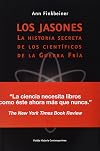
The Jasons: The Secret History of Science's Postwar Elite
by Ann Finkbeiner
On This Page
Description
They call themselves Jason. Their group is a child of the Cold War, and they include scientific stars like Freeman Dyson and Murray Gell-Mann. They've inherited a mission from the Manhattan Project--to counsel the government on the military uses of pure science--and have gathered every summer since 1960 to solve classified problems for the Department of Defense and the intelligence community. Aside from a brief media firestorm during the Vietnam War, they've worked in secrecy with show more unparalleled freedom. The Jasons have been responsible for breakthroughs ranging from the electronic battlefield to the "Star Wars" missile defense technologies to the national system for predicting global climate. But their mission to keep a vigil over applied science has led them into both moral dilemmas and political stews. Here, science writer Finkbeiner reveals the critical advances--and the unintended consequences--of the Jasons' shadowy work as well as the personalities of the Jasons themselves.--From publisher description. show lessTags
Recommendations































Member Reviews
The Jasons are the most powerful people you've never heard of. An elite advisory group composed of a veritable who's who of American physics, the Jasons have been providing cutting edge scientific expertise to the Department of Defense and other agencies for nearly fifty years.
Finkbeiner manages to depict both the personal charisma and fascination of the Jasons, and their murky ethical role. True genius is strange, and appealing, and a large part of why Jason persists is the pleasure that it's members take in working with each other; a pleasure echoed in Finkbeiner description of interviews with luminaries such as John Wheeler (many worlds interpretation, black holes) and Freeman Dyson (polymath of the 20th century).
However, at the show more same time that they break new intellectual ground for the sheer joy of it, Jason is an integral part of the defense establishment, and works to improve weapons. Smart bombs, combat sensors, and strategic missile defense can all be traced back to Jason, and this book does an excellent job putting a human face on a scientist's many obligations: to knowledge, to humanity, and to his or her country. Jasons see themselves as patriots, but have been labelled as war criminals. On balance, even as advance the science of death, the Jasons have injected sanity and reason into nuclear armaggedon. The science that makes the comprehensive test ban treaty possible was pioneered by Jason, while adaptive optics and oceanic tomography have advanced natural science.
For good or ill, Jason is a unique organization, and one that any scholar of science policy should be familiar with as an exemplar of what can be done at the very top of science. show less
Finkbeiner manages to depict both the personal charisma and fascination of the Jasons, and their murky ethical role. True genius is strange, and appealing, and a large part of why Jason persists is the pleasure that it's members take in working with each other; a pleasure echoed in Finkbeiner description of interviews with luminaries such as John Wheeler (many worlds interpretation, black holes) and Freeman Dyson (polymath of the 20th century).
However, at the show more same time that they break new intellectual ground for the sheer joy of it, Jason is an integral part of the defense establishment, and works to improve weapons. Smart bombs, combat sensors, and strategic missile defense can all be traced back to Jason, and this book does an excellent job putting a human face on a scientist's many obligations: to knowledge, to humanity, and to his or her country. Jasons see themselves as patriots, but have been labelled as war criminals. On balance, even as advance the science of death, the Jasons have injected sanity and reason into nuclear armaggedon. The science that makes the comprehensive test ban treaty possible was pioneered by Jason, while adaptive optics and oceanic tomography have advanced natural science.
For good or ill, Jason is a unique organization, and one that any scholar of science policy should be familiar with as an exemplar of what can be done at the very top of science. show less
A biography of the Jasons, a loose group of top US scientists who independently work on both classified and non-classified projects of their own choosing, mostly for the Defense Department. I knew the names of many of the physicists named in the book (and who I didn't know were Jasons), and was surprised to discover that a former academic adviser of mine is now a member. It was an interesting glimpse into this secretive group of scientists and their role in US science policy throughout the cold war and beyond, mostly through interviews with members, supplemented with material from unpublished internal histories from both the DoD and the Jasons themselves.
I was impress with the use of the word ' anent ' too ( ! )
I was impress with the use of the word ' anent ' too ( ! )
The Sun,
April 18, 2006 Edition > Section: Arts and Letters Science for Better Government
Books
BY PETER PETTUS
URL: http://www.nysun.com/article/31164
extract:
The example of the Manhattan Project taught that a disparate group of strong-willed scientists, working together voluntarily, could achieve marvels. This was the model followed by the group of scientific advisers we now know as the Jasons. Originally formed by veterans of the Manhattan Project, the group included such gigantic personalities as Freeman Dyson, Edward Teller, Eugene Wigner, and Hans Bethe, and demonstrated how creative cooperation between scientists and the government could produce astonishing results.
In "The Jasons: The Secret History of Science's Postwar Elite" show more (Viking, 304 pages, $27.95),Ann Finkbeiner tells the remarkable story of how this small cadre of brilliant American scientists provided vital technological support to our government over a period of 46 years following the end of World War II. Her fascinating, often moving account of the history of the Jasons (named after the Golden Fleece hero) includes interviews with many current and former members, some of whom preferred to remain anonymous.
Although the existence of the group was never acknowledged openly, it was not the most closely guarded secret, either. Originally created by people close to the physicist John Archibald Wheeler in 1960, the idea behind the Jasons was to provide the Defense Department (actually, the Advanced Research Projects Agency) with practical answers to the many threats posed by the suddenly intensified Cold War. The arrival of Sputnik, which could just as well have been carrying a nuclear warhead, created a critical sense of urgency in the military. They needed creative solutions fast. Jason was created to provide them, just as the Manhattan Project had done during the World War II.
What distinguished this group from all the other science advisers that serve the government is the unique way it was organized. The association is voluntary and collegial, and, most important, it is independent. Members are invited to join not by the government, but by other Jasons. And Jason management worked with the government sponsors to decide what questions they would study, and Jasons themselves would work only on those studies that interested them.
Because all the elite members of the group have distinguished careers elsewhere in universities around the country, they meet during the summer months in La Jolla, Calif., and deal with questions put to them by ARPA and other government agencies. What always made the group feasible is the scientists' sheer excitement about the prospect of working with a bunch of really smart people on projects that were not simply theoretical but existed in the real world. This was applied technology that these theoretical physicists were working on, and, as Ms. Finkbeiner shows, most of the Jasons believed that their scientific role could exist in both realms, the theoretical and the practical. This remained true for the Jasons even when it led inevitably to difficult moral issues about the possible consequences of their work, much as it had for the Manhattan group earlier.
Motivated by a sense of responsibility for how the country uses the products of science to defend itself, most Jasons accepted this conflict. As Freeman Dyson expressed it, "We are scientists second and human beings first." "We became politically involved," he wrote, "because knowledge implies responsibility." The atomic genie was out of the bottle forever, and many of America's leading scientists, especially the Jasons, chose engagement, rather than withdrawal to the academy. In addition, Ms. Finkbeiner came to believe that these people were deeply, if indemonstrably, patriotic. show less
April 18, 2006 Edition > Section: Arts and Letters Science for Better Government
Books
BY PETER PETTUS
URL: http://www.nysun.com/article/31164
extract:
The example of the Manhattan Project taught that a disparate group of strong-willed scientists, working together voluntarily, could achieve marvels. This was the model followed by the group of scientific advisers we now know as the Jasons. Originally formed by veterans of the Manhattan Project, the group included such gigantic personalities as Freeman Dyson, Edward Teller, Eugene Wigner, and Hans Bethe, and demonstrated how creative cooperation between scientists and the government could produce astonishing results.
In "The Jasons: The Secret History of Science's Postwar Elite" show more (Viking, 304 pages, $27.95),Ann Finkbeiner tells the remarkable story of how this small cadre of brilliant American scientists provided vital technological support to our government over a period of 46 years following the end of World War II. Her fascinating, often moving account of the history of the Jasons (named after the Golden Fleece hero) includes interviews with many current and former members, some of whom preferred to remain anonymous.
Although the existence of the group was never acknowledged openly, it was not the most closely guarded secret, either. Originally created by people close to the physicist John Archibald Wheeler in 1960, the idea behind the Jasons was to provide the Defense Department (actually, the Advanced Research Projects Agency) with practical answers to the many threats posed by the suddenly intensified Cold War. The arrival of Sputnik, which could just as well have been carrying a nuclear warhead, created a critical sense of urgency in the military. They needed creative solutions fast. Jason was created to provide them, just as the Manhattan Project had done during the World War II.
What distinguished this group from all the other science advisers that serve the government is the unique way it was organized. The association is voluntary and collegial, and, most important, it is independent. Members are invited to join not by the government, but by other Jasons. And Jason management worked with the government sponsors to decide what questions they would study, and Jasons themselves would work only on those studies that interested them.
Because all the elite members of the group have distinguished careers elsewhere in universities around the country, they meet during the summer months in La Jolla, Calif., and deal with questions put to them by ARPA and other government agencies. What always made the group feasible is the scientists' sheer excitement about the prospect of working with a bunch of really smart people on projects that were not simply theoretical but existed in the real world. This was applied technology that these theoretical physicists were working on, and, as Ms. Finkbeiner shows, most of the Jasons believed that their scientific role could exist in both realms, the theoretical and the practical. This remained true for the Jasons even when it led inevitably to difficult moral issues about the possible consequences of their work, much as it had for the Manhattan group earlier.
Motivated by a sense of responsibility for how the country uses the products of science to defend itself, most Jasons accepted this conflict. As Freeman Dyson expressed it, "We are scientists second and human beings first." "We became politically involved," he wrote, "because knowledge implies responsibility." The atomic genie was out of the bottle forever, and many of America's leading scientists, especially the Jasons, chose engagement, rather than withdrawal to the academy. In addition, Ms. Finkbeiner came to believe that these people were deeply, if indemonstrably, patriotic. show less
Ratings
Members
- Recently Added By
Author Information
3+ Works 372 Members
Ann Finkbeiner runs the graduate program in science writing at Johns Hopkins University.
Some Editions
Awards and Honors
Awards
Classifications
Statistics
- Members
- 230
- Popularity
- 141,052
- Reviews
- 6
- Rating
- (3.18)
- Languages
- English, Greek, Spanish
- Media
- Paper, Ebook
- ISBNs
- 7
- ASINs
- 2