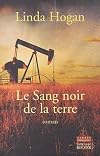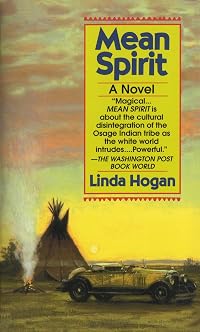
Mean Spirit
by Linda Hogan
On This Page
Description
Early in this century, rivers of oil were found beneath Oklahoma land belonging to Indian people, and beautiful Grace Banket became the richest person in the Territory. But she was murdered by the greed of white men, and the Graycloud family, who cared for her daughter, began dying mysteriously. Letters sent to Washington, D.C. begging for help went unanswered, until at last a Native American government official, Stace Red Hawk, traveled west to investigate. What he found has been documented show more by history: rampant fraud, intimidation, and murder. But he also found something truly extraordinary--his deepest self and abiding love for his people, and their brave past. show lessTags
Recommendations











Member Reviews
This was recommended to me as an earlier version (1990) of the noted book and movie Killers of the Flower Moon (2017), about the murder and destruction of the Osage tribe members who were landowners of sparse territory by government decree who became wealthy holders of oil leases in Oklahoma in the 1920s. All the violence perpetrated and the vast corruption of almost every single white man charged with distributing payments to tribal property owners and with investigating the murders of the tribe that had been forcibly removed from their land during the Trail of Tears is a horrifying story. This book is told from the viewpoints of tribal members, who realize way too late that they are still not perceived as human beings, but "just show more Indians", as the genocide continues. Their demands for justice are thwarted even by traitors within their own tribe. The Greycloud family is aided by a former government agent, Lakota Sioux Stace Red Hawk, and his transition to become a protector of the Osage residents is inspiring, if mostly futile. This is a heartbreaking book, encompassing the clash of the law/lawless and the rituals and rites of the old ways. show less
Linda Hogan’s 1990 novel Mean Spirit is a fictionalized version of real life events that took place in Oklahoma during the early 1920s after oil was discovered under land owned by members of the Osage Indian tribe. Almost as soon as the oil was discovered, white men schemed to take the newfound wealth for themselves by forcing the Osage families from their homes or by marrying Osage women who held the mineral rights in their own names. Multiple members of the tribe were murdered, and whole families were forced to flee the region in fear of their lives. Even today (this quote is from 1990), according to Hogan, “Non-Indian shareholders still receive Osage Indian annuity checks, shares in the Mineral Trust, and unwarranted benefits as show more shareholders.” Mean Spirit tells the story of the people from whom the “non-Indians” stole all that money.
The beautiful Grace Blanket never expected to become the richest woman in the entire Oklahoma Territory, but after oil is discovered beneath the otherwise worthless reservation land given to her family by the US government decades earlier, that is exactly what she is. The Blankets have so much money they are running out of things to spend it on — and some of the other Osage families who live near the Blanket family are having the same problem. But that is not the only problem the Osage families have because, unbeknownst to them, the struggling white families living in the nearest town, the various oil men who come to the territory, and the very government agents responsible for protecting the rights of the Osage tribe all want that money for themselves — and some of them will do anything it takes to get their hands on it.
When members of the tribe start committing “suicide,” dying from “heart attacks,” and otherwise dropping dead all over the reservation, other Indians like the Blankets and the Grayclouds are at first a little slow in realizing just how much danger they are all in. It is only after their pleas for help are ignored by Washington D.C. officials, and the bodycount continues to rise, that they realize they are under a relentless siege by outsiders that will not end until all of the oil money has been stolen from them. The more traditional among them literally pack up and move to the hills where they feel safer; the less traditional families load up all of their belongings and leave the area completely, abandoning their property in the process.
Linda Hogan tells the story from the points of view of multiple characters who struggle to deal with the reality of what is happening to their family, friends, and neighbors as they are picked off one by one by the scavengers around them. The Indians have no place to turn to for help because even the one agent from Washington who has their best interests at heart, himself an American Indian, is treated by his fellow agents as if he is losing his mind. By the time the Osage get some semblance of justice and protection, it will be way too late. There is no just compensation for murder and theft of this scale when no one really seems to care.
Bottom Line: Mean Spirit is based on a shameful segment of American history that even today too few people know about. It covers the same events that, twenty-seven years later, became the basis of David Grann’s well-received nonfiction book on the same subject, Killers of the Flower Moon. Before writing the novel, Linda Hogan (who is herself a member of the Chickasaw tribe) spoke to people who are still separated from the land that is rightfully theirs because their ancestors fled the area in the middle of the night. The story that Mean Spirit tells is a moving one, but Hogan’s fiction style is somewhat labored and, as a result, the book’s 375 pages do make for slow reading. This one requires patience, but it is well worth the effort. show less
The beautiful Grace Blanket never expected to become the richest woman in the entire Oklahoma Territory, but after oil is discovered beneath the otherwise worthless reservation land given to her family by the US government decades earlier, that is exactly what she is. The Blankets have so much money they are running out of things to spend it on — and some of the other Osage families who live near the Blanket family are having the same problem. But that is not the only problem the Osage families have because, unbeknownst to them, the struggling white families living in the nearest town, the various oil men who come to the territory, and the very government agents responsible for protecting the rights of the Osage tribe all want that money for themselves — and some of them will do anything it takes to get their hands on it.
When members of the tribe start committing “suicide,” dying from “heart attacks,” and otherwise dropping dead all over the reservation, other Indians like the Blankets and the Grayclouds are at first a little slow in realizing just how much danger they are all in. It is only after their pleas for help are ignored by Washington D.C. officials, and the bodycount continues to rise, that they realize they are under a relentless siege by outsiders that will not end until all of the oil money has been stolen from them. The more traditional among them literally pack up and move to the hills where they feel safer; the less traditional families load up all of their belongings and leave the area completely, abandoning their property in the process.
Linda Hogan tells the story from the points of view of multiple characters who struggle to deal with the reality of what is happening to their family, friends, and neighbors as they are picked off one by one by the scavengers around them. The Indians have no place to turn to for help because even the one agent from Washington who has their best interests at heart, himself an American Indian, is treated by his fellow agents as if he is losing his mind. By the time the Osage get some semblance of justice and protection, it will be way too late. There is no just compensation for murder and theft of this scale when no one really seems to care.
Bottom Line: Mean Spirit is based on a shameful segment of American history that even today too few people know about. It covers the same events that, twenty-seven years later, became the basis of David Grann’s well-received nonfiction book on the same subject, Killers of the Flower Moon. Before writing the novel, Linda Hogan (who is herself a member of the Chickasaw tribe) spoke to people who are still separated from the land that is rightfully theirs because their ancestors fled the area in the middle of the night. The story that Mean Spirit tells is a moving one, but Hogan’s fiction style is somewhat labored and, as a result, the book’s 375 pages do make for slow reading. This one requires patience, but it is well worth the effort. show less
Rating this book is a complicated thing and how a person rates it would be heavily impacted by the criteria they're using. I mean, I realize that's a super general thing to say that's applicable to any review but when reflecting on this book it really hit home. Am I rating whether or not it was an enjoyable read? Because it wasn't. It was depressing as hell. But so was The Grapes of Wrath and I have a freaking tattoo from that book. Am I rating whether or not the writing is good? Because it is but it's also hard. Not the word usage but the fact that for the first seventy-five or so pages there are so many god damn characters that I had to give up trying to keep them straight in the grander scheme and just concentrate on what the show more character in front of me was doing on the specific page I was reading. Once the background was set up and the author focused on the key characters it was much smoother sailing and inevitably worth it.
This book tells the story of Native Americans (the author uses the term Indians) living in Oklahoma in the 1920s. This particular tribe was deeded land by the U.S. that ended up being oil rich as all hell. Some folks fond themselves mighty wealthy and then a bunch of murdering started up. There's also a lot of horse training going on.
The story was depressing because, though this particular tale may be fictionalized, it was - and still is - a reality for way too many indigenous people. I was also sort of uncomfortable with this book being deemed magical realism. I get why but the only real "magic" stuff going on was actual native ceremonies and I think it's beyond rude to refer to them as "magic". Well, and that guy that died but then was sort-of alive and more human than ghost - enough to marry someone, I guess. So there's that. OK, I guess I'm comfortable with the term. Forgive me, fearless readers. show less
This book tells the story of Native Americans (the author uses the term Indians) living in Oklahoma in the 1920s. This particular tribe was deeded land by the U.S. that ended up being oil rich as all hell. Some folks fond themselves mighty wealthy and then a bunch of murdering started up. There's also a lot of horse training going on.
The story was depressing because, though this particular tale may be fictionalized, it was - and still is - a reality for way too many indigenous people. I was also sort of uncomfortable with this book being deemed magical realism. I get why but the only real "magic" stuff going on was actual native ceremonies and I think it's beyond rude to refer to them as "magic". Well, and that guy that died but then was sort-of alive and more human than ghost - enough to marry someone, I guess. So there's that. OK, I guess I'm comfortable with the term. Forgive me, fearless readers. show less
Mean Spirit recounts a bloody year in Indian country in Oklahoma and the injustices against the Osage people who were stripped of their land and some cases their lives. I loved the way Hogan builds the world of the town of Watona and the details of the cultural resurgence in the people, some who were devout Baptists at the beginning of the novel. This cultural insight is a fantastic element of the book and a credit to a lot of research and understanding. However there was a times an uneven amount of detail and the pace of the novel felt lurching, especially when the interweaving stories of the characters were either not addressed or quickly wrapped up at the end. I expected a bit more of a poet's attention to density of language rather show more than an spilling over of narrative threads and a lot of exposition. show less
I was led to this fictional story of the Osage thru a discussion about Hogan's writing possibly being given short shrift after the non fiction version of some of her story "Killers of the Flower Moon" came out. I wish I'd read it before I'd read the non fiction one. I possibly would have been able to appreciate the story better. I found myself wanting to know how much was accurate and how much was legend, and was frustrated in that search. Hence I only got thru 1/2 of the book.
Tämä tarina saa ihmisen niin vihaiseksi ja särkee sydämen. Ja silti se on pakko lukea. Pakko.
I love her stuff. She's a beautiful writer, her descriptions are amazingly vivid and I fall in love with at least one of her characters in every book.
Members
- Recently Added By
Lists

500 Great Books by Women
507 works; 60 members

Top 100 books by Indigenous Masters
134 works; 7 members

Indigenous America Reader
145 works; 12 members

Pulitzer Prize for Fiction - Finalists
88 works; 9 members
Author Information

23+ Works 2,342 Members
Linda Hogan--a Chickasaw writer whose work draws heavily on Native American culture--was born in Denver, Colorado, in 1947. A poet, novelist, screenwriter, and playwright, Hogan writes about topics related to the experiences of Native Americans as well as the relationship between humans and the environment. Her acclaimed first novel, Mean Spirit, show more focused on violence in the Osage Indian community during the Oklahoma oil boom of the 1920s. She has also published volumes of poetry and essays. Hogan has received grants from the National Endowment for the Arts and the Guggenheim Foundation and has taught at University of Colorado, University of Denver, and the University of Minnesota. (Bowker Author Biography) Linda Hogan has published several books of poetry, essays, and fiction. She lives in Colorado. (Bowker Author Biography) Linda Hogan is the recipient of an American Book Award. Her novel, "Mean Spirit," was a finalist for the Pulitzer Prize. She lives in Idledale, Colorado. (Bowker Author Biography) show less
Some Editions
Awards and Honors
Awards
Series
Belongs to Publisher Series
Gallimard, Folio (4372)
Common Knowledge
- Canonical title
- Mean Spirit
- Original title
- Mean Spirit
- Original publication date
- 1990
- People/Characters
- Grace Blanket; Nora Blanket
- Important places
- Oklahoma, USA
- Dedication
- In memory of Carol Hunter,
Osage woman, scholar, and friend - First words
- Oklahoma 1922
That summer a water diviner named Michael Horse forecast a two-week dry spell. - Last words
- (Click to show. Warning: May contain spoilers.)The night was on fire with their past and they were alive.
- Blurbers
- Erdrich, Louise; Hillerman, Tony; Harrison, Jim; Kitteridge, William
Classifications
Statistics
- Members
- 399
- Popularity
- 78,086
- Reviews
- 7
- Rating
- (3.81)
- Languages
- English, French
- Media
- Paper, Ebook
- ISBNs
- 7
- ASINs
- 5