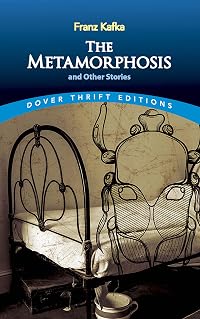
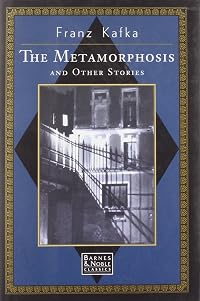
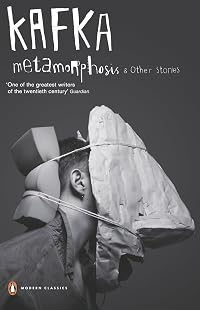
The Metamorphosis and Other Stories [Dover]
by Franz Kafka 
On This Page
Description
Since his death in 1924, Kafka has come to be regarded as one of the greatest modern writers, one whose work brilliantly explores the anxiety, futility, and complexity of modern life. The precision and clarity of Kafka's style, its powerful symbolism, and his existential exploration of the human condition have given his work universal significance. In addition to the title selection, considered by many critics Kafka's most perfect work, this collection includes "The Judgment," "In the Penal show more Colony," "A Country Doctor," and "A Report to an Academy." Stanley Appelbaum has provided excellent new English translation of the stories and a brief Note placing them within Kafka's oeuvre. A selection of the Common Core State Standards Initiative. show lessTags
Recommendations










Member Reviews
Overall I would say I like Kafka, but some of these stories were definitely stronger than others... Obviously The Metamorphosis is a masterpiece but I found a lot of the others to be mediocre and didn't "wow" me like The Metamorphosis does. I would say if you're a die hard Kafka fan then this is a fine collection, but otherwise you might as well just read The Metamorphosis on its own. My other favorites of the collection were Before the Law, The Judgement, In the Penal Colony, A Hunger Artist, and A Report to An Academy. In general I thought the longer stories were much better than the really short ones. Also, it might be relevant that I read some of these for class and then finished the rest on my own. Discussing them definitely made a show more lot of these better. show less
Kafka is weird. There, I said it. And I usually like weird, but I'm still not quite sure what to think of Kafka. In a discussion with a friend about themes, it became a bit easier to read. I didn't have problems with the bug, or the killing device as much as I did with the characters' reactions.
When I mentioned that the ending in "The Judgement" felt kinda clunky, my friend said, "That's the thing about Kafka. He gets a free pass because he's Kafka. The ending is clunky, but because he's Kafka, people wonder if they're missing something."
Note to self: Kafka is not god, his work is not perfect. (Weird, but not perfect.)
In "The Metamorphosis," one of the themes is being worthwhile. This poor man works hard to support his family, but in show more return, they and the bureaucrats he works for believe him to be nothing more than a "bug." And all anyone can do is be horrified that he can no longer work and treat him even more poorly.
"In The Penal Colony" was horrifying. Not because of the actual killing device, but is pretty horrific on its own, but for the attitude of The Officer toward crime and punishment. 30 years later, George Orwell published Nineteen Eighty-Four. The extreme belief that anyone showing any humanity towards others is weak, haunts us every day. On a light note, if there is one, I kept hearing Sylvester Stallone in "Judge Dredd" saying, "I AM the law" whenever The Officer spoke about how The Condemned had come to be condemned. It's a pretty damning statement against government (being published the year after WWI ended), dictatorships and those who stand by and do nothing.
As for "The Country Doctor" and "A Report to the Academy," well, those were more of the same weirdness.
In sum, I'm not sorry I read this. Not sorry, but not necessarily glad. I can now say I've read Kafka and understand what the meaning of the word "Kafkaesque" is. I don't need to read any more. show less
When I mentioned that the ending in "The Judgement" felt kinda clunky, my friend said, "That's the thing about Kafka. He gets a free pass because he's Kafka. The ending is clunky, but because he's Kafka, people wonder if they're missing something."
Note to self: Kafka is not god, his work is not perfect. (Weird, but not perfect.)
In "The Metamorphosis," one of the themes is being worthwhile. This poor man works hard to support his family, but in show more return, they and the bureaucrats he works for believe him to be nothing more than a "bug." And all anyone can do is be horrified that he can no longer work and treat him even more poorly.
"In The Penal Colony" was horrifying. Not because of the actual killing device, but is pretty horrific on its own, but for the attitude of The Officer toward crime and punishment. 30 years later, George Orwell published Nineteen Eighty-Four. The extreme belief that anyone showing any humanity towards others is weak, haunts us every day. On a light note, if there is one, I kept hearing Sylvester Stallone in "Judge Dredd" saying, "I AM the law" whenever The Officer spoke about how The Condemned had come to be condemned. It's a pretty damning statement against government (being published the year after WWI ended), dictatorships and those who stand by and do nothing.
As for "The Country Doctor" and "A Report to the Academy," well, those were more of the same weirdness.
In sum, I'm not sorry I read this. Not sorry, but not necessarily glad. I can now say I've read Kafka and understand what the meaning of the word "Kafkaesque" is. I don't need to read any more. show less
The Metamorphosis definately makes you see how insignificant your life really is to others. While you are useful you are loved and valued. When you are no longer useful you begin to be an annoyance and when you have descended to being uncomfortable and a burden to others they wish you to disappear altogether. Fantastic story of a man's life reduced to that of a bug.
The Penal Colony is a valuable statement of how too much power in one man's hands to exercise judgement is terrifying. Do not read this if your squeamish, it's pretty gruesome.
I loved all of the stories in this edition.
The Penal Colony is a valuable statement of how too much power in one man's hands to exercise judgement is terrifying. Do not read this if your squeamish, it's pretty gruesome.
I loved all of the stories in this edition.
Superb collection by modern master explores the complexity, anxiety, and futility of modern life. Excellent new English translations of the title story — considered by many critics Kafka's most perfect work — plus "The Judgment," "In the Penal Colony," "A Country Doctor" and "A Report to an Academy." A selection of the Common Core State Standards Initiative.
In Kafka's "The Metamorphosis," Gregor Samsa awakes one morning to find himself transformed into a giant insect. The theme of personal transformation is clear and the items which are obvious metaphors (e.g. Samsa being an insect, the apple lodged in his back), will allow students to explore what their intended meaning could have been.
This book also includes "The Judgement," "In the Penal Colony," "A Country Doctor," and "A Report to an Academy."
This book also includes "The Judgement," "In the Penal Colony," "A Country Doctor," and "A Report to an Academy."
I love "The Metamorphosis" and have read it several times. I know some people probably think I'm crazy. (My friend, Natalie, said she could never get over the giant bug thing.) Personally, I love the weirdness of the Modernist period.
The Metamorphosis was required reading for me in school, and I have since re-visited it a few times. Short, powerful, and well worth anyone's time.
Members
- Recently Added By
Lists

New York Public Library's Books of the Century
120 works; 19 members

First published in 1915
87 works; 11 members

recalling favorites...
105 works; 2 members

Sonlight Books
1,487 works; 25 members

el
1,139 works; 1 member

20th Century Literature
1,161 works; 54 members
Author Information

1,509+ Works 103,895 Members
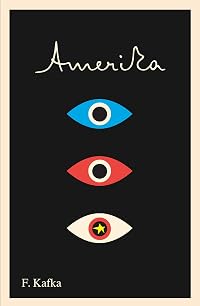
Franz Kafka -- July 3, 1883 - June 3, 1924 Franz Kafka was born to middle-class Jewish parents in Prague, Czechoslovakia on July 3, 1883. He received a law degree at the University of Prague. After performing an obligatory year of unpaid service as law clerk for the civil and criminal courts, he obtained a position in the workman's compensation show more division of the Austrian government. Always neurotic, insecure, and filled with a sense of inadequacy, his writing is a search for personal fulfillment and understanding. He wrote very slowly and deliberately, publishing very little in his lifetime. At his death he asked a close friend to burn his remaining manuscripts, but the friend refused the request. Instead the friend arranged for publication Kafka's longer stories, which have since brought him worldwide fame and have influenced many contemporary writers. His works include The Metamorphosis, The Castle, The Trial, and Amerika. Kafka was diagnosed with tuberculosis (TB) in August 1917. As his disease progressed, his throat became affected by the TB and he could not eat regularly because it was painful. He died from starvation in a sanatorium in Kierling, near Vienna, after admitting himself for treatment there on April 10, 1924. He died on June 3 at the age of 40. (Bowker Author Biography) show less
Franz Kafka has a Legacy Library. Legacy libraries are the personal libraries of famous readers, entered by LibraryThing members from the Legacy Libraries group.
Some Editions
Awards and Honors
Series
Belongs to Publisher Series
Work Relationships
Is contained in
Common Knowledge
- Canonical title
- The Metamorphosis and Other Stories [Dover]
- Alternate titles
- The Metamorphosis and Other Stories
- Original publication date
- 1915
- People/Characters
- Gregor Samsa; Georg Bendemann; The Traveler; The Officer; The Condemned; The Soldier
- Related movies
- Die Verwandlung (1975 | IMDb | TV); Förvandlingen (1976 | IMDb); The Metamorphosis of Mr. Samsa (1977 | IMDb); Metamorphosis (1987 | IMDb | TV); Metamorphosis: Beyond the Screen Door (1997 | IMDb); Prevrashchenie (2002 | IMDb) (show all 8); La metamorfosis (2007 | IMDb); A Metamorfose (2007 | IMDb)
- First words
- It was on a Sunday morning in the loveliest part of the spring.
- Last words
- (Click to show. Warning: May contain spoilers.)Anyway, I don't want any human being's opinion, I merely wish to disseminate information, I am merely making a report; even to you, gentlemen of the Academy, I have merely made a report.
- Disambiguation notice
- There are multiple anthologies with the same title. This one contains:
"The Judgement";
"The Metamorphosis";
"In the Penal Colony"
"A Country Doctor"
"A Report to an Academy"
Please do not combine wi... (show all)th works that contain a different selection of stories
Classifications
- Genres
- Fiction and Literature, General Fiction
- DDC/MDS
- 833.912 — Literature & rhetoric German & related literatures German fiction 1900- 1900-1990 1900-1945
- LCC
- PT2621 .A26 .A225 — Language and Literature German, Dutch and Scandinavian literatures German literature Individual authors or works 1860/70-1960
- BISAC
Statistics
- Members
- 1,861
- Popularity
- 11,616
- Reviews
- 11
- Rating
- (3.97)
- Languages
- English, French
- Media
- Paper, Audiobook, Ebook
- ISBNs
- 14
- UPCs
- 2
- ASINs
- 4