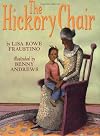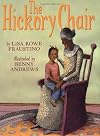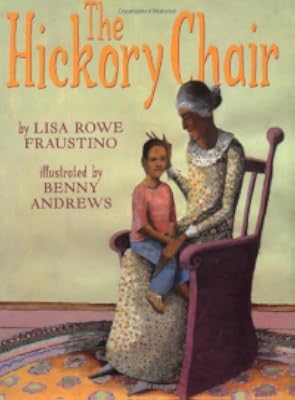
The Hickory Chair
by Lisa Rowe Fraustino
On This Page
Description
A blind boy tells of his warm relationship with his grandmother and the gift she left for him after her death.Tags
Recommendations























Member Reviews
The Hickory Chair is a beautifully written story about love and family. Louis is a blind boy who holds a special bond with his Gran. Although he cannot see her, he feels that he can because he knows her so well. When Gran passes, he believes she has forgotten him by not leaving something for him. He soon realizes that the memories they shared is what truly matters.
The descriptive language paints such a vivid picture for the reader. The words were drenched with warmth and affection. The hickory chair was the ultimate symbol of the love and bond Louis and his gran shared and stood as a treasure chest full of memories.
Their connection reminded me of the bond I shared with my grandmothers. Louis focused so lovingly on her smell. I can show more still smell my grandmother from certain trinkets I have of hers, which floods my mind with memories. This book does a wonderful job of showing that just because one can’t see, that doesn’t mean their experiences are lessened in any way. Although this book deals with blindness, it ultimately highlights the importance of family and the love that is shared. show less
The descriptive language paints such a vivid picture for the reader. The words were drenched with warmth and affection. The hickory chair was the ultimate symbol of the love and bond Louis and his gran shared and stood as a treasure chest full of memories.
Their connection reminded me of the bond I shared with my grandmothers. Louis focused so lovingly on her smell. I can show more still smell my grandmother from certain trinkets I have of hers, which floods my mind with memories. This book does a wonderful job of showing that just because one can’t see, that doesn’t mean their experiences are lessened in any way. Although this book deals with blindness, it ultimately highlights the importance of family and the love that is shared. show less
I really enjoyed this story. It was a little bitter sweet and incorporated many different aspects to deepen what made the main characters of the story who they were. The book tied many different themes into one: the loss of a family member, forgiveness, hope, physical disabilities, and love. The main character of this story is a little blind child who shares a really special connection with his grandmother. They often read together in an old hickory chair. When the grandmother passes away, the child is devastated that he cannot find the note that his grandmother leaves behind, even when he has found everyone else’s while being blind. However, he is able to overcome his disappointment and believe in his grandmother’s love for him, show more eventually finding the note when he himself becomes a grandfather. It is a really heartwarming story and is well written in that the story flows really well and the writing holds a certain sentiment that had to have affected the author in a very personal way: “The cushion sighed a good clean smell, lilacs, with a whiff of bleach. Gran’s shape was rocked into the seat…The lost note no longer mattered. In that chair, I was on Gran’s lap again.” I love how the author depicts how this child deals with loss in such a positive way. The book could serve as a really good example to young children who are going through loss in their own families. Finally, the pictures in the book were very well done. I loved how they did not show too much detail. The colors all blurred together and gave off a feeling of a fond memory. I think it really added a lot of depth to the story. show less
"In this loving, warmly sentimental tale an old man fondly remembers his childhood days with his grandmother. Louis may be blind but that doesn’t stop him from sniffing out Gran, with her bleach-and-lilac scent, wherever she may be hiding, or playing “touch your nose” with her and a mirror, or listening to her “molasses voice” as she reads aloud, sitting in a favorite hickory chair. When Gran dies, Louis’s family gathers to reminisce, and learns from her will that she’s hidden notes in the possessions she wanted specific people to have. Endowed with what Gran always called “blind sight,” Louis proves best at finding those notes—but not one is addressed to him. Given the option to pick anything he’d like to keep, he show more chooses the chair. Restrained colors and upright, elongated figures give both feelings of dignity and intimacy to Andrews’s (Sky Sash So Blue, 1998) paint and fabric tableaux; facial features are shadowed or indistinct, but the body language clearly expresses the warmth and respect with which this family is bound. On a sweet closing note, the aging Louis finds his own youngest grandchild asleep in that hickory chair, her fist around an old, long-lost message that had been hidden in the padding for so many years. It says that the chair is meant to be his, of course, as he knew all along. A fine story with a theme seldom visited. (Picture book. 6-9)" show less
Louis and his grandmother play games together, and have a wonderful relationship. One day, as all grandparents will someday, she passes away. However, over the years, the grandmother has hidden away different notes assigning various belongings to his family. This wonderful tale tells the story of Louis finding his grandmother's note where he least expects it.
Perhaps the most interesting part of this book, however, is that Louis is blind. As mentioned in other reviews, not all disability fiction treats its main characters as people, and this book does that perfectly. Louis is treated as a normal kid, not someone to be pitied. Because of this, I find The Hickory Chair to be a wonderful example of what "disability fiction" is supposed to be.
Perhaps the most interesting part of this book, however, is that Louis is blind. As mentioned in other reviews, not all disability fiction treats its main characters as people, and this book does that perfectly. Louis is treated as a normal kid, not someone to be pitied. Because of this, I find The Hickory Chair to be a wonderful example of what "disability fiction" is supposed to be.
Luis can't actually see his Gran but he'd recognize her anywhere between that lilacs with a whiff of bleach smell and that rich molasses voice. When Gran dies, she leaves hidden notes for every one of her family members, every one except for Luis it may seem. It isn't until years later, when Luis has grandkids of his own that Luis finds his note. "The Hickory Chair" is about that special relationship between a child and their grandparents and how that love can be limitless.
This is such a touching story. When the book started, I had no clue that he was blind until Louis said it. I think the author did a great job depicting the love a grandmother has for her grandchildren. I like how they portrayed Louis to be a normal boy and didn’t start out by showing his disability. I was also fascinated with how cool he recognized her by her scent. Definitely was emotional when his grandmother passed, but amazing he was able to share the moments he did when she was still alive. The hickory chair was the ultimate symbol of the memories they shared. This was so beautifully written and even made me forget Louis was blind because I was so captivated with his relationship with his grandmother.
Genre: Realistic Fiction
Age Appropriateness: primary
Media: oils and fabric collage
Characterization: Gran is a constant, flat and static character. In the book you know nothing about her except that she is the boys grandmother, and you don't learn anything about her, because she dies in the beginning of the book. You learn a little bit more about her life through the development of the other characters, but she remains constant. Even when she is talked about her actions are absolute and very dependable.
Plot: person against nature
Review: This is a great example for realistic fiction, because of its relation to children with impaired sight. You don't realize that the main boy is blind until half way through the book. At the beginning the show more author makes it seem like the boy is normal and that he can see perfectly, but that he is rather choosing to describe his Gran by the way she smells and sounds. The whole book is held together by this boys descriptions. Therefore it is a very realistic description of what a young child's perceptions of the world would be. show less
Age Appropriateness: primary
Media: oils and fabric collage
Characterization: Gran is a constant, flat and static character. In the book you know nothing about her except that she is the boys grandmother, and you don't learn anything about her, because she dies in the beginning of the book. You learn a little bit more about her life through the development of the other characters, but she remains constant. Even when she is talked about her actions are absolute and very dependable.
Plot: person against nature
Review: This is a great example for realistic fiction, because of its relation to children with impaired sight. You don't realize that the main boy is blind until half way through the book. At the beginning the show more author makes it seem like the boy is normal and that he can see perfectly, but that he is rather choosing to describe his Gran by the way she smells and sounds. The whole book is held together by this boys descriptions. Therefore it is a very realistic description of what a young child's perceptions of the world would be. show less
Members
- Recently Added By
Lists

Five in a Row
144 works; 8 members

Five in a Row
174 works; 2 members

Book Review Roundup
254 works; 2 members
Author Information

10+ Works 984 Members
All Editions
Awards and Honors
Awards
Distinctions
Classifications
Statistics
- Members
- 400
- Popularity
- 77,810
- Reviews
- 51
- Rating
- (4.37)
- Languages
- English
- Media
- Paper
- ISBNs
- 2
- ASINs
- 1