On This Page
Description
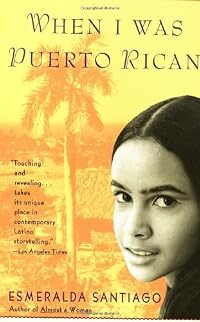
One of "The Best Memoirs of a Generation" (Oprah's Book Club): a young woman's journey from the mango groves and barrios of Puerto Rico to Brooklyn, and eventually on to Harvard. In a childhood full of tropical beauty and domestic strife, poverty and tenderness, Esmeralda Santiago learned the proper way to eat a guava, the sound of tree frogs, the taste of morcilla, and the formula for ushering a dead baby's soul to heaven. But when her mother, Mami, a force of nature, takes off to New York show more with her seven, soon to be eleven children, Esmeralda, the oldest, must learn new rules, a new language, and eventually a new identity. In the first of her three acclaimed memoirs, Esmeralda brilliantly recreates her tremendous journey from the idyllic landscape and tumultuous family life of her earliest years, to translating for her mother at the welfare office, and to high honors at Harvard. show lessTags
Recommendations


Member Reviews
"Con la musica por dentro"...with the music inside...perfectly describes Negi the main protagonist in Esmeralda's Santiago's memoir When I Was Puerto Rican. I read this one with as a buddy read with @idleutopia_reads and some other awesome bookstagrammers and it couldn't have come at a more perfect time.
From the moment I started reading this I knew that Negi and I shared the same spirit: the spirit of a fighter, one who questions everything, one who challenges authority and makes her own rules and her own space in an uber masculine world that seeks to break you. No matter what tragedy happened, she just pushed through and it fueled her determination to save herself from her circumstances. My mother used to tell me I had " la musica por show more dentro" and I never understood what it meant. All I knew was that I was sensitive to people's pain but I was also a rebel who could not be tamed or silenced.
There are books that come into your life that give you glimpses of your younger self, your journey, your homeland and more importantly your beloved culture and ancestry. Representation in books is far and in between but this one spoke to me deeply on a visceral level. It transported me to Puerto Rico and places that I loved to visit as little girl. It brought back memories of my grandparents and it also gave me snippets of what my mother's life was like when she first moved to NYC. I gave me some new history about my neighborhood and made me feel more connected to my Puerto Rican roots. It gave me new insight into my own parents' experiences and it provided validation for their own migration stories.
This book touched me in so many ways that I can't help but cry and smile at the same time. The little girl in me that was just like Negi has found reconciliation and newfound pride in the pages. Negi's story is one that I will revisit over and over because it reminded me that the undying fire that lives inside of me burns for a reason. I am reminded who I fight for every day. Thank you Esmeralda Santiago for sharing your life with the world. I am forever grateful. show less
From the moment I started reading this I knew that Negi and I shared the same spirit: the spirit of a fighter, one who questions everything, one who challenges authority and makes her own rules and her own space in an uber masculine world that seeks to break you. No matter what tragedy happened, she just pushed through and it fueled her determination to save herself from her circumstances. My mother used to tell me I had " la musica por show more dentro" and I never understood what it meant. All I knew was that I was sensitive to people's pain but I was also a rebel who could not be tamed or silenced.
There are books that come into your life that give you glimpses of your younger self, your journey, your homeland and more importantly your beloved culture and ancestry. Representation in books is far and in between but this one spoke to me deeply on a visceral level. It transported me to Puerto Rico and places that I loved to visit as little girl. It brought back memories of my grandparents and it also gave me snippets of what my mother's life was like when she first moved to NYC. I gave me some new history about my neighborhood and made me feel more connected to my Puerto Rican roots. It gave me new insight into my own parents' experiences and it provided validation for their own migration stories.
This book touched me in so many ways that I can't help but cry and smile at the same time. The little girl in me that was just like Negi has found reconciliation and newfound pride in the pages. Negi's story is one that I will revisit over and over because it reminded me that the undying fire that lives inside of me burns for a reason. I am reminded who I fight for every day. Thank you Esmeralda Santiago for sharing your life with the world. I am forever grateful. show less
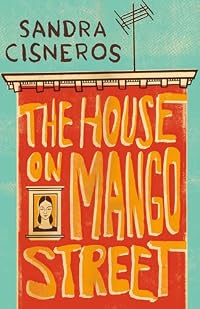
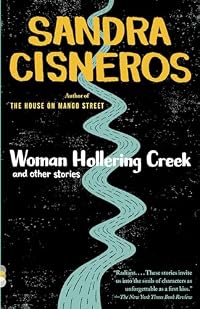
I loved this book beyond reason, but I admit for very personal reasons. This certainly resonated with me in ways someone without a Puerto Rican background wouldn't share, although that doesn't mean they wouldn't appreciate it. Just that my response to it was so personal I'm aware I didn't have an objective response to it at all. It was hard to see Esmeralda Santiago when I was constantly thinking of my own family and what we shared in our experiences and attitudes and background and what we didn't. I guess this is to me what A Tree Grows in Brooklyn might be for someone with an Irish background--not that I didn't love that book as a teen myself. But I've found few works about the Hispanic American experience that I could identify with show more and like. (I despised the celebrated House on Mango Street by Cisneros for instance.)
In a lot of ways mind you Santiago and I are very different--you could say her experience is much closer to the experience of my mother than myself. It was my mother and her family that was born and raised in Puerto Rico. I'm a native New Yorker who has only spent a few brief vacations in Puerto Rico, the longest one entire summer when I was a child, even if it was an indelible experience. But when Santiago spoke of the morivivi plant and the coquis (tree frogs) and mango and coconut trees, it sure brought back memories of that magical summer. Nor did I grow up in Hispanic neighborhoods or close to our extended family--but in integrated neighborhoods and buildings. So there are times I think growing up I didn't have a full context for things that Santiago illuminated. For instance, I have called my aunt "Titi" for as long as I can remember. I thought it was my word for her. As it turns out it's what Santiago called her aunts as well. Mind you, I have to admit feeling a bit disappointed in that... And "jibaro"--it was funny how different our families saw the word. She translated it as "country person" and mostly took pride in it as an identity. In my family it was disparaging--the Puerto Rican equivalent of hillbilly or redneck and used as a comment on bad taste or a display of ignorance or "low class" behavior. And we never, ever used the word "gringo" in our household so when I first heard the word, I thought of it as something Mexicans said of Americans--not Puerto Ricans. I think that reflects another difference between us and our families. Santiago expressed at times an ambivalence, a resentment of how moving to the American mainland made her a "hybrid." My family never looked back. Not that they ever forgot where they came from or were ashamed of being Puerto Ricans--but above all we were proud of being Americans, and the opportunities that opened to us, and happy to adapt and assimilate. Well, mostly--goodness knows my aunt is not to be separated from her Puerto Rican foods or cooking. She wouldn't, like Santiago, express any ambivalence about grabbing a guava... (or avocado, mango, bacaloa, or ugh pig feet.)
I'd add that even if my reaction to this felt so personal, I couldn't help but note this was "objectively" a good read. Santiago's a good, good writer. This is a memoir that read like a novel--one of those works of "creative non-fiction" I feel somewhat ambivalent about usually but was fine with here. I'd add that for all I compared this to A Tree Grows in Brooklyn and is a coming of age story that follows Santiago from about ten to fourteen years old, I wouldn't call this a Young Adult work. It's frank in sexual content for one--not G-rated, I'd call this PG-13 at least--you'll even learn some Spanish curse words (if you didn't already know them)--so keep that in mind. show less
In a lot of ways mind you Santiago and I are very different--you could say her experience is much closer to the experience of my mother than myself. It was my mother and her family that was born and raised in Puerto Rico. I'm a native New Yorker who has only spent a few brief vacations in Puerto Rico, the longest one entire summer when I was a child, even if it was an indelible experience. But when Santiago spoke of the morivivi plant and the coquis (tree frogs) and mango and coconut trees, it sure brought back memories of that magical summer. Nor did I grow up in Hispanic neighborhoods or close to our extended family--but in integrated neighborhoods and buildings. So there are times I think growing up I didn't have a full context for things that Santiago illuminated. For instance, I have called my aunt "Titi" for as long as I can remember. I thought it was my word for her. As it turns out it's what Santiago called her aunts as well. Mind you, I have to admit feeling a bit disappointed in that... And "jibaro"--it was funny how different our families saw the word. She translated it as "country person" and mostly took pride in it as an identity. In my family it was disparaging--the Puerto Rican equivalent of hillbilly or redneck and used as a comment on bad taste or a display of ignorance or "low class" behavior. And we never, ever used the word "gringo" in our household so when I first heard the word, I thought of it as something Mexicans said of Americans--not Puerto Ricans. I think that reflects another difference between us and our families. Santiago expressed at times an ambivalence, a resentment of how moving to the American mainland made her a "hybrid." My family never looked back. Not that they ever forgot where they came from or were ashamed of being Puerto Ricans--but above all we were proud of being Americans, and the opportunities that opened to us, and happy to adapt and assimilate. Well, mostly--goodness knows my aunt is not to be separated from her Puerto Rican foods or cooking. She wouldn't, like Santiago, express any ambivalence about grabbing a guava... (or avocado, mango, bacaloa, or ugh pig feet.)
I'd add that even if my reaction to this felt so personal, I couldn't help but note this was "objectively" a good read. Santiago's a good, good writer. This is a memoir that read like a novel--one of those works of "creative non-fiction" I feel somewhat ambivalent about usually but was fine with here. I'd add that for all I compared this to A Tree Grows in Brooklyn and is a coming of age story that follows Santiago from about ten to fourteen years old, I wouldn't call this a Young Adult work. It's frank in sexual content for one--not G-rated, I'd call this PG-13 at least--you'll even learn some Spanish curse words (if you didn't already know them)--so keep that in mind. show less
A beautifully written memoir. I like Ms. Santiago's style- it's very everyday and conversational. It reminds me of listening to my father-in-law's stories of growing up in Puerto Rico as a young boy. As another reviewer pointed out, very few lives naturally have the story arc that a well-crafted novel would generally have, so the memoir is episodic and a little scatter-brained, but I think that this is not a bad thing. I think it fits, seeing as how this is a book about the first thirteen or fourteen years of Ms. Santiago's life, and many people do not have solid memories of their childhood- my memories of my own childhood are also scattered. I tend to only remember the really big, earth-shaking things. That seems to be true for a lot show more of people. Memories in general tend to be staccato bursts, and I think this is a memoir that illustrates that perfectly. It's honest, written conversationally, and casual, like a favorite auntie telling stories. It is not pretentious. It's not written with lots of gigantic words to impress the reader. It's very down-to-earth, and it's wonderful. show less
This is a nicely written memoir of the author's childhood in the Puerto Rico of the 1950s—Santiago can write vividly and lucidly. Unfortunately, the subject matter seemed to hamper the book a little—no one's life has a narrative arc the way that a novel does, so things are of necessity somewhat episodic, and as she is a young child for most of the book, her experiences are mostly passive ones, caused by the actions of other people. I was also a little irked by the narrative device of scattering some Spanish words and phrases throughout the text—with the exception of those which are genuinely untranslatable, I don't see the need for it. That device always seems a cheap way of creating an aura of exoticism. Still, show more enjoyable—perhaps best suited for a YA audience and/or one with a connection to Puerto Rico. show less
3.5***
Santiago is an American writer who burst on the literary scene with this memoir of her childhood growing up in Puerto Rico.
Her writing is vivid and expressive. She details the joys of living close to nature with a loving family, and the strife of poverty and her parents’ arguing, and of her responsibility as the oldest in a family of four, then five, and ultimately eleven children. Esmeralda, however, was bright enough to capture the attention of a few key teachers who encouraged her. The move to Brooklyn was painful, especially because her father, whom she adored, stayed behind. But Esmeralda had the grit and determination to succeed.
There are some scenes that are quite distressing, including sexual abuse and domestic show more upheaval, but on the whole this is a very uplifting and inspiring memoir.
This memoir ends with Esmeralda getting ready to go to high school. There are two more volumes in the trilogy that takes her through her youth and into early adulthood. show less
Santiago is an American writer who burst on the literary scene with this memoir of her childhood growing up in Puerto Rico.
Her writing is vivid and expressive. She details the joys of living close to nature with a loving family, and the strife of poverty and her parents’ arguing, and of her responsibility as the oldest in a family of four, then five, and ultimately eleven children. Esmeralda, however, was bright enough to capture the attention of a few key teachers who encouraged her. The move to Brooklyn was painful, especially because her father, whom she adored, stayed behind. But Esmeralda had the grit and determination to succeed.
There are some scenes that are quite distressing, including sexual abuse and domestic show more upheaval, but on the whole this is a very uplifting and inspiring memoir.
This memoir ends with Esmeralda getting ready to go to high school. There are two more volumes in the trilogy that takes her through her youth and into early adulthood. show less
A memoir of a hard life lived mainly in Puerto Rico by a young girl in a large family. Details of the culture are plentiful but not described in an organic way that would paint a fuller picture. Some paragraphs are merely lists of different types of food or what Negi sees as she walks through the neighborhood. I learned little about Negi herself and much about her surroundings.
I read this book with my book club this month. I could not put it down.
This is a memoir of a young girl growing up in poverty in Puerto Rico and then Brooklyn in the 1950's and 1960's. The author's descriptive writing paints a vivid picture of what life was for her as a child.
Esmeralda lived with her mother and father, with many siblings along the way, often in primitive conditions for their time. She was often uprooted due to the unstable relationship between her mother and father, who were never married.
After finishing this book, Esmeralda has left me wanting to learn more about her life. I am anxious to read the other books she has written.
This is a memoir of a young girl growing up in poverty in Puerto Rico and then Brooklyn in the 1950's and 1960's. The author's descriptive writing paints a vivid picture of what life was for her as a child.
Esmeralda lived with her mother and father, with many siblings along the way, often in primitive conditions for their time. She was often uprooted due to the unstable relationship between her mother and father, who were never married.
After finishing this book, Esmeralda has left me wanting to learn more about her life. I am anxious to read the other books she has written.
Members
- Recently Added By
Lists

Adult Books for YA Readers
194 works; 6 members
Author Information

14+ Works 2,990 Members
Esmeralda Santiago is the author of two other memoirs, When I Was Puerto Rican and Almost a Woman, which was made into a Peabody Award-winning film for Masterpiece Theatre
Awards and Honors
Series

Common Knowledge
- Canonical title
- When I Was Puerto Rican
- Original title
- Cuando Era Puertorriqueña
- Original publication date
- 1994
- People/Characters
- Esmeralda Santiago
- Important places
- Caribbean Region; New York, USA; New York, New York, USA; Puerto Rico
- Epigraph
- Under its palm frond wings, the little house on the hill sense the freshness of morning and opens its eyes to the dawn. A bird flies from its nest. The rooster jumos from the branch. From the nostrils of calves separated from... (show all) the cows run the milk of dawn. Butterflies swarm-ruby, sapphire, gold, silver-orphan flowers in search of the mother branch. -from "Claroscuro" by Luis Llorens Torres
- First words
- There are guavas at the Shop and Save.
- Last words
- (Click to show. Warning: May contain spoilers.)"One of these days."
Classifications
- Genres
- Biography & Memoir, Nonfiction
- DDC/MDS
- 974.71004687295 — History & geography History of North America Northeastern United States (New England and Middle Atlantic states) New York New York (N.Y.)
- LCC
- F128.9 .P85 .S27 — Local History of the United States, Canada and Latin America United States local history New York
- BISAC
Statistics
- Members
- 1,539
- Popularity
- 14,802
- Reviews
- 25
- Rating
- (3.96)
- Languages
- Dutch, English, German, Spanish
- Media
- Paper, Audiobook, Ebook
- ISBNs
- 26
- ASINs
- 9