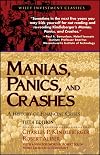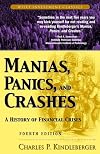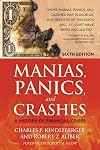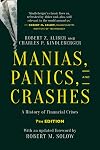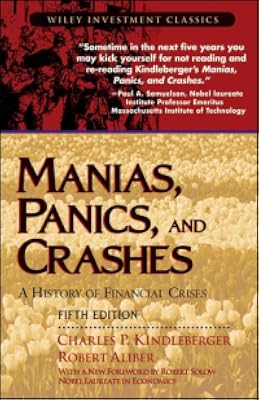
Manias, Panics, and Crashes: A History of Financial Crises
by Charles P. Kindleberger
On This Page
Description
"Manias, Panics and Crashes, is a vivid and entertaining account of the way that mismanagement of money and credit has led to financial explosions over the centuries. Covering such topics as the history and anatomy of crises, speculative manias, and the lender of last resort, this book has been hailed as 'a true classic...both timely and timeless.' In this new, updated fifth edition, Kindleberger and Aliber expand upon the ideas presented in the previous edition, and include two new chapters show more on the real estate price bubble that occurred in Norway, Sweden and Finland at the end of the 1980s, and the three asset price bubbles that occurred between 1985 and 2000 in Japan and other Asian countries. Selected as one of the best investment books of all time by the Financial Times, Manias, Panics and Crashes puts the turbulence of the financial world in perspective. "-- show lessTags
Recommendations


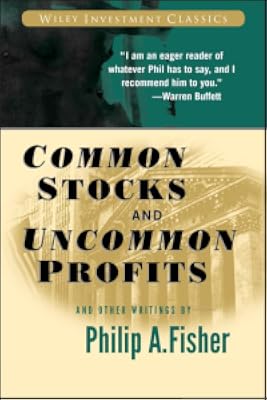


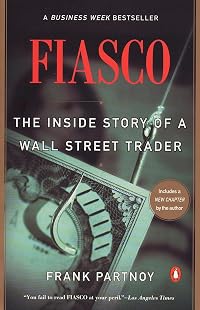

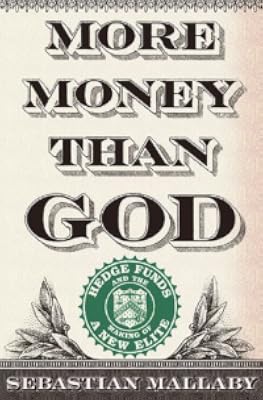
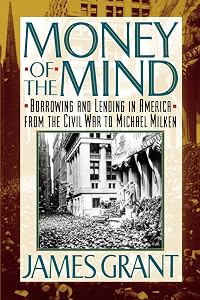




Member Recommendations
Member Reviews
In light of current events on the business front I have been dipping into a classic text that provides historical perspective for understanding the events of today.
This is the classic Manias, Panics, and Crashes by Charles P. Kindleberger. He provides a succinct history of economic crises in ten chapters plus a conclusion as to "The Lessons of History". Interestingly he feels it necessary in his first chapter to explain: "This book is an essay in what is derogatorily called today "literary economics," as opposed to mathematical economics, econometrics, or (embracing them both) the "new economic history."" (pp. 7-8)
Having received my own degree in Economics less than a decade before this book was published I found a kindred spirit in show more that I, too, preferred "literary economics", eschewing econometrics, et. al. I recommend Kindleberger's treatise as a good example of economics (without approving of all his views), history, or both. His analysis of various episodes of speculative fever in the markets and his thoughtful discussion of causes and lessons for today are worth reading and considering in light of our own economic turbulence. show less
This is the classic Manias, Panics, and Crashes by Charles P. Kindleberger. He provides a succinct history of economic crises in ten chapters plus a conclusion as to "The Lessons of History". Interestingly he feels it necessary in his first chapter to explain: "This book is an essay in what is derogatorily called today "literary economics," as opposed to mathematical economics, econometrics, or (embracing them both) the "new economic history."" (pp. 7-8)
Having received my own degree in Economics less than a decade before this book was published I found a kindred spirit in show more that I, too, preferred "literary economics", eschewing econometrics, et. al. I recommend Kindleberger's treatise as a good example of economics (without approving of all his views), history, or both. His analysis of various episodes of speculative fever in the markets and his thoughtful discussion of causes and lessons for today are worth reading and considering in light of our own economic turbulence. show less
The book is regarded as a classic on the history of financial meltdowns similar to the 2008-09 global economic crisis. The author recounts bubbles and crashes over several centuries. The bottom line from his analysis is that the existence of a lender of last resort (like the IMF today) helps dampen and reduce the frequency of crashes. The author's style is informal and often witty. But understanding the content requires a lot of knowledge about banking and finance. In other words, the book often put me to sleep.
Quite an unusual book. Instead of taking crises case by case, the author divides them on stages and gives a very detailed description of what happened on this or that stage, what are the similarities. This is a rare example of literary economics. It can be a very nice reference book but reading it is a bit hard
It is possible that I am just extraordinarily stupid about money. It is also possible that, even when they are writing for a lay audience, economists are extraordinarily poor at conveying information. When pages full of what appears to be information nevertheless fail to convey any concrete meaning I suspect one of two possibilities. (well three in fairness, if the 'I am too stupid to get this' option must be retained) Either the basic knowledge to make sense of the subject is just not there--for examples talk of genetics before Mendel; or these who understand what is going on have some reason for not wanting others to understand. In any case, I just didn't finish this book.
I gave five stars to the third edition. The fifth edition (isbn 0471467146) has Robert Aliber as coauthor.
De la Tulipomanía a la caída de Lehman. Una amena exposición de las burbujas más importantes acaecidas a lo largo de la historia, desde la de los tulipanes en los Países Bajos en el siglo XVII hasta la puntocom, pasando por la South Sea Company o el crac del 29. Escrito por uno de los economistas más brillantes del siglo XX junto a Galbraith, el libro es un riguroso análisis de las causas y consecuencias de las crisis financieras.
Un clásico imprescindible, en una edición actualizada y ampliada, para entender cómo funcionan y cómo se originan las crisis económicas; las pasadas, las presentes y las futuras.
Un clásico imprescindible, en una edición actualizada y ampliada, para entender cómo funcionan y cómo se originan las crisis económicas; las pasadas, las presentes y las futuras.
Jan 29, 2014Spanish
Members
- Recently Added By
Author Information

50+ Works 1,425 Members
Charles P. Kindleberger was the Ford Professor of Economics at MIT for thirty-three years. He is a financial historian and prolific writer who has published thirty books.
Some Editions
Series
Belongs to Publisher Series
Common Knowledge
- Canonical title
- Manias, Panics, and Crashes: A History of Financial Crises
- Original title
- Manias, Panics, and Crashes: A History of Financial Crises
- Original publication date
- 1978; 7th edition: 2015; (1st edition: 1978) (1st edition: 1978)
- First words
- There is hardly a more conventional subject in economic literature than financial crises.
Classifications
- Genres
- Economics, Nonfiction, Business, History, General Nonfiction
- DDC/MDS
- 338.542 — Society, government, & culture Economics Production Microeconomics Fluctuations Business Cycles
- LCC
- HB3722 .K56 — Social sciences Economic theory. Demography Economic theory. Demography Business cycles. Economic fluctuations
- BISAC
Statistics
- Members
- 901
- Popularity
- 29,779
- Reviews
- 7
- Rating
- (4.01)
- Languages
- 6 — English, French, German, Italian, Portuguese (Portugal), Spanish
- Media
- Paper, Audiobook, Ebook
- ISBNs
- 45
- UPCs
- 1
- ASINs
- 6