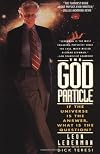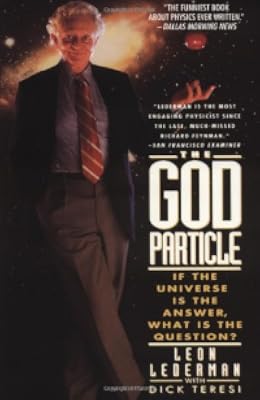
The God Particle: If the Universe Is the Answer, What Is the Question?
by Leon M. Lederman
On This Page
Description
The quest began in 430 B.C. when a Greek philosopher smelled bread baking and imagined that an invisible particle might be the building block of all matter. He called it the a-tom - "that which cannot be cut"--And its pursuit has become science's longest-running experiment. Now, in a book of dazzling originality, Nobel laureate Leon Lederman tells the story of the 2,500-year search for the answer to an ancient question: what is the world made of? Lederman joined this search in the 1950s, and show more his many contributions to our understanding of subatomic architecture have ranked him among the foremost experimental physicists in the world. The God Particle is yet another remarkable achievement: drawing on a lifetime of research and teaching, Lederman shines such a clear light on the mysteries of matter that they are at last understandable to everyone. With great wit and erudition, he describes the long string of Eureka moments that have brought us tantalizingly close to unlocking the last secrets of the universe. Galileo, Newton, Faraday, Rutherford, and Einstein are just a few of the heroes in Lederman's tale, each one a brilliant detective looking for clues behind the veil of matter. The past fifty years have brought the development of the most complex experimental tool ever built - the particle accelerator, an immensely powerful knife that cuts matter into quarks and leptons and reveals the forces that drive them. Lederman explains how accelerators work and argues passionately for the need for a huge new machine that can find the ultimate a-tom. He believes that this particle - the God Particle - orchestrates the cosmic symphony, and he dreams of its discovery, hoping it will reduce the laws of physics to an equation so simple that it can fit on a T-shirt. Using humor, metaphor, and vivid storytelling, Leon Lederman takes us on an adventure into an invisible world. The God Particle is a celebration of human curiosity, a thrilling book by a man whose genius for discovering the secrets of the universe is matched by his gift for illuminating the wonders of science. show lessTags
Recommendations
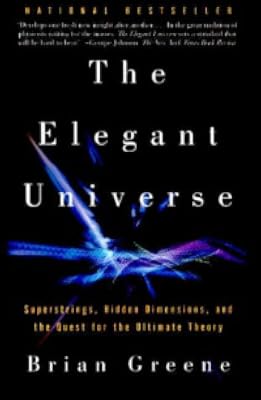
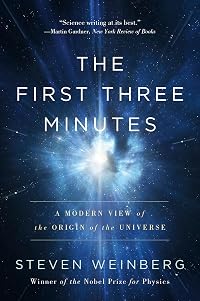
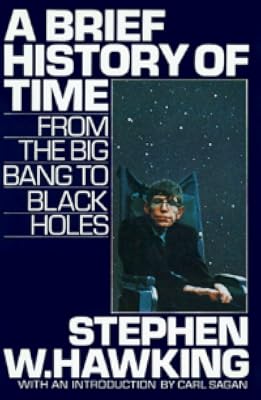
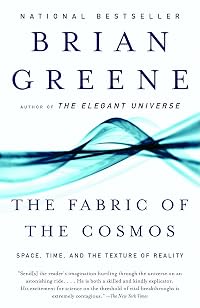
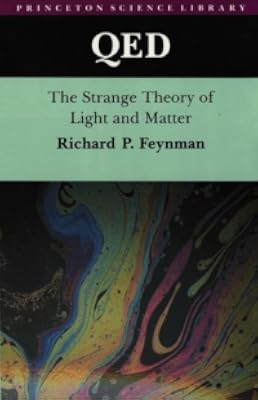
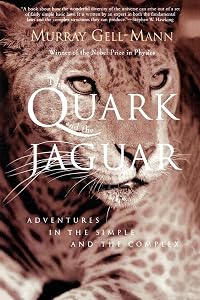

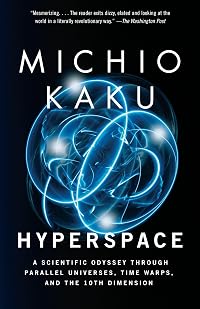
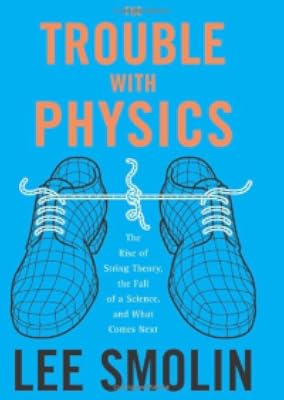




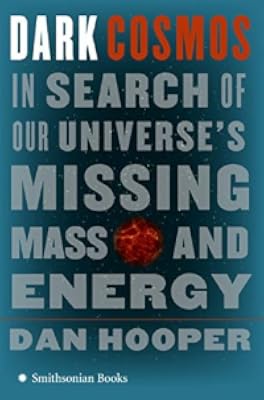

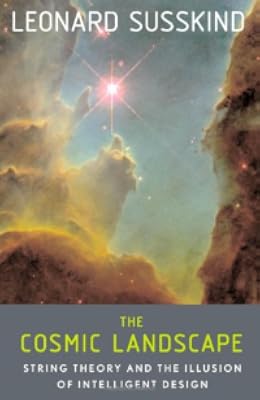
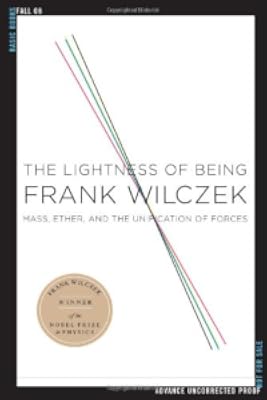
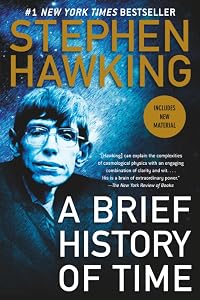



Member Recommendations
Member Reviews
What is a Higgs boson, and if we can’t keep one of our own, why should you or I care? Well, Leon Lederman, the 1988 Nobel Laureate in physics, just might make you care, through a combination of anecdotes, jokes, and good solid explanations.
The God Particle is a pretty complete narrative of man’s effort to answer the question of what is the ultimate stuff. His task in telling the oft told tale, he says, is much like being Zsa Zsa Gabor’s seventh husband: he knows what to do, but how does he make it interesting?
For about a decade, Lederman was the Director of Fermilab and its Tevatron, the huge particle accelerator in Batavia, Illinois. He was and remains an experimentalist at heart, with a fair amount of disdain for pure theorists show more (albeit tempered by a great deal of humor). His personal professional quest has been not only to guess at what makes up the world, but to build the incredible machines that can actually detect the nearly infinitesimal.
He recapitulates the efforts of the pre-Socratic Greek philosophers in a fictional wisecracking dialog between himself and Democritus, who somehow turns up in the 20th century. Democritus describes how his predecessors and contemporaries tried to answer the question by positing that the world was composed of a single or just a few basic substances that change form. I knew the story from a course in college and several later accounts in science or philosophical histories, but Lederman’s version is the most entertaining. Democritus turns out to be Lederman’s hero because he guessed the world was composed only of atoms and the void. To Democritus, an atom (or A-tom, as Lederman calls it) is the irreducible substance. Since the time of the early Greeks, we have come to discover pretty basic things we call atoms, but we now know they are far from irreducible. In fact, even the subatomic particles that compose atoms, which we once thought were the smallest things in existence, turn out to be composed of quarks held together by gluons.
Lederman’s history has some interesting factoids that were new to me. For example, Galileo was able to conduct experiments that required precise measurement of time before stop watches were invented. An accomplished musician, he measured time by listening to music while watching the progress of balls rolling down inclined planes. At the beat of a march, a competent musician can detect an error of about one sixty-fourth of a second.
Lederman gives the usual credit to Brahe, Kepler, Newton (of course), Faraday, and Maxwell, but he adds a new one (for me at least): this is Roger Boscovich (b. 1711 in Dubrovnik), who theorized the existence of particles of matter with no dimensions. Lederman says “We found a particle that fits such a description. It’s called a quark.”
Next Lederman tells us of the development of quantum mechanics and today’s picture of the subatomic world, the so called “standard model.” Niels Bohr came up with a radical theory in order to explain the presence and sizes of the then known spectral lines: electrons revolve around the nucleus only at allowed radii or energy levels, only where their angular momentum takes on an integer value of Planck’s constant (4.11 x 10 to the -15th power eV-seconds). Bohr’s electrons absorb energy exclusively in allowed quanta and drop spontaneously from one allowed radius to another. In doing so, they emit a photon whose energy equals the drop in energy level of the electron. De Broglie improved Bohr’s model by accounting for the particular size of the radii of the orbits. If electrons were wavelike, then the orbit sizes could only be integer multiples of the electron’s wave length! But orbiting electrons would radiate energy, and eventually collapse into the nucleus, which doesn’t happen. So something remained fishy about the concept of the orbiting electron.
Heisenberg said you just can’t envision an atom. Orbits could not be measured, but spectral lines could be, so ignore orbits. Heisenberg developed a theory called matrix mechanics, based on matrices, to deal with the data. Schrodinger developed the wave function, ψ, a differential equation which contained all we know or can know about the electron. (It was later demonstrated that Heisenberg’s matrices and Schrodinger’s equation were mathematically equivalent.) Schrodinger thought he had discovered “matter waves,” but that could not be. The question was, “what was waving?” Max Born came up with the answer in that the only consistent interpretation of ψ (actually, ψ squared) was that it represented the probability of finding an electron in the places calculated. Electrons and other particles act like particles when they are detected, but their distribution in space between measurements follows the wavelike probability patterns that emerge from the Schrodinger equation. Lederman calls this interpretation “the single most dramatic and major change in our world view since Newton.”
Paul Dirac tried to make quantum theory compatible with relativity, and in doing so formulated the Dirac equation which implied not only that electrons must spin and produce magnetism, but that there must exist another particle identical to the electron except with an opposite charge. That particle, the positron, was later discovered by Carl Anderson in a cloud chamber at Cal Tech.
Another physical property of matter derived from the relevant equations is the uncertainty principle. Heisenberg deduced from Schrodinger’s equation that the determination of the location and momentum of an electron must always be uncertain. In fact, the product of the 2 uncertainties must always be greater than Planck’s constant.
Having acquainted the reader with a modicum of quantum theory, Lederman then describes the marvelous machines used to split atoms and create many bizarre subatomic particles. He also shows how those particles now fall into families, based on their properties. There is a clearly seen symmetry among the particles thus far discovered. Matter consists of quarks and leptons, with bosons being the carriers of forces. However, the list seems incomplete. As Dirac inferred the existence of positrons from equations, modern physicists infer the existence of the granddaddy of the particles, the Higgs boson, from the symmetry of the known subatomic particles.
The problem is that no existing atom smasher or super collider has yet achieved the energy necessary to create a Higgs boson.
Lederman argues for the funding to create the super colliding superconductor in order to determine if nature really is a symmetrical as it appears it might be. Finding an actual Higgs boson would the complete symmetry sought by the theorists.
This book is more lighthearted than any other physics book of similar depth. I highly recommend it.
(JAB) show less
The God Particle is a pretty complete narrative of man’s effort to answer the question of what is the ultimate stuff. His task in telling the oft told tale, he says, is much like being Zsa Zsa Gabor’s seventh husband: he knows what to do, but how does he make it interesting?
For about a decade, Lederman was the Director of Fermilab and its Tevatron, the huge particle accelerator in Batavia, Illinois. He was and remains an experimentalist at heart, with a fair amount of disdain for pure theorists show more (albeit tempered by a great deal of humor). His personal professional quest has been not only to guess at what makes up the world, but to build the incredible machines that can actually detect the nearly infinitesimal.
He recapitulates the efforts of the pre-Socratic Greek philosophers in a fictional wisecracking dialog between himself and Democritus, who somehow turns up in the 20th century. Democritus describes how his predecessors and contemporaries tried to answer the question by positing that the world was composed of a single or just a few basic substances that change form. I knew the story from a course in college and several later accounts in science or philosophical histories, but Lederman’s version is the most entertaining. Democritus turns out to be Lederman’s hero because he guessed the world was composed only of atoms and the void. To Democritus, an atom (or A-tom, as Lederman calls it) is the irreducible substance. Since the time of the early Greeks, we have come to discover pretty basic things we call atoms, but we now know they are far from irreducible. In fact, even the subatomic particles that compose atoms, which we once thought were the smallest things in existence, turn out to be composed of quarks held together by gluons.
Lederman’s history has some interesting factoids that were new to me. For example, Galileo was able to conduct experiments that required precise measurement of time before stop watches were invented. An accomplished musician, he measured time by listening to music while watching the progress of balls rolling down inclined planes. At the beat of a march, a competent musician can detect an error of about one sixty-fourth of a second.
Lederman gives the usual credit to Brahe, Kepler, Newton (of course), Faraday, and Maxwell, but he adds a new one (for me at least): this is Roger Boscovich (b. 1711 in Dubrovnik), who theorized the existence of particles of matter with no dimensions. Lederman says “We found a particle that fits such a description. It’s called a quark.”
Next Lederman tells us of the development of quantum mechanics and today’s picture of the subatomic world, the so called “standard model.” Niels Bohr came up with a radical theory in order to explain the presence and sizes of the then known spectral lines: electrons revolve around the nucleus only at allowed radii or energy levels, only where their angular momentum takes on an integer value of Planck’s constant (4.11 x 10 to the -15th power eV-seconds). Bohr’s electrons absorb energy exclusively in allowed quanta and drop spontaneously from one allowed radius to another. In doing so, they emit a photon whose energy equals the drop in energy level of the electron. De Broglie improved Bohr’s model by accounting for the particular size of the radii of the orbits. If electrons were wavelike, then the orbit sizes could only be integer multiples of the electron’s wave length! But orbiting electrons would radiate energy, and eventually collapse into the nucleus, which doesn’t happen. So something remained fishy about the concept of the orbiting electron.
Heisenberg said you just can’t envision an atom. Orbits could not be measured, but spectral lines could be, so ignore orbits. Heisenberg developed a theory called matrix mechanics, based on matrices, to deal with the data. Schrodinger developed the wave function, ψ, a differential equation which contained all we know or can know about the electron. (It was later demonstrated that Heisenberg’s matrices and Schrodinger’s equation were mathematically equivalent.) Schrodinger thought he had discovered “matter waves,” but that could not be. The question was, “what was waving?” Max Born came up with the answer in that the only consistent interpretation of ψ (actually, ψ squared) was that it represented the probability of finding an electron in the places calculated. Electrons and other particles act like particles when they are detected, but their distribution in space between measurements follows the wavelike probability patterns that emerge from the Schrodinger equation. Lederman calls this interpretation “the single most dramatic and major change in our world view since Newton.”
Paul Dirac tried to make quantum theory compatible with relativity, and in doing so formulated the Dirac equation which implied not only that electrons must spin and produce magnetism, but that there must exist another particle identical to the electron except with an opposite charge. That particle, the positron, was later discovered by Carl Anderson in a cloud chamber at Cal Tech.
Another physical property of matter derived from the relevant equations is the uncertainty principle. Heisenberg deduced from Schrodinger’s equation that the determination of the location and momentum of an electron must always be uncertain. In fact, the product of the 2 uncertainties must always be greater than Planck’s constant.
Having acquainted the reader with a modicum of quantum theory, Lederman then describes the marvelous machines used to split atoms and create many bizarre subatomic particles. He also shows how those particles now fall into families, based on their properties. There is a clearly seen symmetry among the particles thus far discovered. Matter consists of quarks and leptons, with bosons being the carriers of forces. However, the list seems incomplete. As Dirac inferred the existence of positrons from equations, modern physicists infer the existence of the granddaddy of the particles, the Higgs boson, from the symmetry of the known subatomic particles.
The problem is that no existing atom smasher or super collider has yet achieved the energy necessary to create a Higgs boson.
Lederman argues for the funding to create the super colliding superconductor in order to determine if nature really is a symmetrical as it appears it might be. Finding an actual Higgs boson would the complete symmetry sought by the theorists.
This book is more lighthearted than any other physics book of similar depth. I highly recommend it.
(JAB) show less
This was an excellent if sometimes confusing book to read, but if you put in the effort, it is an excellent read. Lederman starts from the beginning with the Greek philospher Democritas and his a-tom. The author goes on to describe numerous eureka moments in the field of Nuclear Physics. This, at least to me, adds a lot of excitement to the story. You can almost feel the Physicist's inner demons as they travel from disappointment to that tantlizing moment, of knowing something that no one else in the world knows. He explains the particle acclerator, which is the main tool of Nuclear physics. Lederman speaks of the SSC, or the Superconducting Super Collider, located in Texas, unfortunately, the book was published before the United States show more turned its back on science. Now our physicists must travel to CERN (The European Center for Nuclear Research) in Geneva, to complete their research. I think America has forgotten. The only reason we have led the world was due to science, and now the Republicans in the U.S. House and Senate, who believe the universe is only 6,000 years old, do their best to eliminate all fields of endeavour that dispute their false beliefs. Too bad for us, we elected them. show less
This is an extremely interesting and entertaining look at the search for the smallest particle. Molecules are made of atoms and atoms are made of sub-atomic particle and some of these are likewise composed of even smaller particles. Science books generally don't hold my attention very long, but this one did.
A very creative presentation of the concepts covered.
A very creative presentation of the concepts covered.
Buen libro, con algunos capítulos mas lentos que otros, pero bien en general.
Nice account. Still has gaps, but it's a great start.
One of my favorite science books because of its emphasis on experimentation.
Members
- Recently Added By
Lists

Alan Kay's Reading List
103 works; 3 members

The r/AskScience Reading List
159 works; 3 members
Author Information

18+ Works 1,512 Members
All Editions
Some Editions
Awards and Honors
Distinctions
Common Knowledge
- Canonical title*
- La particella di Dio. Se l'universo è la domanda, qual è la risposta?
- Original title
- The God Particle: If the Universe Is the Answer, What Is the Question?
- People/Characters
- Albert Einstein; Murray Gell-Mann; Peter Higgs
- Epigraph
- I like relativity and quantum theories
because I don't understand them
and they make me feel as if space shifted
about like a swan that can't settle,
refusing to sit still and be measured;
and as if the atom w... (show all)ere an impulsive thing
always changing its mind.
— D.H. Lawrence - Dedication
- For Evan and Jayna
- First words
- In the very beginning there was a void - a curious form of vacuum - a nothingness containing no space, no time, no matter, no light, no sound.
- Last words
- (Click to show. Warning: May contain spoilers.)Roll credits.
- Original language
- English
- Canonical DDC/MDS
- 539.72
- Canonical LCC
- QC793.5.B62
*Some information comes from Common Knowledge in other languages. Click "Edit" for more information.
Classifications
- Genres
- Science & Nature, Nonfiction, General Nonfiction, Philosophy, Religion & Spirituality, History
- DDC/MDS
- 539.72 — Natural sciences & mathematics Physics Modern physics Atomic and nuclear physics Particle Physics
- LCC
- QC793.5 .B62 — Science Physics Physics Atomic energy. Elementary particle physics
- BISAC
Statistics
- Members
- 925
- Popularity
- 28,903
- Reviews
- 8
- Rating
- (3.93)
- Languages
- 7 — Dutch, English, German, Hungarian, Italian, Polish, Spanish
- Media
- Paper, Ebook
- ISBNs
- 19
- UPCs
- 1
- ASINs
- 5