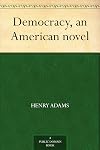
Democracy: An American Novel
by Henry Adams
On This Page
Description
Originally published anonymously, it was later revealed that this classic work of political fiction was penned by Henry Brooks Adams, the renowned essayist and journalist best known for the autobiography The Education of Henry Adams. Though fictionalized, Democracy: An American Novel offers a gripping account of the vagaries and vicissitudes of political power that still rings true more than a century after it was first published..
Tags
Recommendations





















Member Reviews
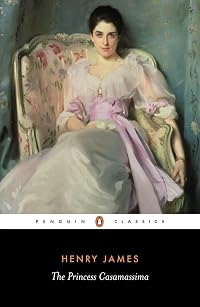
I took a break from reading novels of Henry James to take respite with a novel by another Henry (or perhaps by his wife Clover). The plot lighter, the sentences still recognizably 19th century, but more straightforward than those of James. In places, especially toward the beginning, it’s witty, even hilarious, but then it turns serious, even a bit melodramatic. Reading it just a few weeks before the election, the book struck me as a House of Cards set 140 years earlier, and the unfolding plot of this year’s election something like the fulfilment of what Adams prophesied — the corruption of his time becoming only more encompassing. Perhaps not a masterpiece, but a very good read.
So, who was the author? Speaking for Clover: show more similarities in the prose style to the voice she adopts in her surviving letters. In addition, the book was first published anonymously, while this is not decisive, it might suggest a female authorship. Speaking for Henry: the presence of many of his pet peeves (senators and protectionism, to name just two). So either Clover adopted Henry’s themes, or Henry adopted Clover’s voice. The latter seems to me more probable, especially since the protagonist is an independent-minded woman. show less
So, who was the author? Speaking for Clover: show more similarities in the prose style to the voice she adopts in her surviving letters. In addition, the book was first published anonymously, while this is not decisive, it might suggest a female authorship. Speaking for Henry: the presence of many of his pet peeves (senators and protectionism, to name just two). So either Clover adopted Henry’s themes, or Henry adopted Clover’s voice. The latter seems to me more probable, especially since the protagonist is an independent-minded woman. show less
A Book About the Gilded Age*
Democracy is a cynical book about politics, primarily that of Senators, in the late 1800s, written by a man descended from two Presidents. It tells the story of a rich New York widow, Madeline Lee, who moves to Washington DC to learn about how the government works, and who is disgusted in what she finds. Her main foil is a senator from Illinois, Silas Ratcliffe, who she will discover is corrupt and power-hungry.
Set in the years after the Civil War, Democracy is full of interesting pictures of life in the capitol before the modern era, where people rode horses for transportation and where the society scene is reminiscent of the Old South. But it also shows the dark side of politics in a way that makes you show more think not much has changed since. I didn't particularly enjoy this book for its plot, and Adams at times seems contradictory in his opinions of politics, condemning the corruption but not the corrupted (perhaps a "hate the sin, love the sinner" approach).
Not a difficult read, although it has many literary and historical references that most people (myself included) will need google to understand.
* - I've had to set my themed reading list aside for now, as I'm taking a couple literature classes this summer through a state program that provides free tuition for Texas residents over 55. This novel is assigned for my 19th Century American Literature class focused on the Gilded Age. show less
Democracy is a cynical book about politics, primarily that of Senators, in the late 1800s, written by a man descended from two Presidents. It tells the story of a rich New York widow, Madeline Lee, who moves to Washington DC to learn about how the government works, and who is disgusted in what she finds. Her main foil is a senator from Illinois, Silas Ratcliffe, who she will discover is corrupt and power-hungry.
Set in the years after the Civil War, Democracy is full of interesting pictures of life in the capitol before the modern era, where people rode horses for transportation and where the society scene is reminiscent of the Old South. But it also shows the dark side of politics in a way that makes you show more think not much has changed since. I didn't particularly enjoy this book for its plot, and Adams at times seems contradictory in his opinions of politics, condemning the corruption but not the corrupted (perhaps a "hate the sin, love the sinner" approach).
Not a difficult read, although it has many literary and historical references that most people (myself included) will need google to understand.
* - I've had to set my themed reading list aside for now, as I'm taking a couple literature classes this summer through a state program that provides free tuition for Texas residents over 55. This novel is assigned for my 19th Century American Literature class focused on the Gilded Age. show less
An incisive and amusing roman à clef, written by Henry Adams and published anonymously in 1880. It's amazing how relevant much of the story still feels, even 125 years on. Political intrigue, personal relationships, and societal tensions - you'll find 'em all here in this delightful satire.
When I was in Washington, DC for a conference, I picked up this novel which was written anonymously by Henry Adams (though some say it was his wife). They didn’t discover that he had written it until they found references to it in his papers after he died. It was an expose of the corruption in Washington about twenty years after the Civil War. The blurbs on the back are from Maureen Dowd and Arthur Schlesinger, Jr. who both say that it is one of the best novels about Washington ever written.
It is the story of a smart, rich, beautiful young widow, who comes to Washington because she is bored with New York. She is completely cerebral, high minded and motivated by her sense of duty, but becomes caught up in the quest for power which an show more able but morally bankrupt Senator makes a bid to convince her to be his wife.
I think there is something of the subtlety of the human interactions which I didn’t get in this book. There are particular shadings of behavior and explorations of the edges of what is morally acceptable which are not as familiar to me as they would have been to a contemporary reader. For example, in one scene, the new president comes to town and sits in state and shakes the hand of everyone who comes to visit him in the White House. The main character attends, but is disgusted by this “aping of monarchy.” She feels that the president and his lady feel obligated to stand there for hours, dumbly shaking the hands of hundreds of visitors. She also strikes up an animosity with the president’s wife, apparently because she is too fashionable for the first lady’s taste. It seems rather vague.
The most interesting scenes, to me, are the two excursions which the fashionable and powerful make together--the first to Mount Vernon, and the second to the home of Robert E. Lee in Arlington, Virginia, to see the cemetery there. The contemporary reactions to the myth of Washington and the painful memories of the Civil War were quite intriguing, and I think I should go back and read them, because I feel they probably share some resonances with each other which I didn’t fully receive the first time. show less
It is the story of a smart, rich, beautiful young widow, who comes to Washington because she is bored with New York. She is completely cerebral, high minded and motivated by her sense of duty, but becomes caught up in the quest for power which an show more able but morally bankrupt Senator makes a bid to convince her to be his wife.
I think there is something of the subtlety of the human interactions which I didn’t get in this book. There are particular shadings of behavior and explorations of the edges of what is morally acceptable which are not as familiar to me as they would have been to a contemporary reader. For example, in one scene, the new president comes to town and sits in state and shakes the hand of everyone who comes to visit him in the White House. The main character attends, but is disgusted by this “aping of monarchy.” She feels that the president and his lady feel obligated to stand there for hours, dumbly shaking the hands of hundreds of visitors. She also strikes up an animosity with the president’s wife, apparently because she is too fashionable for the first lady’s taste. It seems rather vague.
The most interesting scenes, to me, are the two excursions which the fashionable and powerful make together--the first to Mount Vernon, and the second to the home of Robert E. Lee in Arlington, Virginia, to see the cemetery there. The contemporary reactions to the myth of Washington and the painful memories of the Civil War were quite intriguing, and I think I should go back and read them, because I feel they probably share some resonances with each other which I didn’t fully receive the first time. show less
A fine and entertaining book that shows that political corruption and incompetence are nothing new at all. At the time I finished the book about 373 other LibraryThing readers had read the book, but I'm the only one who read this dilapidated old paperback edition from 1961--don't use my entry as an indication of popularity. As I understand it, this book was tremendously popular in its day--1880 publication. The cover on my book says that "Gladstone, the English Prime Minister, advised everyone one to read it." The cover also reports, ""The public, with appetite whetted by the secrecy surrounding its authorship and the highly inflammable nature of its subject matter clamored so vividly for copies that countless unauthorized editions were show more published on both sides of the Atlantic. This wholesale piracy, Adams declared, was the single real triumph of his life." show less
Like Jane Austen's novels this is about society, relationships between men and women and the mistakes we often make in our judgements of people. Imagine Pride and Prejucide with a fair dose of politics and an exploration of power and corruption.
3142. Democracy / An American Novel, by Henry Brooks Adams (read Jan 2, 1999) This was published anonymously in 1880. It is carefully plotted, and credible. Surprisingly, the problem it discusses is still with us and the book is relevant even after all these years. Worth reading. And in print--which tells us something about it. Think of the 100's of books which were published in 1880 which no living person has ever heard of.
Members
- Recently Added By
Published Reviews
ThingScore 75
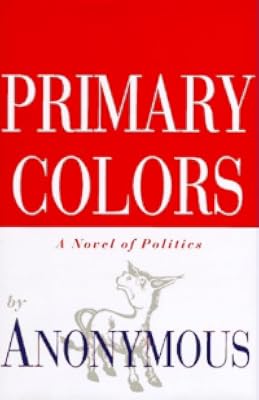
Like O, and the Clinton-era Primary Colors before it, Democracy was an anonymously published roman à clef, causing a stir in political circles when it appeared in 1880. Unlike those authors' anonymity, however, the secret of Adams' authorship held for 35 years. [...] Democracy, though distinctly an artifact of its historical moment, boasts some true artistry.
added by elenchus
Lists

Fiction (Mostly) in Selective Bibliography of American Literature 1775-1900
431 works; 3 members

Works Cited in The Life and Death of Democracy by John Keane
278 works; 1 member
Author Information

74+ Works 7,359 Members
Henry Adams was born in Boston, Massachusetts on February 16, 1838, the son of American diplomat Charles Francis Adams and grandson of President John Quincy Adams. Educated at Harvard University, he worked in Washington, D.C., as his father's secretary before embarking on a career in journalism and later in teaching. A prominent American show more historian, he wrote several important historical works. His works include The Education of Henry Adams, Mont-Saint-Michel and Chartres, Esther: A Novel, and Democracy: An American Novel. He died on March 27, 1918 at the age of 80. (Bowker Author Biography) show less
Series
Belongs to Publisher Series
Work Relationships
Common Knowledge
- Canonical title
- Democracy: An American Novel
- Alternate titles
- Democracy: An American Novel (Penguin Classics) (Penguin Classics)
- Original publication date
- 1880
- People/Characters
- Mrs. Lightfoot Lee
- Important places
- Washington, D.C., USA
- First words
- For reasons which many persons thought ridiculous, Mrs. Lightfoot Lee decided to pass the winter in Washington.
- Quotations
- “…lurking in the breast of every American Senator…[is the idea that] democracy, rightly understood, is the government of the people, by the people, and for the benefit of Senators.”
- Last words
- (Click to show. Warning: May contain spoilers.)Enclosed was a thin strip of paper containing another message from Sybil, privately inserted at the last moment unknown to Mrs. Lee--
"If I were in your place I would try again after she comes home."
Mrs. Lee's P.S. was very short--
"The bitterest part of all this horrid story is that nine out of ten of our countrymen would say I had made a mistake." - Canonical DDC/MDS
- 813.4
- Canonical LCC
- PS1004 .A4 .D4
- Disambiguation notice
- The identity of the Publisher series was found via loc.gov. (... (show all)QwTa2x1zwJH5Y8Cmtp5xeAdc2yM&SID=1" rel="nofollow" target="_new">http://catalog.loc.gov/cgi-bin/Pwebre...) It is listed as such on that page.
Classifications
- Genres
- Fiction and Literature, General Fiction, Historical Fiction
- DDC/MDS
- 813.4 — Literature & rhetoric American literature in English American fiction in English Later 19th Century 1861-1900
- LCC
- PS1004 .A4 .D4 — Language and Literature American literature American literature Individual authors 19th century
- BISAC
Statistics
- Members
- 546
- Popularity
- 54,366
- Reviews
- 13
- Rating
- (3.24)
- Languages
- English, French, Portuguese (Portugal), Spanish
- Media
- Paper, Audiobook, Ebook
- ISBNs
- 83
- ASINs
- 21