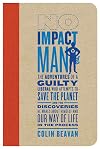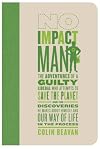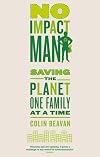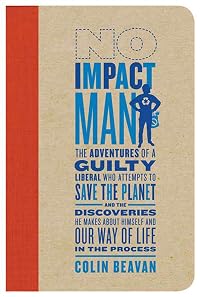
No Impact Man: The Adventures of a Guilty Liberal Who Attempts to Save the Planet and the Discoveries He Makes About Himself and Our Way of Life in the Process
by Colin Beavan
On This Page
Description
Bill McKibben meets Bill Bryson in this seriously engaging look at one man's decision to put his money where his mouth is and go off the grid for one year--while still living in New York City--to see if it's possible to make no net impact on the environment. In other words, no trash, no toxins in the water, no elevators, no subway, no products in packaging, no air-conditioning, no television. After this mad endeavor, Beavan explains to the rest of us how we can realistically live a more show more "eco-effective" and by turns more content life in an age of inconvenient truths. show lessTags
Recommendations

Member Recommendations
The Year of Living Biblically: One Man's Humble Quest to Follow the Bible as Literally as Possible by A. J. Jacobs
Deesirings Both of these are a memoir of a "rules-based" experience of living for a one year period
Plastikfreie Zone: Wie meine Familie es schafft, fast ohne Kunststoff zu leben by Sandra Krautwaschl
mene Both books are about families who try to live more green, though Plastikfreie Zone focuses mostly on plastic and No Impact Man focuses on reducing the impact on the planet in general.
"Plastikfreie Zone" has only been published in German (so far).
mene In "The Power of Habit", it is described why people do things a certain way. The reason people buy so many things is also explained.
"No Impact Man" is a good example of someone changing their habits (in a very extreme way). The author of "No Impact Man" also talks about why people buy so many things, among other things.
Member Reviews
There have been a lot of books lately in which the author gives up some modern convenience (or some combination of them) for some period of time. Some of them are pretty awful. But Beavan manages to be both humble and even occasionally funny while narrating his family's attempt to make the smallest negative environmental impact possible while living in New York City and maintaining their usual social commitments, work etc. This is an inspiring book and, while I consider myself to be a "not-that bad" person in my habits (i.e. I buy organic, don't eat "much" meat, walk "most of the time" etc.) I really started to re-evaluate things after reading this book. I especially appreciate the author's openness about discouragments and doubts, but show more also his emphasis on the personal benefits of living with less, the enhanced family and social time etc. show less
I had to read this book for work as I am a college instructor. So, I expected that I would have to slog through it as I normally do with the "freshman common book." I was pleasantly surprised to find Beavan to be relatable, talented, and far from pedantic. Beavan's narration is witty and funny, and, best of all, he acknowledges the extreme nature of his experiment. He's not advocating that we all adopt his temporary lifestyle. He's advocating that we all think about our choices and their effects on us and on others.
This brings me to my favorite part of the book. Colin Beavan is clearly a believer in emotional unity, which is an incredibly important life value for me. He writes that "[t]here is no my despair or your despair. There is show more only our despair." When we destroy the planet, we are hurting one another, and, so, we are hurting ourselves. Even if this had been the only insight I gleaned from the book (and it wasn't), the narrative would have been completely worth reading. Beavan presents environmentalism as simultaneously self-interested and generous, which is an amazing rhetorical shift from the more common depiction of recycling, etc... as a sacrifice of time and energy. The complexity of his argument, and the effectiveness that complexity generates, is fascinating to any writer. Amazing. show less
This brings me to my favorite part of the book. Colin Beavan is clearly a believer in emotional unity, which is an incredibly important life value for me. He writes that "[t]here is no my despair or your despair. There is show more only our despair." When we destroy the planet, we are hurting one another, and, so, we are hurting ourselves. Even if this had been the only insight I gleaned from the book (and it wasn't), the narrative would have been completely worth reading. Beavan presents environmentalism as simultaneously self-interested and generous, which is an amazing rhetorical shift from the more common depiction of recycling, etc... as a sacrifice of time and energy. The complexity of his argument, and the effectiveness that complexity generates, is fascinating to any writer. Amazing. show less
I have to admire Colin Beavan for his consistent attempt to make no impact on the environment. I admire his wife, daughter, and dog even more for joining him on his urban adventure (he attempts this feat while living in a 9th-floor apartment in NYC—and his self-imposed rules prohibit the use of an elevator). Beavan is a good writer; his words and his tone truly capture the concurrent folly, heartbreak, earnestness, absurdity, and exasperation engendered by his attempt to live for one year without damaging the planet. And his reflective prose clarifies for us (without being too preachy) just how dependent we are on the alleged conveniences of modern life. I’m not sure if I could even attempt one-tenth of what Beavan does to improve show more the planet, but his example proves that we—and by we, I mean the human race—must do something to avert the inevitable disasters that our careless stewardship of the planet will evoke. I’m not sure, however, that I share Beavan’s optimism. I suspect that most people will have to be forced to make changes that will require them to do more to save the planet. show less
I pretty much loved this book. I had already seen the documentary. The book compliments the movie very well and vice versa. I liked that I got to read his personal thoughts and stories about the No Impact experiment after seeing a lot of the changes he and his family went through in the film. Beaven really makes you question what you need or don't need to be happy, and how we can go about providing the things we do need in a sustainable way. For a guy who embarked on this experiment as a way to try and make a difference, with no environmental background, he brings up some good point on how we are swiftly and surely killing off our resources and our planet. This book will definitely leave you with wanting to try an experiment like this show more of your own. show less
No Impact Man
By Colin Beavan
Farrar, Straus and Giroux, Publishers
ISBN: 978-0-374-22288-8
I love to read environmental writing. There are so many good books available right now on the subject of the environment and global warming that a person can become overwhelmed. I believe this book is a must if you have to limit what you read in this category. (But please don't limit yourself!)
There are so many things to like about this book that I will try to do it justice in this review.
First of all I like the subject. I think that this timely subject must be written about if there is any possibility for changing the status quo. Mr. Beavan takes on the subject from an if not me then who perspective that shows his willingness to step outside of his show more safety zone and do his part to find some answers.
Secondly I like the fact that one of the main focuses of this book is how changing our way of life to one that does not impact the earth also has an equally positive impact on our personal relationships. I think that it is important that people start to realize the benefits that we all receive when our lifestyles are no longer focused on the act of consumption.
Third, I like his commitment throughout the whole project to do the best he could. Sometimes we are not perfect (thank heavens) but the act of trying is what makes the biggest impact. This commitment carried over to the production of the book itself. It was produced as low impact as possible and shows what can be done if the desire is there.
From a writing standpoint I feel that Mr. Beavan did a wonderful job of making the transitions from information that he has researched, His own personal feelings, and anecdotes on the affect this project had on his family. My interest was always kept happily looking forward to reading just a little more and for the most part I found the flow of the book to move well. Occasionally, I did find some sentences that I had to go over a time or two to make sure that my comprehension was correct. In general it was a very relaxing read. I also appreciate the fact that he included in the back of the book additional places to find information.
What this book does not have is great deal of is detailed information on how they accomplished going off of the grid. Mind you there was a lot of discussion of mason jars and bicycles and a specific change that had to find a solution in each chapter, but not very many more details on how to go off the grid. Near the end of the book, however, you will find a brief outline of a typical day in their household. For the most part the book seemed to be about how they went about researching the information that they needed to accomplish their goals given their specific situation. I think that if this idea is to work for us we all need to do a bit of our own research. I live in Los Angeles. What I have to do to have no impact, especially in the area of transportation is much different than it is in New York. So instead of being told exactly what to do, I found myself being inspired to find the way that works best for my family and my self.
"Tis a gift to be simple, tis a gift to be free"
Thank you for such an inspiring work. show less
By Colin Beavan
Farrar, Straus and Giroux, Publishers
ISBN: 978-0-374-22288-8
I love to read environmental writing. There are so many good books available right now on the subject of the environment and global warming that a person can become overwhelmed. I believe this book is a must if you have to limit what you read in this category. (But please don't limit yourself!)
There are so many things to like about this book that I will try to do it justice in this review.
First of all I like the subject. I think that this timely subject must be written about if there is any possibility for changing the status quo. Mr. Beavan takes on the subject from an if not me then who perspective that shows his willingness to step outside of his show more safety zone and do his part to find some answers.
Secondly I like the fact that one of the main focuses of this book is how changing our way of life to one that does not impact the earth also has an equally positive impact on our personal relationships. I think that it is important that people start to realize the benefits that we all receive when our lifestyles are no longer focused on the act of consumption.
Third, I like his commitment throughout the whole project to do the best he could. Sometimes we are not perfect (thank heavens) but the act of trying is what makes the biggest impact. This commitment carried over to the production of the book itself. It was produced as low impact as possible and shows what can be done if the desire is there.
From a writing standpoint I feel that Mr. Beavan did a wonderful job of making the transitions from information that he has researched, His own personal feelings, and anecdotes on the affect this project had on his family. My interest was always kept happily looking forward to reading just a little more and for the most part I found the flow of the book to move well. Occasionally, I did find some sentences that I had to go over a time or two to make sure that my comprehension was correct. In general it was a very relaxing read. I also appreciate the fact that he included in the back of the book additional places to find information.
What this book does not have is great deal of is detailed information on how they accomplished going off of the grid. Mind you there was a lot of discussion of mason jars and bicycles and a specific change that had to find a solution in each chapter, but not very many more details on how to go off the grid. Near the end of the book, however, you will find a brief outline of a typical day in their household. For the most part the book seemed to be about how they went about researching the information that they needed to accomplish their goals given their specific situation. I think that if this idea is to work for us we all need to do a bit of our own research. I live in Los Angeles. What I have to do to have no impact, especially in the area of transportation is much different than it is in New York. So instead of being told exactly what to do, I found myself being inspired to find the way that works best for my family and my self.
"Tis a gift to be simple, tis a gift to be free"
Thank you for such an inspiring work. show less
This is definitely a good read, and I would recommend it both to beginners and more seasoned environmentalists.
The author grapples with big issues, and takes them on as well as he can, which is pretty awesome. He looks at all aspects of the no impact lifestyle, and doesn't just stop at using canvas bags like most people. He switches to a local diet, stops buying new things, and even turns off the electricity. Throughout the book, you see how the author evolves throughout the course of this experiment, and how he questions every act he carries out.
I really appreciate how the author takes on the big questions such as whether personal lifestyle changes are enough to solve the problems of over consumption and global warming. He is show more rightfully skeptical of legislative change, but agrees that spending time arguing over whose method is best wastes time that could be spent making lifestyle changes and advocating for change as well. I agree that making lifestyle changes is important for people to understand that it is possible to live a lower impact lifestyle, it is more rewarding and engaging, and when institutional change finally comes about, it won't be as much of a culture shock for people who have already made changes in their lives.
It's also refreshing to read a book about making these lifestyle changes in a city. I've read so many "urban" homestead books about making your city home more eco-friendly, but so often the books are catered towards people with houses and lawns and the whole nine yards. The author and his family reside in a one bedroom apartment in Manhattan, and he says that this is a reality that many people live with and that we can still make changes even without our own homes.
I'm also looking forward to reading a lot of the books he references throughout the text, and which he provides in a resources section at the end of the book. As much as I like to think that I live a low impact lifestyle, I know that I don't and I'd like to get more ideas on how I can change my lifestyle to be more environmentally friendly. show less
The author grapples with big issues, and takes them on as well as he can, which is pretty awesome. He looks at all aspects of the no impact lifestyle, and doesn't just stop at using canvas bags like most people. He switches to a local diet, stops buying new things, and even turns off the electricity. Throughout the book, you see how the author evolves throughout the course of this experiment, and how he questions every act he carries out.
I really appreciate how the author takes on the big questions such as whether personal lifestyle changes are enough to solve the problems of over consumption and global warming. He is show more rightfully skeptical of legislative change, but agrees that spending time arguing over whose method is best wastes time that could be spent making lifestyle changes and advocating for change as well. I agree that making lifestyle changes is important for people to understand that it is possible to live a lower impact lifestyle, it is more rewarding and engaging, and when institutional change finally comes about, it won't be as much of a culture shock for people who have already made changes in their lives.
It's also refreshing to read a book about making these lifestyle changes in a city. I've read so many "urban" homestead books about making your city home more eco-friendly, but so often the books are catered towards people with houses and lawns and the whole nine yards. The author and his family reside in a one bedroom apartment in Manhattan, and he says that this is a reality that many people live with and that we can still make changes even without our own homes.
I'm also looking forward to reading a lot of the books he references throughout the text, and which he provides in a resources section at the end of the book. As much as I like to think that I live a low impact lifestyle, I know that I don't and I'd like to get more ideas on how I can change my lifestyle to be more environmentally friendly. show less
The author decided to stop ranting about environmental destruction, and do something about it. With the somewhat reluctant cooperation of his wife, while living in a New York apartment with a toddler and dog, he embarked on a year long project to reduce or counteract his impact on the planet. In stages they reduced trash, eliminated all but self-propelled travel, purchased no new products, consumed only local food, shut off the electricity and relied on a solar panel, and got involved with city environmental organizations. This was not 100% pure; the adults had jobs, the child was in daycare, and the rules allowed socializing in the homes of friends. The year was not without marital discord, but his wife seized the opportunity to change show more unsatisfying habits (too much TV, too much shopping), she loved the scooter and the rickshaw, and if he was going to transform their shared life for his goals, then she was going to write her opinions on the bathroom wall. She did not, however, take to the peppermint tea as a substitute for coffee. The book is not much of a how-to; it is more rationale and musings and consequences and relationships. A documentary, recorded through year, complements the book, with little additional information but a view of the personalities in action. There is a blog too.
(read 8 Jan 2013) show less
(read 8 Jan 2013) show less
Members
- Recently Added By
Lists

Macmillan Publishers
129 works; 3 members

My Year Spent Doing Something Stupid so I Could Write This Book
31 works; 5 members
Author Information

5 Works 1,001 Members
Common Knowledge
- Canonical title
- No Impact Man: The Adventures of a Guilty Liberal Who Attempts to Save the Planet and the Discoveries He Makes About Himself and Our Way of Life in the Process
- Original title
- No Impact Man: The Adventures of a Guilty Liberal Who Attempts to Save the Planet and the Discoveries He Makes About Himself and Our Way of Life in the Process
- Alternate titles
- No Impact Man
- Original publication date
- 2009
- People/Characters
- Colin Beavan
- Important places
- New York, New York, USA
- Related movies
- No Impact Man: The Documentary (2009 | IMDb)
- Epigraph
- Our sages taught:
A man should not move stones from his ground to public ground.
A certain man was moving stones from his ground onto public ground when a pious man found him doing so and said to him,
<... (show all)br>"Fool, why do you move stones from ground which is not yours to ground which is yours?"
The man laughed at him.
Some days later, the man had to sell his field, and when he was walking on that public ground he stumbled over those stones.
He then said, "How well did that pious man say to me, 'Why do you move stones from ground which is not yours to ground which is yours?'"
- Talmud Bavli, Masekhet Bava Kama 50b - Dedication
- To you, Michelle, with my deepest love and the hope that you will always write on walls
- First words
- For one year, my wife, baby daughter, and I, while residing in the middle of New York City, attempted to live without making any net impact on the environment.
- Last words
- (Click to show. Warning: May contain spoilers.)So, what are you going to do?
- Blurbers
- Nestle, Marion; Huffington, Arianna; Leonard, Annie; McKibben, Bill
- Original language
- English
Classifications
- Genres
- Science & Nature, Nonfiction, General Nonfiction, Biography & Memoir
- DDC/MDS
- 333.72 — Society, government, & culture Economics Economics of land and energy Conservation, Alternative Energy Sources Conservation & protection
- LCC
- TD171.7 .B43 — Technology Environmental technology. Sanitary engineering Environmental technology. Sanitary engineering Environmental protection
- BISAC
Statistics
- Members
- 564
- Popularity
- 52,068
- Reviews
- 32
- Rating
- (3.85)
- Languages
- 8 — Chinese, Dutch, English, Finnish, French, German, Italian, Spanish
- Media
- Paper, Audiobook, Ebook
- ISBNs
- 28
- ASINs
- 9