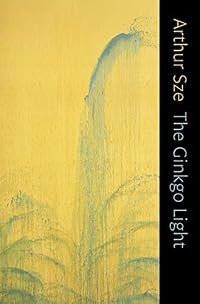
The Ginkgo Light
by Arthur Sze
On This Page
Description
"Classically elegant."- The New York Times Book Review Sze's free verse emphasizes at once how difficult, and how necessary, it is for us to imagine our world as a system whose ecologies and societies require us to care for all their interdependent parts." - Publishers Weekly "Sze's list-laden sequences capture the world's manifold facts one by one, then through discursive commentary exact from them a sense not only of aesthetic order but of universal cause and effect."- Boston Review show more "Sze...here captures the energy of life in overshadowed daily events....His poems mine everything from geography, history, and biology to philosophy and nature, interweaving them to create a complex and luminous poetic texture....His poetry is an experience of awakening and pleasure that all serious students of contemporary poetry should have." - Library Journal "Whether incorporating nature, philosophy, history, or science, Sze's poems are expansive. They unfold like the time-slowed cinematic recording of a flower's blooming...Sze has a refreshingly original sensibility and style, and he approaches writing like a collagist by joining disparate elements into a cohesive whole." - Booklist A temple near the hypocenter of the atomic blast at Hiroshima was disintegrated, but its ginkgo tree survived to bud and bloom. Arthur Sze extends this metaphor of survival and perseverance to transform the world's factual darkness into precarious splendor. "Each hour teems," Sze writes, as he ingeniously integrates the world's miraculous and mundane-a woodpecker drilling a utility pole or a 1300-year-old lotus seed-into a moving, visionary journey. Mayans charted Venus's motion across the sky, poured chocolate into jars and interred them with the dead. A woman dips three bowls into hair's fur glaze, places them in a kiln, anticipates removing them, red-hot, to a shelf to cool. When samba melodies have dissipated into air, when lights wrapped around a willow have vanished, what pattern of shifting lines leads to Duration? Arthur Sze , one of America's leading poets, is the author of nine books of poetry and translation. He is professor emeritus of creative writing at the Institute of American Indian Arts and just completed a term as Poet Laureate of Santa Fe, New Mexico. show lessTags
Recommendations



Member Reviews
Sze's style is to crowd image upon image, the showy and the modest, natural phenomena and human drama, packing them in so tightly that the reader is almost dazzled by the abrupt shifts. In this way he says something about the variety of existence on earth. It is at a pole apart from confessional poetry, with the author's voice kept detached from the subjects being discussed, which makes the reader think more in terms of editorial choices which went into the poetic collage. I think someone who goes in with an expectation of a single message carried by a particular poem will be disappointed, whereas one who takes the time to feel each finely detailed element and consider how it fits or conflicts with its neighbors might have a better show more appreciation of what the poet intends. show less
Ratings
Members
- Recently Added By
Author Information

22+ Works 498 Members
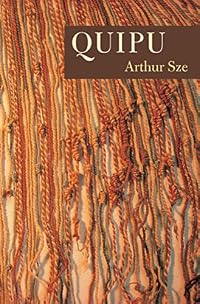
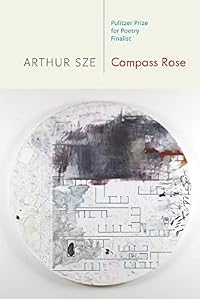
Arthur Sze was a finalist for the 2015 Pulitzer Prize for Poetry with his title Compass Rose. (Bowker Author Biography)
Classifications
Statistics
- Members
- 45
- Popularity
- 659,360
- Reviews
- 1
- Rating
- (3.79)
- Languages
- English
- Media
- Paper, Ebook
- ISBNs
- 2
- ASINs
- 1