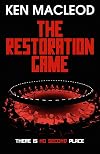
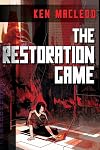
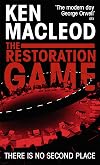
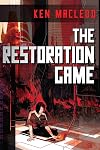
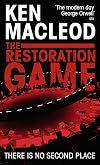
The Restoration Game
by Ken MacLeod
On This Page
Description
There is no such place as Krassnia. Lucy Stone should know--she was born there. In that tiny, troubled region of the former Soviet Union, revolution is brewing. Its organizers need a safe place to meet, and where better than the virtual spaces of an online game? Lucy, who works for a start-up games company in Edinburgh, has a project that almost seems made for the job: a game inspired by The Krassniad, an epic folk tale concocted by Lucy's mother, Amanda, who studied there in the 1980s. Lucy show more knows Amanda is a spook. She knows her great-grandmother Eugenie also visited the country in the 1930s and met the man who originally collected Krassnian folklore, and who perished in Stalin's terror. As Lucy digs up details about her birthplace to slot into the game, she finds the open secrets of her family's past, the darker secrets of Krassnia's past--and hints about the crucial role she is destined to play in The Restoration Game. Combining international intrigue with cutting-edge philosophical speculation, romance with adventure, and online gaming with real-life consequences, this book delivers as science fiction and as a sharp take on our present world from the viewpoint of a complex, engaging heroine who has to fight her way through a maze of political and family manipulation to take control of her own life. show lessTags
Recommendations









Member Recommendations
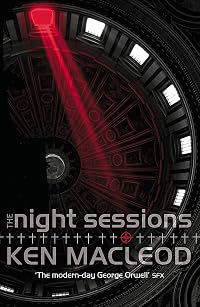
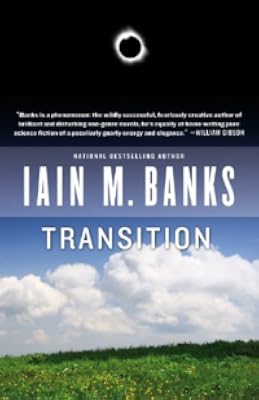
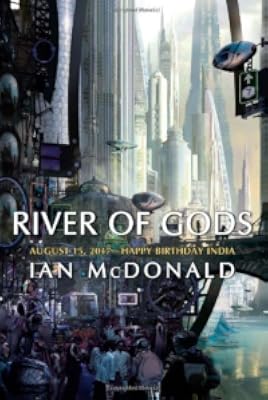
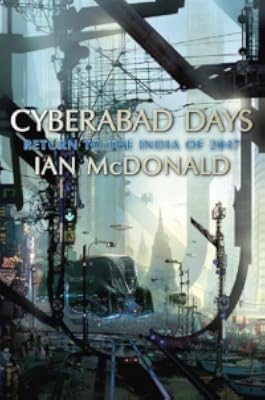
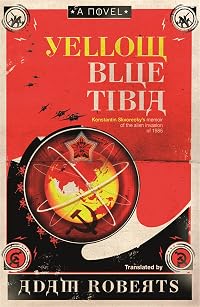
AlanPoulter Both novels are 're-interpretations' of Soviet history, with a playful intent...
11
Member Reviews
This book rather confounded my expectations about what I could expect from Ken MacLeod. First of all, it seemed to be another excursion into the recent history of the British Left, this time looking at the Left's role in the closing years of the Cold War. You must understand, first, that to many on the Left, the former Soviet Union did not fit their definition of a socialist society. Rather, the state held all the assets and only re-distributed them as the state saw fit. Furthermore, the Eastern Bloc did not practice any form of direct workers' control. Production targets and the development of new products were determined centrally, rather than directly by workers in their factories. Thus, the Soviet Union was defined as a "state show more capitalist" model; and as self-determination movements sprang up in the USSR's satellite states, elements of the Left in the UK started to seek ways of engaging directly with, and supporting, workers in places like Poland and East Germany.
These movements came to the attention of state security organisations in both East and West. Confusion as to who exactly was who was the main result, as the agencies in the West (particularly the CIA) started creating workers' support schemes under a convenient red banner. I recollect that in the early 1980s, one such scheme got a lot of publicity within the British science fiction fan community: "Dupers for Poland". The aim was to get British fans to send their out-dated duplicators (Roneos or Gestetners) to "fans" in Poland who were denied the right to publish their own science fiction fanzines. In fact, this is now known to have been a CIA scheme to get printing equipment to anti-Communist samizdat publishers in Poland under the banner of mutual support from one group of science fiction fans to another.
Of course, those who the Left were supporting in those countries were not necessarily those with whom they would agree in the years following the fall of Communism. But that's what happens when you get involved in the murky world of politics. Things don't turn out the way you think they will.
Which is exactly what I found with this novel. About a quarter of the way in, it stopped being about the British Left being manipulated by all sorts of shadowy forces, and became more about the shadowy forces themselves, and how they affected lives. We find ourselves in the family history of one Lucy Stone, who was brought up in the Soviet Caucasian province of Krassnia. Krassnia is not to be found on any maps, but in the novel it is a sort of Stalinist Ruritania, far from Moscow and dominated by certain powerful local Communists.
We are pitched into Lucy's story, her family history, and the legends of the historical Krassnians and their mythology. Lucy works for a video games company, and has successfully pitched Krassnian myth as the setting for a game - lots of mightily-thewed barbarians battling diverse evil forces on a quest to discover the Krassnian Truth. But what is the Krassnian Truth? Lucy begins to find that, for an ancient myth, legends of Krassnia have attracted a lot of attention over the years, even into the era of Stalin and Beria; and something about the myth had those hard men of Soviet power genuinely scared. Eventually, Lucy finds herself being steered into her own quest to discover the Krassnian Truth for herself.
For about two-thirds of the novel, this seems to have very little science-fictional content. Rather, it seems we are reading a contemporary novel of the impact of the collapse of the Soviet Union on some of the more distant parts of their former empire. Only when Lucy finally reaches Krassnia and heads into the mountains do fantastic elements begin to manifest themselves. And the Krassnian Truth holds genuine fears for the men of power. Its manifestation is a delicious surprise; its implications are world-changing.
Some might have difficulty with a man writing a female p.o.v. character in the first person. Otherwise, this is another Ken Macleod novel which looks at our world from a different standpoint. Perhaps one of the most interesting things is that the standpoints the author gives us - a woman, the British Left, the Caucasus - are themselves, for some readers at least, almost as different as the world-picture we are left with when we, too, are told the Krassnian Truth. show less
These movements came to the attention of state security organisations in both East and West. Confusion as to who exactly was who was the main result, as the agencies in the West (particularly the CIA) started creating workers' support schemes under a convenient red banner. I recollect that in the early 1980s, one such scheme got a lot of publicity within the British science fiction fan community: "Dupers for Poland". The aim was to get British fans to send their out-dated duplicators (Roneos or Gestetners) to "fans" in Poland who were denied the right to publish their own science fiction fanzines. In fact, this is now known to have been a CIA scheme to get printing equipment to anti-Communist samizdat publishers in Poland under the banner of mutual support from one group of science fiction fans to another.
Of course, those who the Left were supporting in those countries were not necessarily those with whom they would agree in the years following the fall of Communism. But that's what happens when you get involved in the murky world of politics. Things don't turn out the way you think they will.
Which is exactly what I found with this novel. About a quarter of the way in, it stopped being about the British Left being manipulated by all sorts of shadowy forces, and became more about the shadowy forces themselves, and how they affected lives. We find ourselves in the family history of one Lucy Stone, who was brought up in the Soviet Caucasian province of Krassnia. Krassnia is not to be found on any maps, but in the novel it is a sort of Stalinist Ruritania, far from Moscow and dominated by certain powerful local Communists.
We are pitched into Lucy's story, her family history, and the legends of the historical Krassnians and their mythology. Lucy works for a video games company, and has successfully pitched Krassnian myth as the setting for a game - lots of mightily-thewed barbarians battling diverse evil forces on a quest to discover the Krassnian Truth. But what is the Krassnian Truth? Lucy begins to find that, for an ancient myth, legends of Krassnia have attracted a lot of attention over the years, even into the era of Stalin and Beria; and something about the myth had those hard men of Soviet power genuinely scared. Eventually, Lucy finds herself being steered into her own quest to discover the Krassnian Truth for herself.
For about two-thirds of the novel, this seems to have very little science-fictional content. Rather, it seems we are reading a contemporary novel of the impact of the collapse of the Soviet Union on some of the more distant parts of their former empire. Only when Lucy finally reaches Krassnia and heads into the mountains do fantastic elements begin to manifest themselves. And the Krassnian Truth holds genuine fears for the men of power. Its manifestation is a delicious surprise; its implications are world-changing.
Some might have difficulty with a man writing a female p.o.v. character in the first person. Otherwise, this is another Ken Macleod novel which looks at our world from a different standpoint. Perhaps one of the most interesting things is that the standpoints the author gives us - a woman, the British Left, the Caucasus - are themselves, for some readers at least, almost as different as the world-picture we are left with when we, too, are told the Krassnian Truth. show less
It's the future and we killed religion! Atheists and agnostics finally had enough of their god botherin' ways and kicked some sense into the true believers! Now peace and reason reign and the world is a utopia. The end.
EXCEPT when someone blows up a priest! Who? Why? How? What? Huh? Edindurgh's finest future fuzz are on the case, sniffin' round with wiki pages and superbots and things, uncovering a dastardly plot even more dastardly than a dastardly museum full of dastardly creationists moving the dinosaurs next to the neanderthals.
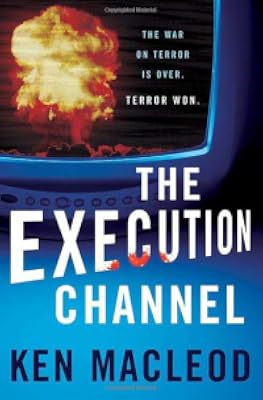
Yes, it was good, though I slightly preferred the more wide ranging thriller style of The Execution Channel. This is more Ian Rankin than James Buchan, ifyouknowhatImean. Also, I'm in a hurry. Bye, now.
EXCEPT when someone blows up a priest! Who? Why? How? What? Huh? Edindurgh's finest future fuzz are on the case, sniffin' round with wiki pages and superbots and things, uncovering a dastardly plot even more dastardly than a dastardly museum full of dastardly creationists moving the dinosaurs next to the neanderthals.
Yes, it was good, though I slightly preferred the more wide ranging thriller style of The Execution Channel. This is more Ian Rankin than James Buchan, ifyouknowhatImean. Also, I'm in a hurry. Bye, now.
In Krassnia a tiny, troubled region of the former Soviet Union revolution is brewing. The leaders need a place to meet and where better in this world than in an on-line game? Lucy Stone, born in Krassnia, works for a game company that has the perfect game. The Krassniad, an epic folk tale made up by Lucy's mother is the basis for this game. As Lucy finds information about her birthplace to put into the game she starts to dig up secrets about her family's past and the past of Krassnia and even hints at her crucial role in the Restoration Game.
This is a book about conspiracies, one which of which seems to involve me. I bought this novel in the Edinburgh SF bookshop, 'Transreal', mentioned in this novel. All of of the novel's locations in Edinburgh and New Zealand I have been to. This congruence slightly spooked me.
After an opening scene set on Mars in what appears to be a 'shooter' style computer game, we are introduced to Lucy Stone, who is meeting her boyfriend at Auckland airport when she is paged that he has been 'delayed'. She knows that this is a euphemism for kidnapped. Over generations, the secret of the 'Vrai', a semi-mythical race inhabiting 'Krassnia', an erst-while Soviet republic, now the scene of a clash over oil, has been kept in Lucy's family. But this show more current spat has roots going way back into Russian history. Its current and past participants go right to the top in both Russia and the West.
This novel essentially re-interprets Russian and Soviet history around what is on one level an intra-family spat but which reaches out into wider and wider circles, all around conspiracies centred on the legend of the Vrai. Lucy gets drawn in initially when the computer game company she works for is given a contract to create a game around the Vrai legend. Her knowledge of Krassnia and its mythology is invaluable but draws her into plots which may involve other family members, for example her 'real' father.
While well-plotted, with a nice balance of humour and serious spy stuff, and lots to say about Soviet/Communist politics, the final twist is a little cliched. But I certainly enjoyed the ride, especially as so much of it was familiar. show less
After an opening scene set on Mars in what appears to be a 'shooter' style computer game, we are introduced to Lucy Stone, who is meeting her boyfriend at Auckland airport when she is paged that he has been 'delayed'. She knows that this is a euphemism for kidnapped. Over generations, the secret of the 'Vrai', a semi-mythical race inhabiting 'Krassnia', an erst-while Soviet republic, now the scene of a clash over oil, has been kept in Lucy's family. But this show more current spat has roots going way back into Russian history. Its current and past participants go right to the top in both Russia and the West.
This novel essentially re-interprets Russian and Soviet history around what is on one level an intra-family spat but which reaches out into wider and wider circles, all around conspiracies centred on the legend of the Vrai. Lucy gets drawn in initially when the computer game company she works for is given a contract to create a game around the Vrai legend. Her knowledge of Krassnia and its mythology is invaluable but draws her into plots which may involve other family members, for example her 'real' father.
While well-plotted, with a nice balance of humour and serious spy stuff, and lots to say about Soviet/Communist politics, the final twist is a little cliched. But I certainly enjoyed the ride, especially as so much of it was familiar. show less
Where does the end of a story belong? At the start of a book or, well… does it belong at the end? If the narrative is the journey to that end, should the story open with the destination? Isn’t the thrill of exploring new places one of the reasons why people read novels? But is it the journey, or the destination, which provides the narrative impetus?
Ken MacLeod’s latest novel, The Restoration Game, opens with a prologue which effectively explains the secret driving the plot of the novel. The book’s premise is hidden in plain sight. Which is where The Restoration Game, like MacLeod’s previous two science fiction / thriller mashups, The Execution Channel and The Night Sessions, both succeeded and, to some extent, failed. For a show more thriller, the authorial sleight of hand which puts the book’s premise in disguised form in front of the reader, before the story itself starts, only adds to the finale. To the science fiction reader who speaks the language of sf, it dilutes the premise and turns the book’s resolution into more of an intellectual exercise than the expected gosh-wow world-redefining climax.
Rest of review here: http://www.sffchronicles.co.uk/2010/08/22/the-restoration-game-ken-macleod/ show less
Ken MacLeod’s latest novel, The Restoration Game, opens with a prologue which effectively explains the secret driving the plot of the novel. The book’s premise is hidden in plain sight. Which is where The Restoration Game, like MacLeod’s previous two science fiction / thriller mashups, The Execution Channel and The Night Sessions, both succeeded and, to some extent, failed. For a show more thriller, the authorial sleight of hand which puts the book’s premise in disguised form in front of the reader, before the story itself starts, only adds to the finale. To the science fiction reader who speaks the language of sf, it dilutes the premise and turns the book’s resolution into more of an intellectual exercise than the expected gosh-wow world-redefining climax.
Rest of review here: http://www.sffchronicles.co.uk/2010/08/22/the-restoration-game-ken-macleod/ show less
All in all, this is a fun read, although it seemed overly complex.
Lucy Stone works for a video game company, where she has helped to create a quest video game. Her mother, who used to be a spy for a small former Soviet republic called Krassnia, contacts her and asks her video game company to make a game based on Krassnian legends. From there, things start to get complex fast as a series of coincidences fall into place. Lucy is eventually sent into Krassnia, which is on the verge of war with Russia, to uncover whatever secret has been hidden in the mountains of Krassnia for generations.
The book gets really complex.... at one point, Lucy is given a series of documents, and the story is interrupted while she reads through the documents. I show more had a little trouble following the significance of some of the documents. There are a lot of names, and I kept getting them all confused. It seems like a lot of the complexity could have been cut without hurting the story.
Complexity aside, the book is a lot of fun. MacLeod writes with humor. It's a solid political thriller with some fun sci-fi elements.
[spoiler] The book avoids grappling with the major existential crisis at its core... what Lucy ultimately discovers is that her world is a simulation. Since she discovers this right at the end of the book, the book doesn't have to deal with how she deals with this information. In some ways, fully dealing with this existential crisis would have really changed the nature of the book, but it still felt like cheating that MacLeod avoided it. [/spoiler] show less
Lucy Stone works for a video game company, where she has helped to create a quest video game. Her mother, who used to be a spy for a small former Soviet republic called Krassnia, contacts her and asks her video game company to make a game based on Krassnian legends. From there, things start to get complex fast as a series of coincidences fall into place. Lucy is eventually sent into Krassnia, which is on the verge of war with Russia, to uncover whatever secret has been hidden in the mountains of Krassnia for generations.
The book gets really complex.... at one point, Lucy is given a series of documents, and the story is interrupted while she reads through the documents. I show more had a little trouble following the significance of some of the documents. There are a lot of names, and I kept getting them all confused. It seems like a lot of the complexity could have been cut without hurting the story.
Complexity aside, the book is a lot of fun. MacLeod writes with humor. It's a solid political thriller with some fun sci-fi elements.
[spoiler] The book avoids grappling with the major existential crisis at its core... what Lucy ultimately discovers is that her world is a simulation. Since she discovers this right at the end of the book, the book doesn't have to deal with how she deals with this information. In some ways, fully dealing with this existential crisis would have really changed the nature of the book, but it still felt like cheating that MacLeod avoided it. [/spoiler] show less
(Reprinted from the Chicago Center for Literature and Photography [cclapcenter.com]. I am the original author of this essay, as well as the owner of CCLaP; it is not being reprinted illegally.)
This book has been getting a lot of play recently from some unusual sources for being put out by a mainstream science-fiction publisher, and the reason becomes obvious once you read it; because although containing some fantastical elements, this is mostly a very astute political thriller that deals with a lot of issues from our own times all the way back to the Nazi era, and even way back into antiquity. The story of a young Scottish female computer programmer originally from "Krassnia," a fictional former Soviet republic that sounds like it's show more supposed to be located right around where the Victorian Age's Crimean War was fought, the tale is a complicated one involving the ancient half-myth history of the region, a secret about the area that the Russians have been hiding from everyone else since World War Two, a modern "Arab Spring" style uprising that may or may not be taking place there soon, and whether or not the CIA may or may not be helping this revolt along by commissioning the creation of a local-language "World of Warcraft" style MMORPG, that actually exists as a safe gathering place for protestors to make their plans, and which may or may not accidentally actually reveal the location of this giant secret that everyone is trying to get their hands on, because of the videogame's terrain being based on an old out-of-print hippie guidebook to the area's folklore penned by our hero's mother in the countercultural '60s, to cash in on the "Lord of the Rings" craze going on at the time. Whew!
It's a lot to take in, but Ken MacLeod does it with a lot of aplomb and humor, making this much more Graham Greene than Ben Bova; and kudos to Lou Anders and Pyr for taking on this hip, ripped-from-the-headlines title to begin with, and expanding their scope beyond the steampunk, urban fantasy, and other traditional fan favorites that they're mostly known for. A hard-to-classify book that will generate a lot of passion from its fans, this is one of the rare genre tales here at CCLaP to get a score in the 9s, and it comes happily recommended to a wide general audience.
Out of 10: 9.2 show less
This book has been getting a lot of play recently from some unusual sources for being put out by a mainstream science-fiction publisher, and the reason becomes obvious once you read it; because although containing some fantastical elements, this is mostly a very astute political thriller that deals with a lot of issues from our own times all the way back to the Nazi era, and even way back into antiquity. The story of a young Scottish female computer programmer originally from "Krassnia," a fictional former Soviet republic that sounds like it's show more supposed to be located right around where the Victorian Age's Crimean War was fought, the tale is a complicated one involving the ancient half-myth history of the region, a secret about the area that the Russians have been hiding from everyone else since World War Two, a modern "Arab Spring" style uprising that may or may not be taking place there soon, and whether or not the CIA may or may not be helping this revolt along by commissioning the creation of a local-language "World of Warcraft" style MMORPG, that actually exists as a safe gathering place for protestors to make their plans, and which may or may not accidentally actually reveal the location of this giant secret that everyone is trying to get their hands on, because of the videogame's terrain being based on an old out-of-print hippie guidebook to the area's folklore penned by our hero's mother in the countercultural '60s, to cash in on the "Lord of the Rings" craze going on at the time. Whew!
It's a lot to take in, but Ken MacLeod does it with a lot of aplomb and humor, making this much more Graham Greene than Ben Bova; and kudos to Lou Anders and Pyr for taking on this hip, ripped-from-the-headlines title to begin with, and expanding their scope beyond the steampunk, urban fantasy, and other traditional fan favorites that they're mostly known for. A hard-to-classify book that will generate a lot of passion from its fans, this is one of the rare genre tales here at CCLaP to get a score in the 9s, and it comes happily recommended to a wide general audience.
Out of 10: 9.2 show less
Members
- Recently Added By
Published Reviews
ThingScore 100
MacLeod’s last novel had, as well as the usual SF, elements of the police procedural to it, not to mention a setting which featured Edinburgh heavily. In this book he mixes SF with the espionage thriller and makes an excellent fist of the spy novel aspect. Is he thinking of moving away from the genre?
In the one time Caucasian Autonomous Region of Krassnia, one of those strange enclaves of show more the former Soviet Union where ethnic strife both within it and with its neighbours was just waiting to break out when that state disintegrated, there is a mountain which hides a secret. A secret which when filmed in 1952 put the fear of God into Stalin and Beria. Krassnia has for centuries been divided between its habitual rulers the Vrai and the underling Krassnars. The mountain is said to hold the secret of the red-haired Vrai and bad things happen to ordinary Krassnars who venture there. (I pondered the significance of vrai being the French word for true but couldn’t work out if there was any.)
Despite her being a US citizen currently living in Edinburgh - again a welcome setting for part of a MacLeod novel - Luciane Stone’s family has been tangled up in Krassnian affairs (the word is apposite) for four generations; indeed she was born and schooled there. In her job with an Edinburgh computer game company she has incorporated almost all the Krassnian folklore that she learned at her mother’s knee into their latest project “Dark Britannia.” Cue much speculation regarding simulations and simulacra. Another game project in hand is of a timeline where the Spartacus revolt in ancient Rome was not crushed. As a consequence Rome did not fall in the fifth century and the industrial revolution occurred much earlier than in Lucy’s world. The Romans reach Mars.
When the call comes from her mother to produce a version of “Dark Britannia” specifically aimed at the Krassnian market Lucy becomes embroiled in all the shenanigans you might expect in a spy/thriller story. As this scenario demands, Lucy does of course ascend the mountain, where she encounters a strangeness illuminating the nature of reality.
While fizzing with speculation, The Restoration Game blends the SF and spy elements a little awkwardly, with the more down to earth sequences fully realised and the fantastical standing somewhat aloof from them - at times appearing almost as an add-on. Nevertheless MacLeod’s prose enables the book to speed by. It is a page turner. show less
added by jackdeighton
Lists

Simulated Reality in Fiction
124 works; 7 members

Books Read in 2024
4,623 works; 126 members
Author Information

61+ Works 12,411 Members
Awards and Honors
Awards
Common Knowledge
- Original title
- The Restoration Game
- Original publication date
- 2010-07-01
- People/Characters
- Lucy Stone; Amanda Stone
- Important places
- Krassnia; Edinburgh, Scotland, UK
- Epigraph
- Exploit (online gaming)
In the realm of games, an exploit is usually a software bug, hack, or bot that contributes to the user's prosperity in a manner not intended by the developers.
Wikipedia (accessed 6th Februar... (show all)y 2008) - Dedication
- To Carol
- First words
- Behind you the module burns.
- Last words
- (Click to show. Warning: May contain spoilers.)You'll see her again, in a better world, in another life.
- Original language
- English
Classifications
Statistics
- Members
- 299
- Popularity
- 107,353
- Reviews
- 16
- Rating
- (3.69)
- Languages
- English
- Media
- Paper, Ebook
- ISBNs
- 5
- ASINs
- 4