On This Page
Description
"With The Steel Remains, award-winning science fiction writer Richard K. Morgan turned his talents to sword and sorcery. The result: a genre-busting masterwork hailed as a milestone in contemporary epic fantasy. Now Morgan continues the riveting saga of Ringil Eskiath--Gil, for short--a peerless warrior whose love for other men has made him an outcast and pariah. Only a select few have earned the right to call Gil friend. One is Egar, the Dragonbane, a fierce Majak fighter who comes to show more respect a heart as savage and loyal as his own. Another is Archeth, the last remaining daughter of an otherworldly race called the Kiriath, who once used their advanced technology to save the world from the dark magic of the Aldrain--only to depart for reasons as mysterious as their arrival. Yet even Egar and Archeth have learned to fear the doom that clings to their friend like a grim shadow. or the curse of a bitter god. Now one of the Kiriath's uncanny machine intelligences has fallen from orbit--with a message that humanity faces a grave new danger (or, rather, an ancient one): a creature called the Illwrack Changeling, a boy raised to manhood in the ghostly between-world realm of the Grey Places, home to the Aldrain. A human raised as one of them--and, some say, the lover of one of their greatest warriors--until, in a time lost to legend, he was vanquished. Wrapped in sorcerous slumber, hidden away on an island that drifts between this world and the Grey Places, the Illwrack Changeling is stirring. And when he wakes, the Aldrain will rally to him and return in force--this time without the Kiriath to stop them. An expedition is outfitted for the long and arduous sea journey to find the lost island of the Illwrack Changeling. Aboard are Gil, Egar, and Archeth: each fleeing from ghosts of the past, each seeking redemption in whatever lies ahead. But redemption doesn't come cheap these days. Nor, for that matter, does survival. Not even for Ringil Eskiath. Or anyone--god or mortal--who would seek to use him as a pawn"-- show lessTags
Recommendations
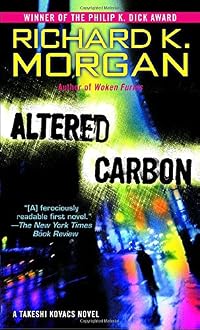



Member Recommendations
by anonymous user
Member Reviews
I really liked The Steel Remains but I'm IN LOVE with The Cold Commands. I have a bit of trouble reading these books in that it usually takes me days, but that doesn't mean they're not absolutely wonderful. The characters are so wonderfully created. Heroes with regrets and really horrid past actions.
I love that we have two queer characters and a basically black (quite literally) character. I mean, there's Egar, who's a kind of homophobic piece of shit, but who kinda has been developing and legit cares for Archeth and Ringil. The book moves a little slow, but you can see where it's going so you don't really have a problem going along with it.
I can see some people having problems with the book because the societies are basically all show more sexist and homophobic and pretty gross, but I feel like Gil and Archidi more than make up for it. They both obviously have their problems, but I feel like them going through the world is worth reading this book.
I'm incredibly excited about The Dark Defiles. show less
I love that we have two queer characters and a basically black (quite literally) character. I mean, there's Egar, who's a kind of homophobic piece of shit, but who kinda has been developing and legit cares for Archeth and Ringil. The book moves a little slow, but you can see where it's going so you don't really have a problem going along with it.
I can see some people having problems with the book because the societies are basically all show more sexist and homophobic and pretty gross, but I feel like Gil and Archidi more than make up for it. They both obviously have their problems, but I feel like them going through the world is worth reading this book.
I'm incredibly excited about The Dark Defiles. show less
Review from Tenacious Reader: http://www.tenaciousreader.com/2014/09/16/cold-commands-by-richard-k-morgan/
What I can’t get over with this book is just how beautifully written eviscerations can be done. Seriously, Morgan’s prose is just wonderfully written with a beautiful and poetic feel. This carries through for every part of his book, including the dark and gritty, violent sections like when the prose is describing disembowelment. Yes, this book, like the first one has graphic sex and violence. This series is not for the faint of heart. And just like I said in my review for The Steel Remains, I don’t think the sex scenes in this are any more graphic than many books with heterosexual sex scenes, but I feel they get more attention show more because they are homosexual. There are some reviewers that will always complain about this level of graphic sex scenes regardless of the genders of the participants, but I think the fact they are homosexual is beyond some readers comfort levels which is just sad. People are people and sex is sex. These characters and the sex scenes are very real and down to earth and I see absolutely no reason to complain.
The Cold Commands has 3 story arcs, each following a familiar character from The Steel Remains. Ringil, of course we get more Ringil. His story line starts with an encounter with an escaped slave and follows him trying to find asylum after being exiled. One thing I found interesting is I felt more interested in Archeth’s storyline for this one than I did in The Steel Remains. The Helmsman is warning her of dark things to come and is following orders of the Emperor she now serves as an advisor to. And Egar’s storyline. Umm…. maybe he didn’t have a major storyline. I mainly remember him drinking, fighting and getting laid. There may have been more to it, but that’s what I remember, which brings me to my one criticism about the book.
I loved reading this, but sometimes I couldn’t quite tell what the overall conflict goal was. If that makes sense, I’m not sure. Every minute of the prose is amazing to read, and maybe even more amazing to listen to Simon Vance narrate. But somehow I felt like if someone were to ask me exactly what was going on at points in the book, I would have been at a loss. I could tell you the latest events, but I also felt like I was missing something from the bigger picture and felt it moved just a little bit slower because of that. Maybe it was just me and my listening comprehensions skills that were lacking, but it did detract just a teeny tiny bit.
If you read the first one, definitely continue reading. Morgan’s prose is every bit as wonderful. And there world is both fascinating and relevant. As per many fantasy novels, there are many themes riding in this that can translate to modern day life, and I absolutely love that. And all of the characters are well done, believable characters with honest emotions and realistic reactions and motivations. This is not a black and white book, but one with much moral ambiguity, which I think is a closer representation of real life. Things are often not clearly right or wrong when you look at all sides. show less
What I can’t get over with this book is just how beautifully written eviscerations can be done. Seriously, Morgan’s prose is just wonderfully written with a beautiful and poetic feel. This carries through for every part of his book, including the dark and gritty, violent sections like when the prose is describing disembowelment. Yes, this book, like the first one has graphic sex and violence. This series is not for the faint of heart. And just like I said in my review for The Steel Remains, I don’t think the sex scenes in this are any more graphic than many books with heterosexual sex scenes, but I feel they get more attention show more because they are homosexual. There are some reviewers that will always complain about this level of graphic sex scenes regardless of the genders of the participants, but I think the fact they are homosexual is beyond some readers comfort levels which is just sad. People are people and sex is sex. These characters and the sex scenes are very real and down to earth and I see absolutely no reason to complain.
The Cold Commands has 3 story arcs, each following a familiar character from The Steel Remains. Ringil, of course we get more Ringil. His story line starts with an encounter with an escaped slave and follows him trying to find asylum after being exiled. One thing I found interesting is I felt more interested in Archeth’s storyline for this one than I did in The Steel Remains. The Helmsman is warning her of dark things to come and is following orders of the Emperor she now serves as an advisor to. And Egar’s storyline. Umm…. maybe he didn’t have a major storyline. I mainly remember him drinking, fighting and getting laid. There may have been more to it, but that’s what I remember, which brings me to my one criticism about the book.
I loved reading this, but sometimes I couldn’t quite tell what the overall conflict goal was. If that makes sense, I’m not sure. Every minute of the prose is amazing to read, and maybe even more amazing to listen to Simon Vance narrate. But somehow I felt like if someone were to ask me exactly what was going on at points in the book, I would have been at a loss. I could tell you the latest events, but I also felt like I was missing something from the bigger picture and felt it moved just a little bit slower because of that. Maybe it was just me and my listening comprehensions skills that were lacking, but it did detract just a teeny tiny bit.
If you read the first one, definitely continue reading. Morgan’s prose is every bit as wonderful. And there world is both fascinating and relevant. As per many fantasy novels, there are many themes riding in this that can translate to modern day life, and I absolutely love that. And all of the characters are well done, believable characters with honest emotions and realistic reactions and motivations. This is not a black and white book, but one with much moral ambiguity, which I think is a closer representation of real life. Things are often not clearly right or wrong when you look at all sides. show less
I enjoyed this book, but it didn't blow me away. One aspect of this series that I've enjoyed is the ambition that Morgan brings to the worldbuilding here. We don't just have fantasy elements, but we also have science fiction elements, which make this an intriguing world. But what is kind of a bummer in this very unique world is that I don't want to exist in it because almost every character is an asshole and happy moments are few and far between. But that's what I get for reading a grimdark book I guess. Overall, I'm enjoying the progression of Ringil's character to dark overlord, now that I know what to expect. I wish Archeth had slightly more to do. I find her backstory the most compelling and I want to read some books about her show more people and history show less
The Land Fit for Heroes trilogy by Richard K. Morgan is a very odd and divisive fantasy series. Don’t let the title fool you. It is meant sarcastically. There are no real heroes in this book, or anti-heroes, really. The main characters are acted upon by circumstance and the society they live in — milieu-driven, as opposed to a character or plot-based work. It’s a take on fantasy-based noire by the author of Altered Carbon, a hyperdark cyberpunk SF novel, all grittiness and cynicism. There’s some John le Carré in Morgan’s work and Phillip Marlowe too, as well as a strong influence from Michael Moorcock. However, I don’t think those elements gelled too well together in a fantasy setting. Or, rather they would work, if some show more basic precepts of the fantasy genre had been honored.
I pulled The Cold Commands from the library shelf because I was curious; I hadn’t read grimdark before, and from what I’d read the trilogy was grimmest of the grim. The Cold Commands was the middle volume of the series so to bring myself up to speed I read a detailed synopsis of The Steel Remains and referred to the wiki so I wouldn’t be confused. For the most part I wasn’t. Off the bat I could tell the author was hell-bent bent on subverting everything about the fantasy genre that people love… the plots and good vs. evil as exemplified by 1980s and 1990s writers like David Eddings and Mercedes Lackey. The Cold Commands is the polar opposite of their kind of coziness, as well as Tolkien’s. But it’s also like beating a dead horse, burning it, and scattering the ashes, as the genre has moved on.
I do think that the author overlooked one of the most basic appeals of fantasy in the way he set up this series and this book. Which is not so much moral absolutes, such as good vs. evil, or ethics, such as law vs. chaos, individual freedoms vs. community responsibility. It’s the simplicity of its arc. Real life doesn’t progress in a straight line. We get sidetracked and jerked around by things beyond our control. Our goals change; we change. We spend long periods in frustration and inactivity, punctuated by shorter periods of bliss and terror. We feel angst and anomie. In short, most often we don’t have singular goals like destroying the magical McGuffin and banishing the dark lord. Sometimes it’s just getting through the day without having a nervous breakdown. Even Tolkien, whom the author derided, realized that. At the end of The Return of the King the looming menace is destroyed, but the world is changed and things will never again be the same as before the evil.
In noire, which most often has a mystery plot, the protagonist must navigate a corrupt world to realize their goal. Sometimes the goal is enlightenment to a sinister plot, sometimes wealth or vengeance. The reader wants to see the little guy go up against the odds to win, even if it’s for something venal or unpalatable, even if they themselves are unappealing as a character. It’s all about the fight – David and Goliath if you will.
In The Cold Commands the arc is nebulous, but neither are the characters fighting just to survive. Instead they’re muddling through a series of vignettes, some amusing to the reader, others off-putting, and oh, hey, there’s some alien creatures called dwenda who are trying to gain control of this world and take it over. But let’s do some other things which have absolutely nothing to do with this plot.
The plot revolves around three main characters: Ringil Eskiath, a gay swordsman ostracized for a sexuality which is very taboo in this world; Egar, a rough and tumble tribesman of the north; and Archeth, a black-skinned member of another alien race, the Kiriath, who are longtime human allies. The trilogy begins ten years after reptilian invaders to this world have successfully been beaten off, but at a great cost, and to an extent these three characters are presented as world-weary ones living day to day in the salvaged but corrupt new world their war victories have created. When The Cold Commands begins Archeth is an advisor to the Jhiral, the decadent emperor of the southern kingdom, Yhelteth, while Egar is hanging around the big city with her. Ringil is seeking revenge on the slave dealer who abused his cousin. These adventures continue closely with those from the previous book.
Up to a point I was enthusiastic about the book. The author can write, and write well; the action moves, and little ironic flourishes abound. I wanted to like it. I felt I had to like it, to game up to its hipness. The subversions amused even as they were violent, misogynistic, and graphically sexual (but not erotically sexual.) The very crassness of it was hilarious, like that over-the-top scene in Kill Bill, Vol. II where Beatrix Kiddo squishes her rival’s last eyeball with her dirty toes. The author even dared to subvert the subversion in a scene where Ringil has his revenge on the female slave dealer who’d taken his cousin. After letting his gang repeatedly gang-rape her, complete with screams, leering men, and dropped trousers, he goes to kill her himself with his dragon-tooth knife. But instead of being all sobbing and cowering she stands up to him, insults him to his face, and states the gang rape has been nothing to what she’s endured in the past, and furthermore, she’s twenty times the woman his cousin was! She refuses to give him the satisfaction of being broken, prepared to go to her death defiant to the last. A bold move by the writer, and I upped the book a star because of it.
But…it goes nowhere. The reader has been prepared for some grimdark denouement from all this buildup, and there is none. Ringil, impassive, lets her rave, and the scene cuts away before she is presumably killed.
The reader, at this point, does expect some resolution for all this buildup. A psychological one for Ringil, if not an advancement for the plot. There was none.
By cheating the reader of a conclusion, the whole scene felt arbitrary and too much like the writer was heaping contempt on his own character, and by extension the reader, for downbeat dramacakes. Ringil could have lost his temper and offed her in a rage, or given her an argument, or realize that that he’s wasted all his time. Psychologically, it could have been a comment on the futility of revenge, or the realization of a task completed. But all it does is showcase the slave dealer’s ugliness to the reader, and after this scene, Ringil doesn’t think of her or incident again. We never find out if he’s been cut down to size by her, or grimly amused. Nothing. Nada. The author may, indeed, have been making a meta comment on the futility of real life and its pointlessness, but that’s not why we read a fantasy novel. We get pointlessness in real life. In fantasy we want clarity and conclusions: good, bad, or ambiguous.
All the main characters in The Cold Commands seem to lack this kind of conclusion-drawing skill and the ability to adjust their inner selves to what occurs in their environment, which led, ultimately, to my becoming dissatisfied with the book. They lacked introspection. They were very much creatures of the present, which was at odds with how often they referenced the past: the war they fought, their childhoods, old friends and lovers. They never came into focus for me, never engaged, even as they were observant of others and sensitive to their motives. They just drifted from incident to incident, rudderless.
Here’s an excerpt the last fifth of book where nomad tribesman Egar bursts in unexpectedly on his lover, a married noblewoman, and she’s put out by it and calls him a Majak (a term used derisively by the people of the city for his culture).
[ … ] Imrana stared at him. In the breathing space that followed, he discovered that what really stung was her apparent opinion, laid abruptly bare with this unscripted meeting. It lurched through the arrangement of his memories like a drunken thug in a spice market, scattering and trampling the little rows of jars and pots, the artfully opened, fine-odored sacks. Belch and curse and stagger, smash and spill. Everything he’d valued, turned over in this head—he watched it happen like a sack of some pretty hillside town. Thick-skulled big-cock barbarian bit of rough—was that all he’d ever been? Or was it the march of years, clawing them apart? Had passing time and age done this to them both, made them colder and more distant, wound up in their own affair and grasping scared at what was left? He cast his mind back, tried to remember. Found he couldn’t. Found he didn’t want to.
It’s a very nice piece of writing that wouldn’t be out of place in a modern literary novel. But, it has absolutely nothing to do with this story. Egar’s character does not change and Imrana herself bows out a few pages later. The slave girl Egar had rescued, who was the reason for the unscripted meeting, is also not mentioned again in the book. All that happens is Imrana’s philandering husband returns, gets mad, and Egar kills him, providing a plot device for Egar to get thrown in prison, forcing Ringil to take on the job of assassinating the emperor’s religious rival as payment for Egar’s pardon. That’s it… a whole lot of nothing.
Much of the book was like this, random incidents strung together, lurching and uncouth, the characters observing them dispassionately. At the end of the book, after Ringil assassinates the troublemaking cleric and his dwenda partners, (after a journey through dwendaland, I think) he kills everyone, destroys the temple, and declares himself the city’s protector. I was like wha…? The dude didn’t even like the city or its people that much. He was out for himself, now he’s a hero? I could imagine he may have been overcome by adrenaline and masculine bravado and wanted to shout his mastery, but it went totally against his character, and the book, to declare himself a savior.
The plot had other moments of confusion that made no sense. Some of it may be because I did not read the first book, only a detailed synopsis; some of it may be that I don’t enjoy psychedelic trip out scenes, where a character has delusions, fever dreams, or interdimensional wanderings through some trippy dreamscape and other characters, gods, demons, utter Important Things to him and of him. The dreamscape in question is the dwenda one, an alternate dimension like a giant, dreary swamp. Ringil goes there twice, and I just zoned out, in part because the swampland was dull to read about, and nothing in it made sense. Both times acted as a deus ex machina for Ringil when he was in a tight spot. I don’t mind a few small occurrences trip-out here and there, but in this book they go for pages.
Both times, he didn’t plan to go there, revealing a lack of character agency; he was just snatched. Other beings were working on him and the other characters behind the scenes, old gods, dwenda, intelligent machines that were servants on the Kiriath. All acted to confuse and obfuscate the characters, and the author made no bones about it. The speech of the Kiriath machines was especially annoying, treating the protagonists with contempt as if they were sticking out their tongues and saying : “Nyah nyah nyah! I know Important Stuff and I’m not going to tell you!” As with the trip-out scenes, a little would have been fine, but the smug pontification of the machines just went on and on, to no purpose other than keeping things mysterious. And the contempt just went on and on too, heaped onto the characters by the author and I think onto the reader as well. Even one of the so-called Gods of the story heaped on the contempt, speaking in a distinctly unlikely way for a deity removed from worldly life. (I guess one of the unspoken conclusions of the story is that absolute power breeds not evil but contempt?)
Also tiring was the author’s focus on details instead of on advancing the plot. For example, there were two extended scenes of wall and rock climbing, one into a rather mundane abandoned temple, the other up a citadel wall, that went on freaking forever. In a book that should be jampacked with excitement and depravity, why waste words on climbing walls? The characters are supposed to be badasses; they can handle a wall. There’s nothing wrong with a jump cut to get to the action if they’re not in a life or death state.
There’s other filler too, of characters just walking through the city, interacting with its denizens, etc. Some of it is amusing, like Egar talking casually to a child outside an inn — in a typical fantasy reader might expect it to go in a heartwarming slice-of-life direction, but it’s subverted by the appearance of a gross, abusive innkeeper father who comes out slaps the kid, and says he was begotten on a whore, whom he also slaps. But sometimes it goes on just too much and too far, and in the end I have to honestly say most of the book was this kind of filler.
Not an enjoyable read for me. show less
I pulled The Cold Commands from the library shelf because I was curious; I hadn’t read grimdark before, and from what I’d read the trilogy was grimmest of the grim. The Cold Commands was the middle volume of the series so to bring myself up to speed I read a detailed synopsis of The Steel Remains and referred to the wiki so I wouldn’t be confused. For the most part I wasn’t. Off the bat I could tell the author was hell-bent bent on subverting everything about the fantasy genre that people love… the plots and good vs. evil as exemplified by 1980s and 1990s writers like David Eddings and Mercedes Lackey. The Cold Commands is the polar opposite of their kind of coziness, as well as Tolkien’s. But it’s also like beating a dead horse, burning it, and scattering the ashes, as the genre has moved on.
I do think that the author overlooked one of the most basic appeals of fantasy in the way he set up this series and this book. Which is not so much moral absolutes, such as good vs. evil, or ethics, such as law vs. chaos, individual freedoms vs. community responsibility. It’s the simplicity of its arc. Real life doesn’t progress in a straight line. We get sidetracked and jerked around by things beyond our control. Our goals change; we change. We spend long periods in frustration and inactivity, punctuated by shorter periods of bliss and terror. We feel angst and anomie. In short, most often we don’t have singular goals like destroying the magical McGuffin and banishing the dark lord. Sometimes it’s just getting through the day without having a nervous breakdown. Even Tolkien, whom the author derided, realized that. At the end of The Return of the King the looming menace is destroyed, but the world is changed and things will never again be the same as before the evil.
In noire, which most often has a mystery plot, the protagonist must navigate a corrupt world to realize their goal. Sometimes the goal is enlightenment to a sinister plot, sometimes wealth or vengeance. The reader wants to see the little guy go up against the odds to win, even if it’s for something venal or unpalatable, even if they themselves are unappealing as a character. It’s all about the fight – David and Goliath if you will.
In The Cold Commands the arc is nebulous, but neither are the characters fighting just to survive. Instead they’re muddling through a series of vignettes, some amusing to the reader, others off-putting, and oh, hey, there’s some alien creatures called dwenda who are trying to gain control of this world and take it over. But let’s do some other things which have absolutely nothing to do with this plot.
The plot revolves around three main characters: Ringil Eskiath, a gay swordsman ostracized for a sexuality which is very taboo in this world; Egar, a rough and tumble tribesman of the north; and Archeth, a black-skinned member of another alien race, the Kiriath, who are longtime human allies. The trilogy begins ten years after reptilian invaders to this world have successfully been beaten off, but at a great cost, and to an extent these three characters are presented as world-weary ones living day to day in the salvaged but corrupt new world their war victories have created. When The Cold Commands begins Archeth is an advisor to the Jhiral, the decadent emperor of the southern kingdom, Yhelteth, while Egar is hanging around the big city with her. Ringil is seeking revenge on the slave dealer who abused his cousin. These adventures continue closely with those from the previous book.
Up to a point I was enthusiastic about the book. The author can write, and write well; the action moves, and little ironic flourishes abound. I wanted to like it. I felt I had to like it, to game up to its hipness. The subversions amused even as they were violent, misogynistic, and graphically sexual (but not erotically sexual.) The very crassness of it was hilarious, like that over-the-top scene in Kill Bill, Vol. II where Beatrix Kiddo squishes her rival’s last eyeball with her dirty toes. The author even dared to subvert the subversion in a scene where Ringil has his revenge on the female slave dealer who’d taken his cousin. After letting his gang repeatedly gang-rape her, complete with screams, leering men, and dropped trousers, he goes to kill her himself with his dragon-tooth knife. But instead of being all sobbing and cowering she stands up to him, insults him to his face, and states the gang rape has been nothing to what she’s endured in the past, and furthermore, she’s twenty times the woman his cousin was! She refuses to give him the satisfaction of being broken, prepared to go to her death defiant to the last. A bold move by the writer, and I upped the book a star because of it.
But…it goes nowhere. The reader has been prepared for some grimdark denouement from all this buildup, and there is none. Ringil, impassive, lets her rave, and the scene cuts away before she is presumably killed.
The reader, at this point, does expect some resolution for all this buildup. A psychological one for Ringil, if not an advancement for the plot. There was none.
By cheating the reader of a conclusion, the whole scene felt arbitrary and too much like the writer was heaping contempt on his own character, and by extension the reader, for downbeat dramacakes. Ringil could have lost his temper and offed her in a rage, or given her an argument, or realize that that he’s wasted all his time. Psychologically, it could have been a comment on the futility of revenge, or the realization of a task completed. But all it does is showcase the slave dealer’s ugliness to the reader, and after this scene, Ringil doesn’t think of her or incident again. We never find out if he’s been cut down to size by her, or grimly amused. Nothing. Nada. The author may, indeed, have been making a meta comment on the futility of real life and its pointlessness, but that’s not why we read a fantasy novel. We get pointlessness in real life. In fantasy we want clarity and conclusions: good, bad, or ambiguous.
All the main characters in The Cold Commands seem to lack this kind of conclusion-drawing skill and the ability to adjust their inner selves to what occurs in their environment, which led, ultimately, to my becoming dissatisfied with the book. They lacked introspection. They were very much creatures of the present, which was at odds with how often they referenced the past: the war they fought, their childhoods, old friends and lovers. They never came into focus for me, never engaged, even as they were observant of others and sensitive to their motives. They just drifted from incident to incident, rudderless.
Here’s an excerpt the last fifth of book where nomad tribesman Egar bursts in unexpectedly on his lover, a married noblewoman, and she’s put out by it and calls him a Majak (a term used derisively by the people of the city for his culture).
[ … ] Imrana stared at him. In the breathing space that followed, he discovered that what really stung was her apparent opinion, laid abruptly bare with this unscripted meeting. It lurched through the arrangement of his memories like a drunken thug in a spice market, scattering and trampling the little rows of jars and pots, the artfully opened, fine-odored sacks. Belch and curse and stagger, smash and spill. Everything he’d valued, turned over in this head—he watched it happen like a sack of some pretty hillside town. Thick-skulled big-cock barbarian bit of rough—was that all he’d ever been? Or was it the march of years, clawing them apart? Had passing time and age done this to them both, made them colder and more distant, wound up in their own affair and grasping scared at what was left? He cast his mind back, tried to remember. Found he couldn’t. Found he didn’t want to.
It’s a very nice piece of writing that wouldn’t be out of place in a modern literary novel. But, it has absolutely nothing to do with this story. Egar’s character does not change and Imrana herself bows out a few pages later. The slave girl Egar had rescued, who was the reason for the unscripted meeting, is also not mentioned again in the book. All that happens is Imrana’s philandering husband returns, gets mad, and Egar kills him, providing a plot device for Egar to get thrown in prison, forcing Ringil to take on the job of assassinating the emperor’s religious rival as payment for Egar’s pardon. That’s it… a whole lot of nothing.
Much of the book was like this, random incidents strung together, lurching and uncouth, the characters observing them dispassionately. At the end of the book, after Ringil assassinates the troublemaking cleric and his dwenda partners, (after a journey through dwendaland, I think) he kills everyone, destroys the temple, and declares himself the city’s protector. I was like wha…? The dude didn’t even like the city or its people that much. He was out for himself, now he’s a hero? I could imagine he may have been overcome by adrenaline and masculine bravado and wanted to shout his mastery, but it went totally against his character, and the book, to declare himself a savior.
The plot had other moments of confusion that made no sense. Some of it may be because I did not read the first book, only a detailed synopsis; some of it may be that I don’t enjoy psychedelic trip out scenes, where a character has delusions, fever dreams, or interdimensional wanderings through some trippy dreamscape and other characters, gods, demons, utter Important Things to him and of him. The dreamscape in question is the dwenda one, an alternate dimension like a giant, dreary swamp. Ringil goes there twice, and I just zoned out, in part because the swampland was dull to read about, and nothing in it made sense. Both times acted as a deus ex machina for Ringil when he was in a tight spot. I don’t mind a few small occurrences trip-out here and there, but in this book they go for pages.
Both times, he didn’t plan to go there, revealing a lack of character agency; he was just snatched. Other beings were working on him and the other characters behind the scenes, old gods, dwenda, intelligent machines that were servants on the Kiriath. All acted to confuse and obfuscate the characters, and the author made no bones about it. The speech of the Kiriath machines was especially annoying, treating the protagonists with contempt as if they were sticking out their tongues and saying : “Nyah nyah nyah! I know Important Stuff and I’m not going to tell you!” As with the trip-out scenes, a little would have been fine, but the smug pontification of the machines just went on and on, to no purpose other than keeping things mysterious. And the contempt just went on and on too, heaped onto the characters by the author and I think onto the reader as well. Even one of the so-called Gods of the story heaped on the contempt, speaking in a distinctly unlikely way for a deity removed from worldly life. (I guess one of the unspoken conclusions of the story is that absolute power breeds not evil but contempt?)
Also tiring was the author’s focus on details instead of on advancing the plot. For example, there were two extended scenes of wall and rock climbing, one into a rather mundane abandoned temple, the other up a citadel wall, that went on freaking forever. In a book that should be jampacked with excitement and depravity, why waste words on climbing walls? The characters are supposed to be badasses; they can handle a wall. There’s nothing wrong with a jump cut to get to the action if they’re not in a life or death state.
There’s other filler too, of characters just walking through the city, interacting with its denizens, etc. Some of it is amusing, like Egar talking casually to a child outside an inn — in a typical fantasy reader might expect it to go in a heartwarming slice-of-life direction, but it’s subverted by the appearance of a gross, abusive innkeeper father who comes out slaps the kid, and says he was begotten on a whore, whom he also slaps. But sometimes it goes on just too much and too far, and in the end I have to honestly say most of the book was this kind of filler.
Not an enjoyable read for me. show less
che potenziale!
tre protagonisti così promettenti! veterani decorati, eroi di una guerra incredibile contro una razza rettiliana, ognuno con il proprio diverso bagaglio di traumi, shock culturali, abbandoni e tradimenti:
una giovane semi-aliena di 200(?) anni
un nobile reietto
un selvaggio delle steppe
così tanta diversità in cui scavare profondamente...e invece no!!
queste tre persone così diverse pensano nello stesso modo, agiscono nello stesso modo, parlano nello stesso modo e cioè come un adolescente meschino ottuso e volgare
poteva essere un capolavoro ed è solo una cialtronata di 1400 pagine, fanculo!!!
e a proposito di cialtroneria:
concludere (ripetutamente) un azione che non si sa come chiudere con "e dopo tutto si fece buio" show more è veramente da cialtroni!!!!!
PS: copierò questo commento su ogni libro della trilogia perchè proprio come non c'è nessuna differenziazione ne crescita nei protagonisti non ce n'è nei tre libri
ancora fanculo! show less
tre protagonisti così promettenti! veterani decorati, eroi di una guerra incredibile contro una razza rettiliana, ognuno con il proprio diverso bagaglio di traumi, shock culturali, abbandoni e tradimenti:
una giovane semi-aliena di 200(?) anni
un nobile reietto
un selvaggio delle steppe
così tanta diversità in cui scavare profondamente...e invece no!!
queste tre persone così diverse pensano nello stesso modo, agiscono nello stesso modo, parlano nello stesso modo e cioè come un adolescente meschino ottuso e volgare
poteva essere un capolavoro ed è solo una cialtronata di 1400 pagine, fanculo!!!
e a proposito di cialtroneria:
concludere (ripetutamente) un azione che non si sa come chiudere con "e dopo tutto si fece buio" show more è veramente da cialtroni!!!!!
PS: copierò questo commento su ogni libro della trilogia perchè proprio come non c'è nessuna differenziazione ne crescita nei protagonisti non ce n'è nei tre libri
ancora fanculo! show less
(re-posted from http://theturnedbrain.blogspot.com/)
This review contains spoilers for The Steel Remains
Is it weird that my favourite character in this book was Ringil’s longsword, Ravensfriend? That’s right folks. No longer merely content with crafting some of the coolest human(ish) characters around, Richard Morgan is now imbuing inanimate objects with more personality than your average fantasy author could dream of.
But of course, there’s a lot more to The Cold Commands than just scene stealing weaponry. When last we left them it seemed that Ringil, Archeth and Egar would heading south together to Archeth's house, and given how fun it is to watch the three play off each other I was looking forward to seeing them share page space. show more So I was a little disappointed when the book opened, much as the first one did, with the three friends involved in three separate story lines. But come on, there’s only so long disappointment can last in the face of Richard Morgan’s awesome prose and clever dialogue.
By the time I hit the midway point my initial feelings of disappointment were a distant memory, and I was enjoying The Cold Commands even more than I did The Steel Remains. (And I really liked The Steel Remains). I spoke in my review of The Steel Remains of how well Morgan handles backstory, and here he continues to show his prowess in that area. The war with the scaled folk is fleshed out further, but it’s done very organically without the use of clunky flashbacks and the like. We also get a few tantalizing glimpses into the battle that earned Egar the title of Dragonbane.
And can I just stop here and say what a fantastic example of characterization the whole Dragonbane thing is. Because Egar and Ringil both killed that dragon, but only Egar is known by ‘Dragonbane’ title that killing a dragon gets you. Ringil, perverted degenerate and corrupter of youth that he is (can you feel my sarcasm from over there?), is conveniently left out of the tale. Where a lesser author would make a huge deal out of it Morgan doesn’t, and it’s very effective. You can tell a reader that your hero is an outcast for x reason until you’re blue in the face, but it doesn’t mean squat unless you show it too.
I think the main reason I enjoyed this book more than its predecessor is a simple one. Whereas Ringil spent much of The Steel Remains wandering around the grey places with Seethlaw, understandably way out of his element, here he spends the bulk of the novel in the “real world.” Watching Ringil (and Ravensfriend) interact with Morgan’s well developed cast was a real pleasure. Really, I can’t overstate how much fun I had watching Ringil charm, intimidate and terrify everyone around him in turns. (I did miss Seethlaw though…) His interactions with the Emporer (who remains one of my favourite non-sword shaped characters, if only for how impressive I find the way Morgan uses him to play with our expectations) was a particular treat.
I will say the plot is very much the plot of a middle book. Whereas the Steel Remains can and does stand very well on its own, The Cold Commands is clearly setting up the events of the trilogy’s final volume. Which didn’t bother me, but it might others. Plot elements introduced in books one, namely the whole “dark lord” business are also further explored here. When it comes to subverting fantasy conventions Abercrombie has nothing on Morgan in my opinion, and I’m very interested to see where this dark lord thing leads. It’s like a wicked inversion of the “chosen hero” trope, and I’m getting a real kick out of it. I also think the subversion is entirely intentional on Morgan’s part. Ringil’s reaction when that creepy crossroads dude (which, wow, what an awesome scene) calls him a farmboy was priceless, but also telling.
So, incase it’s somehow unclear, I loved this book. I really can’t see anyone who enjoyed The Steel Remains not getting, at the least, the same level of enjoyment out of The Cold Commands. I just can’t wait to see how Morgan brings this thing to a close. I’m also hoping to see a Ravensfriend spin off. What? It could happen… show less
This review contains spoilers for The Steel Remains
Is it weird that my favourite character in this book was Ringil’s longsword, Ravensfriend? That’s right folks. No longer merely content with crafting some of the coolest human(ish) characters around, Richard Morgan is now imbuing inanimate objects with more personality than your average fantasy author could dream of.
But of course, there’s a lot more to The Cold Commands than just scene stealing weaponry. When last we left them it seemed that Ringil, Archeth and Egar would heading south together to Archeth's house, and given how fun it is to watch the three play off each other I was looking forward to seeing them share page space. show more So I was a little disappointed when the book opened, much as the first one did, with the three friends involved in three separate story lines. But come on, there’s only so long disappointment can last in the face of Richard Morgan’s awesome prose and clever dialogue.
By the time I hit the midway point my initial feelings of disappointment were a distant memory, and I was enjoying The Cold Commands even more than I did The Steel Remains. (And I really liked The Steel Remains). I spoke in my review of The Steel Remains of how well Morgan handles backstory, and here he continues to show his prowess in that area. The war with the scaled folk is fleshed out further, but it’s done very organically without the use of clunky flashbacks and the like. We also get a few tantalizing glimpses into the battle that earned Egar the title of Dragonbane.
And can I just stop here and say what a fantastic example of characterization the whole Dragonbane thing is. Because Egar and Ringil both killed that dragon, but only Egar is known by ‘Dragonbane’ title that killing a dragon gets you. Ringil, perverted degenerate and corrupter of youth that he is (can you feel my sarcasm from over there?), is conveniently left out of the tale. Where a lesser author would make a huge deal out of it Morgan doesn’t, and it’s very effective. You can tell a reader that your hero is an outcast for x reason until you’re blue in the face, but it doesn’t mean squat unless you show it too.
I think the main reason I enjoyed this book more than its predecessor is a simple one. Whereas Ringil spent much of The Steel Remains wandering around the grey places with Seethlaw, understandably way out of his element, here he spends the bulk of the novel in the “real world.” Watching Ringil (and Ravensfriend) interact with Morgan’s well developed cast was a real pleasure. Really, I can’t overstate how much fun I had watching Ringil charm, intimidate and terrify everyone around him in turns. (I did miss Seethlaw though…) His interactions with the Emporer (who remains one of my favourite non-sword shaped characters, if only for how impressive I find the way Morgan uses him to play with our expectations) was a particular treat.
I will say the plot is very much the plot of a middle book. Whereas the Steel Remains can and does stand very well on its own, The Cold Commands is clearly setting up the events of the trilogy’s final volume. Which didn’t bother me, but it might others. Plot elements introduced in books one, namely the whole “dark lord” business are also further explored here. When it comes to subverting fantasy conventions Abercrombie has nothing on Morgan in my opinion, and I’m very interested to see where this dark lord thing leads. It’s like a wicked inversion of the “chosen hero” trope, and I’m getting a real kick out of it. I also think the subversion is entirely intentional on Morgan’s part. Ringil’s reaction when that creepy crossroads dude (which, wow, what an awesome scene) calls him a farmboy was priceless, but also telling.
So, incase it’s somehow unclear, I loved this book. I really can’t see anyone who enjoyed The Steel Remains not getting, at the least, the same level of enjoyment out of The Cold Commands. I just can’t wait to see how Morgan brings this thing to a close. I’m also hoping to see a Ravensfriend spin off. What? It could happen… show less
I do like books where you can formulate and discard theories on just what the hell is happening as you go along and further snippets of information are given to you. With the fact that half of Ringil's adventure in this book is done in metaphor (or, as he calls them, the Grey Places) it's extremely possible to theorise wildly at every turn. Which is good, because otherwise, I find his trekking through fantasyland slightly tedious.
This remains thoroughly interesting fantasy, partly because it's just so damn different. Morgan takes a gleeful, filthy cant on traditional fantasy, and he rolls around in mysterious world-building that includes so many elements you just don't often see in the genre (the state of the night sky remains one of show more the most compelling ongoing items in the worldbuilding for me). I've seen criticism of the patchiness of his plotting, and that's entirely justified, but I'm willing to run over the top of it for the black humour and the interesting development.
However, I am fumbling with certainty that hatched within me halfway through that this is probably not going to be a trilogy, given that I'm not sure we've even MET the true villains yet, and they haven't even set off on the quest they were planning for half the book.
Also, as a writer currently struggling with POV questions in my own work, I was somewhat bemused to see Morgan's careful system of POV rotation (previously Ringil-Egar-Ringil-Archeth-Ringil) fall down completely in the second half of the book. Did I care? Only inasmuch as Archeth kept getting left out. There's only so much wildly silly testosterone a girl can take. show less
This remains thoroughly interesting fantasy, partly because it's just so damn different. Morgan takes a gleeful, filthy cant on traditional fantasy, and he rolls around in mysterious world-building that includes so many elements you just don't often see in the genre (the state of the night sky remains one of show more the most compelling ongoing items in the worldbuilding for me). I've seen criticism of the patchiness of his plotting, and that's entirely justified, but I'm willing to run over the top of it for the black humour and the interesting development.
However, I am fumbling with certainty that hatched within me halfway through that this is probably not going to be a trilogy, given that I'm not sure we've even MET the true villains yet, and they haven't even set off on the quest they were planning for half the book.
Also, as a writer currently struggling with POV questions in my own work, I was somewhat bemused to see Morgan's careful system of POV rotation (previously Ringil-Egar-Ringil-Archeth-Ringil) fall down completely in the second half of the book. Did I care? Only inasmuch as Archeth kept getting left out. There's only so much wildly silly testosterone a girl can take. show less
Members
- Recently Added By
Lists

Books Read in 2015
3,298 works; 129 members
Author Information

42+ Works 21,418 Members
Some Editions
Awards and Honors
Awards
Series

Common Knowledge
- Original publication date
- 2011; 2012
- People/Characters
- Ringil Eskiath; Egar the Dragonbane; Archeth Indamaninarmal
- Epigraph
- I tell you, it's no game serving down in the city.
—J.R.R. Tolkein,
The Two Towers - Dedication
- The Cold Commands is for V.
who has given me something to hold - First words
- When they got down into the fringes of the forest beyond Hinerion, Gerin saw the heat shimmering off the scrublands ahead of them, and knew the crunch had come.
- Last words
- (Click to show. Warning: May contain spoilers.)Later, they would say only that he rode wordless and corpse-stiff in the saddle, that tear tracks from the laughter cut down his blood-caked face like the mark of claws, and that he never wiped them away.
- Disambiguation notice
- Named changed from 'The Cold Commands' to 'The dark Commands' pre-publication as at July 2009
Published as "The Cold Commands" in October 2011 in UK
Classifications
Statistics
- Members
- 746
- Popularity
- 37,507
- Reviews
- 32
- Rating
- (3.77)
- Languages
- 5 — English, French, German, Hungarian, Italian
- Media
- Paper, Audiobook, Ebook
- ISBNs
- 21
- ASINs
- 13