The Wife's Tale
by Lori Lansens
On This Page
Description
On the eve of their Silver Anniversary, Mary Gooch is waiting for her husband Jimmy to come home. As night turns to day, it becomes frighteningly clear to Mary that he is gone. Through the years, disappointment and worry have brought Mary's life to a standstill, and she has let her universe shrink to the well-worn path from the bedroom to the refrigerator. But her husband's disappearance startles her out of her inertia, and she begins a desperate search.Tags
Recommendations













Member Recommendations
Member Reviews
I received this book through the Early Reviewers program. In a word, I loved it. The main character is a woman named Mary Gooch. Her husband disappears on the day before their 25th anniversary, and the book is about her search for him and her finding her real self along the way. Mary is obese. She said she'd kill herself the day she weighed over 300 pounds, and when the book opens, she weighs in at 302. (Needless to say, she doesn't kill herself, or it would be a really short book.) On her travels, Mary finds herself on an airplane across from a painfully thin woman, sees the woman nibbling on her fingernail, and thinks that she must be hungry, much as Mary was always finding herself hungry, and she thought:
"At what point had food show more ceased to nourish and sought to torture?"
I am Mary Gooch - not in her initial hermitlike existence and narrow worldview, but in size. No, I don't tip the scales at 302 pounds, but I'm closer to it than I care to contemplate. Mary's story has inspired me to make some changes I should have made years ago. I felt her pain in the early part of the book when she was at her heaviest, felt the separation that she must have felt, brought on by her size. I cheered for her as she took one baby step after another, starting her search for Gooch, first looking closer to home, then venturing out well beyond her comfort zone - getting on a plane, walking up a hill, all the little things she forced herself to do. She went looking for her husband and found herself, and conquered her love/hate relationship with food in the process. The book doesn't tie everything up in a nice neat bow at the end, but I'm OK with that. It works here. I was thrilled to see Mary transformed, and hopefully I'll soon see myself transformed in a similar fashion. show less
"At what point had food show more ceased to nourish and sought to torture?"
I am Mary Gooch - not in her initial hermitlike existence and narrow worldview, but in size. No, I don't tip the scales at 302 pounds, but I'm closer to it than I care to contemplate. Mary's story has inspired me to make some changes I should have made years ago. I felt her pain in the early part of the book when she was at her heaviest, felt the separation that she must have felt, brought on by her size. I cheered for her as she took one baby step after another, starting her search for Gooch, first looking closer to home, then venturing out well beyond her comfort zone - getting on a plane, walking up a hill, all the little things she forced herself to do. She went looking for her husband and found herself, and conquered her love/hate relationship with food in the process. The book doesn't tie everything up in a nice neat bow at the end, but I'm OK with that. It works here. I was thrilled to see Mary transformed, and hopefully I'll soon see myself transformed in a similar fashion. show less
 This review was written for LibraryThing Early Reviewers.
"The Wife’s Tale," by Lori Lansens, is a lovely book about awakening, self-acceptance, and independence. It tells the story of Mary Gooch, a morbidly obese woman whose husband disappears on the eve of their twenty-fifth wedding anniversary, leaving a considerable amount of money in their bank account and a letter saying, "I need time to think."
Even though she’s never even used a cell phone or bank card, Mary begins following the very tenuous trails her husband has left. Travelling farther than she’s ever gone before, from small-town Ontario to Los Angeles, Mary expects good from most people, and encounters surprisingly good people wherever she goes. With each new step, she exercises both real and metaphorical muscles she had never show more previously used. The scales fall from her eyes as she gains insight from both large and small events. And with her exertions, and a severe loss of appetite that seems subliminally connected to her grief at her husband’s disappearance, she learns to value herself and begins to lose weight.
The reader rejoices with Mary as she gains all her insights and begins to heal from her husband’s action and from wounds she never even knew she’d had all her life. The book is an uplifting story of encouragement, about taking flight.
The only thing that makes me uneasy is wondering if overweight people are somehow going to feel a bit judged, whether or not Ms. Lansens intends it. That’s hard to answer, because questions about being fat are so controversial in society, in a way perhaps that questions about anorexia would not be. Society thinks that what applies to one fat person must apply to all, and people with weight problems have been subject to this attitude for so long that they tend to defend against it whether it’s there or not.
Even if, in this one case, the weight issue is more about Mary’s lack of self-acceptance than lack of self-control, it’s difficult to write about the personal learning experiences of an overweight person and not have them viewed as representing all fat people. You wouldn’t automatically assume that a trauma that resulted in one woman’s obsessive compulsive disorder would be the same as that for another woman with OCD, yet while society can distinguish between these two women, it doesn’t seem capable of making such distinctions when it comes to weight.
If, however, you can make this distinction, you will love observing how Mary grows and learns. And ultimately, you will rejoice in her healing, and will be uplifted and encouraged as, I think, Ms. Lansens did intend. show less
Even though she’s never even used a cell phone or bank card, Mary begins following the very tenuous trails her husband has left. Travelling farther than she’s ever gone before, from small-town Ontario to Los Angeles, Mary expects good from most people, and encounters surprisingly good people wherever she goes. With each new step, she exercises both real and metaphorical muscles she had never show more previously used. The scales fall from her eyes as she gains insight from both large and small events. And with her exertions, and a severe loss of appetite that seems subliminally connected to her grief at her husband’s disappearance, she learns to value herself and begins to lose weight.
The reader rejoices with Mary as she gains all her insights and begins to heal from her husband’s action and from wounds she never even knew she’d had all her life. The book is an uplifting story of encouragement, about taking flight.
The only thing that makes me uneasy is wondering if overweight people are somehow going to feel a bit judged, whether or not Ms. Lansens intends it. That’s hard to answer, because questions about being fat are so controversial in society, in a way perhaps that questions about anorexia would not be. Society thinks that what applies to one fat person must apply to all, and people with weight problems have been subject to this attitude for so long that they tend to defend against it whether it’s there or not.
Even if, in this one case, the weight issue is more about Mary’s lack of self-acceptance than lack of self-control, it’s difficult to write about the personal learning experiences of an overweight person and not have them viewed as representing all fat people. You wouldn’t automatically assume that a trauma that resulted in one woman’s obsessive compulsive disorder would be the same as that for another woman with OCD, yet while society can distinguish between these two women, it doesn’t seem capable of making such distinctions when it comes to weight.
If, however, you can make this distinction, you will love observing how Mary grows and learns. And ultimately, you will rejoice in her healing, and will be uplifted and encouraged as, I think, Ms. Lansens did intend. show less
This review was written for LibraryThing Early Reviewers.At first, I wasn't sure if I was going to like this book. I'm not usually a big fan of books that focus largely on one characteristic of a character -- In this case, Mary's weight -- because it almost seems to reduce that character to a stereotype. With Mary, however, it soon becomes obvious that her weight is the outgrowth and cause of a lot of other factors in her life.
I've never had an experience with Lansens' work in the past, but I think I'll seek out her other novel. Her writing is smooth and easy to read. This book flows really well. I would sit down to read and look up after another 50 pages, surprised at how quickly the pages flew by.
I really liked Mary as a character. She is someone who, in the beginning of the book, clearly show more needs a change. It takes one major event to throw her out of her usual life, but she does a total 180 and becomes a whole new person. She steps outside herself and her own problems to help others, including her often abrasive mother-in-law and a woman she meets in a parking lot. I cheered for Mary through the whole book.
Lansens is great at rendering a lot of different people vividly. She has the ability to present an Israeli immigrant who drives a limousine with the same depth that she shows us Mary, and we get the same sense of a kindly bank teller that we do of Mary's husband. The minor characters are just as memorable as the major characters.
If you like stories with characters who make great changes in their lives or who get through a major crisis, or if you're a fan of non-traditional women's fiction (Is that even a category?), this book's for you. show less
I've never had an experience with Lansens' work in the past, but I think I'll seek out her other novel. Her writing is smooth and easy to read. This book flows really well. I would sit down to read and look up after another 50 pages, surprised at how quickly the pages flew by.
I really liked Mary as a character. She is someone who, in the beginning of the book, clearly show more needs a change. It takes one major event to throw her out of her usual life, but she does a total 180 and becomes a whole new person. She steps outside herself and her own problems to help others, including her often abrasive mother-in-law and a woman she meets in a parking lot. I cheered for Mary through the whole book.
Lansens is great at rendering a lot of different people vividly. She has the ability to present an Israeli immigrant who drives a limousine with the same depth that she shows us Mary, and we get the same sense of a kindly bank teller that we do of Mary's husband. The minor characters are just as memorable as the major characters.
If you like stories with characters who make great changes in their lives or who get through a major crisis, or if you're a fan of non-traditional women's fiction (Is that even a category?), this book's for you. show less
This review was written for LibraryThing Early Reviewers.I enjoyed The Wife's Tale very much. Some reader reviews complain that the story is unrealistic, but I see the "Tale" part of the title telling us that this was never supposed to be exactly realistic. It's a story, and like other tales, it's the story of a journey.
Mary Gooch is morbidly obese and lives a life of relative isolation in small town Southern Ontario. On the eve of her 25th wedding anniversary, her devoted husband abandons her. Shocked out of her malaise, she goes to his family in Southern California looking for him. Along the way she meets many wonderfully-drawn characters and discovers herself. I also found that at the sentence level the writing was often rather wonderful.
The book is not perfect and if I wanted to nitpick, show more I could pick away. There was one point midway through the novel that I thought the author was taking us down a cliched predictable path. But then she veered away, and the story went off in a direction, and toward a conclusion, that I didn't predict at all.
Although I don't believe the author meant the story to be realistic in itself, the details of the story are crisp and evocative. I particularly delighted in her descriptions of life in the small area of SoCal where she sets the second half of The Wife's Tale, as it's a corner of the world I know very well. Even though she changed some of the names (Thousand Oaks was decimated and became Hundred Oaks, for example), the real world setting is clear, right down to the corner where she meets the Mexican men (just one of many example). I love that sort of verisimilitude in a novel, although I know others couldn't care less.
Years ago I read the same author's The Girls, which I found massively disappointing. I'm happy to say that this one was much better. show less
Mary Gooch is morbidly obese and lives a life of relative isolation in small town Southern Ontario. On the eve of her 25th wedding anniversary, her devoted husband abandons her. Shocked out of her malaise, she goes to his family in Southern California looking for him. Along the way she meets many wonderfully-drawn characters and discovers herself. I also found that at the sentence level the writing was often rather wonderful.
The book is not perfect and if I wanted to nitpick, show more I could pick away. There was one point midway through the novel that I thought the author was taking us down a cliched predictable path. But then she veered away, and the story went off in a direction, and toward a conclusion, that I didn't predict at all.
Although I don't believe the author meant the story to be realistic in itself, the details of the story are crisp and evocative. I particularly delighted in her descriptions of life in the small area of SoCal where she sets the second half of The Wife's Tale, as it's a corner of the world I know very well. Even though she changed some of the names (Thousand Oaks was decimated and became Hundred Oaks, for example), the real world setting is clear, right down to the corner where she meets the Mexican men (just one of many example). I love that sort of verisimilitude in a novel, although I know others couldn't care less.
Years ago I read the same author's The Girls, which I found massively disappointing. I'm happy to say that this one was much better. show less
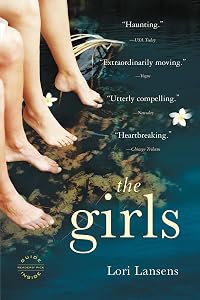
I thought The Girls by Lori Lansens was good, but I just adored this book. Mary Gooch is a character whose struggle to find herself I won't soon forget.
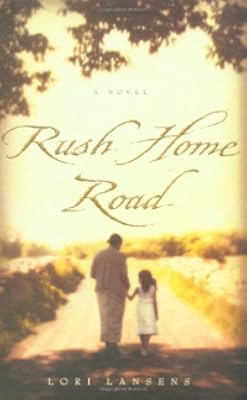
Mary Gooch is morbidly obese, and on the eve of her twenty-fifth wedding anniversary, her husband disappears. Life is hard for Mary, and physically she is struggling to just get around. Her husband Gooch has been her life and his disappearance sets her world upside-down. As she searches for him, she ends up finding herself. It sounds trite, but the writing was so good, and Mary's reaching out to people, letting others help her and learning that she has value in her own right was very satisfying. The Wife's Tale is set in the same small Ontario town as The Girls. The girls, conjoined show more twins Ruby and Rose Darlen are mentioned in this book as well. I believe Lansens' other book, Rush Home Road is also set in the same town.
In some ways the ending wasn't enough; I wanted more! But Lansens told all she needed to and Mary's life, while not tied up neatly at the end, was really more of a beginning. I would love to have read the same book from Jimmy Gooch's perspective as well. He was a character that I really liked (even though he disappeared from Mary's life) and would have liked to have learned even more about him. show less
Mary Gooch is morbidly obese, and on the eve of her twenty-fifth wedding anniversary, her husband disappears. Life is hard for Mary, and physically she is struggling to just get around. Her husband Gooch has been her life and his disappearance sets her world upside-down. As she searches for him, she ends up finding herself. It sounds trite, but the writing was so good, and Mary's reaching out to people, letting others help her and learning that she has value in her own right was very satisfying. The Wife's Tale is set in the same small Ontario town as The Girls. The girls, conjoined show more twins Ruby and Rose Darlen are mentioned in this book as well. I believe Lansens' other book, Rush Home Road is also set in the same town.
In some ways the ending wasn't enough; I wanted more! But Lansens told all she needed to and Mary's life, while not tied up neatly at the end, was really more of a beginning. I would love to have read the same book from Jimmy Gooch's perspective as well. He was a character that I really liked (even though he disappeared from Mary's life) and would have liked to have learned even more about him. show less
This is a novel of transformation. It begins slowly and somewhat ponderously, but this suits, because Mary Gooch, the main character, is somewhat ponderous herself, weighing in at the morbidly obese end of the scale. (Morbidly obese is defined as 100% or more over ideal body weight. Think about it.) Yes, she's big, and yes, she knows it. She loves her husband, but food is her true lover. The love affair is both blatant and illicit. On the eve of their 25th wedding anniversary, her husband does not come home. This pierces even Mary's food-obsessed torpor. She manages to leave her hermit-like existence and goes out into the world (indeed to another country) in search of both her man and answers. Ultimately, she stumbles into show more self-awareness.
What I liked about this book was Mary's transformation, not so much physical, but in terms of how her mind and heart open and develop. Yes, she does change some habits and transforms physically (though, thank goodness, in a more realistic way than chick lit books, where the fat girl has her heart broken and melts away into a size 2). The more arduous, startling journey is the one that moves her from a stifled, shuttered mind, to one that is aware, alert and active. The small steps she takes add up, whether it's walking up a flight of stairs or discarding pop culture magazines to return to reading books.
The characters that are in the book with Mary were portrayed realistically, even the missing Gooch, who seems like a really nice guy, undergoing his own rediscovery and search. The book didn't end in a predictable, neatly wrapped bow, but still was totally believable. It is, however, true to the title. It tells the wife's tale.
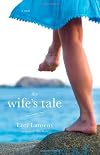
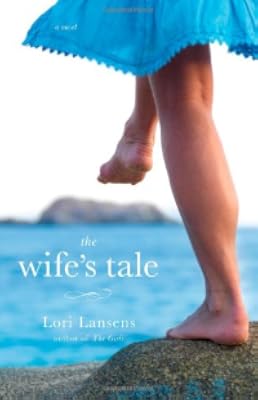
It's funny, but my main qualm was the cover of the book, which is a beautiful photograph, but seemed to me, not part of the book. Yes, Mary makes it to the ocean, but even with her weight loss, during the book she's still a big gal. The toned legs of the woman on the cover don't seem to fit my mind's image. But it's beautiful and will probably sell books, so go for it.
Note: Received this via the Firstreads program on Goodreads and was quite excited as I had read about it in the BookCrossing forums and Newsletter. The author apparently mentions BookCrossing in the book. Yay! show less
What I liked about this book was Mary's transformation, not so much physical, but in terms of how her mind and heart open and develop. Yes, she does change some habits and transforms physically (though, thank goodness, in a more realistic way than chick lit books, where the fat girl has her heart broken and melts away into a size 2). The more arduous, startling journey is the one that moves her from a stifled, shuttered mind, to one that is aware, alert and active. The small steps she takes add up, whether it's walking up a flight of stairs or discarding pop culture magazines to return to reading books.
The characters that are in the book with Mary were portrayed realistically, even the missing Gooch, who seems like a really nice guy, undergoing his own rediscovery and search. The book didn't end in a predictable, neatly wrapped bow, but still was totally believable. It is, however, true to the title. It tells the wife's tale.
It's funny, but my main qualm was the cover of the book, which is a beautiful photograph, but seemed to me, not part of the book. Yes, Mary makes it to the ocean, but even with her weight loss, during the book she's still a big gal. The toned legs of the woman on the cover don't seem to fit my mind's image. But it's beautiful and will probably sell books, so go for it.
Note: Received this via the Firstreads program on Goodreads and was quite excited as I had read about it in the BookCrossing forums and Newsletter. The author apparently mentions BookCrossing in the book. Yay! show less
I knew roughly what this book was about and I thought I wouldn't care for it but it turns out that it was very good. Which brings me to musing about how to decide what to read. I used to go by reviews in the Globe and Mail but I learned it was important to read between the lines of a review to see if it would really suit me. Then there are always recommendations from friends and others and usually those are reliable; on the occasion when I haven't cared for a book that a friend recommended it is probably because I wasn't in the right frame of mind. Sometimes I read a book based on the fact that I enjoyed a previous book of the author's but that can be hit and miss. And sometimes I read a book just because it is sitting there and the show more cover looks interesting. That was certainly a factor this time.
Mary Gooch has lived in the same Ontario town all her life, hardly even venturing to Toronto. To the disgust of her husband she cancelled a cruise that she had won. You see, Mary is morbidly obese and can hardly make it from her house to her vehicle to drive into town. The idea of getting on a plane and facing all those people on a cruise ship, not to mention all the food temptations, was too much for her. Her husband of 25 years disappears on the eve of their wedding anniversary without a word. When she checks the bank balance she finds that there is an extra $25,000 in it. Determined to find her husband, Gooch as she calls him, she drives first to Toronto to go to a restaurant that he frequented. She learns that he has gone to California to see his mother so she gets on a plane to California. She doesn't find Gooch in California but she does find friends and her self-esteem and things she can do for others.
From the look of the author's photo she is not herself overweight but maybe she was at one time or else she is very empathetic. Mary's binge eating is so perfectly described that I could almost taste the food. I have had my own times of binge eating and that urge to eat more even as your brain says to stop is overwhelming. Mary's aversion to food after Gooch abandons her is not something I've experienced but obviously anorexics deal with that daily. But the important lesson is that Mary is more than her relationship with food and so are we all. That is something all of us must remember when we see people of any size, shape, or colour. show less
Mary Gooch has lived in the same Ontario town all her life, hardly even venturing to Toronto. To the disgust of her husband she cancelled a cruise that she had won. You see, Mary is morbidly obese and can hardly make it from her house to her vehicle to drive into town. The idea of getting on a plane and facing all those people on a cruise ship, not to mention all the food temptations, was too much for her. Her husband of 25 years disappears on the eve of their wedding anniversary without a word. When she checks the bank balance she finds that there is an extra $25,000 in it. Determined to find her husband, Gooch as she calls him, she drives first to Toronto to go to a restaurant that he frequented. She learns that he has gone to California to see his mother so she gets on a plane to California. She doesn't find Gooch in California but she does find friends and her self-esteem and things she can do for others.
From the look of the author's photo she is not herself overweight but maybe she was at one time or else she is very empathetic. Mary's binge eating is so perfectly described that I could almost taste the food. I have had my own times of binge eating and that urge to eat more even as your brain says to stop is overwhelming. Mary's aversion to food after Gooch abandons her is not something I've experienced but obviously anorexics deal with that daily. But the important lesson is that Mary is more than her relationship with food and so are we all. That is something all of us must remember when we see people of any size, shape, or colour. show less
Members
- Recently Added By
Lists

Recommend the 20 best books you've read in the last five years
2,168 works; 601 members

Top Five Books of 2014
1,064 works; 398 members

Most Popular Books Tagged Ontario
35 works; 2 members

Books To Get From The Library
115 works; 5 members
Author Information

6 Works 4,430 Members
Lori Lansens has written several screenplays. She lives in Toronto, Canada.
Common Knowledge
- Canonical title
- The Wife's Tale
- Original title
- The Wife's Tale
- Original publication date
- 2009
- People/Characters
- Mary Brody Gooch; Jimmy Gooch; Orin Brody; Mr. Barkley; Leo Feragamo; Christopher Klik
- Important places
- Ontario, Canada; California, USA
- Dedication
- To Maxim and Natasha
- First words
- Alone in the evenings, when the light had drained from the slate roof of her small rural home, and when her husband was working late, Mary Gooch would perform a striptease for the stars at the open bedroom window: shifting ou... (show all)t of rumpled bottoms, slipping off blousy top, liberating breasts, peeling panties, her creamy flesh spilling forth until she was completely, exquisitely nude.
- Last words
- (Click to show. Warning: May contain spoilers.)There was just Mary Gooch, eating enough.
- Original language
- English
Classifications
Statistics
- Members
- 613
- Popularity
- 47,558
- Reviews
- 74
- Rating
- (3.60)
- Languages
- 5 — Dutch, English, French, Italian, Norwegian (Bokmål)
- Media
- Paper, Audiobook, Ebook
- ISBNs
- 26
- ASINs
- 7