
Shadow Tag
by Louise Erdrich
On This Page
Description
Chronciles the emotional war between Irene America, a beautiful, introspective woman of Native American ancestry, struggling to finish her dissertation while raising three children, and her husband Gil, a painter whose reputation is built on a series of now iconic portraits of Irene.Tags
Recommendations




















Member Recommendations

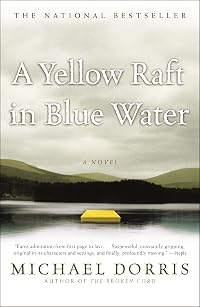
tangledthread The plot lines are very similar
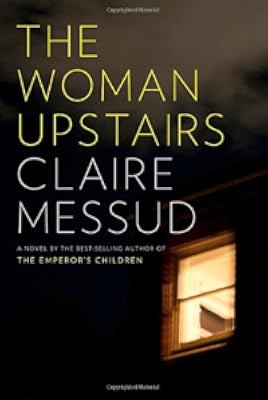
novelcommentary Very modern novel where the events of 9/11 are integral to the plot. Told in alternating views, a unhappily married couple do their best to destroy each other.
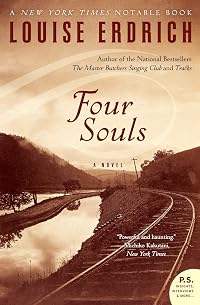
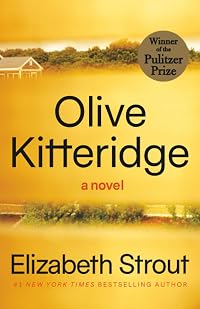
tangledthread Both novels deal with trust and deception in marriage. Also both take place in an upper midwestern U.S. winter.

akblanchard Another look at a disintegrating marriage.
Member Reviews
I got this book as part of Powell’s Books amazing Indispensable subscription club that delivers exciting new titles to your door. Usually the book is a signed first edition in a custom slipcase and they’ll pack a bunch of other loosely related goodies in the box. Very cool way to get titles you might not pick yourself but have been carefully vetted out by people I trust to know a good book.
Louise Erdrich’s Shadow Tag is one such book. I probably would not have purchased this book even though it sounds interesting on the back and has a Native American connection. I love books about Native Americans and have increasingly been interested in literature by them as a glimpse into their culture and current issues. This book did not show more disappoint.
One issue explored by this book is the relationship between an artist and his muse. What happens when that person is also your wife and lover? Gil had been warned against using Irene as his model by another artist early in his career but became famous for his revealing, provocative, obsessive representations of her. He thought it would be alright since “…Hopper had painted Jo, Rembrandt had painted Saskia, then Hendrickje. Wyeth had painted Betsy and of course Helga; Bonnard had painted Marthe; there was the limitless and devouring Picasso; de Kooning and Kitaj and John Currin painted their wives.”
This family has some serious issues and the ominous writing (no pun intended) is on the wall from the first paragraph when you see Irene keeping two diaries. One is a manipulative dummy since she has realized that Gil is reading her diaries. The other is the real diary kept in a safety deposit box at the bank. There three children watch everything unravel: Florian is the boy genius at 14, Riel the 11 year old that decides that when a disaster strikes she will have to be the one to save the family, and the oblivious 5 year old Stoney who takes comfort with his stuffed animals whenever the violence and abuse gets too acute. Florian, obsessed with physics, describes his dad as a black hole and his mom as approaching the Schwarzchild radius, that distance from the black hole from which no light can escape. This turns out to be a brilliant analogy of Irene’s orbit around Gil. DTMFA, Irene! She tries half-heartedly and co-dependently but the physics are physics.
This can be a raw book if you have gone through the dissolution of a marriage with kids but the writing is powerful and the narrative drives inexorably towards it’s conclusion. Thank you Powell’s for introducing me to Louise Erdrich.
For more book reviews, including the physical book and overall reading experience, visit my blog The Whole Book Experience at http://www.thewholebookexperience.com/ show less
Louise Erdrich’s Shadow Tag is one such book. I probably would not have purchased this book even though it sounds interesting on the back and has a Native American connection. I love books about Native Americans and have increasingly been interested in literature by them as a glimpse into their culture and current issues. This book did not show more disappoint.
One issue explored by this book is the relationship between an artist and his muse. What happens when that person is also your wife and lover? Gil had been warned against using Irene as his model by another artist early in his career but became famous for his revealing, provocative, obsessive representations of her. He thought it would be alright since “…Hopper had painted Jo, Rembrandt had painted Saskia, then Hendrickje. Wyeth had painted Betsy and of course Helga; Bonnard had painted Marthe; there was the limitless and devouring Picasso; de Kooning and Kitaj and John Currin painted their wives.”
This family has some serious issues and the ominous writing (no pun intended) is on the wall from the first paragraph when you see Irene keeping two diaries. One is a manipulative dummy since she has realized that Gil is reading her diaries. The other is the real diary kept in a safety deposit box at the bank. There three children watch everything unravel: Florian is the boy genius at 14, Riel the 11 year old that decides that when a disaster strikes she will have to be the one to save the family, and the oblivious 5 year old Stoney who takes comfort with his stuffed animals whenever the violence and abuse gets too acute. Florian, obsessed with physics, describes his dad as a black hole and his mom as approaching the Schwarzchild radius, that distance from the black hole from which no light can escape. This turns out to be a brilliant analogy of Irene’s orbit around Gil. DTMFA, Irene! She tries half-heartedly and co-dependently but the physics are physics.
This can be a raw book if you have gone through the dissolution of a marriage with kids but the writing is powerful and the narrative drives inexorably towards it’s conclusion. Thank you Powell’s for introducing me to Louise Erdrich.
For more book reviews, including the physical book and overall reading experience, visit my blog The Whole Book Experience at http://www.thewholebookexperience.com/ show less
What would you do if you caught someone reading your diary? If you caught your spouse snooping in your inner-most thoughts, how angry would you be? In Louise Erdrich’s Shadow Tag, Irene America is a woman in an abusive marriage, who discovers that her husband has been reading her diary. Instead of lashing out, she takes advantage — she starts a secret journal and uses her diary to manipulate her violent husband, Gil.
Gil is an artist and Irene is his muse. His iconic paintings of his wife have brought him tremendous success, but they have also pigeonholed him as a Native American artist:
“Don’t paint Indians. The subject wins. You’ll never be an artist. You’ll be an American Indian artist…Still, Gil had no choice. He painted show more Indians when he painted his wife because he couldn’t help it — the ferocity between them, the need. Her blood ancestors came out in Gil’s paint as he worked.”
There is certainly ferocity between them. There is evidence of great passion, but it is passion that has turned sour and gone wrong. Irene has fallen out of love with Gil and I am never really certain whether Gil adores Irene or despises her. He goes out of his way to antagonize her, buying her expensive gifts she doesn’t want and throwing parties that she will hate. He ridicules her in person and on canvas — he paints her nude, in demeaning positions — but she continues to model for him. They are locked in a sort of mortal combat; they hurt each other terribly but they just can’t break away.
“Here is the most telling fact: you wish to possess me. Here is another fact: I loved you and let you think you could.”
I love the way that story is both subtle and jarring. There are hints of violence and unhappiness, then there is a sudden slap. Gil dotes on his children, praising their unique qualities, then he slams his son’s forehead into the table. The family orbits around Gil, pandering to his mercurial moods — especially the children — knowing when to pull away, when to hide. Even the dogs are sensitive to it, milling around and putting themselves physically between Gil and the children. The children seem too wise, too knowing, and then Erdrich sneaks up on you with something shocking.
Read my full review at Alive on the Shelves. show less
Gil is an artist and Irene is his muse. His iconic paintings of his wife have brought him tremendous success, but they have also pigeonholed him as a Native American artist:
“Don’t paint Indians. The subject wins. You’ll never be an artist. You’ll be an American Indian artist…Still, Gil had no choice. He painted show more Indians when he painted his wife because he couldn’t help it — the ferocity between them, the need. Her blood ancestors came out in Gil’s paint as he worked.”
There is certainly ferocity between them. There is evidence of great passion, but it is passion that has turned sour and gone wrong. Irene has fallen out of love with Gil and I am never really certain whether Gil adores Irene or despises her. He goes out of his way to antagonize her, buying her expensive gifts she doesn’t want and throwing parties that she will hate. He ridicules her in person and on canvas — he paints her nude, in demeaning positions — but she continues to model for him. They are locked in a sort of mortal combat; they hurt each other terribly but they just can’t break away.
“Here is the most telling fact: you wish to possess me. Here is another fact: I loved you and let you think you could.”
I love the way that story is both subtle and jarring. There are hints of violence and unhappiness, then there is a sudden slap. Gil dotes on his children, praising their unique qualities, then he slams his son’s forehead into the table. The family orbits around Gil, pandering to his mercurial moods — especially the children — knowing when to pull away, when to hide. Even the dogs are sensitive to it, milling around and putting themselves physically between Gil and the children. The children seem too wise, too knowing, and then Erdrich sneaks up on you with something shocking.
Read my full review at Alive on the Shelves. show less
Gil and Irene America are married with three children, living in Minneapolis. Gil is an artist, made famous and successful by painting a series of Irene which ran the gamut from sexual to lovely. Now, their marriage is falling apart: Irene starts a second, hidden diary and starts using the one at home to manipulate her husband, since she knows he's secretly reading it.
This is one of those stories where the writing/themes takes center stage, the characters come next, and everything else is incidental. The dynamics of Gil and Irene's relationship are complex, and Erdrich uses them to explore this idea of a "shadow" and how the representation of a person may steal his/her soul. Irene, in a way, is also trying to get out of Gil's shadow and show more his image of her, and trying to keep a part of herself separate and private. I found it both compelling and painful reading, and I never really loved any individual part. It was like a train wreck, knowing everything was unraveling and being unable to walk away. show less
This is one of those stories where the writing/themes takes center stage, the characters come next, and everything else is incidental. The dynamics of Gil and Irene's relationship are complex, and Erdrich uses them to explore this idea of a "shadow" and how the representation of a person may steal his/her soul. Irene, in a way, is also trying to get out of Gil's shadow and show more his image of her, and trying to keep a part of herself separate and private. I found it both compelling and painful reading, and I never really loved any individual part. It was like a train wreck, knowing everything was unraveling and being unable to walk away. show less
A brilliant, gorgeous portrayal of a codependent marriage told from multiple perspectives. It would have been perfect if not for an epilogue that too neatly explains the author's technique.
The prose is incredible, the relationships are complex and nuanced and utterly believable. Gil is drawn a tad two dimensional, but also with sympathy and compassion, though he is a monster. The layering of painting against their relationship, and against the act of writing, along with the story of the cultural underpinnings in this family, are amazingly done. Numerous notes taken in the book, numerous underlining. Her metaphors and analogies are powerful and rich. An opus, though a small story. So emotionally draining to read.
I was blown away by this one. Such a powerful, disturbing story, written in a sharp, poignant manner that took my breath away. Not a story that I can easily recommend as it touches on some issues that some readers may not be comfortable reading, but that is exactly what made this such an amazing read for me. Erdrich gets under the skin of her characters and brings to the surface their troubling personality and control issues, depicting a manipulative relationship as the damaging and destructive force it can be for all caught within its vortex. I seem to appreciate disturbing, shattering reads like this one. Not sure what that says about me but I think it says a lot about Erdrich's ability as a writer to unflinchingly paint a picture, show more draw me in as a reader and keep my attention while the subject matter continues to disturb and then throw me over the precipice like she did with that ending. A brilliant portrayal, but as I mentioned, not a book that is easy to recommend to others. show less
I liked but didn't love this novel. The characterization felt incomplete given that it's more of a character study of a family than it is a plot driven novel. That said, I really liked Erdrich's writing and I would read more.
Members
- Recently Added By
Published Reviews
ThingScore 63
in places, “Shadow Tag” seems more like notes for a novel than fully realized fiction. Elsewhere, though, Erdrich’s unbridled urgency yields startlingly original phrasing (“the christbirthing pinecone air”) as well as flashes of blinding lucidity.
added by Shortride
I left the novel with mixed feelings. Despite its psychological acuity, and the tenderness the author has for the kids, I mostly felt trapped in a stifling space with a rather unlikable couple. I hope that in her next novel, Erdrich opens some windows.
added by Shortride
Lists

Top Five Books of 2013
1,562 works; 715 members

Powell's Indiespensable
79 works; 6 members
Author Information

70+ Works 45,362 Members
Karen Louise Erdrich was born on June 7, 1954 in Little Falls, Minnesota. Erdrich grew up in Wahpeton, North Dakota, where both of her parents were employed by the Bureau of Indian Affairs. She is a member of the Turtle Mountain Band of Chippewa. Erdrich graduated from Dartmouth College in 1976 with an AB degree, and she received a Master of Arts show more in creative writing from Johns Hopkins University in 1979. Erdrich published a number of poems and short stories from 1978 to 1982. In 1981 she married author and anthropologist Michael Dorris, and together they published The World's Greatest Fisherman, which won the Nelson Algren Award in 1982. In 1984 she won the National Book Critics Circle Award for Love Medicine, which is an expansion of a story that she had co-written with Dorris. Love Medicine was also awarded the Virginia McCormick Scully Prize (1984), the Sue Kaufman Prize (1985) and the Los Angeles Times Award for best novel (1985). In addition to her prose, Erdrich has written several volumes of poetry, a textbook, children's books, and short stories and essays for popular magazines. She has been the recipient of numerous awards for professional excellence, including the National Magazine Fiction Award in 1983 and a first-prize O. Henry Award in 1987. Erdrich has also received the Pushcart Prize in Poetry, the Western Literacy Association Award, the 1999 World Fantasy Award, and the Scott O'Dell Award for Historical Fiction in 2006. In 2007 she refused to accept an honorary doctorate from the University of North Dakota in protest of its use of the "Fighting Sioux" name and logo. Erdrich's novel The Round House made the New York Times bestseller list in 2013. Her other New York Times bestsellers include Future Home of the Living God (2017). (Bowker Author Biography) show less
Some Editions
Awards and Honors
Series
Belongs to Publisher Series
Common Knowledge
- Canonical title
- Shadow Tag
- Original publication date
- 2010-02-02 (1e édition originale américaine) (1e édition originale américaine); 2012-09-03 (1e édition originale française, Terres d'Amérique, Albin Michel) (1e édition originale française, Terres d'Amérique, Albin Michel)
- People/Characters
- Irene America; Gil America; Florien America; Riel America; Stoney America
- Important places
- Minneapolis, Minnesota, USA
- First words
- November 2, 2007
Blue Notebook
I have two diaries now. - Quotations
- Falling in love is falling into knowledge. Enduring love comes when we love most of what we learn about the other person and can tolerate the faults they cannot change.
- Last words
- (Click to show. Warning: May contain spoilers.)And now as I remember it, I see it was midday, the sun right over us that day, and the pavement was hot on out feet, stinging hot, and it felt good, and it was noon and there were no shadows under us, or anywhere around us, it was all bright, flat, dazzling, and then the sirens began to rise and fall and grow louder in their rising and falling until they were here.
- Original language*
- Anglais (Etats-Unis) (Etats-Unis)
- Canonical DDC/MDS
- 813.54
- Canonical LCC
- PS3555.R42
*Some information comes from Common Knowledge in other languages. Click "Edit" for more information.
Classifications
Statistics
- Members
- 1,136
- Popularity
- 22,124
- Reviews
- 67
- Rating
- (3.40)
- Languages
- 6 — English, French, German, Italian, Portuguese, Spanish
- Media
- Paper, Audiobook, Ebook
- ISBNs
- 27
- ASINs
- 13