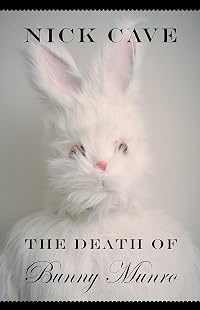
The Death of Bunny Munro: A Novel
by Nick Cave
On This Page
Description
Set adrift by his wife's suicide and struggling to keep a grip on reality, Bunny Munro does the only thing he can think of: with his young son in tow, he hits the road. To his son, waiting patiently in the car while his father peddles beauty wares and quickies to lonely housewives in the south of England, Bunny is a hero, larger than life. But Bunny himself, haunted by what might be his wife's ghost, seems only dimly aware of his son's existence. When his bizarre trip shades into a final show more reckoning, when he can no longer be sure what is real and what is not, Bunny finally begins to recognize the love he feels for his son. And he sees that the revenants of his world—decrepit fathers, vengeful ghosts, jealous husbands and horned psychokillers—are lurking in the shadows, waiting to exact their toll. At turns dark and humane, The Death of Bunny Munro is a tender portrait of the relationship between a boy and his father, with all the wit and enigma that fans will recognize as Nick Cave's singular vision. show lessTags
Recommendations

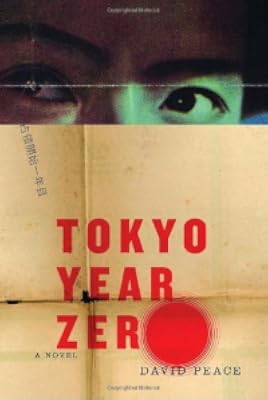
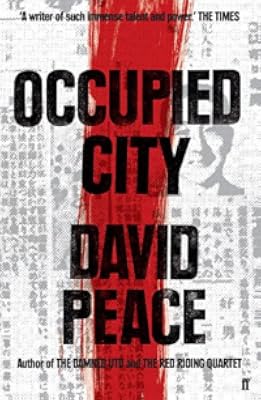
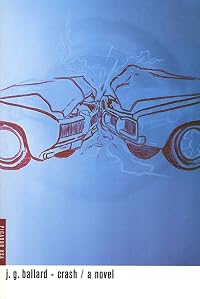
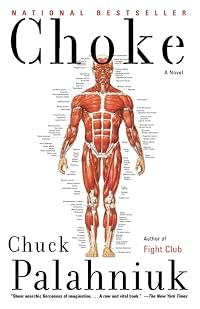




Member Recommendations

hairball It's not the Australian thing as much as the mood and the alcohol that makes them feel similar to me.

Member Reviews
"Are you for real?" women ask Bunny Munro in open-mouthed shock. (Well, not all of them.) "Do guys like you still exist? Shouldn't you be in a museum somewhere, with a sign around your neck saying PREHISTORIC FOSSIL?"
Bunny himself, of course, doesn't really get why they react like that. (Well, some of them.) After all, what has he ever done wrong? No misogynist he; he loves pussy. ...Women, I mean. Bunny Munro loves women. In fact, it is... I mean they are pretty much what his entire life revolves around. As one of the most successful travelling salesmen of a cosmetics company, he rides from town to town in his faithful Fiat, seduces farmer's daughters... uh, bored suburban housewives into buying his various, ahem, creams, then rides show more home to his faithful if boring wife (jerking off a couple of times on the way) and spends his nights fantasizing about Avril Lavigne and Kylie Minogue and the neighbour's 14-year-old and, well, anything with a... he loves women. (Cave apologizes to Lavigne and Minogue in the afterword, and for good reason.) That's his entire existence: want pussy, have pussy , joke about pussy, dream about pussy, and occasionally pat his young son on the head and make him want to be like him. The world is, ahem, his oyster.
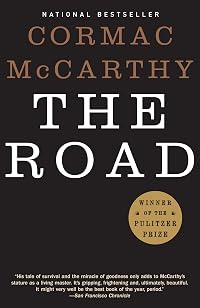
And then one day it falls apart. His wife kills herself rather than live with him, and suddenly Bunny is alone with a young kid, a growing gut, and a life built around... well, a hole, I suppose. So after first having sex with a colleague's girlfriend (he has no actual friends to speak of) at his wife's wake, he takes Bunny Jr out of school to "teach him the ropes", and together the two of them set out on a The Road-style odyssey (it's hardly a coincidence that he and John Hillcoat have been collaborating on the film version) through a Britain of council flats, 20-year-old mothers of three, and drugged-out teenagers who look like pop stars (or possibly the other way around). Bunny tries to do his job, sell his product to increasingly apprehensive women, while the certainty that something is going to end very very soon is slowly causing him to lose his, ahem, marbles. He keeps seeing news reports of a man dressed as the devil who's working himself down through England on a collision course with Bunny, beating women to death. Meanwhile, poor motherless Bunny Jr (there's three Bunny Munros in this - grandfather, father, son) is trying to teach himself about the world from an old encyclopedia that can only offer (dubious) facts.
Cave's second novel is savage, both in the the way his protagonist acts and in the treatment Cave gives him, and also very funny; it's as if he can't quite make up his mind if Bunny deserves pity for what the world has made him or a swift kick in the balls for what he does to the world, and decides to do both. Cave was always one of rock's more ambitious songwriters, with an approach that echoes Milton, Updike or Straub as often as it does Hooker, Reed or Dylan, and in Bunny Munro he proves himself a more than capable prose writer as well. It's funny how his writing has developed since the 80s; where his Faulkner-on-heroin debut And The Ass Saw The Angel felt like a novelization of a Nick Cave song (specifically, a mash-up of "Swampland" and "Tupelo"), many of his recent songs have felt more like condensed novels made to rhyme. And Bunny Munro has the same restless, frantic, impotently furious feel of many of his best latter-day lyrics, except here he gets to spread out and explore every, ahem, crevice of what it means. Bunny tumbles head-first (you know which one) through life in a rhythmic, pounding, Humbert/Rabbit Angstrom/John Self-like haze of images and ideas about himself and those who exist for his pleasure, unsure of which bits are jokes and which ones are just very macabre tragedies, only that they're all increasingly at his expense. Especially Cave's dialogue is an absolute joy to read, if by "joy" you mean "funny, but awkward and authentic enough to make your teeth hurt."
Sure, in the long run his strength is more in how the story is told, and like his other recent full-length effort (the script for The Proposition), his plot and his points end up a little too predictable; not enough to ruin the book, but just enough that you know what's around the bend before he gets there. He kicks in what should be open doors, but he does it with style. You might argue that he's being either hypocritical or just a little too honest, considering the amount of songs he's written about stalking, beating or killing women, but of course Cave realised that that aspect of his writing was turning into self-parody over 10 years ago and mostly ditched that persona following Murder Ballads. When he revisits it now, as if he wants to finally deconstruct and bury the idea of the poor, set-upon middle-aged male novel protagonist trying to understand why women won't fuck... I mean love him, it's often about as subtle as - to quote a phrase - "a fucking really big brick." Bunny, the killer (or at least rapist) rabbit who sells women an idea of wanting to be like he wants them to be, makes them pay through the nose for it, and passes it on to the next generation without a second's thought. The real and more subtle tragedy is in the world we see around Bunny - the men who laugh at his jokes, the women who gladly play his game for lack of anything better in their life, poor Bunny Jr idolizing his father for lack of anything else. Cave walks - or rather, runs ranting back and forth - along a thin line between social commentary and outrageous satire, and keeps it up (sorry) more than he falls off. Bunny Munro dies and lives forever; a pitiful, hilariously inept predator caveman, whose only function is to swim and eat and make little sharks, and lacks even the language to wonder why he shouldn't be allowed to. show less
Bunny himself, of course, doesn't really get why they react like that. (Well, some of them.) After all, what has he ever done wrong? No misogynist he; he loves pussy. ...Women, I mean. Bunny Munro loves women. In fact, it is... I mean they are pretty much what his entire life revolves around. As one of the most successful travelling salesmen of a cosmetics company, he rides from town to town in his faithful Fiat, seduces farmer's daughters... uh, bored suburban housewives into buying his various, ahem, creams, then rides show more home to his faithful if boring wife (jerking off a couple of times on the way) and spends his nights fantasizing about Avril Lavigne and Kylie Minogue and the neighbour's 14-year-old and, well, anything with a... he loves women. (Cave apologizes to Lavigne and Minogue in the afterword, and for good reason.) That's his entire existence: want pussy, have pussy , joke about pussy, dream about pussy, and occasionally pat his young son on the head and make him want to be like him. The world is, ahem, his oyster.
And then one day it falls apart. His wife kills herself rather than live with him, and suddenly Bunny is alone with a young kid, a growing gut, and a life built around... well, a hole, I suppose. So after first having sex with a colleague's girlfriend (he has no actual friends to speak of) at his wife's wake, he takes Bunny Jr out of school to "teach him the ropes", and together the two of them set out on a The Road-style odyssey (it's hardly a coincidence that he and John Hillcoat have been collaborating on the film version) through a Britain of council flats, 20-year-old mothers of three, and drugged-out teenagers who look like pop stars (or possibly the other way around). Bunny tries to do his job, sell his product to increasingly apprehensive women, while the certainty that something is going to end very very soon is slowly causing him to lose his, ahem, marbles. He keeps seeing news reports of a man dressed as the devil who's working himself down through England on a collision course with Bunny, beating women to death. Meanwhile, poor motherless Bunny Jr (there's three Bunny Munros in this - grandfather, father, son) is trying to teach himself about the world from an old encyclopedia that can only offer (dubious) facts.
Cave's second novel is savage, both in the the way his protagonist acts and in the treatment Cave gives him, and also very funny; it's as if he can't quite make up his mind if Bunny deserves pity for what the world has made him or a swift kick in the balls for what he does to the world, and decides to do both. Cave was always one of rock's more ambitious songwriters, with an approach that echoes Milton, Updike or Straub as often as it does Hooker, Reed or Dylan, and in Bunny Munro he proves himself a more than capable prose writer as well. It's funny how his writing has developed since the 80s; where his Faulkner-on-heroin debut And The Ass Saw The Angel felt like a novelization of a Nick Cave song (specifically, a mash-up of "Swampland" and "Tupelo"), many of his recent songs have felt more like condensed novels made to rhyme. And Bunny Munro has the same restless, frantic, impotently furious feel of many of his best latter-day lyrics, except here he gets to spread out and explore every, ahem, crevice of what it means. Bunny tumbles head-first (you know which one) through life in a rhythmic, pounding, Humbert/Rabbit Angstrom/John Self-like haze of images and ideas about himself and those who exist for his pleasure, unsure of which bits are jokes and which ones are just very macabre tragedies, only that they're all increasingly at his expense. Especially Cave's dialogue is an absolute joy to read, if by "joy" you mean "funny, but awkward and authentic enough to make your teeth hurt."
Sure, in the long run his strength is more in how the story is told, and like his other recent full-length effort (the script for The Proposition), his plot and his points end up a little too predictable; not enough to ruin the book, but just enough that you know what's around the bend before he gets there. He kicks in what should be open doors, but he does it with style. You might argue that he's being either hypocritical or just a little too honest, considering the amount of songs he's written about stalking, beating or killing women, but of course Cave realised that that aspect of his writing was turning into self-parody over 10 years ago and mostly ditched that persona following Murder Ballads. When he revisits it now, as if he wants to finally deconstruct and bury the idea of the poor, set-upon middle-aged male novel protagonist trying to understand why women won't fuck... I mean love him, it's often about as subtle as - to quote a phrase - "a fucking really big brick." Bunny, the killer (or at least rapist) rabbit who sells women an idea of wanting to be like he wants them to be, makes them pay through the nose for it, and passes it on to the next generation without a second's thought. The real and more subtle tragedy is in the world we see around Bunny - the men who laugh at his jokes, the women who gladly play his game for lack of anything better in their life, poor Bunny Jr idolizing his father for lack of anything else. Cave walks - or rather, runs ranting back and forth - along a thin line between social commentary and outrageous satire, and keeps it up (sorry) more than he falls off. Bunny Munro dies and lives forever; a pitiful, hilariously inept predator caveman, whose only function is to swim and eat and make little sharks, and lacks even the language to wonder why he shouldn't be allowed to. show less
I knew Nick Cave as a punk rocker and couldn't resist his novel. I was going to read it as a lark, with an open mind. I didn't think I would read one of the best novels I've read in a long time. Gritty, authentic, emotional and multi-layered, this book drives the reader through the twisted and increasingly out-of-control world of Bunny Munro.
This sleazy, preying character reveals himself as a lost, caring father madly grieving for this wife. It's hard at any time to feel sorry for him: his repeated mistakes, the negligence of his son, his compulsive need to seduce women, all make him rather unlikable. But he is so human and fallible it's impossible not to feel for him. The other characters, Bunny Junior and Senior, Poodle as well as the show more cast of women are all equally engaging, unique and alternately funny, laughable or poignant. The reader never gets bored, drawn into this increasingly dark novel in which the final epiphany is both inevitable and heart-breaking.
A real discovery. show less
This sleazy, preying character reveals himself as a lost, caring father madly grieving for this wife. It's hard at any time to feel sorry for him: his repeated mistakes, the negligence of his son, his compulsive need to seduce women, all make him rather unlikable. But he is so human and fallible it's impossible not to feel for him. The other characters, Bunny Junior and Senior, Poodle as well as the show more cast of women are all equally engaging, unique and alternately funny, laughable or poignant. The reader never gets bored, drawn into this increasingly dark novel in which the final epiphany is both inevitable and heart-breaking.
A real discovery. show less
This novel was akin to taking a trip down memory lane with my creepy Polish great uncle Chester, who, at his sister's funeral, sidled up to my Father and in a hushed, conspiratorial tone (when my Mother walked by), said something like (paraphrasing here), "Wow, what do we have here? I'd love to tap that a__." To which, my stunned and gracious Father could only say, "My God Chess, that is your niece. And my wife." So I know people like Bunny Munro exist. They should never be venerated. Ever. And this book is also like fart or sex jokes. Sure, a couple are mildly funny. But 750 of them in 10 minutes? No. Lastly, the author writes like a 15-year-old boy trying for shock value in his English literature class to be "edgy." It's very badly show more written and seriously, who on earth wants to know about this guy's tingling perineum? Repeatedly. So alas, I dropped this back into the library return shute at page 75. I realize I may have jumped shipped before the miracle of redemption happened, but that is a risk I was very willing to take. The only upside is that it made me ink that overdue OB/GYN appointment on the off chance that anyone I have ever dated, in my entire life, ever, bears any resemblance, in any way, to the protagonist. Skip it. It's garbage. show less
Despite the title, THE DEATH OF BUNNY MUNRO is not a novel from my preferred genre of crime fiction. Defining exactly what it is, however, is a lot harder. Nick Cave is one of my favourite musicians, despite so much of his subject matter being somewhat more biblical than would normally be of any particular appeal. With this novel he's moved from the overtly biblical, Southern Gothic feel of AND THE ASS SAW THE ANGEL released in 1989, but not completely away from some of all of its core themes. THE DEATH OF BUNNY MUNRO explores human frailty, fanaticism and vengeance, set this time within the confines of a small family, over which Bunny Munro's behaviour casts a sad, reflective, self-interested and yet strangely touching pall.
Bunny is a show more man who gives into his natural urges. Constantly. He's utterly obsessed with sex, his every waking moment seems to be devoted to the pursuit of casual sex. He gives nobody a second thought - his conquests, his wife, their young son. All he thinks about, all he can do is pursue sex. When his wife finally gives up the constant pain of their marriage - and her life - and kills herself with Bunny Junior in the flat with her - Bunny is still unable to grasp the message she leaves him. He's also not quite able to grasp the ramifications of being a sole parent to a sad and lost little boy, even though somewhere inside his self-obsessed, pleasure-obsessed, mindless behaviour something human, something beyond himself, is tantalisingly close to being reached by Bunny Junior. But Bunny Senior isn't able / willing / open enough to change, to let go of his own, to stand aside from his pleasure, to look outside of himself. Or at least not in time he isn't.
There were aspects of this book that made me profoundly uncomfortable. Not the sexual descriptions - which are prolific, and explicit, but rather the starkness of Bunny's obsession with sex. The starkness in which pursuit became predation, pleasure became cruel, made me wince. A lot. Especially as what little control there had been simply gave way. The violence implicit in that one person's complete disregard for everyone around him, writ large against his little boy's unconditional love, acceptance, sorrow, understanding. The finale in which everything, all pleasure, all pursuit, is revealed as pointless.
There were also aspects of this book that soared, that were hilarious. Gallows humour maybe, certainly absurdist, THE DEATH OF BUNNY MUNRO grabs you, shakes you, slaps you to make sure you're still paying attention, then tugs your heart-strings. Then it wraps them around your ears and tweaks like crazy until your heart aches and your ears ring.
I could not get the lyrics from INTO MY ARMS out of my head as I read this book, which didn't help as THE DEATH OF BUNNY MUNRO made me cry. A lot. I read it a second time. Laughed, winced, lost my temper with Bunny, cried a lot all over again. show less
Bunny is a show more man who gives into his natural urges. Constantly. He's utterly obsessed with sex, his every waking moment seems to be devoted to the pursuit of casual sex. He gives nobody a second thought - his conquests, his wife, their young son. All he thinks about, all he can do is pursue sex. When his wife finally gives up the constant pain of their marriage - and her life - and kills herself with Bunny Junior in the flat with her - Bunny is still unable to grasp the message she leaves him. He's also not quite able to grasp the ramifications of being a sole parent to a sad and lost little boy, even though somewhere inside his self-obsessed, pleasure-obsessed, mindless behaviour something human, something beyond himself, is tantalisingly close to being reached by Bunny Junior. But Bunny Senior isn't able / willing / open enough to change, to let go of his own, to stand aside from his pleasure, to look outside of himself. Or at least not in time he isn't.
There were aspects of this book that made me profoundly uncomfortable. Not the sexual descriptions - which are prolific, and explicit, but rather the starkness of Bunny's obsession with sex. The starkness in which pursuit became predation, pleasure became cruel, made me wince. A lot. Especially as what little control there had been simply gave way. The violence implicit in that one person's complete disregard for everyone around him, writ large against his little boy's unconditional love, acceptance, sorrow, understanding. The finale in which everything, all pleasure, all pursuit, is revealed as pointless.
There were also aspects of this book that soared, that were hilarious. Gallows humour maybe, certainly absurdist, THE DEATH OF BUNNY MUNRO grabs you, shakes you, slaps you to make sure you're still paying attention, then tugs your heart-strings. Then it wraps them around your ears and tweaks like crazy until your heart aches and your ears ring.
I could not get the lyrics from INTO MY ARMS out of my head as I read this book, which didn't help as THE DEATH OF BUNNY MUNRO made me cry. A lot. I read it a second time. Laughed, winced, lost my temper with Bunny, cried a lot all over again. show less
This, the second book that the singer Nick Cave has written, is a black comedic tragic tale about Bunny Munro and the increasing velocity of his downward spiral after his wife's suicide.
Bunny is an unlikeable character - incapable of dealing with love, he's a modern day sex addict with an insatiable libido who uses his job as a beauty product door-to-door salesman as a fast-track route to his next shag. After his wife's death (no spoiler - we learn of that on the book jacket), he takes his son Bunny Junior on the road with him, and we observe the slow car crash of Bunny's life, as he struggles to deal with his own emotions and those of his grieving child. Having always considered himself invincible with the ladies, as his aimlessness show more and erratic behaviour increases he becomes stripped back to face the weak, pathetic and insignificant character he really is until there's nothing left to hide behind.
For the first few chapters I wasn't sure I would enjoy this book - it was very laddish, and I wasn't sure there was going to be much depth to it. But surprisingly, once I was a quarter of the way in I couldn't put it down. Cave does a great job of slowly destroying Bunny and exposing him as a man of immense weakness and zero achievement, portraying him in a comedic yet poignantly sad light.
I felt that Cave was heavily influenced by Updike's Rabbit novels, even to the point of similarity between the characters' names. Cave doesn't get anywhere near Updike's touching characterisation - I didn't like Bunny at all whereas I grew to love and pity Rabbit in equal measure - yet this a decent enough book. There were some writing tools employed (such as a maroon colour symbolism) which were perhaps a little too obvious, but all in all this was a good read. Whilst it was hard to sympathise with Bunny due to his immense self-centredness, as a reader I felt immense sympathy and sorrow for his neglected young son.
3.5 stars - I dropped half a star as it's hard to fall in love with a book where you don't feel anything for the character, but a job well done in this singer to novelist transition. show less
Bunny is an unlikeable character - incapable of dealing with love, he's a modern day sex addict with an insatiable libido who uses his job as a beauty product door-to-door salesman as a fast-track route to his next shag. After his wife's death (no spoiler - we learn of that on the book jacket), he takes his son Bunny Junior on the road with him, and we observe the slow car crash of Bunny's life, as he struggles to deal with his own emotions and those of his grieving child. Having always considered himself invincible with the ladies, as his aimlessness show more and erratic behaviour increases he becomes stripped back to face the weak, pathetic and insignificant character he really is until there's nothing left to hide behind.
For the first few chapters I wasn't sure I would enjoy this book - it was very laddish, and I wasn't sure there was going to be much depth to it. But surprisingly, once I was a quarter of the way in I couldn't put it down. Cave does a great job of slowly destroying Bunny and exposing him as a man of immense weakness and zero achievement, portraying him in a comedic yet poignantly sad light.
I felt that Cave was heavily influenced by Updike's Rabbit novels, even to the point of similarity between the characters' names. Cave doesn't get anywhere near Updike's touching characterisation - I didn't like Bunny at all whereas I grew to love and pity Rabbit in equal measure - yet this a decent enough book. There were some writing tools employed (such as a maroon colour symbolism) which were perhaps a little too obvious, but all in all this was a good read. Whilst it was hard to sympathise with Bunny due to his immense self-centredness, as a reader I felt immense sympathy and sorrow for his neglected young son.
3.5 stars - I dropped half a star as it's hard to fall in love with a book where you don't feel anything for the character, but a job well done in this singer to novelist transition. show less
"He gives vent to his imagination and realises for the millionth time he has none and so he pictures her vagina."
Nick Cave was already one of my favorite musicians, and now he’s one of my favorite novelists. This story had me shedding a tear over a(n eventually) penitent -- if overwhelmed -- debauchee of monstrously comic proportions who is hounded by the spirit of his dead-by-suicide wife and only mildly distracted by the presence of his beautiful, god-like, 9 year-old son while on an odyssey for the idealized female orifice. And the poor fellow doesn't even have the slightest clue as to why.
A blurb by Irvine Welsh (Trainspotting) claims that this story is a fusion of Cormac McCarthy, Franz Kafka and Benny Hill. I see it more as show more Henry Miller does Austin Powers with a dash of Ryan/Tatum O’Neal "Paper Moon." If there's redemption for Bunny Munro, through his child, there's redemption possible for the rest of us. And if there's redemption for the rest of us, who knows? Things may fall apart, but we at least can huddle in the consolation of the next generation, who, despite our best efforts to screw ‘em up, somehow find a way. show less
Nick Cave was already one of my favorite musicians, and now he’s one of my favorite novelists. This story had me shedding a tear over a(n eventually) penitent -- if overwhelmed -- debauchee of monstrously comic proportions who is hounded by the spirit of his dead-by-suicide wife and only mildly distracted by the presence of his beautiful, god-like, 9 year-old son while on an odyssey for the idealized female orifice. And the poor fellow doesn't even have the slightest clue as to why.
A blurb by Irvine Welsh (Trainspotting) claims that this story is a fusion of Cormac McCarthy, Franz Kafka and Benny Hill. I see it more as show more Henry Miller does Austin Powers with a dash of Ryan/Tatum O’Neal "Paper Moon." If there's redemption for Bunny Munro, through his child, there's redemption possible for the rest of us. And if there's redemption for the rest of us, who knows? Things may fall apart, but we at least can huddle in the consolation of the next generation, who, despite our best efforts to screw ‘em up, somehow find a way. show less
When I first started reading this, I was certain I was going to give it a single star, since that is the lowest rating Goodreads offers. There is just way too much vulgarity and sex-both real and imagined. I know that this helps us get to really understand the main character, Bunny, but sometimes there can be a bit too much.
I decided on four stars though because there really is a great story here. My only problem with the actual story was the somewhat abrupt ending. Yes, the title of the book is "The Death of Bunny Munro", and the book ends with the death of Bunny Munro. But I really want to know what is going to happen to Bunny Jr. The main reason I continued reading the book was because of Jr, and to not really have a clear idea of show more what is going to happen to him is annoying!!! show less
I decided on four stars though because there really is a great story here. My only problem with the actual story was the somewhat abrupt ending. Yes, the title of the book is "The Death of Bunny Munro", and the book ends with the death of Bunny Munro. But I really want to know what is going to happen to Bunny Jr. The main reason I continued reading the book was because of Jr, and to not really have a clear idea of show more what is going to happen to him is annoying!!! show less
Members
- Recently Added By
Published Reviews
ThingScore 50
Nick Cave's new book, like its title character, offers a wild ride and comes to a bad end.
added by Shortride
Lists

Fiction with Men's Given Names in the Title
302 works; 11 members
Author Information

65+ Works 4,842 Members
Some Editions
Awards and Honors
Awards
Notable Lists
Common Knowledge
- Canonical title*
- A Morte de Bunny Munro
- Original title
- The Death of Bunny Munro
- Original publication date
- 2009
- People/Characters
- Bunny Munro; Libby Pennington Munro; Bunny Junior; Geoffrey; Poodle; Raymond (show all 17); Barbara; River; Mushroom Dave; Mrs Lumley; Georgia; Mrs Brooks; Charlotte Parnovar; Bunny Senior; Emily; Pamela Stokes; Mylene Huq
- Important places
- Brighton, East Sussex, England, UK; Bognor Regis, West Sussex, England, UK
- Dedication
- For Susie
- First words
- 'I am damned,' thinks Bunny Munro in a sudden moment of self-awareness reserved for those who are soon to die.
- Last words
- (Click to show. Warning: May contain spoilers.)Bunny Junior watches a policewoman with long blonde hair trailing behind her like moulded plastic and her radio transmitter squelching its own private language and her warm, merciful, adult face smiling down at him as she kneels on the street and says, ‘Come on, little man, let me help you,’ and Bunny Junior gently pushes her outstretched hand to one side and, standing, stands up above.
- Blurbers
- Welsh, Irvine; Labute, Neil; Pearce, David
*Some information comes from Common Knowledge in other languages. Click "Edit" for more information.
Classifications
Statistics
- Members
- 1,416
- Popularity
- 16,691
- Reviews
- 53
- Rating
- (3.34)
- Languages
- 18 — Czech, Danish, Dutch, English, Finnish, French, German, Hebrew, Hungarian, Italian, Korean, Polish, Romanian, Russian, Spanish, Swedish, Turkish, Portuguese (Brazil)
- Media
- Paper, Audiobook, Ebook
- ISBNs
- 61
- ASINs
- 14