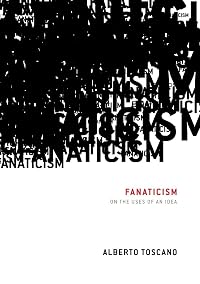
Fanaticism: On the Uses of an Idea
by Alberto Toscano
On This Page
Description
The idea of fanaticism as a deviant or extreme variant of an already irrational set of religious beliefs is today invoked by the West in order to demonize and psychologize any non-liberal politics. Alberto Toscano's compelling and erudite counter-history explodes this accepted interpretation in exploring the critical role fanaticism played in forming modern politics and the liberal state. Tracing its development from the traumatic Peasants' War of early sixteenth-century Germany to show more contemporary Islamism, Toscano tears apart the sterile opposition of 'reasonableness' and fanaticism. Instead, in a radical new interpretation, he places the fanatic at the very heart of politics, arguing that historical and revolutionary transformations require a new understanding of his role. Showing how fanaticism results from the failure to formulate an adequate emancipatory politics, this illuminating history sheds new light on an idea that continues to dominate debates about faith and secularism. show lessTags
Recommendations






















Member Reviews
Although "fanaticism" is a pejorative of highly varied applications, sometimes significantly opposite to one another, Alberto Toscano's book is not a mere study of rhetoric. It delves into a long modern development of paradigms for the fanatic, ranging from the German Peasants' Revolt to Islam to the French Revolution to Marxism.
Reading this 2009 book and considering current usage made me realize that "fanatic" has somewhat fallen out of vogue, with "extremist" taking its place in the vernacular. Chapter 2 had me reflecting on Q-anon under the category of "millenarian crisis cult." A point of repeated emphasis is the divergence between viewing fanaticism as benighted irrational passion on one hand and uncompromising adherence to show more abstract ideals on the other. Although I was less familiar with the latter tendency, Toscano supplies many important instances of it from the eighteenth century to the present.
The examinations and arguments here engage a long span of continental philosophy, from Kant and Hegel to Agamben and Derrida. The penultimate chapter does a good job of rescuing Marxist insights on religion from being tossed out with the facile secularization hypothesis to which they are commonly attached. And the final chapter was of special value in its examination of the "political religion" diagnosis, where thinkers "consider extreme or illiberal political ideologies as types or perversions of religion." Toscano admirably teases out the motives and consequences of such a move, and I was fortunate to have fresh in my memory a good narrative to anchor some of the high-flown analysis here, having read not too long ago Benson's 1907 novel Lord of the World.
This book is a work of genuine theory, suspicious of recent intellectual trends, and alert to the accumulation of arguments around its focus. It is not at all an easy read, and I often had to make a second pass at a paragraph to be sure I had grasped the sense of it. Toscano also took as given the reader's awareness of various modern thinkers, and if I had been just a little less well-read myself, I suspect that much of the attention I gave to this text would have been unrewarded. show less
Reading this 2009 book and considering current usage made me realize that "fanatic" has somewhat fallen out of vogue, with "extremist" taking its place in the vernacular. Chapter 2 had me reflecting on Q-anon under the category of "millenarian crisis cult." A point of repeated emphasis is the divergence between viewing fanaticism as benighted irrational passion on one hand and uncompromising adherence to show more abstract ideals on the other. Although I was less familiar with the latter tendency, Toscano supplies many important instances of it from the eighteenth century to the present.
The examinations and arguments here engage a long span of continental philosophy, from Kant and Hegel to Agamben and Derrida. The penultimate chapter does a good job of rescuing Marxist insights on religion from being tossed out with the facile secularization hypothesis to which they are commonly attached. And the final chapter was of special value in its examination of the "political religion" diagnosis, where thinkers "consider extreme or illiberal political ideologies as types or perversions of religion." Toscano admirably teases out the motives and consequences of such a move, and I was fortunate to have fresh in my memory a good narrative to anchor some of the high-flown analysis here, having read not too long ago Benson's 1907 novel Lord of the World.
This book is a work of genuine theory, suspicious of recent intellectual trends, and alert to the accumulation of arguments around its focus. It is not at all an easy read, and I often had to make a second pass at a paragraph to be sure I had grasped the sense of it. Toscano also took as given the reader's awareness of various modern thinkers, and if I had been just a little less well-read myself, I suspect that much of the attention I gave to this text would have been unrewarded. show less
A quotation Toscano uses from Ernst Bloch (to describe Thomas Müntzer's failed revolution) fueled a whole essay: https://zwieblein.bearblog.dev/in-search-of-a-worthy-burden/
Ratings
Members
- Recently Added By
Lists

Top Five Books of 2022
736 works; 272 members

New philosophy
65 works; 2 members
Author Information

9+ Works 317 Members
Classifications
- Genres
- Nonfiction, Politics and Government, History, Philosophy, Religion & Spirituality, General Nonfiction
- DDC/MDS
- 320.53 — Society, government, & culture Political science Types of Government Political ideologies Radicalism, collectivism, fascism
- LCC
- BJ1535 .F25 .T67 — Philosophy, Psychology and Religion Ethics Ethics Individual ethics. Character. Virtue
- BISAC
Statistics
- Members
- 93
- Popularity
- 346,390
- Reviews
- 2
- Rating
- (3.33)
- Languages
- English, French, Turkish
- Media
- Paper, Ebook
- ISBNs
- 6
- ASINs
- 2