On This Page
Description
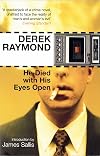
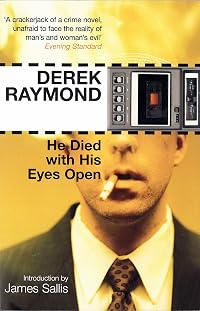
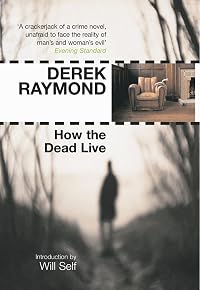
As it turns out, a dead man can tell stories... Murders are a dime a dozen in Margaret Thatcher's London, and when it comes to the brutal killing of a middle-aged alcoholic found dumped outside of town, Scotland Yard has more important cases to deal with. Instead it's a job for the Department of Unexplained Deaths and its head Detective Sergeant. With only a box of cassette-tape diaries as evidence the rogue detective has no chouce but to listen to the haunting voice of the victim for clues show more to his gruesome end. The first book in Derek Raymond's acclaimed Factory Series is an unflinching yet deeply compassionate portrait of a city plagued by poverty and perversion, and a policeman who may be the only one who cares about the "people who don't matter and who never did." show lessTags
Recommendations






Member Reviews
It has been more than a while since I read a book as good as this one. It begins with Raymond’s writing style, which grabs you from the start and just keeps getting better as the book proceeds. By about the last third of the novel, it turns into sheer poetry. It became one of those all-too-rare totally absorbing reading experiences.
Second, are the story and the characters. In one sense, the plot is just something to hang Raymond’s eloquence and wide-ranging observations on, but it is essential to the success of the story. A never-named police sergeant, condemned to a life of solving the murders of nonentities, investigates a brutal killing and begins to identify with the victim. This is possible, because the victim, who was a writer show more among other things, left a series of tapes where he mused about his life and philosophy. These passages are sometimes stunning, and they give us more than a little insight (I presume) into Raymond’s own view of literature. For example, “Anyone who conceives of writing as an agreeable stroll towards a middle-class life-style will never write anything but crap.”
The atmosphere of the books is grimy and intense. It is not really a police procedural, despite the fascination of seeing the sergeant relentlessly track down the murderers. He operates completely alone, except for occasional interactions with a detective from the important part of the police department, whom he dislikes intensely (the feeling is mutual.) Nevertheless, there is a level of cooperation that occurs throughout the novel. The real action takes place in the sergeant’s head, however, as he listens to the tapes and begins to identify with them. Then he shows he will do whatever takes, even putting his own life into danger, to solve the crime. But although we are introduced through the tapes to the victim’s family, and though the detective meets his estranged wife in person, there is no sense that he is solving the crime for their benefit—only for his own personal satisfaction, and perhaps redemption. He is the essence of Raymond Chandler’s definition of a detective hero, “…a man of honor—by instinct, by inevitability, without thought of it….” The rest of Chandler’s definition applies as well, but Raymond’s nameless sergeant is far more alone than Chandler’s Philip Marlowe, who at least has a secretary!
This is powerful, powerful stuff, and I can’t wait to read the other novels in the “Factory” series, as well as the rest of everything the author wrote under various names. Crime fiction in general is under-appreciated and unfairly relegated to “genre” status by lots of so-called serious readers. I wonder how many of the ones reading the latest best seller are ready for the ultimate truths about human existence in “He Died with His Eyes Open”? By any standard, this is great literature. show less
Second, are the story and the characters. In one sense, the plot is just something to hang Raymond’s eloquence and wide-ranging observations on, but it is essential to the success of the story. A never-named police sergeant, condemned to a life of solving the murders of nonentities, investigates a brutal killing and begins to identify with the victim. This is possible, because the victim, who was a writer show more among other things, left a series of tapes where he mused about his life and philosophy. These passages are sometimes stunning, and they give us more than a little insight (I presume) into Raymond’s own view of literature. For example, “Anyone who conceives of writing as an agreeable stroll towards a middle-class life-style will never write anything but crap.”
The atmosphere of the books is grimy and intense. It is not really a police procedural, despite the fascination of seeing the sergeant relentlessly track down the murderers. He operates completely alone, except for occasional interactions with a detective from the important part of the police department, whom he dislikes intensely (the feeling is mutual.) Nevertheless, there is a level of cooperation that occurs throughout the novel. The real action takes place in the sergeant’s head, however, as he listens to the tapes and begins to identify with them. Then he shows he will do whatever takes, even putting his own life into danger, to solve the crime. But although we are introduced through the tapes to the victim’s family, and though the detective meets his estranged wife in person, there is no sense that he is solving the crime for their benefit—only for his own personal satisfaction, and perhaps redemption. He is the essence of Raymond Chandler’s definition of a detective hero, “…a man of honor—by instinct, by inevitability, without thought of it….” The rest of Chandler’s definition applies as well, but Raymond’s nameless sergeant is far more alone than Chandler’s Philip Marlowe, who at least has a secretary!
This is powerful, powerful stuff, and I can’t wait to read the other novels in the “Factory” series, as well as the rest of everything the author wrote under various names. Crime fiction in general is under-appreciated and unfairly relegated to “genre” status by lots of so-called serious readers. I wonder how many of the ones reading the latest best seller are ready for the ultimate truths about human existence in “He Died with His Eyes Open”? By any standard, this is great literature. show less
The dissonance between the fine writing and a bleak mid-1980s London setting of dank streets, dark bars, and broken people gave me the kind of psychic tingle I read for.
A man is found beaten to death on the side of the road, and his sordid story is revealed through a cache of cassette tapes recovered from a dingy boarding-house room. The copper investigating the crime develops a begrudging affinity for the dead man and his eloquent desolation. By the end, I was reading the title idiomatically, as in “He Died with a Grim Comprehension Roughly Acquired.”
From the tapes: What I suffer isn’t self-pity; it is my coming up against the absolute. The ordeal the writer sets himself is to track down existence and then, both stripped naked, show more fight it out. Everyone experiences this in the end, somehow or other. But often the contest is short and sharp—the last seconds of a motor crash, a fall from a roof, a heart attack, being rolled and beaten to death in a dark street.
But I wonder if the agony of unreturned love that becomes the sick, eating sweetness of jealousy isn't by far the worst?
oof show less
A man is found beaten to death on the side of the road, and his sordid story is revealed through a cache of cassette tapes recovered from a dingy boarding-house room. The copper investigating the crime develops a begrudging affinity for the dead man and his eloquent desolation. By the end, I was reading the title idiomatically, as in “He Died with a Grim Comprehension Roughly Acquired.”
From the tapes: What I suffer isn’t self-pity; it is my coming up against the absolute. The ordeal the writer sets himself is to track down existence and then, both stripped naked, show more fight it out. Everyone experiences this in the end, somehow or other. But often the contest is short and sharp—the last seconds of a motor crash, a fall from a roof, a heart attack, being rolled and beaten to death in a dark street.
But I wonder if the agony of unreturned love that becomes the sick, eating sweetness of jealousy isn't by far the worst?
oof show less
He Died With His Eyes Open is the first of what became known as the Factory series of detective novels where the Factory is the ugly grey police station in London that houses the anonymous narrator.
The book starts, like all good detective stories, with the discovery of a body. It's 1984 and London is an unforgiving landscape of unemployment and violence. Our detective is physically sickened by the amount of violence that has been perpetrated against this particular victim who appears to have endured it all without closing his eyes.
The case is not a promising one and several times the detective is mocked by his superior, Inspector Bowman, for not wrapping things up quickly and seeking promotion with easy to solve headline cases.
Instead show more the detective devotes hours to a set of recordings left behind by the murdered Charles Locksley Alwin Staniland. The recordings tell of a disappointing man who has been abandoned by his wife and child and left to drink too much and seek love and companionship in places he had better left undiscovered.
The detective chases down all the available leads and immerses himself deeper into Staniland's life that is healthy. Rather than being solved the crime seems to fester like an untreated boil until lanced.
Throughout the telling there is an oppressive sense of despair, futility and menace which rings true from my own memories of the 80s. In this week of the death of Margaret Thatcher, I have been trying to out into words the sense of hopelessness that she presided over. This grim novel written contemporaneously perfectly captures the spirit of the time.
It's a hard book to like. It's frequently foulmouthed and brutally frank about sex. The violence is appalling and simultaneously detached. I think it's a great snapshot of its time and I may well dig up the subsequent Factory books just to see where the no-name detective goes from here. show less
The book starts, like all good detective stories, with the discovery of a body. It's 1984 and London is an unforgiving landscape of unemployment and violence. Our detective is physically sickened by the amount of violence that has been perpetrated against this particular victim who appears to have endured it all without closing his eyes.
The case is not a promising one and several times the detective is mocked by his superior, Inspector Bowman, for not wrapping things up quickly and seeking promotion with easy to solve headline cases.
Instead show more the detective devotes hours to a set of recordings left behind by the murdered Charles Locksley Alwin Staniland. The recordings tell of a disappointing man who has been abandoned by his wife and child and left to drink too much and seek love and companionship in places he had better left undiscovered.
The detective chases down all the available leads and immerses himself deeper into Staniland's life that is healthy. Rather than being solved the crime seems to fester like an untreated boil until lanced.
Throughout the telling there is an oppressive sense of despair, futility and menace which rings true from my own memories of the 80s. In this week of the death of Margaret Thatcher, I have been trying to out into words the sense of hopelessness that she presided over. This grim novel written contemporaneously perfectly captures the spirit of the time.
It's a hard book to like. It's frequently foulmouthed and brutally frank about sex. The violence is appalling and simultaneously detached. I think it's a great snapshot of its time and I may well dig up the subsequent Factory books just to see where the no-name detective goes from here. show less
Derek Raymond (aka Robert Cook) has a biography almost as fascinating as his novels. He smuggled oil paintings, got thrown in Spanish prison for badmouthing Franco, drove fast cars, lived with the beat poets in the fifties, was interrogated by Dutch police, and then wrote British noir.
Raymond published five novels in his nameless detective Factory series and these excellent novels are unique in their format and tone. The narrator is a British detective who works unsolved cases, cases no one in the Department of Unexplained Deaths could give a lesser damn about. He spends an enormous amount of time in these cases, delving into the victim's character and lives, trying to understand what happened.
A man is found on the side of the road, show more beaten with a hammer, stabbed with a knife, and made to suffer a long slow death. Who was he and who hated him so much? Our detective listens to a series of cassette tapes left by the victim in the form of a diary and tries to understand who this man was and who had it in for him. As it says in this diary, "Anyone who conceives of writing as an agreeable stroll toward middle-class lifestyle will never write anything but crap." On the way, he brings Britain of the early eighties alive with punks, mods and rockers, junkies, people living as squatters and on the dole.
There may not be the kind of action here present in most detective novels, but it is a smooth, talented read that is worth reading far more than once. This detective is rude, sarcastic, overbearing and altogether one of the most unique characters ever. show less
Raymond published five novels in his nameless detective Factory series and these excellent novels are unique in their format and tone. The narrator is a British detective who works unsolved cases, cases no one in the Department of Unexplained Deaths could give a lesser damn about. He spends an enormous amount of time in these cases, delving into the victim's character and lives, trying to understand what happened.
A man is found on the side of the road, show more beaten with a hammer, stabbed with a knife, and made to suffer a long slow death. Who was he and who hated him so much? Our detective listens to a series of cassette tapes left by the victim in the form of a diary and tries to understand who this man was and who had it in for him. As it says in this diary, "Anyone who conceives of writing as an agreeable stroll toward middle-class lifestyle will never write anything but crap." On the way, he brings Britain of the early eighties alive with punks, mods and rockers, junkies, people living as squatters and on the dole.
There may not be the kind of action here present in most detective novels, but it is a smooth, talented read that is worth reading far more than once. This detective is rude, sarcastic, overbearing and altogether one of the most unique characters ever. show less
Extrem Noir literature... One of the darkest noir novels I’ve ever read and also one of the best. Derek Raymond is far beyond noir. There probably isn't even a word for his kind of darkness I think.
I definitely see noir as existentialist literature and this is one of the its primary examples.
Everyone who's a fan of Noir should this book, but be prepared to feel the urge to take a shower and turn on all your houselights after reading them. Ever since the release of Derek Raymond’s Factory Series, five crime novels set in Margaret Thatcher’s London, they’ve been on my must-read list. Finally I got around to reading one of the books. 2013 has been Discovery Year...
I don't know if I could stand to read this book show more again, but I'll read the following 4 volumes for sure. One of the things that impressed me the most was its remarkable and disturbing physicality.
Raymond's characters penetrated and interfered, putting me in touch with levels of intensity and disintegration that seem to combine literary achievement with a visceral view on things. His characters are both unlikely and horribly real. They live, like his narratives, in places I don't want to visit.
The book is so incredibly melancholic without ever feeling as self-indulgent as you might expect from a book that grieves at length over Death.
Highly recommended. show less
I definitely see noir as existentialist literature and this is one of the its primary examples.
Everyone who's a fan of Noir should this book, but be prepared to feel the urge to take a shower and turn on all your houselights after reading them. Ever since the release of Derek Raymond’s Factory Series, five crime novels set in Margaret Thatcher’s London, they’ve been on my must-read list. Finally I got around to reading one of the books. 2013 has been Discovery Year...
I don't know if I could stand to read this book show more again, but I'll read the following 4 volumes for sure. One of the things that impressed me the most was its remarkable and disturbing physicality.
Raymond's characters penetrated and interfered, putting me in touch with levels of intensity and disintegration that seem to combine literary achievement with a visceral view on things. His characters are both unlikely and horribly real. They live, like his narratives, in places I don't want to visit.
The book is so incredibly melancholic without ever feeling as self-indulgent as you might expect from a book that grieves at length over Death.
Highly recommended. show less
My first novel by Derek Raymond (born Robin Cook in 1931, and who died in London in 1994). The son of a textile magnate, he dropped out of Eton aged sixteen and was employed at various times as a pornographer, organiser of illegal gambling, money launderer, pig-slaughterer and minicab driver.
Much of this work experience is reflected in He Died With His Eyes Open, the first of the Factory novels, nominal police procedurals narrated by the unnamed protagonist, a sergeant at London's Metropolitan Police Department of Unexplained Deaths, also known as A14. A14 handles the lowlife murders, and which are in stark contrast to the headline-grabbing homicides handled by the prestigious Serious Crimes Division, better known as Scotland Yard.
He show more Died With His Eyes Open was a precursor to the work of David Peace and James Ellroy and, if that makes you sit up and take notice, then you should most certainly read this book. I am now resolved to read the other four Factory novels.
The tale takes place in the London of the mid 1980s, and the brutal killing of Charles Staniland - a middle-aged alcoholic failure - is handed to the sergeant at A14. The detection primarily involves the sergeant listening to cassette tapes made by the victim in which he describes his relationships and his personal reflections on his complex and dysfunctional world. This is not a standard crime novel, and - like the best genre fiction - Derek Raymond pushes the boundaries to create a bleak and surprising study of obsession and evil, that also evokes the matt black darkness of Thatcher's London.
Beautifully written and quietly profound, what more could could anyone want from a crime novel?
4/5 show less
Much of this work experience is reflected in He Died With His Eyes Open, the first of the Factory novels, nominal police procedurals narrated by the unnamed protagonist, a sergeant at London's Metropolitan Police Department of Unexplained Deaths, also known as A14. A14 handles the lowlife murders, and which are in stark contrast to the headline-grabbing homicides handled by the prestigious Serious Crimes Division, better known as Scotland Yard.
He show more Died With His Eyes Open was a precursor to the work of David Peace and James Ellroy and, if that makes you sit up and take notice, then you should most certainly read this book. I am now resolved to read the other four Factory novels.
The tale takes place in the London of the mid 1980s, and the brutal killing of Charles Staniland - a middle-aged alcoholic failure - is handed to the sergeant at A14. The detection primarily involves the sergeant listening to cassette tapes made by the victim in which he describes his relationships and his personal reflections on his complex and dysfunctional world. This is not a standard crime novel, and - like the best genre fiction - Derek Raymond pushes the boundaries to create a bleak and surprising study of obsession and evil, that also evokes the matt black darkness of Thatcher's London.
Beautifully written and quietly profound, what more could could anyone want from a crime novel?
4/5 show less
A noir thriller--very cinematic in scope--concerns the murder of a middle-aged alcoholic would be writer and the investigation into the matter by a nameless police detective. The novelist Derek Raymond shows somewhat of an unique style in what I believe to be his first novel. The unnamed detective is determined to find the killers who had mercilessly murdered the man breaking both of legs and arms. Left pretty much on his own to carry out his investigation (because of the victims lack of social standing) he immerses himself in the poverty stricken and corrupt world in which the victim moved. In this Raymond renders the world in black and white from the bottom up as the investigator slowly closes in on the perpetrators of the crime. show more Those criminals are violent and ruthless and in the showdown in the final pages they just about turn the tables on our investigator--unfortunately though for them that is not to be.
For those who like noir style--at least some of the time--this is about as gritty as it gets. There is no holds barred in terms of language or imagery. For american readers it might be a little tough sledding through the brit slang at times which is not polished up at all but it is not so bad that with a little thought one can't work out what is going on. To me that quality makes it even grittier which is part of the charm. Anyway I would recommend it and have plans to read more of Raymond's books in the future. show less
For those who like noir style--at least some of the time--this is about as gritty as it gets. There is no holds barred in terms of language or imagery. For american readers it might be a little tough sledding through the brit slang at times which is not polished up at all but it is not so bad that with a little thought one can't work out what is going on. To me that quality makes it even grittier which is part of the charm. Anyway I would recommend it and have plans to read more of Raymond's books in the future. show less
Members
- Recently Added By
Lists

Best Noir Fiction
160 works; 14 members

Majkia's Mystery/ Thriller TBR
86 works; 3 members

100 Best Thrillers of All Time
100 works; 6 members

Global Mysteries
90 works; 6 members

Books Read in 2018
4,360 works; 110 members

Books Read in 2025
4,128 works; 98 members
Author Information

18+ Works 1,800 Members
Some Editions
Awards and Honors
Awards
Notable Lists
Series

Belongs to Publisher Series
Common Knowledge
- Canonical title
- He Died with His Eyes Open
- Original title
- He Died with His Eyes Open
- Original publication date
- 1984
- People/Characters
- Charles Locksley Alwin Staniland
- Important places
- London, England, UK
- Epigraph
- 'One eye was shut where he knocked it on leaving the tomb
But the other is staring from behind the cornflakes
On middle-class dining-room sideboards.'
Robin Cook
'The Edencourt', 1952 - Dedication
- For Fiona
- First words
- He was found in the shrubbery in front of the Word of God House in Albatross Road, West Five.
- Quotations
- 'If you'd like to fetch Mr Staniland for me,'...
'He's collating some incunabula upstairs.'
...the sun came and went in slow yellow bursts of hysteria beyond the heavy window curtains.
The card was signed with a self-conscious squiggle that reminded me of an ageing virgin trying to shake an impertinent finger out of her knickers.
...a new moon rocked over the Thames, attended by a single cloud.
Skeletal Maisie juggling the teacups with the confused haste of the insane... - Disambiguation notice
- ISBN 0752857932 is for The Pusher by Ed McBain
Classifications
Statistics
- Members
- 489
- Popularity
- 62,072
- Reviews
- 18
- Rating
- (3.76)
- Languages
- 5 — Danish, English, French, Italian, Spanish
- Media
- Paper, Ebook
- ISBNs
- 23
- ASINs
- 8