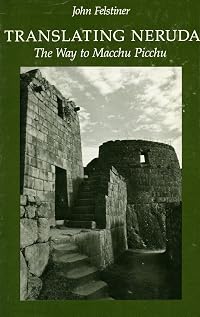
Translating Neruda: The Way to Macchu Picchu
by John Felstiner
On This Page
Description
What goes into the translating of a poem? Usually that process gets forgotten once the new poem stands intact in translation. Yet a verse translation derives from historical, biographical, and philosophical research, interpretive analysis of the original poem, and continuous linguistic and prosodic choices that parallel those the poet made. Taking as a text Pablo Neruda's brilliant prophetic sequence Alturas de Macchu Picchu (1945), the author here re-creates the entire process of show more translation, from his first encounter with the poem to the last shaping of a phrase that may never come right in English. This many-faceted book forms an essay on the theory and practice of literary translation, a study of Neruda's career through 1945, and an interpretation of his major poem, all of which lead to a striking new poem in English, Heights of Macchu Picchu, printed along with the original Spanish. This genesis of a verse translation also includes little-known biographical data, hitherto untranslated poems and prose from the years 1920 to 1945, and new translations of key poems from Neruda's Residence on Earth and Spain in My Heart. show lessTags
Recommendations


































Member Reviews
If you hold that there's such a thing as a niche book, Translating Neruda is probably a great example of it. At heart it's a long description of the process and choices that went into creating Felstiner's translation of The Heights of Macchu Picchu that closes the work.
To understand the whys and hows of a mid-career culmination like Heights however, you really need to understand what came before. As such, much of the book is taken up by a discussion of Neruda's life and poetry prior to his visit to Macchu Picchu and the composition born of that. That done, the work then discusses root words, vowel (and consonant) sounds, syllables and stresses, and the difficulties of expressing someone else's thoughts from one language to another.
A show more wonderful work that gave me a new understanding of Heights that I had failed to get from either the Tarn or Schmit translations, but at the same time unlikely to appeal to anyone who isn't interested in either Neruda or the process of translating, and preferably both. show less
To understand the whys and hows of a mid-career culmination like Heights however, you really need to understand what came before. As such, much of the book is taken up by a discussion of Neruda's life and poetry prior to his visit to Macchu Picchu and the composition born of that. That done, the work then discusses root words, vowel (and consonant) sounds, syllables and stresses, and the difficulties of expressing someone else's thoughts from one language to another.
A show more wonderful work that gave me a new understanding of Heights that I had failed to get from either the Tarn or Schmit translations, but at the same time unlikely to appeal to anyone who isn't interested in either Neruda or the process of translating, and preferably both. show less
Ratings
Members
- Recently Added By
Author Information

8+ Works 312 Members
John Felstiner teaches at Stanford University. (Bowker Author Biography)
All Editions
Awards and Honors
Work Relationships
Is a commentary on the text of
Common Knowledge
- Canonical title
- Translating Neruda: The Way to Macchu Picchu
Classifications
- Genres
- Fiction and Literature, Literature Studies and Criticism, Poetry
- DDC/MDS
- 861 — Literature & rhetoric Spanish Literature Spanish poetry
- LCC
- PQ8097 .N4 .A763 — Language and Literature French, Italian, Spanish and Portuguese literatures Spanish literature Provincial, local, colonial, etc. Spanish America
- BISAC
Statistics
- Members
- 34
- Popularity
- 836,989
- Reviews
- 1
- Rating
- (4.30)
- Languages
- English, Spanish
- Media
- Paper, Ebook
- ISBNs
- 3