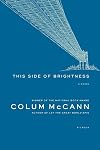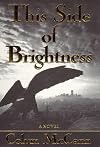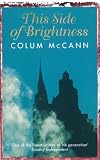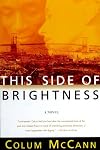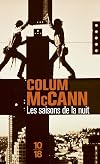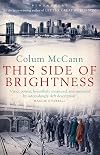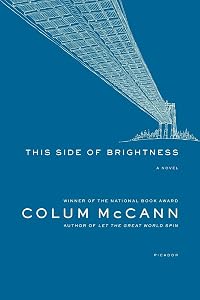
This Side of Brightness
by Colum McCann 
On This Page
Description
In the early years of the century, Nathan Walker leaves his native Georgia for New York City and the most dangerous job in America. A sandhog, he burrows beneath the East River, digging the tunnel that will carry trains from Brooklyn to Manhattan. Above ground, the sandhogs - black, white, Irish, Italian - keep their distance from each other until a spectacular accident welds a bond between Walker and his fellow diggers - a bond that will bless and curse the next three generations. Years show more later, Treefrog, a homeless man driven below by a shameful secret, endures a punishing winter in his subway nest. In tones ranging from bleak to disturbingly funny, Treefrog recounts his strategies of survival - killing rats, scavenging for discarded soda cans, washing in the snow.Between Nathan Walker and Treefrog stretch seventy years of ill-fated loves and unintended crimes. In a triumph of plotting, the two stories fuse to form a tale of family, race, and redemption that is as bold and fabulous as New York City itself. show lessTags
Recommendations





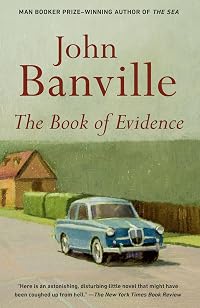
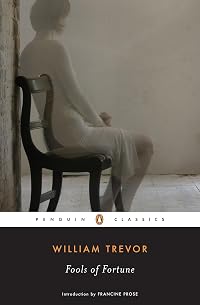
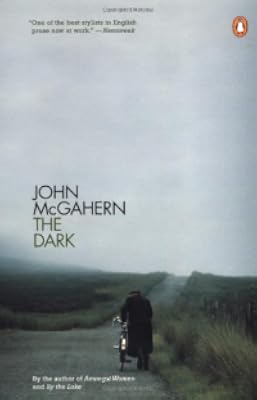


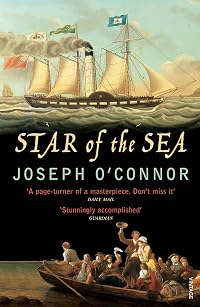


Member Recommendations
Member Reviews
This is the first time I sit down with Colum McCann for a good long chat and it won't be the last.
'This Side of Brightness' certainly implies the dark side, the side that does not glitter and shine, the side hidden from view that most of us would rather avoid looking at in real life.
It's a story of tunnels, creepy places where sun never shines, needed only to connect one point to another on a subway map. We rarely reflect on tunnels, yet there are people who live there, there were people who built them. A tunnel is typically built starting from two sides, and this is how this book is fittingly structured.
From one end we start with a tumultuous history of the first underwater tunnel being built in New York at the beginning of the XX show more century. One of the builders risking his life in dismal working conditions is Walker, we follow him throughout the course of his life, through hardships and sorrows, through moments of happiness and bliss. On the other end we start with a bum, a mole, living in a tunnel in the present day New York (90s). We follow his story mostly looking backwards through an uncertain lens of his memory. The stories meet at a breaking point. Here, in the darkest moment, there is nowhere to go, we are deep underground, there seems to be no hope left, yet there is a proverbial light at the end of the tunnel.
The book raises so many important issues that it would take a long time to list them all here. I am not going to do that. You are welcome to find them yourself. I will just touch on how short a distance could be that separates our happiness from our ruin, how one step, one fall, one quantum tunneling leap can take us from the bright side of life to 'this side of brightness'. show less
'This Side of Brightness' certainly implies the dark side, the side that does not glitter and shine, the side hidden from view that most of us would rather avoid looking at in real life.
It's a story of tunnels, creepy places where sun never shines, needed only to connect one point to another on a subway map. We rarely reflect on tunnels, yet there are people who live there, there were people who built them. A tunnel is typically built starting from two sides, and this is how this book is fittingly structured.
From one end we start with a tumultuous history of the first underwater tunnel being built in New York at the beginning of the XX show more century. One of the builders risking his life in dismal working conditions is Walker, we follow him throughout the course of his life, through hardships and sorrows, through moments of happiness and bliss. On the other end we start with a bum, a mole, living in a tunnel in the present day New York (90s). We follow his story mostly looking backwards through an uncertain lens of his memory. The stories meet at a breaking point. Here, in the darkest moment, there is nowhere to go, we are deep underground, there seems to be no hope left, yet there is a proverbial light at the end of the tunnel.
The book raises so many important issues that it would take a long time to list them all here. I am not going to do that. You are welcome to find them yourself. I will just touch on how short a distance could be that separates our happiness from our ruin, how one step, one fall, one quantum tunneling leap can take us from the bright side of life to 'this side of brightness'. show less
How delightful it is to go back and fill in the high spots in a favorite author's early career. This book, published in 1998, was the third published book by McCann, and showed that his command of language was equal to his command of storytelling. He's a winner of the National Book Award now, but his earlier books don't disappoint in any way. (Well, Songdogs disappointed me, but not severely.)
The evocation of the sandhog life in early 20th-century New York was strong, compelling stuff. The juxtaposition of that hard, working life with modern-day tunnel dwelling by those rendered homeless from the machinations of the current culture's prejudices was the knockout punch for me.
I was sucked into the flow of the book immediately, and the show more relationships that unfolded over time were so exactingly built, emotion by emotion, event by event, that I never once questioned their factual accuracy. Spoilerlessly, let's just go with: The relationships in question are now, and certainly were then, inflammatory in nature. McCann simply writes them as truth, and does so convincingly.
Expect no disappointments from reading this book. It's a humdinger of a story, well crafted and fully realized. Most assuredly recommended. show less
The evocation of the sandhog life in early 20th-century New York was strong, compelling stuff. The juxtaposition of that hard, working life with modern-day tunnel dwelling by those rendered homeless from the machinations of the current culture's prejudices was the knockout punch for me.
I was sucked into the flow of the book immediately, and the show more relationships that unfolded over time were so exactingly built, emotion by emotion, event by event, that I never once questioned their factual accuracy. Spoilerlessly, let's just go with: The relationships in question are now, and certainly were then, inflammatory in nature. McCann simply writes them as truth, and does so convincingly.
Expect no disappointments from reading this book. It's a humdinger of a story, well crafted and fully realized. Most assuredly recommended. show less
entertaining enough, but not wholly engaging. A story of a tunnel digger in New York, and through the ages, his offspring, including a builder of skyscrapers. Down and outs on the edge of society. Beautifully described but just felt a little distant from all the characters.
An unfortunate tunnel digging accident in the early 20th century under the Hudson River in New York brings one of the survivors into the world of the family of a man who was lost on that day. The young black man who survived the tunnel blowout makes weekly visits to the family of his friend and eventually winds up marrying their daughter whom he has known since she was a baby. The trouble is that she is Irish and he is black, which indirectly places great burdens on the next two generations that follow.
It is an achronological narrative. It jumps all over different time periods within two main framings—that of Nathan Walker’s life in the past, and that of Treefrog’s current life. The framed sections begin to overlap through the show more progression of Nathan’s story, and flashbacks from Treefrog’s story but the reader is never lost (not very long anyway) as far as whose story is being told.
The entire book is very well-written and chapter fourteen is just a pleasure to read. I lost myself the most in those pages. Just a magical piece of writing that both pushes the narrative toward its climax and reveals little mystery after little mystery like presents on Christmas Day. show less
It is an achronological narrative. It jumps all over different time periods within two main framings—that of Nathan Walker’s life in the past, and that of Treefrog’s current life. The framed sections begin to overlap through the show more progression of Nathan’s story, and flashbacks from Treefrog’s story but the reader is never lost (not very long anyway) as far as whose story is being told.
The entire book is very well-written and chapter fourteen is just a pleasure to read. I lost myself the most in those pages. Just a magical piece of writing that both pushes the narrative toward its climax and reveals little mystery after little mystery like presents on Christmas Day. show less
Although it seems to finish on a somewhat optimistic note, for me this is essentially a very dark novel about the breakdown of family relationships and slide into poverty, homelessness and drugs. I didn't fully understand the reason behind the behaviour which ultimately destroyed this family, but I suspect the reader is deliberately being kept in the dark to some extent.
Certainly there is mental illness that gradually develops into completely dysfunctional behaviour, but already poverty and a very hard life have separated these people from the (?)majority of New York city dwellers.
Even at a superficial level, I found this book worth reading for the description of how hard life can be in NYC.
I wasn't entirely happy with the unannounced show more time jumps in this story, and although I am entering senility, I suspect even normal people might have issues with the writing structure. Despite this discomfort, I regard this as a quality piece of writing for the way it draws out the precarious nature of relationships and how close we can be to complete breakdown. show less
Certainly there is mental illness that gradually develops into completely dysfunctional behaviour, but already poverty and a very hard life have separated these people from the (?)majority of New York city dwellers.
Even at a superficial level, I found this book worth reading for the description of how hard life can be in NYC.
I wasn't entirely happy with the unannounced show more time jumps in this story, and although I am entering senility, I suspect even normal people might have issues with the writing structure. Despite this discomfort, I regard this as a quality piece of writing for the way it draws out the precarious nature of relationships and how close we can be to complete breakdown. show less
This was an extraordinary book. It tells the story of the sandhogs who dug the underwater subway tunnels in New York in the early 1900s, and the homeless people who live in those tunnels today. The bringing together of the two stories is powerful.
This is the story of three generations of the Walker family: Nathan, the sandhog who marries a white Catholic girl, his son Clarence who lived with the prejudice of coming from a mixed marriage, and his grandson Nathan Clarence, who worked on high rises with an unfailing sense of balance.
And it is a story of tunnels -- the tragedies within them, and the way love, guilt and loyalty can tunnel into the deepest reaches of who you are.
The writing is superb. Definitely recommended.
This is the story of three generations of the Walker family: Nathan, the sandhog who marries a white Catholic girl, his son Clarence who lived with the prejudice of coming from a mixed marriage, and his grandson Nathan Clarence, who worked on high rises with an unfailing sense of balance.
And it is a story of tunnels -- the tragedies within them, and the way love, guilt and loyalty can tunnel into the deepest reaches of who you are.
The writing is superb. Definitely recommended.
Colum McCann is the newest addition to my list of authors whose bibliography I'd like to read in its entirety. This Side of Brightness seemed a good choice: I prefer to start with the author's earlier works, I had easy accessibility to a copy, and the blurb for the novel sounded right up my alley. So here it is.
I largely had a positive opinion of McCann's second novel. The premise is strong. The writing is solid. The story takes place in a tunnel beneath New York City—one part follows a member of the crew constructing the subway tunnel, the other focuses on a homeless man who lives in the tunnel three generations later. McCann handles both time lines with equal precision and care. And he ties it all together quite wonderfully in the show more end. I have no complaints...
but I never quite connected with the story. It's possible this was my own blockage: perhaps it just wasn't the right time for me to read this novel. Or there may have been some level of disconnect in the text: a slight gap in character development, perhaps, or too much authorial involvement. Either way, I appreciated the novel, recognized the workmanship, but just didn't invest in it in a way that felt satisfactory to me. show less
I largely had a positive opinion of McCann's second novel. The premise is strong. The writing is solid. The story takes place in a tunnel beneath New York City—one part follows a member of the crew constructing the subway tunnel, the other focuses on a homeless man who lives in the tunnel three generations later. McCann handles both time lines with equal precision and care. And he ties it all together quite wonderfully in the show more end. I have no complaints...
but I never quite connected with the story. It's possible this was my own blockage: perhaps it just wasn't the right time for me to read this novel. Or there may have been some level of disconnect in the text: a slight gap in character development, perhaps, or too much authorial involvement. Either way, I appreciated the novel, recognized the workmanship, but just didn't invest in it in a way that felt satisfactory to me. show less
Members
- Recently Added By
Published Reviews
ThingScore 75
Der Roman ist ein dunkler, dunkler Gang durch die Nacht
added by Indy133
Lists

Favourite Books
1,819 works; 316 members

Five star books
1,767 works; 110 members

International IMPAC Dublin Literary Award
179 works; 6 members

Books We Love to Reread
688 works; 296 members
Author Information

23+ Works 14,395 Members
Irish writer Colum McCann was born near Dublin in 1965 and graduated from the University of Texas with a B.A. degree. He has worked as a newspaper journalist in Ireland and written several short stories and bestselling novels. The short film of Everything in this Country Must was nominated for an Academy Award in 2005. McCann's work has appeared show more in publications including The New York Times, The Atlantic Monthly, GQ, The Irish Times, La Repubblica, Die Zeit, Paris Match, the Guardian, and the Independent. He has won numerous awards, such as a Pushcart Prize, the Rooney Prize, the Irish Novel of the Year Award, and the 2002 Ireland Fund of Monaco Princess Grace Memorial Literary Award. In 2009 McCann was inducted into the Irish arts association Aosdana. He teaches in the Master of Fine Arts Creative Writing program at New York's Hunter College. (Bowker Author Biography) show less
Colum McCann is a LibraryThing Author, an author who lists their personal library on LibraryThing.
Some Editions
Awards and Honors
Awards
Series
Belongs to Publisher Series
Otavan kirjasto (130)
rororo (22696)
Common Knowledge
- Canonical title
- This Side of Brightness
- Original title
- This Side of Brightness
- Original publication date
- 1997
- People/Characters
- Nathan Walker; Treefrog; Con O'Leary
- Important places
- New York, New York, USA
- Epigraph
- We started dying before the snow and, like the snow, we continued to fall. It was surprising there were so many of us left to die.
- Louise Erdrich Tracks - Dedication
- Fore Siobhan, Sean, Oonagh and Ronan
And, of course, for Allison - First words
- On the evening before the first snow fell, he saw a large bird frozen in the waters of the Hudson River.
- Last words
- (Click to show. Warning: May contain spoilers.)And at the gate he smiles, hefting the weight of the word upon his tongue, all its possibility, all its beauty, all its hope, a single word, resurrection.
- Original language*
- englanti
*Some information comes from Common Knowledge in other languages. Click "Edit" for more information.
Classifications
Statistics
- Members
- 743
- Popularity
- 37,939
- Reviews
- 22
- Rating
- (3.71)
- Languages
- 10 — Catalan, Danish, Dutch, English, Finnish, French, German, Italian, Portuguese, Spanish
- Media
- Paper, Audiobook, Ebook
- ISBNs
- 38
- ASINs
- 9