The Complete Children's Stories (Wordsworth Special Editions) (Special Edition Using)
by Rudyard Kipling 
On This Page
Description
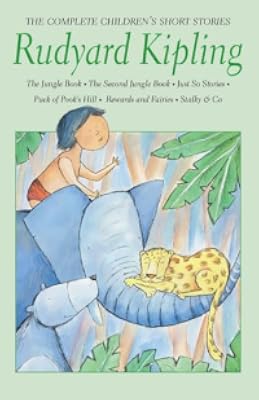
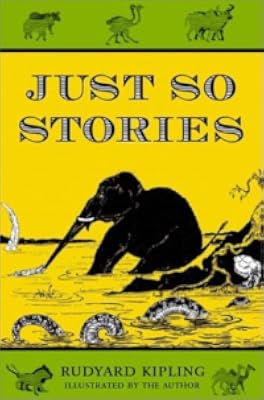
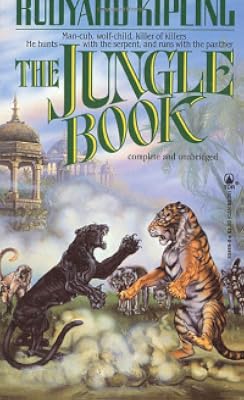
The Jungle Book introduces Mowgli, the boy foundling adopted by a family of wolves, Shere Khan the tiger, Bagheera the black panther and Baloo the sleepy brown bear. How did the Leopard get his spots? How did the Elephant get his trunk? In Just So Stories Kipling wittily supplies the answers to these and other questions. Puck of Pook's Hill relates how Dan and Una's magical meeting with Puck, the last of the People of the Hills, leads to their adventures with Romans and Crusaders, Saxons and show more Vikings... And later, in Rewards and Fairies, the three meet an array of characters ranging from Iron Age warriors to 'Good Queen Bess' and Sir Francis Drake. In Kipling's rattling school yarn Stalky & Co, Stalky, M'Turk and the Beetle are a trio of scallywags with a keen desire to break the rules, their unruly activities give the stories an enduring appeal to all children - especially those who have ever wilted beneath the stern glance of a peevish schoolmaster. Kipling's wry, sometimes tongue-in-cheek style will delight and entertain young readers while adults throughout the world will remember his stories with affection. show lessTags
Recommendations











Member Reviews
The Jungle Book
Het kost wat moeite om de Disneyfiguurtjes uit je geest te bannen als je aan het Jungle Book begint. Naarmate het boek vordert, groeit de irritatie daarover. Ook al omdat het ene steeds minder met het andere te maken heeft. Kaa is Kaa niet en Shere Khan Shere Khan niet. King Louie bestaat zelfs niet. De Bandar Log zijn gewoon een anarchistisch stelletje dat geen behoefte heeft aan een koning.
Het probleem lost zichzelf op na de eerste drie verhalen, wanneer het niet meer gaat over beren en panters, maar over zeehonden, mangoesten en de menagerie van een laat-negentiende eeuwse Britse legertroep. Meer dan Mowgli stelen Toomai van de Olifanten en vooral de ietwat roekeloze Rikki-tikki-tavi de harten.
Diepgang ontbreekt, maar show more dat mag bij kinderverhalen. En via de omweg van met veel liefde geschreven dierenverhalen, geeft het Jungle Book toch ook een inkijkje in het dagelijkse leven in het koloniale India. show less
Het kost wat moeite om de Disneyfiguurtjes uit je geest te bannen als je aan het Jungle Book begint. Naarmate het boek vordert, groeit de irritatie daarover. Ook al omdat het ene steeds minder met het andere te maken heeft. Kaa is Kaa niet en Shere Khan Shere Khan niet. King Louie bestaat zelfs niet. De Bandar Log zijn gewoon een anarchistisch stelletje dat geen behoefte heeft aan een koning.
Het probleem lost zichzelf op na de eerste drie verhalen, wanneer het niet meer gaat over beren en panters, maar over zeehonden, mangoesten en de menagerie van een laat-negentiende eeuwse Britse legertroep. Meer dan Mowgli stelen Toomai van de Olifanten en vooral de ietwat roekeloze Rikki-tikki-tavi de harten.
Diepgang ontbreekt, maar show more dat mag bij kinderverhalen. En via de omweg van met veel liefde geschreven dierenverhalen, geeft het Jungle Book toch ook een inkijkje in het dagelijkse leven in het koloniale India. show less
Jul 16, 2013Dutch
Ratings
Members
- Recently Added By
Author Information

2,459+ Works 91,093 Members
Kipling, who as a novelist dramatized the ambivalence of the British colonial experience, was born of English parents in Bombay and as a child knew Hindustani better than English. He spent an unhappy period of exile from his parents (and the Indian heat) with a harsh aunt in England, followed by the public schooling that inspired his "Stalky" show more stories. He returned to India at 18 to work on the staff of the Lahore Civil and Military Gazette and rapidly became a prolific writer. His mildly satirical work won him a reputation in England, and he returned there in 1889. Shortly after, his first novel, The Light That Failed (1890) was published, but it was not altogether successful. In the early 1890s, Kipling met and married Caroline Balestier and moved with her to her family's estate in Brattleboro, Vermont. While there he wrote Many Inventions (1893), The Jungle Book (1894-95), and Captains Courageous (1897). He became dissatisfied with life in America, however, and moved back to England, returning to America only when his daughter died of pneumonia. Kipling never again returned to the United States, despite his great popularity there. Short stories form the greater portion of Kipling's work and are of several distinct types. Some of his best are stories of the supernatural, the eerie and unearthly, such as "The Phantom Rickshaw," "The Brushwood Boy," and "They." His tales of gruesome horror include "The Mark of the Beast" and "The Return of Imray." "William the Conqueror" and "The Head of the District" are among his political tales of English rule in India. The "Soldiers Three" group deals with Kipling's three musketeers: an Irishman, a Cockney, and a Yorkshireman. The Anglo-Indian Tales, of social life in Simla, make up the larger part of his first four books. Kipling wrote equally well for children and adults. His best-known children's books are Just So Stories (1902), The Jungle Books (1894-95), and Kim (1901). His short stories, although their understanding of the Indian is often moving, became minor hymns to the glory of Queen Victoria's empire and the civil servants and soldiers who staffed her outposts. Kim, an Irish boy in India who becomes the companion of a Tibetan lama, at length joins the British Secret Service, without, says Wilson, any sense of the betrayal of his friend this actually meant. Nevertheless, Kipling has left a vivid panorama of the India of his day. In 1907, Kipling became England's first Nobel Prize winner in literature and the only nineteenth-century English poet to win the Prize. He won not only on the basis of his short stories, which more closely mirror the ambiguities of the declining Edwardian world than has commonly been recognized, but also on the basis of his tremendous ability as a popular poet. His reputation was first made with Barrack Room Ballads (1892), and in "Recessional" he captured a side of Queen Victoria's final jubilee that no one else dared to address. (Bowker Author Biography) show less
Rudyard Kipling has a Legacy Library. Legacy libraries are the personal libraries of famous readers, entered by LibraryThing members from the Legacy Libraries group.
Classifications
Statistics
- Members
- 36
- Popularity
- 798,330
- Reviews
- 1
- Rating
- (4.00)
- Languages
- English, Polish
- Media
- Paper
- ISBNs
- 1
- ASINs
- 1