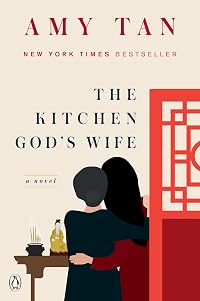
The Kitchen God's Wife
by Amy Tan
On This Page
Description
For decades-in China and in San Francisco-Winnie Louie and Helen Kwong have kept each other's confidences, but those secrets are about to be revealed. Convinced that she is dying, Helen decides to celebrate the Chinese New Year by unburdening herself of hidden truths-not only hers, but those of Winnie and of Winnie's daughter, Pearl. So begins a series of comic misunderstandings and heartbreaking realizations about luck, loss, and trust-about the things a mother cannot tell her daughter, show more about the secret that daughters keep, and about the miraculous resiliency of love. Read by Amy Tan, this second novel by the author of The Joy Luck Club was a New York Times bestseller. show lessTags
Recommendations

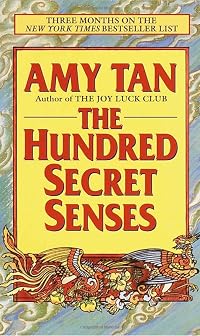
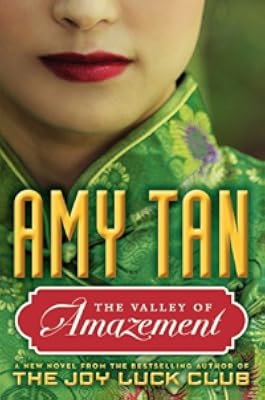

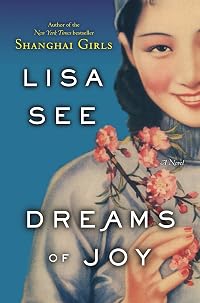

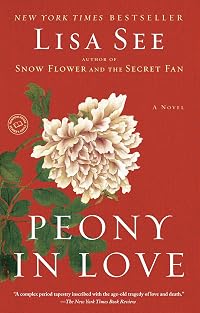
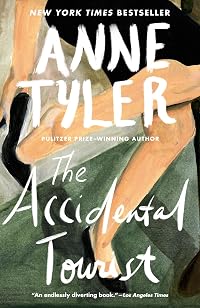
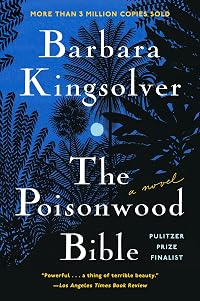
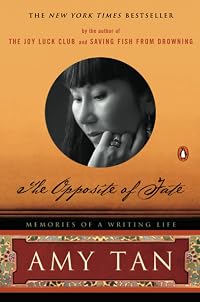
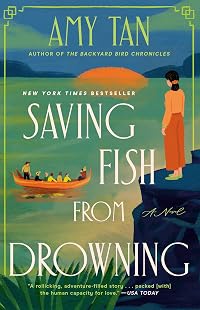

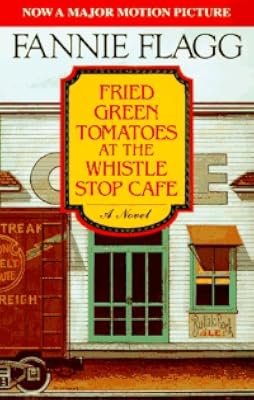
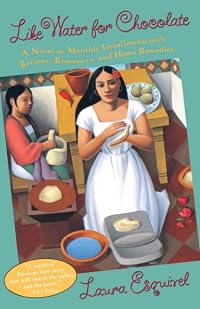
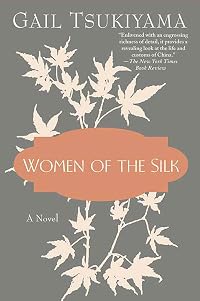
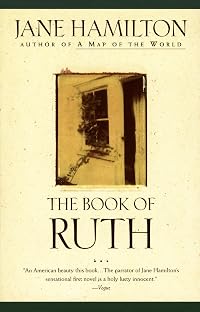
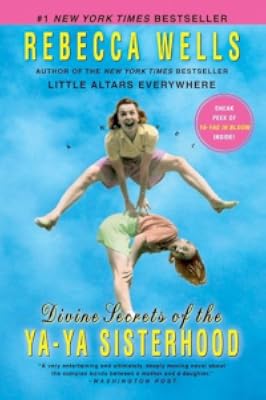
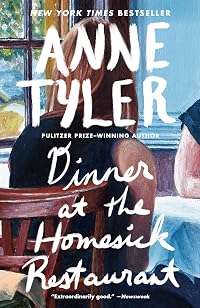
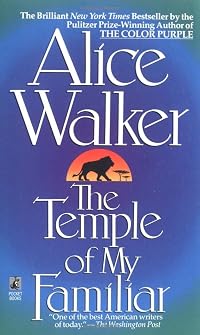
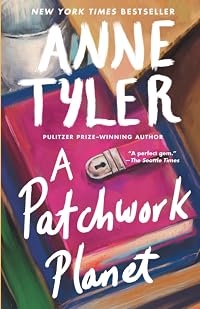
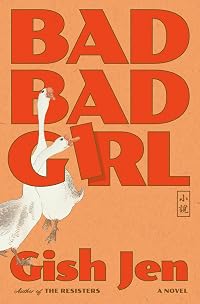
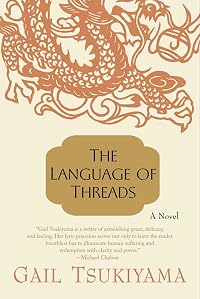
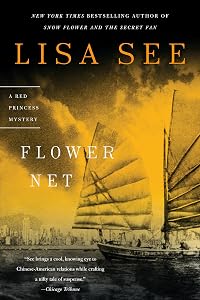
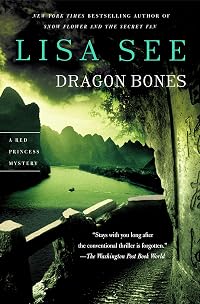
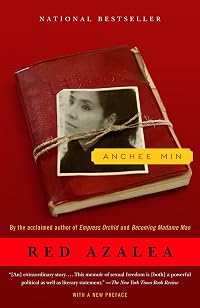
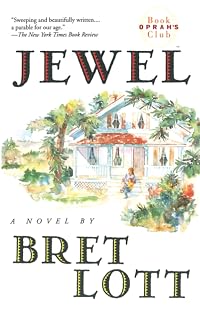
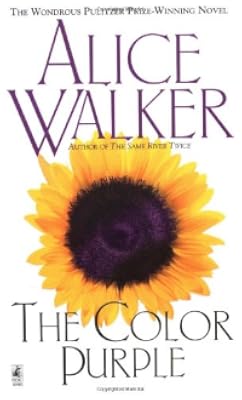
Member Recommendations
Elizabeth088 Amy Tan's first book and my personal favourite.
Also recommended by albavirtual
Member Reviews
"I think about a child’s capacity to hurt her mother in ways she cannot ever imagine."
"Mostly I see my mother sitting one table away, and I feel as lonely as I imagine her to be. I think of the enormous distance that separates us and makes us unable to share the most important matters of our life. How did this happen?"
"For many years, my mother was the source of funny and bad stories, terrible secrets and romantic tales. It was like digging up her grave, then pushing her down farther, always throwing more dirt on top."
"According to our custom, when the new year began, not one single speck of dust from last year could remain. Not a single copper’s worth of debt could be left unpaid. And not a single bad word could fall from show more anyone’s mouth for three days."
"Chance is the first step you take, luck is what comes afterward."
"If you don’t take a chance, someone else will give you his luck. And if you get bad luck, then you need to take another chance to turn things from bad to good."
"You did not get a reward for being good, that was expected."
"In this matter, you should not trouble yourself for my sake."
“If you can’t change your fate, change your attitude.”
"I don’t know why something that made me so happy then feels so sad now. Maybe that is the way it is with the best memories."
"She smiled, wiped another stain onto her dress, took my elbow, and pointed me toward the stairs."
"She was putting all this into her own heart, so that I could finally see what was left. Hope."
“'In this matter,'” I say in a mock formal voice, 'you should not concern yourself for my sake.'”
The Kitchen God's Wife exists in two worlds simultaneously: the tidy domesticity of a Chinese-American community in modern California, and the brutal, beautiful chaos of pre-revolutionary China. Tan renders wartime Shanghai and the rural provinces with an almost tactile intimacy: you feel the damp cold, the perpetual fear, the oppressive social hierarchies bearing down on every choice Winnie makes. There is a particular quality to the novel's atmosphere that can only be described as a kind of claustrophobic tenderness; Winnie's world is small because it has been made small for her, and yet within it, she carries a life of enormous proportions. Reading it feels like sitting across from someone who has waited decades to be truly heard. show less
"Mostly I see my mother sitting one table away, and I feel as lonely as I imagine her to be. I think of the enormous distance that separates us and makes us unable to share the most important matters of our life. How did this happen?"
"For many years, my mother was the source of funny and bad stories, terrible secrets and romantic tales. It was like digging up her grave, then pushing her down farther, always throwing more dirt on top."
"According to our custom, when the new year began, not one single speck of dust from last year could remain. Not a single copper’s worth of debt could be left unpaid. And not a single bad word could fall from show more anyone’s mouth for three days."
"Chance is the first step you take, luck is what comes afterward."
"If you don’t take a chance, someone else will give you his luck. And if you get bad luck, then you need to take another chance to turn things from bad to good."
"You did not get a reward for being good, that was expected."
"In this matter, you should not trouble yourself for my sake."
“If you can’t change your fate, change your attitude.”
"I don’t know why something that made me so happy then feels so sad now. Maybe that is the way it is with the best memories."
"She smiled, wiped another stain onto her dress, took my elbow, and pointed me toward the stairs."
"She was putting all this into her own heart, so that I could finally see what was left. Hope."
“'In this matter,'” I say in a mock formal voice, 'you should not concern yourself for my sake.'”
The Kitchen God's Wife exists in two worlds simultaneously: the tidy domesticity of a Chinese-American community in modern California, and the brutal, beautiful chaos of pre-revolutionary China. Tan renders wartime Shanghai and the rural provinces with an almost tactile intimacy: you feel the damp cold, the perpetual fear, the oppressive social hierarchies bearing down on every choice Winnie makes. There is a particular quality to the novel's atmosphere that can only be described as a kind of claustrophobic tenderness; Winnie's world is small because it has been made small for her, and yet within it, she carries a life of enormous proportions. Reading it feels like sitting across from someone who has waited decades to be truly heard. show less
Oh, wow. I fell in love with Amy Tan’s writing and The Kitchen God’s Wife within the first few pages. Due to personal experience I can’t handle books dealing with abuse, but I could not stop reading this one. No wonder Amy Tan is as celebrated as she is! I’m definitely going to check out what else she’s written.
Content warnings:
- ableist c slur (intentional)
- fatphobia
- r slur
- abuse, especially domestic abuse -- the book has a LOT OF THIS; proceed with caution
- rape
- racism in the mother’s PoV (referring to “those tribal people” in China & more)
- intersexism
- casual cissexism
- homophobia
Representation:
- almost every character is Chinese
For more than fifty years, Winnie and Helen have kept what happened about their lives show more in China a secret. But Helen threatens to reveal everything to Winnie’s daughter, Pearl, because she fears she’s dying. Winnie is determined to tell her daughter everything first, and to tell it all right -- as Helen would get it all wrong. So she tells her life story to Pearl: from her mother leaving her to live with her negligent aunts on an island to her abusive husband to her immigrating to America. Little does she know Pearl has a secret of her own to share.
Most of the book except for the chapters near the front and the end are in Winnie’s PoV, where she’s telling the story of her past. The others are in her daughter’s, Pearl’s. You could say the story is about her life in China, her hardships, what she overcame, but I believe it’s about the relationship between mother and daughter -- even if we don’t see them interact many times throughout the book (in comparison to the scenes when they’re alone; when Pearl doesn’t exist yet; etc.).
It’s Amy Tan’s way of crafting and writing about this mother-daughter relationship that really hooked me, Winnie’s relationship with Helen’s (which I believe was described as something that’s not quite best friends but a bond stronger than sisters), and her understanding of chronic pain when it comes to Pearl’s secret -- that she has MS. A couple pages really hit hard.
But like I said above, I usually don’t read books that contain a lot of abuse. I just can’t read it for obvious reasons. But I couldn’t put this down, and … I’m not sure if maybe the abuser here was just … so much like mine and it was like staring into a fire and being unable to stop or if it was just that captivating.
There were, of course, things I didn’t enjoy, mostly the fatphobia present throughout the entire novel, and then especially the intersexism, which seemed to come out of nowhere, interrupt everything, and make me feel absolutely disgusted with who I am. The intersexism (as well as homophobia) is present on just two pages -- that’s it -- but wow, did it make me sick. Winnie’s ex-husband is one of the worst human beings you could imagine -- and a woman she grew up with then says, “My husband was still worse! He was a [-n intersex person].” And at first Winnie doesn’t even believe her. Then she says, “But how could Miao-miao marry you off to such a person?” and proceeds to ask about his sexual organs. Did you see them? How did you know? etc. But the worst is when the woman says she found her husband in bed with another man and says, “The female side of him had enticed a male.”
Just on two pages. There’s absolutely no need to include this in the story. To put this intersex person as being on the same level of nastiness as an abuser, murderer, etc. I don’t care if it’s still in the PoV of the mother, the author decided for some reason to add this in here. Does she think it’s humorous? I don’t know.
But that’s the only reason this is four stars instead of five. I was completely enraptured by this book. show less
Content warnings:
- ableist c slur (intentional)
- fatphobia
- r slur
- abuse, especially domestic abuse -- the book has a LOT OF THIS; proceed with caution
- rape
- racism in the mother’s PoV (referring to “those tribal people” in China & more)
- intersexism
- casual cissexism
- homophobia
Representation:
- almost every character is Chinese
For more than fifty years, Winnie and Helen have kept what happened about their lives show more in China a secret. But Helen threatens to reveal everything to Winnie’s daughter, Pearl, because she fears she’s dying. Winnie is determined to tell her daughter everything first, and to tell it all right -- as Helen would get it all wrong. So she tells her life story to Pearl: from her mother leaving her to live with her negligent aunts on an island to her abusive husband to her immigrating to America. Little does she know Pearl has a secret of her own to share.
Most of the book except for the chapters near the front and the end are in Winnie’s PoV, where she’s telling the story of her past. The others are in her daughter’s, Pearl’s. You could say the story is about her life in China, her hardships, what she overcame, but I believe it’s about the relationship between mother and daughter -- even if we don’t see them interact many times throughout the book (in comparison to the scenes when they’re alone; when Pearl doesn’t exist yet; etc.).
It’s Amy Tan’s way of crafting and writing about this mother-daughter relationship that really hooked me, Winnie’s relationship with Helen’s (which I believe was described as something that’s not quite best friends but a bond stronger than sisters), and her understanding of chronic pain when it comes to Pearl’s secret -- that she has MS. A couple pages really hit hard.
But like I said above, I usually don’t read books that contain a lot of abuse. I just can’t read it for obvious reasons. But I couldn’t put this down, and … I’m not sure if maybe the abuser here was just … so much like mine and it was like staring into a fire and being unable to stop or if it was just that captivating.
There were, of course, things I didn’t enjoy, mostly the fatphobia present throughout the entire novel, and then especially the intersexism, which seemed to come out of nowhere, interrupt everything, and make me feel absolutely disgusted with who I am. The intersexism (as well as homophobia) is present on just two pages -- that’s it -- but wow, did it make me sick. Winnie’s ex-husband is one of the worst human beings you could imagine -- and a woman she grew up with then says, “My husband was still worse! He was a [-n intersex person].” And at first Winnie doesn’t even believe her. Then she says, “But how could Miao-miao marry you off to such a person?” and proceeds to ask about his sexual organs. Did you see them? How did you know? etc. But the worst is when the woman says she found her husband in bed with another man and says, “The female side of him had enticed a male.”
Just on two pages. There’s absolutely no need to include this in the story. To put this intersex person as being on the same level of nastiness as an abuser, murderer, etc. I don’t care if it’s still in the PoV of the mother, the author decided for some reason to add this in here. Does she think it’s humorous? I don’t know.
But that’s the only reason this is four stars instead of five. I was completely enraptured by this book. show less
Every time I read a book set in 20th century China I am astonished, fascinated, and heartbroken. This one captured me from the very beginning with the mother/daughter points of view chapters, then went off in a direction I didn't expect. The story itself is compelling, and the descriptions really suck you in. There's a real sense of place. You get a personal, closeup view of huge changes in a vast country. The human scale shows the impact better than figures do (in my opinion). The mother-daughter relationship feels genuine, with realistic misunderstandings, not overwrought (not just the typical ones, but those springing from the difficult relationship between immigrants and their children). There's a mixture of the extraordinary and show more the mundane that feels somehow real (as it's semi-autobiographical I don't know which bits are from her own life).
A huge part of this book is the female experience in patriarchal China. Though set after the demise of footbinding, many customs still constricted women in other ways - traditional arranged marriages, with polygyny & concubines, the expectations of femininity and class, sexual and reproductive labour (with no rights over the children), difficulty accessing divorce etc. The depiction of domestic violence, and the curious mixture of "weakness & strength" (paraphrased) needed to stay or go, felt very real. The relationships between women are beautifully shown in all their inconsistent glory. Class is very visible too, in the educational divide and the huge disparity in access to resources. show less
A huge part of this book is the female experience in patriarchal China. Though set after the demise of footbinding, many customs still constricted women in other ways - traditional arranged marriages, with polygyny & concubines, the expectations of femininity and class, sexual and reproductive labour (with no rights over the children), difficulty accessing divorce etc. The depiction of domestic violence, and the curious mixture of "weakness & strength" (paraphrased) needed to stay or go, felt very real. The relationships between women are beautifully shown in all their inconsistent glory. Class is very visible too, in the educational divide and the huge disparity in access to resources. show less
It's been over a decade since I reread this, and I still love it. I always wonder at first about the dual narrator/framed story, but it works--because this is a story Winnie tells to Pearl. I love the complexity of Wei-wei and Hulan's friendship, the sortung out of fate and luck, the perseverance. The losses still hit hard. The hope still hits hard too.
This is a story that spans decades. Begun in the present day by the first person narrative of Pearl, the bulk of the story is told by her seventy-four-year-old mother Winnie (Weili) as she relates to her daughter the tale of her first marriage, telling of what it was like in China during and after World War II and how she came to America. The Kitchen God of the title allots luck according to just desserts. He's deified, even though his wife who had suffered because of him and had lived a life of virtue. Winnie identifies with the wife: Nobody had worshiped her either. He got all the excuses. He got all the credit. She was forgotten.
The story impressed me in so many ways. First, there's a real difference in voice between mother and show more daughter. Somehow, without using distracting and annoying devices such as elisions and eccentric spellings, through syntax and word choice, Tan makes Winnie sound like a non-native English speaker of an earlier generation. And before that Winnie sounded so much like a mother. I completely understood and related to her daughter detailing how her mother drove her crazy and their frequent disconnect. But Tan conveys the love there too, even before Winnie tells her story that makes sense of so much her daughter hadn't understood. And Tan is simply a wonderful storyteller, able to convey the complexities of Chinese culture to an American reading audience while completely involving you emotionally. My first book by Amy Tan, it certainly won't be my last. show less
The story impressed me in so many ways. First, there's a real difference in voice between mother and show more daughter. Somehow, without using distracting and annoying devices such as elisions and eccentric spellings, through syntax and word choice, Tan makes Winnie sound like a non-native English speaker of an earlier generation. And before that Winnie sounded so much like a mother. I completely understood and related to her daughter detailing how her mother drove her crazy and their frequent disconnect. But Tan conveys the love there too, even before Winnie tells her story that makes sense of so much her daughter hadn't understood. And Tan is simply a wonderful storyteller, able to convey the complexities of Chinese culture to an American reading audience while completely involving you emotionally. My first book by Amy Tan, it certainly won't be my last. show less
When we meet Winnie Louie, she seems like a traditional Chinese wife, ruling her family with a combination of love and superstition. Now widowed, she still misses her husband, Jimmie Louie, and worries excessively about her two grown children. Winnie has secrets she has kept hidden since her youth in China, secrets she wants to tell Pearl but is afraid to.
Pearl Louie, now in her 40s, has secrets too. She has just been diagnosed with multiple sclerosis, and knows that her mother will wonder what she has done to cause Pearl's illness. Most of the novel then switches to Winnie's narration and the story of her life in China. She is sent to live with relatives but then makes a terrible mistake that will fill her life with pain and misery. show more Her story is both tragic and painful to read about.
I originally read this book when it was first published in 1995 but discovered that I couldn't remember anything about it. Amy Tan does a wonderful job of making her characters realistic and every word from Winnie seemed believable. The first section was a little slow, but once we go back to China with Winnie, I couldn't put it down. It has several subplots and all of them are engaging. The characters are complex and the relationships between the women is especially insightful. While some of the scenes are tragic, I'm glad that I had a chance to read this novel once more. show less
Pearl Louie, now in her 40s, has secrets too. She has just been diagnosed with multiple sclerosis, and knows that her mother will wonder what she has done to cause Pearl's illness. Most of the novel then switches to Winnie's narration and the story of her life in China. She is sent to live with relatives but then makes a terrible mistake that will fill her life with pain and misery. show more Her story is both tragic and painful to read about.
I originally read this book when it was first published in 1995 but discovered that I couldn't remember anything about it. Amy Tan does a wonderful job of making her characters realistic and every word from Winnie seemed believable. The first section was a little slow, but once we go back to China with Winnie, I couldn't put it down. It has several subplots and all of them are engaging. The characters are complex and the relationships between the women is especially insightful. While some of the scenes are tragic, I'm glad that I had a chance to read this novel once more. show less
A very vivid unfolding of a Chinese mother's life story as she recounts it to her American-Chinese daughter in an effort to bridge a widening gap in their relationship. It took me a while to get into this book. In these covid times I was not in the mood for a dark book and there was a lot of foreshadowing of the deep and awful experiences the mother had being married to an evil and abusive man back in China. Well with a sudden snow storm and power outage I read more at one time, and I was hooked. A dramatic story, retold in a powerful, authentic and dispassionate voice that vividly brings China of the 30's and 40's to life. Central themes are the attitudes and values of the culture and the complicated love-hate relationship with show more life-long friend Hulan-Helen. show less
Members
- Recently Added By
Published Reviews
ThingScore 63
Where Ms. Tan writes about contemporary Chinese-Americans, her portraits are often witty and complex. You want to know more about people like Uncle Henry Kwong, who insists on videotaping the funeral of a relative, or Roger Bao-bao, who feels ready to be one of the pallbearers because he has been "pumping iron." But the plight of a maiden victimized by an arranged marriage seems very old show more stuff. Amy Tan can probably do better. One hopes that she soon will. show less
added by jlelliott
Within the peculiar construction of Amy Tan's second novel is a harrowing, compelling and at times bitterly humorous tale in which an entire world unfolds in a Tolstoyan tide of event and detail.
added by jlelliott
Lists

Best Contemporary Literary Fiction (Around the Last 30 Years)
388 works; 124 members

The Immigrant's Stories
74 works; 19 members

Unread books
1,063 works; 83 members

Female Author
1,235 works; 67 members

500 Great Books by Women
507 works; 60 members

1990s
309 works; 17 members

BBC Radio 4 Bookclub
340 works; 13 members

Blue Pyramid 1,276 Best Books of All Time
1,248 works; 32 members

Best family sagas
244 works; 34 members

Adult Books for YA Readers
194 works; 6 members

Books about World War II
241 works; 22 members

Books about the ordinary family members of interesting sounding people.
20 works; 2 members

Carole's List
445 works; 13 members

American Lit for Eng 11 Research Project
368 works; 6 members

Global Reads: Books Set in East Asia
139 works; 12 members

Asian American Literature
46 works; 6 members

Books Tagged Abuse
152 works; 4 members

TBR - Older Books
92 works; 1 member

To Read
29 works; 2 members

Books Read in 2011
684 works; 20 members

Read in 2011
81 works; 1 member
Author Information

40+ Works 53,642 Members
Some Editions
Awards and Honors
Distinctions
Series
Belongs to Publisher Series
Goldmann (42182)
Work Relationships
Is contained in
Is abridged in
Has as a student's study guide
Common Knowledge
- Canonical title
- The Kitchen God's Wife
- Original title
- The Kitchen God's Wife
- Original publication date
- 1991
- People/Characters
- Winnie Louie; Pearl Loui Brandt
- Important places
- Shanghai, China
- Dedication
- To my mother, Daisy Tan,
and her happy memories of
my father, John (1914-1968),
and my brother Peter (1950-1967)
with love and respect - First words
- Whenever my mother talks to me, she begins the conversation as if we were already in the middle of an argument.
- Last words
- (Click to show. Warning: May contain spoilers.)But see how fast the smoke rises - oh, even faster when we laugh, lifting our hopes, higher and higher.
Classifications
Statistics
- Members
- 7,391
- Popularity
- 1,560
- Reviews
- 89
- Rating
- (3.84)
- Languages
- 15 — Catalan, Danish, Dutch, English, Estonian, Finnish, French, German, Icelandic, Italian, Norwegian (Bokmål), Norwegian, Portuguese, Spanish, Swedish
- Media
- Paper, Audiobook, Ebook
- ISBNs
- 92
- UPCs
- 1
- ASINs
- 50