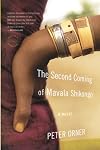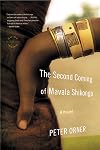
The Second Coming of Mavala Shikongo
by Peter Orner
On This Page
Description
Set in Namibia just after independence in the early 1990s, Peter Orner's first novel is a chronicle of the long days, short loves, and cold nights at Goas, an all-boys Catholic primary school so deep in the veld that "even the baboons feel sorry for us." Though physically isolated in semi-desert beneath a relentless sun, the people of Goas create an alternate, more fertile universe through the stories they tell each other. The book's central character is Mavala Shikongo, a combat veteran who show more fought in Namibia's long war for independence against South Africa. She has recently returned to the school -- with a child, but no husband. Mavala is modern, restless, and driven, in sharp contrast to conservative Goas. All the male teachers (including a bumbling but observant volunteer from Cincinnati) try not to fall in love with her. Everyone fails -- immediately and miserably. This extraordinary first novel explores the history of a place through the stories of its people. But above all it's about the fleetingness of love and the endurance of fellowship. show lessTags
Recommendations







































Member Reviews
Sparse but beautiful writing. It took me a moment to get into this book, but once I was won over, I couldn't put it down. How Orner managed to create such complete characterizations with so few words is a mystery to me; yet the people who populate this book feel known to me in a way that I don't even know myself. I quote a NYTimes review that states: "As Orner unspools their quirks through sharp, eccentric dialogue and interior asides, his characters grow distinct without ever becoming Gothic. He hits the right notes and no others.... Orner's thrift only heightens the longing that vibrates throughout the novel." Longing for rain; longing for something new on the horizon of the vast and endlessly arid veld; longing for love or that show more something that approximates it. show less
Orner is fairly spare with his words, a la Hemingway or Vonnegut -- a clear picture or description in few words. The short chapters are almost like an impressionistic painting: small dabs that are individual but pull back a bit & you see the cohesive whole.
Each chapter focuses on some small piece whether it's the environment, the other people at the school, an event, but there's not a lot of plot as the days move slowly with a lot of repetition (same routines, same weather, same harshness of the drought,...). While it has a serious tone running throughout (& more so for the last third of the book), some unexpected & delightful humor pops out sometimes.
Mavala Shikongo is the titular character, yet she is the one who seems most removed show more from the story.
It reminded me in a tiny way of The Plover by Brian Doyle, even though they are different in more ways than they are similar. Maybe it's the humor & humanity that shine through.
I found each little chapter to be a tiny masterpiece. Taken together as a whole, it creates a beautiful book. I loved it. show less
Each chapter focuses on some small piece whether it's the environment, the other people at the school, an event, but there's not a lot of plot as the days move slowly with a lot of repetition (same routines, same weather, same harshness of the drought,...). While it has a serious tone running throughout (& more so for the last third of the book), some unexpected & delightful humor pops out sometimes.
Mavala Shikongo is the titular character, yet she is the one who seems most removed show more from the story.
It reminded me in a tiny way of The Plover by Brian Doyle, even though they are different in more ways than they are similar. Maybe it's the humor & humanity that shine through.
I found each little chapter to be a tiny masterpiece. Taken together as a whole, it creates a beautiful book. I loved it. show less
Goas, Namibia. Heat, desolation, desert. A school for boys. A lot of unnamed little boys. A few teachers, their wives, the director of the school and the priest. Larry Kaplinski, American, volunteer, teacher. And of course Mavala Shikongo, former fighter in the liberation army, and by far the coolest lady in this desolate place. What else can all men do but fall in love with her? However, she remains an enigma, even to Larry, who appears to get closest to her.
This about sums up the novel, at least story-wise. Nothing much happens in Goas, apart from the daily business and boredom. A drunk teacher. The school's mechanic leaving for his monthly visit to his wife. A love affair. Nightly conversations. So if you are looking for action and show more adventure, don't read this book. This is a quiet and slow book. Yet it is one of the most original novels I have read during the past years. The chapters are short, sometimes extremely short, and set around one character, one event, or one location. Many of the chapter titles are repeated, so that gradually you get to know Goas, and its main characters and regular events. Such as the nightly conversations, or the meetings of Larry and Mavala. They are mixed with original titles, recounting original events. This mixture of repetition and new titles give the novel a rhythm that is almost like a song, a very pleasing and soothing song. A song that I would like to listen to again. show less
This about sums up the novel, at least story-wise. Nothing much happens in Goas, apart from the daily business and boredom. A drunk teacher. The school's mechanic leaving for his monthly visit to his wife. A love affair. Nightly conversations. So if you are looking for action and show more adventure, don't read this book. This is a quiet and slow book. Yet it is one of the most original novels I have read during the past years. The chapters are short, sometimes extremely short, and set around one character, one event, or one location. Many of the chapter titles are repeated, so that gradually you get to know Goas, and its main characters and regular events. Such as the nightly conversations, or the meetings of Larry and Mavala. They are mixed with original titles, recounting original events. This mixture of repetition and new titles give the novel a rhythm that is almost like a song, a very pleasing and soothing song. A song that I would like to listen to again. show less
Orner does a really excellent job of capturing daily life in rural Namibia. The chapters have this ephemeral, leaf-like quality where they simply seem to float away - much like the days in the heat of Namibia. I am biased because I lived in Namibia for two years as a Peace Corps volunteer and I hunger for any sort of literature from that area. However, even though I understood almost all of the references and details, I felt like Orner did a great job of leaving the details off to the side and focusing on the overall narrative. I felt like I was right back there in Namibia with characters that seemed very lifelike and similar to actual people I met in Namibia.
A wonderful engaging book - very different from the usual white teacher comes to Africa with much wisdom to impart. Young Jewish Larry Kaplansky lands at a run down mission school in the middle of the Nambibian nowhere. His colleagues are an engaging bunch, there's a drought, a neighboring farmer sells vegetables, a piano arrives. There is boredom, joy, sorrow, mystery, and more boredom. The story - or what there is of it - is told in brief, sometimes single paragraph chapters, but it builds like the most detailed novel and the brievity adds to the humor and sadness. A most unusual but very satisfying story.
"The Second Coming of Mavala Shikongo" is told in snippets, tiny chapters, some as short as a paragraph, that observe the lives, lusts, and shenanigans of teachers at a Catholic boys' school in the veld of Namibia.
Some of the snippets provide forward momentum, as we learn of the volunteer teacher from Cincinnati, a youngish Jewish man who, along with the other male teachers, lusts after the eponymous Mavala. Young Larry Kaplanski, our Buckeye protaganist, engages in a long series of assignations with the heroine, and works less than diligently at his teaching job.
These brief chapters make this book a quick read, but don't get in the way of our knowing the characters. They (the chapters) are often extremely funny, but there is some show more informed, charged talk about the newly independent Namibia, about how isolated everyone is, about the struggle between the parish priest and the principal. There are other weighty issues to grapple with, too, as when a young boy dies en route back to school after a holiday. While this is an enjoyable book and effective in its way, its characters don't do quite enough to win our sympathy, and the point of the exercise remains, frankly, murky. show less
Some of the snippets provide forward momentum, as we learn of the volunteer teacher from Cincinnati, a youngish Jewish man who, along with the other male teachers, lusts after the eponymous Mavala. Young Larry Kaplanski, our Buckeye protaganist, engages in a long series of assignations with the heroine, and works less than diligently at his teaching job.
These brief chapters make this book a quick read, but don't get in the way of our knowing the characters. They (the chapters) are often extremely funny, but there is some show more informed, charged talk about the newly independent Namibia, about how isolated everyone is, about the struggle between the parish priest and the principal. There are other weighty issues to grapple with, too, as when a young boy dies en route back to school after a holiday. While this is an enjoyable book and effective in its way, its characters don't do quite enough to win our sympathy, and the point of the exercise remains, frankly, murky. show less
A gorgeous, original novel that is set in a far-out Namibian boys school and the American teacher who finds himself there. It's so interestingly written (short chapters, multiple points of view, slightly unclear passing of time) and super compelling. I really recommend it. It's out in paperback now. But the paperback cover is not the one that is showing. I'll see if I can find that one.
Members
- Recently Added By
Lists

Books Read in 2024
4,727 works; 128 members
Author Information

24+ Works 1,201 Members
He was born in chicago in 1968. After graduating from the University of Michigan, he taught in a rural Catholic mission in Africa, received a law degree in Boston & practiced there as a juvenile public defender & then enrolled in the University of Iowa's Writer's Workshop. He lectured in law & English in Prague until joining the English department show more at Miami University in Ohio, where he now lives. (Bowker Author Biography) show less
Awards and Honors
Common Knowledge
- Canonical title
- The Second Coming of Mavala Shikongo
- Original publication date
- 2008
- People/Characters
- Larry Kaplanski; Pohamba; Obadiah Horaseb; Mavala Shikongo; Festus; Vilho (show all 8); Aunt Wilhelmina; Theofilus
- Important places
- Goas, Namibia
Classifications
Statistics
- Members
- 185
- Popularity
- 177,429
- Reviews
- 9
- Rating
- (3.86)
- Languages
- 5 — Dutch, English, French, German, Italian
- Media
- Paper, Ebook
- ISBNs
- 7
- ASINs
- 4