The Great Turning: From Empire to Earth Community
by David C. Korten
On This Page
Description
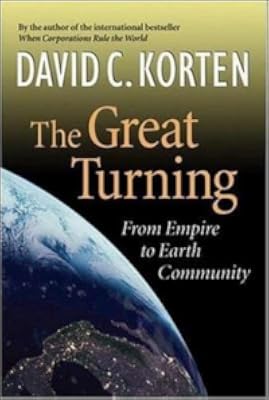
David Korten?s classic bestseller When Corporations Rule the World was one of the first books to articulate the destructive and oppressive nature of the global corporate economy. In The Great Turning he argues that corporate consolidation of power is merely one manifestation of what he calls?Empire?: the organization of society through hierarchy and violence that has largely held sway for the past 5,000 years. The Great Turning traces the evolution of Empire from ancient times to the present show more day but also tells the parallel story of the attempt to develop a democratic alternative to Empire, beginning in Athens and continuing with the founding of the United States of America?although elitists with an imperial agenda have consistently sought to undermine the bold and inspiring?American experiment.? Finally, Korten draws on evidence from sources as varied as evolutionary theory, developmental psychology, and religious teachings to make the case that?Earth Community??a life-centered, egalitarian, sustainable alternative to Empire based on democratic principles of partnership?is indeed possible. And he outlines a grassroots strategy for beginning the momentous turning toward a future of as-yet-unrealized human potential. show lessTags
Recommendations
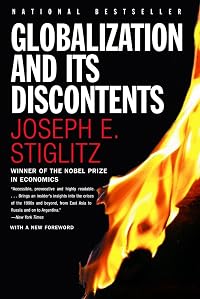
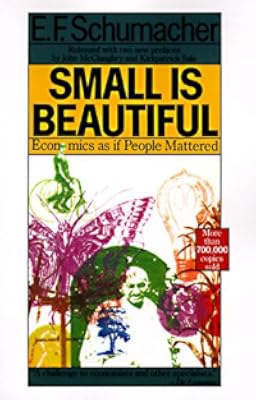
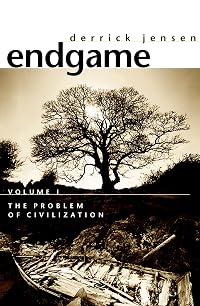


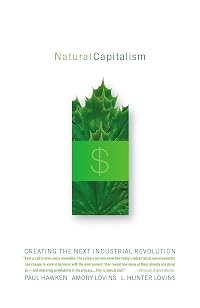




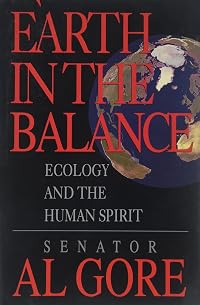
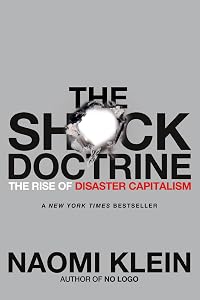
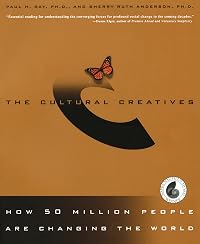
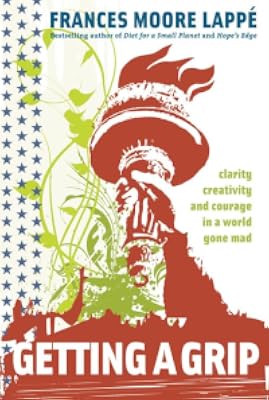



Member Recommendations
Member Reviews
Any reader of The Great Turning must remember one key fact: You're not reading this book because Korten is a noteworthy psychologist or theologian or anthropologist. Korten has some keen insights and his experience with international NGOs and in academia ensure that the telling of his vision is effective, grounded in reality, and at times inspiring. He finds great metaphors to convey concepts that otherwise might hover just above true comprehension. Korten not only defines and describes a new economy, he does so in ways that help you see that you never really thought logically about our contemporary system—even if you considered yourself knowledgeable in economics before.
Korten is right in that instituting his community-focused show more system would change everything—but he’s also right that our current system is inherently based on change and therefore everything will change anyway, so why not work to ensure that future changes are improvements and not just helping consolidate the power of the already powerful. In short, Korten is at his best when he stays focused on undoing the conventional wisdom he characterizes as “[Trusting] in the magic of the unregulated market to convert your unrestrained greed and self-indulgence into a better life for all.”
He reaches too far in his vision. His vision replaces an unsustainable global economy driven by conglomerates with a global sense of spirituality which is basically Gnostic garbage, often citing Borg and Fox—nothing new here, what he promotes has been commonplace theology since the dawn of Empires. It’s ironic, since Korten seems to really understand the importance of love and community but doesn’t seem to understand that the spiritual worldview he’s embracing won’t support his vision of loving local economies any better than the greed-centered worldview of crony capitalism. He equates love with tolerance, elevates the feminine above the masculine, and believes that knowledge is power. The economy he envisions requires love that doesn’t tolerate abuse of power, puts men and women on equal footings, and understands that wisdom comes from outside yourself and is marked by humility.
He gets tripped up on this last point because of his reliance on conventional psychological models which are essentially repackaged Gnosticism that encourages intelligent people to believe that they are at the top of a five-step scale of human development. Instead of recognizing that people are a mix of good and bad, he prefers models which basically categorize people as either enlightened or unenlightened—inherently belittling the humanity of children and mentally disabled.
Fortunately, the system Korten promotes would better serve the people his theological and psychological models would exclude. If his economic ideas start taking hold, hopefully theologians whose theology is better equipped to bolster his communities will have more of an impact on his thinking. show less
Korten is right in that instituting his community-focused show more system would change everything—but he’s also right that our current system is inherently based on change and therefore everything will change anyway, so why not work to ensure that future changes are improvements and not just helping consolidate the power of the already powerful. In short, Korten is at his best when he stays focused on undoing the conventional wisdom he characterizes as “[Trusting] in the magic of the unregulated market to convert your unrestrained greed and self-indulgence into a better life for all.”
He reaches too far in his vision. His vision replaces an unsustainable global economy driven by conglomerates with a global sense of spirituality which is basically Gnostic garbage, often citing Borg and Fox—nothing new here, what he promotes has been commonplace theology since the dawn of Empires. It’s ironic, since Korten seems to really understand the importance of love and community but doesn’t seem to understand that the spiritual worldview he’s embracing won’t support his vision of loving local economies any better than the greed-centered worldview of crony capitalism. He equates love with tolerance, elevates the feminine above the masculine, and believes that knowledge is power. The economy he envisions requires love that doesn’t tolerate abuse of power, puts men and women on equal footings, and understands that wisdom comes from outside yourself and is marked by humility.
He gets tripped up on this last point because of his reliance on conventional psychological models which are essentially repackaged Gnosticism that encourages intelligent people to believe that they are at the top of a five-step scale of human development. Instead of recognizing that people are a mix of good and bad, he prefers models which basically categorize people as either enlightened or unenlightened—inherently belittling the humanity of children and mentally disabled.
Fortunately, the system Korten promotes would better serve the people his theological and psychological models would exclude. If his economic ideas start taking hold, hopefully theologians whose theology is better equipped to bolster his communities will have more of an impact on his thinking. show less
A wonderful, thought provoking book about how to Save the World. Raises a lot of interesting questions and possible solutions to Corporate Greed, Golbal Warming and other ills of today. You have to be able though to overlook some mindless blather about feminism and a thorough trashing of religion as another attempt at male domination ... if you get past those flaws it will open your mind.
I actually led a book discussion group on this book last year. The discussions were interesting but the book is, I think, inadequate. For anyone with vaguely leftist inclinations, It's sort of like going to see a romantic comedy starring (oh, say) Meg Ryan. You know what to expect, and you will probably enjoy it, but the plot is predictable and it is not going to really challenge you or add to your knowledge. He's pretty sharp about social inequality, but less so about the environment. But the whole contrast between "empire" and "earth community" is just too simplistic and overdone. Empire is evil, evil, evil, but suddenly, we're going to turn around and everything will be wonderful! Moreover, I cannot agree with his environmental ideas show more either. There is something unsettling about his first example of a "good" industry -- a cattle ranch where they treat the workers well. Cattle grazing is a leading cause of global warming, and according to November/December 2009 WorldWatch article by Goodland and Anhang, meat production actually contributes over half of all human-caused greenhouse gas emissions. Korten says at one point that rulers learned to domesticate people after they domesticated animals. Do you think that these two forms of exploitation are related? In what way? So we're all in solidarity while we kill animals and destroy the climate. There does not seem to be any awareness, either, about peak oil, the financial crisis, and related issues. I've heard him speak: he eats meat, apparently, and he's overweight. Sigh. So, you might want to flip through the book to keep current with what people are saying, and Korten really is a good speaker, but his analysis lacks weight. show less
This book begins as a critical commentary on corporations, in a way that is mostly just a compilation of factoids that have been thrown about over the course of the last couple decades. Korten's "environmentalist" stance reads like an absurd fantasy, like a child fleshing out a future utopia without any regard for reality and practical constraints. Maybe the popularity of this book is in its fantastical, absurd optimism, and its unstated idea that dreaming alone can create positive change. This approach frankly does more harm than good.
too much political correctness and a shallow, naive way of thinking. Utopia's are great for dreaming and I can imagine this book sometimes stimulates thinking how life on earth should be. However, only a small percentage of the people have to be after their narrow self interest and you create a prisoners dilemma. This book seriously lacks in solutions how we should deal with serious problems we are facing, taking our history as people into mind. Also the book is very selective in quoting history, namely only the facts that suit him and omits many others.
*The Great Turning is an inclusive framework that has emerged as a synthesis of thinking and experience arising from the many initiatives that are giving form and substance to a global social movement aligned with the principles of the Earth Charter.
"We stand at a critical moment in Earth's history, a time when humanity must choose its future. As the world becomes increasingly interdependent and fragile, the future at once holds great peril and great promise. To move forward we must recognize that in the midst of a magnificent diversity of cultures and life forms we are one human family and one Earth community with a common destiny."
"We stand at a critical moment in Earth's history, a time when humanity must choose its future. As the world becomes increasingly interdependent and fragile, the future at once holds great peril and great promise. To move forward we must recognize that in the midst of a magnificent diversity of cultures and life forms we are one human family and one Earth community with a common destiny."
"This is a wise and much needed book that shows we can create cultures where our enormous human capacities for joy, caring, and cooperation are realized" (Riane Eisler). From the back cover.
Members
- Recently Added By
Author Information

22+ Works 1,422 Members
David C. Korten is a cofounder and board chair of YES! Magazine, a cochair of the New Economy Working Group, the founder and president of the Living Economies Forum on Globalization, and a former Harvard Business School professor.
Awards and Honors
Awards
Common Knowledge
- Original publication date
- 2006
- Dedication
- Dedicated to: My paternal grandmother, Lydia Boehl Korten, who taught me that every person has a sacred purpose. / My parents, Ted Korten and Margaret Korten, who made it possible to honor the call. / My brother, Robert Korte... (show all)n, who assumed the family responsibilities I abandoned. / Thomas Berry, Riane Eisler, and Joanna Macy, on whose inspiration, analysis, and language I have drawn freely in framing the human choice at hand. / Timothy Iistowanohpataakiiwa, who initiated me into elderhood on my sixty-fifth birthday and helped me see with greater clarity the path of my elder years. / And George W. Bush, whose administration exposed to full view the imperial shadow side of U.S. democracy, stripped away the last illusions of my childhood innocence, and compelled me to write this book.
- First words
- By what name will our children and our children's children call our time?
- Last words
- (Click to show. Warning: May contain spoilers.)We are the ones we have been waiting for.
- Blurbers
- Glover, Danny; Hartmann, Thom; Eisler, Riane; Barlow, Maude; Wheatley, Margaret J.; Hightower, Jim
Classifications
- Genres
- Economics, Nonfiction, Science & Nature, General Nonfiction, Politics and Government, Business, History
- DDC/MDS
- 302.14 — Society, government, & culture Social sciences, sociology & anthropology Mass Communication & Media General topics of social interaction Social participation
- LCC
- JZ1318 .K67 — Political Science International relations International relations Scope of international relations. Political theory.
- BISAC
Statistics
- Members
- 300
- Popularity
- 107,450
- Reviews
- 7
- Rating
- (3.73)
- Languages
- English
- Media
- Paper, Audiobook, Ebook
- ISBNs
- 7
- ASINs
- 6