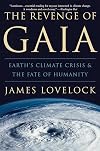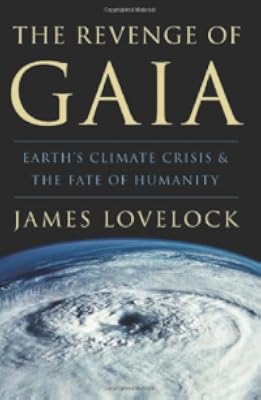
The Revenge of Gaia: Earth's Climate Crisis and the Fate of Humanity
by James E. Lovelock
Gaia Theory (book 5)
On This Page
Description
A call to address a major threat to our collective futureTags
Recommendations






Member Reviews
If consistency is the hobgoblin of little minds, then Lovelock is surely a giant here. A true visionary and a wonderful writer with the ability both to analyze data and convey scientific understandings metaphorically to the lay reader, he sadly seems to have become the 21st century schizoid man through his love for two wholly incompatible entities: Gaia, the living planet he first (in modern times) identified as such, and British "civilization" which has been one of the forces most destructive of the whole relationship to Gaia he sees as essential to human survival.
So to keep the lovely British countryside free of ugly, awful wind farms, and still give Brits the power I guess to listen to Purcell concerts and read books on tape? he show more advocates--nuclear reactors? Leaving aside the bomb and waste threats (which he utterly dismisses) whose farm are they going to beautify? He talks about cellphones and the internet being good things because they keep us from getting on planes and in cars, in the absence of any evidence to this effect, and the presence of much evidence that they further disconnect us from any sense of ourselves as part of the natural world. Oh, and the third world has somehow unfairly been denied the DDT that's what Africa really needs to develop, by elitist liberals in the north.
His presentation of the science behind global heating and his knowledge of how Earth's ecosystems function are solid and compelling. But his fundamental flaw is in not seeing that it's not British civilization he ought to be trying to preserve at all costs but the lifeways of millions of people who actually have a knowledge and understanding of Gaia that extends back far before Lovelock and William Golding took their now-famous walk through that English village. The rest of us in the global north, including Lovelock, ought to be learning from their example. Then maybe we could produce the knowledge-book he advocates (one of his only good suggestions in my view) as a kind of farmer's almanac for the future, that could help every household reacquire at least some of the basic skills of how to live with instead of against nature. show less
So to keep the lovely British countryside free of ugly, awful wind farms, and still give Brits the power I guess to listen to Purcell concerts and read books on tape? he show more advocates--nuclear reactors? Leaving aside the bomb and waste threats (which he utterly dismisses) whose farm are they going to beautify? He talks about cellphones and the internet being good things because they keep us from getting on planes and in cars, in the absence of any evidence to this effect, and the presence of much evidence that they further disconnect us from any sense of ourselves as part of the natural world. Oh, and the third world has somehow unfairly been denied the DDT that's what Africa really needs to develop, by elitist liberals in the north.
His presentation of the science behind global heating and his knowledge of how Earth's ecosystems function are solid and compelling. But his fundamental flaw is in not seeing that it's not British civilization he ought to be trying to preserve at all costs but the lifeways of millions of people who actually have a knowledge and understanding of Gaia that extends back far before Lovelock and William Golding took their now-famous walk through that English village. The rest of us in the global north, including Lovelock, ought to be learning from their example. Then maybe we could produce the knowledge-book he advocates (one of his only good suggestions in my view) as a kind of farmer's almanac for the future, that could help every household reacquire at least some of the basic skills of how to live with instead of against nature. show less
I do not know whether you, like me, listening to the moaning of the Greens, telling us that the world is doomed unless we give up our lifestyle, NOW. Eating lentils and chanting appear to be the only allowable pastimes. I become a rabid gain-sayer of Global Warming and the effects that planetary destruct will bring upon us. Then, we get the 'sensible view': some plutocrat in his best pin-stripe suit confidently preaching that it is all nonsense and that we should only be concerned with his accrual of more shiny coins to add to the mountain that he already possesses, and I am ready to lead the revolution - I might even eat the odd lentil!
This is not a healthy way in which to consider the health of our planet and so, thank God for James show more Lovelock. He states what he believes in a manner so lacking in the stridency of most advocates that he seems quite willing to be proved wrong - and admits to an error in one of his previous books in this text. Lovelock has a carefully considered argument, rather than a series of knee-jerk reactions. He accepts that it is impractical to suggest that we close down our way of life tomorrow and offers ideas that would slow our rape of Gaia.
This approach is far more scary than all the doom-mongers. When one is faced by a reasonable, well argued tract suggesting that it is imperative to take action now, it is hard to dig in one's heels. It is clearly time to do something and, whilst it might make us feel good to stick windmills on every bit of spare space and grow bio-fuels, Lovelock is disparaging about the likely success of these actions. He argues for nuclear power as the only system that will provide the power needed in the time available. He is not too caught up in green philosophy to accept the need for unpleasant actions.
This book should be compulsory reading by every school child. We have messed things up; it is time that we gave the next generation the tools to correct our stupidity and ignorance. show less
This is not a healthy way in which to consider the health of our planet and so, thank God for James show more Lovelock. He states what he believes in a manner so lacking in the stridency of most advocates that he seems quite willing to be proved wrong - and admits to an error in one of his previous books in this text. Lovelock has a carefully considered argument, rather than a series of knee-jerk reactions. He accepts that it is impractical to suggest that we close down our way of life tomorrow and offers ideas that would slow our rape of Gaia.
This approach is far more scary than all the doom-mongers. When one is faced by a reasonable, well argued tract suggesting that it is imperative to take action now, it is hard to dig in one's heels. It is clearly time to do something and, whilst it might make us feel good to stick windmills on every bit of spare space and grow bio-fuels, Lovelock is disparaging about the likely success of these actions. He argues for nuclear power as the only system that will provide the power needed in the time available. He is not too caught up in green philosophy to accept the need for unpleasant actions.
This book should be compulsory reading by every school child. We have messed things up; it is time that we gave the next generation the tools to correct our stupidity and ignorance. show less
Lovelock is a non-conformist thinker with an entertaining writing style. His book is an appeal from the heart. It is slightly rough around the edges but it carries a forceful message. Put simply the global natural ecosystem is in bad health. Thus appropriate urgent action (life support) is required to keep the natural systems working temporarily whilst we find and adapt to workable long-term solutions.
Lovelock dismisses the linguistic wordplay about whether the ecosphere (Gaia) is alive or is merely an adaptive homeostatic physiological system. He acknowledges many ecological blunders caused by industries during the 20th century. Nonetheless he argues we must put aside subsequent irrational fears driven by political mischief. We have show more no choice but to responsibly and carefully use nuclear power and pesticides. He proposes we divide the world into three equal proportional allocated to untamed nature, scientifically informed farming and human cities. show less
Lovelock dismisses the linguistic wordplay about whether the ecosphere (Gaia) is alive or is merely an adaptive homeostatic physiological system. He acknowledges many ecological blunders caused by industries during the 20th century. Nonetheless he argues we must put aside subsequent irrational fears driven by political mischief. We have show more no choice but to responsibly and carefully use nuclear power and pesticides. He proposes we divide the world into three equal proportional allocated to untamed nature, scientifically informed farming and human cities. show less
Excellent book. I read James Lovelock's previous book, Gaia, and was impressed - in part. When I read that book, I felt he was unduly optimistic.
In this book, he struck a more pessimistic note. Since he wrote the earlier book, the world has moved closer to a tipping point. There is one theme that comes through persistently, which is this: the earth is a living system, and you cannot just address one small aspect at a time. It is only when we look at nature as a complex system, alive, that we will address how we live our lives.
He is skeptical about most clean energy projects and is a great proponent of nuclear energy. This is an area I need to explore.
James Lovelock pulls no punches, and his style is engaging.
Be prepared to have a few show more illusions shattered.
Read on.
There is another point he made consistently: we are almost out of time show less
In this book, he struck a more pessimistic note. Since he wrote the earlier book, the world has moved closer to a tipping point. There is one theme that comes through persistently, which is this: the earth is a living system, and you cannot just address one small aspect at a time. It is only when we look at nature as a complex system, alive, that we will address how we live our lives.
He is skeptical about most clean energy projects and is a great proponent of nuclear energy. This is an area I need to explore.
James Lovelock pulls no punches, and his style is engaging.
Be prepared to have a few show more illusions shattered.
Read on.
There is another point he made consistently: we are almost out of time show less
This book could've used a better editor. I often lost track during the chapters what Lovelock was talking about and many of his arguments seem to end halfway, without proper evidence or explanation. Having said that, I found it a provocative read that challenged some of the Green clichés and made me think about f.e. nuclear energy, the argumentative weight of carcinogenics and who are the actors that can make a change for the better occur.
It was James Lovelock who put into words the concept of the Earth as a living entity. Anything that smacks of New Age or mysticism usually makes me gag, but I kept going because the author doesn't ascribe a consciousness to this mechanism, which he calls Gaia. Rather, Gaia is the process by which the Earth behaves as a single, self-regulating system. Mr. Lovelock believes that human activities have limited Gaia’s to self-regulate. He believes disaster is all but inevitable .
The book contained some surprising ideas: support for nuclear energy, disapproval of organic farming. But the test for a book like has to go beyond interesting. It needs to make a compelling argument, and I think Mr. Lovelock falls a little short of compelling in show more several cases.
In spite of his arguments, I have some doubt about the safe disposal of nuclear waste. He is nostalgic to the point of being realistic; for example, when he talks about returning to sailing ships for long distance travel. And, he tells us that Gaia is “old and has not very long to live”. So, either we need a new metaphor or there isn’t much point worrying about anything, including climate change. show less
The book contained some surprising ideas: support for nuclear energy, disapproval of organic farming. But the test for a book like has to go beyond interesting. It needs to make a compelling argument, and I think Mr. Lovelock falls a little short of compelling in show more several cases.
In spite of his arguments, I have some doubt about the safe disposal of nuclear waste. He is nostalgic to the point of being realistic; for example, when he talks about returning to sailing ships for long distance travel. And, he tells us that Gaia is “old and has not very long to live”. So, either we need a new metaphor or there isn’t much point worrying about anything, including climate change. show less
One of the striking things about places heavily contaminated by radioactive waste is the richness of their wildlife. This is true of the land around Chernobyl, the bomb test sites of the Pacific, and areas near the United States' Savannah River nuclear weapons plant of the Second World War. Wild plants and animals do not perceive radiation as dangerous, and any slight reduction it may cause in their lifespans is far less a hazard than is the presence of people and their pets. It is easy to forget now that we are so numerous, almost anything we do in the way of farming, forestry and home building is harmful to wildlife and Gaia. The preference of wildlife for nuclear-waste sites suggests that the best sites for its disposal are the show more tropical forests and other habitats in need of a reliable guardian against their destruction by hungry farmers and developers.
Although I had heard of the Gaia theory, I had not read about it in any detail before so there were quite a few surprises awaiting me between the covers of this book.
And are we all doomed? Most likely yes. show less
Although I had heard of the Gaia theory, I had not read about it in any detail before so there were quite a few surprises awaiting me between the covers of this book.
And are we all doomed? Most likely yes. show less
Members
- Recently Added By
Lists

Best Science Books for Non-Scientists
113 works; 57 members
Author Information

20+ Works 3,455 Members
Some Editions
Awards and Honors
Series

Belongs to Publisher Series
Roheline Raamat (5)
Penguin Celebrations (36)
Common Knowledge
- Canonical title
- The Revenge of Gaia: Earth's Climate Crisis and the Fate of Humanity
- Alternate titles
- The Revenge of Gaia: Why the Earth is Fighting Back and How We Can Still Save Humanity
- Original publication date
- 2006
Classifications
Statistics
- Members
- 863
- Popularity
- 31,671
- Reviews
- 20
- Rating
- (3.56)
- Languages
- 13 — Catalan, Czech, Danish, Dutch, English, Estonian, Finnish, French, German, Italian, Norwegian (Bokmål), Portuguese, Spanish
- Media
- Paper, Ebook
- ISBNs
- 29
- ASINs
- 8