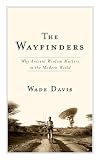
The Wayfinders: Why Ancient Wisdom Matters in the Modern World
by Wade Davis
On This Page
Description
Every culture is a unique answer to a fundamental question: What does it mean to be human and alive? In The Wayfinders, renowned anthropologist, winner of the prestigious Samuel Johnson Prize, and National Geographic Explorer-in-Residence Wade Davis leads us on a thrilling journey to celebrate the wisdom of the world's indigenous cultures. In Polynesia we set sail with navigators whose ancestors settled the Pacific ten centuries before Christ. In the Amazon we meet the descendants of a true show more lost civilization, the Peoples of the Anaconda. In the Andes we discover that the earth really is alive, while in Australia we experience Dreamtime, the all-embracing philosophy of the first humans to walk out of Africa. We then travel to Nepal, where we encounter a wisdom hero, a Bodhisattva, who emerges from forty-five years of Buddhist retreat and solitude. And finally we settle in Borneo, where the last rain forest nomads struggle to survive. Understanding the lessons of this journey will be our mission for the next century. For at risk is the human legacy-a vast archive of knowledge and expertise, a catalog of the imagination. Rediscovering a new appreciation for the diversity of the human spirit, as expressed by culture, is among the central challenges of our time. show lessTags
Recommendations


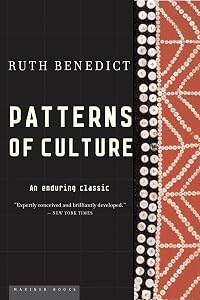
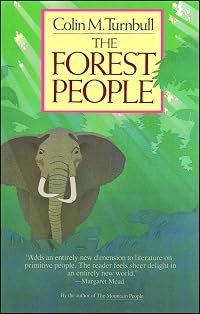
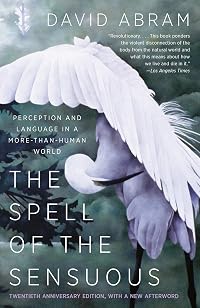


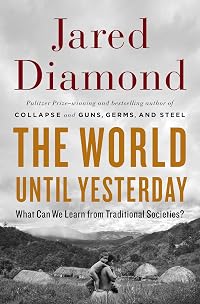











Member Recommendations
Yervant Both works explore the sum of human knowledge contained in minority languages, which are disappearing at an alarming rate.
Member Reviews
Anthropology was probably one of the driest general requirements courses that I suffered through in college. But when I heard Wade Davis speak on the TED website (http://www.ted.com), he piqued my interest in what he termed the "ethnosphere." His National Geographic travels take him to the far reaches of the globe. He has a keen sense of the rare riches found in the value that indigenous tribes have for nature. Its not that I buy into the deities of mountains or the forest and skies, but I certainly value the ecosystems on this planet. His concern for climate change and its impact on these harmless ancient societies highlights our arrogance that the resources they worship are merely our free raw materials for the taking.
Wade Davis show more writes well of past misconceptions about just how primitive aboriginal tribes lived hundreds and even thousands of years ago. His representations in this book help set the tone for thoughts of our own greed and seemingly endless quest to destroy the earth that sustains us. A humbling read. show less
Wade Davis show more writes well of past misconceptions about just how primitive aboriginal tribes lived hundreds and even thousands of years ago. His representations in this book help set the tone for thoughts of our own greed and seemingly endless quest to destroy the earth that sustains us. A humbling read. show less
Very eye-opening book on the wisdom of other cultures and our western hubris in ignoring them. Mostly absorbing, but he goes on a little too long in some spots. Very worthwhile.
Very convincing argument for elevating the pre-modern cultures. The first half or so dealing Polynesians gives light to what remarkable skills they developed, and how Orientalist treated what they couldn't understand.
It doesn't shy away from what we may find troubling in some practices in ancient traditions, and why we may want to not always jump to "fixing" it.
It doesn't shy away from what we may find troubling in some practices in ancient traditions, and why we may want to not always jump to "fixing" it.
This is a wide-ranging and interesting discussion by anthropologist Wade Davis on various cultures from all over the world and what they may be able to teach us before they are wiped out by the inexorable march of our technology- and energy-driven “modern” society. The book’s origins as a series of lectures for the CBC do show through and give it more of an anecdotal style rather than the reasoned academic exposition the reader might expect. I found, however, that the author’s repeated laments over the destruction of languages and cultures gave the book a bit of a whiny tone. He never addresses the root problem, which is that if you are going to support six or seven billion people on the planet, you are going to end up with a show more much different relationship between humans and their environment than you had when there were only a million hunter-gatherers or a few hundred million farmers. Many (although not all) of the “other” cultures he discusses made sustainable use of the resources around them, but most were also sparse upon the land in terms of numbers. But even with our bloated population, there are lessons here that would help us make better use of the resources we need to survive. show less
After a poor series in 2008, I was worried that the 2009 Masseys would be disappointing as well. Fortunately, they're back to the quality that I've come to expect from them.
The first four lectures in this book describe different cultures, including the bushmen of the Kalahari, Polynesians wayfinders, and South American "Amazons". Each lecture is interesting in and of itself but the book's secondary title, "Why Ancient Wisdom Matters in the Modern World" is only brought to the foreground in the final lecture, which ties the lectures together more cohesively and puts out a call to action for their preservation.
The first four lectures in this book describe different cultures, including the bushmen of the Kalahari, Polynesians wayfinders, and South American "Amazons". Each lecture is interesting in and of itself but the book's secondary title, "Why Ancient Wisdom Matters in the Modern World" is only brought to the foreground in the final lecture, which ties the lectures together more cohesively and puts out a call to action for their preservation.
A bit meandering, but full of interesting stories about people and cultures from out-of-the-way places.
Also touching upon language but including multiple cultures and obscure cultural techniques and "other ways of knowing" such as polynesian navigation, ayhuasca etc.
Wonderful book. Easy to read but dense. Should be twice as thick and go more into detail.
Wonderful book. Easy to read but dense. Should be twice as thick and go more into detail.
Members
- Recently Added By
Lists

Some Things for Me to Read
20 works; 1 member

The (So-Called) Canada Pill
150 works; 1 member
Author Information

30+ Works 4,685 Members
Wade Davis is Explorer-in-Residence at the National Geographic Society. An ethnographer, photographer, filmmaker, and writer, he is the author of Light at the Edge of the World, One River, the international bestseller The Serpent and the Rainbow, and other books. His articles have appeared in Outside, Cond Nast Traveler, National Geographic, show more Scientific American, and many other publications. show less
Awards and Honors
Series
Belongs to Publisher Series
CBC Massey Lectures (2009)
Common Knowledge
- Canonical title
- The Wayfinders: Why Ancient Wisdom Matters in the Modern World
- Original publication date
- 2009
- Dedication
- For David Maybury-Lewis
1929-2007 - First words
- One of the intense pleasure of travel is the opportunity to live amongst peoples who have not forgotten the old ways, who still feel their past in the wind, touch it in stones polished by rain, taste it in the bitter leaves o... (show all)f plants.
- Last words
- (Click to show. Warning: May contain spoilers.)As I watched Mohamed pour me a cup of tea, I thought to myself, these are the moments that allow us all to hope.
Classifications
- Genres
- Anthropology, Nonfiction, General Nonfiction, History, Science & Nature, Philosophy
- DDC/MDS
- 303.48 — Society, government, & culture Social sciences, sociology & anthropology Social processes Social change Causes of change
- LCC
- HM1271 .D39 — Social sciences Sociology (General) Sociology Social psychology Social influence. Social pressure
- BISAC
Statistics
- Members
- 613
- Popularity
- 47,563
- Reviews
- 14
- Rating
- (3.99)
- Languages
- 5 — English, French, Italian, Spanish, Turkish
- Media
- Paper, Audiobook, Ebook
- ISBNs
- 17
- UPCs
- 1
- ASINs
- 6