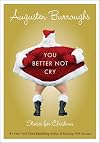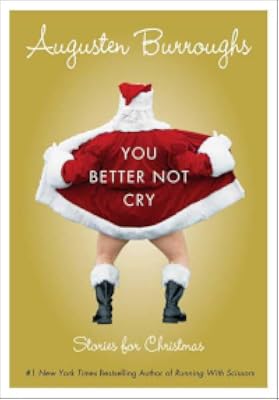
You Better Not Cry: Stories for Christmas
by Augusten Burroughs
On This Page
Description
You've eaten too much candy at Christmas... but have you ever eaten the face off a six-foot stuffed Santa? You've seen gingerbread houses... but have you ever made your own gingerbread tenement? You've woken up with a hangover... but have you ever woken up next to Kris Kringle himself? Augusten Burroughs has, and in this caustically funny, nostalgic, poignant, and moving collection, he recounts Christmases past and present -- as only he could...Tags
Recommendations

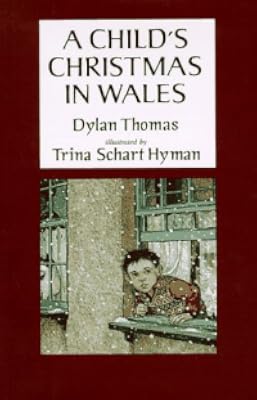
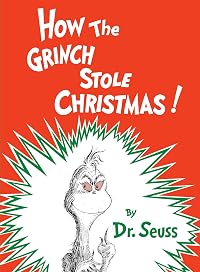
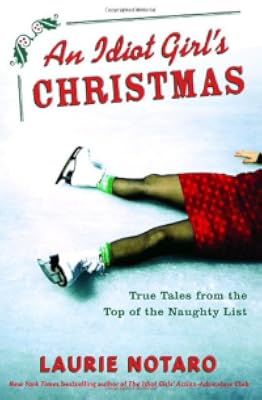
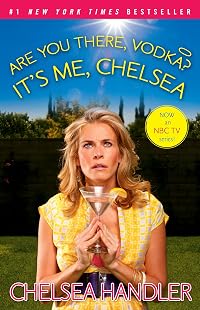
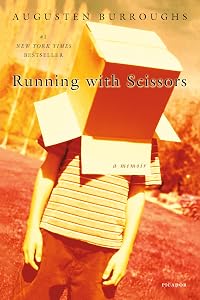
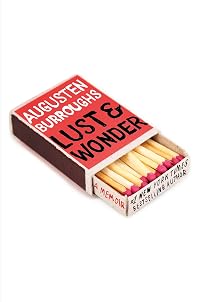
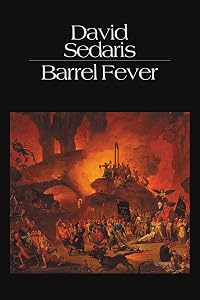
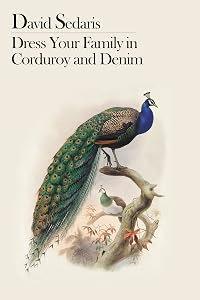


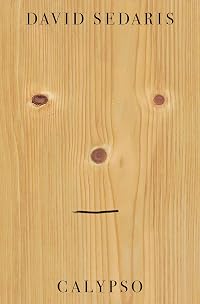



Member Recommendations
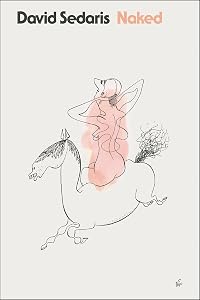
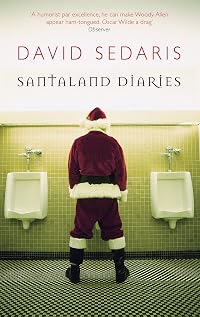
BookshelfMonstrosity Holidays On Ice and You Better Not Cry are hilarious story collections with a holiday overtone. They satirize customs, traditions, and the interpersonal drama that is inherent in holiday gatherings.
21
Member Reviews
You Better Not Cry by Augusten Burroughs is a collection of Christmas essays that range from exceedingly funny to mind-blowingly sad. I was practically in tears after reading the second to last essay entitled “The Best and Only Everything”, and then the last story, for me the gem of the collection, “Silent Night” ended the book on a perfect note. This was not the book I thought it was going to be, but a much more meaningful and deeper reading experience.
The stories run the gamut from abrasively funny, to cynically sentimental, yet instead of an anti-Christmas book, I felt quite warm and fuzzy after I turned the last page. These are certainly not your typical Christmas stories as You Better Not Cry is full of disasters and bad show more decisions and I think there will be some people put off by his darkness, yet his writing is beautifully descriptive and whether he is writing about his confusion over Santa Claus or his own sexuality, this book comes across as both witty and honest. show less
The stories run the gamut from abrasively funny, to cynically sentimental, yet instead of an anti-Christmas book, I felt quite warm and fuzzy after I turned the last page. These are certainly not your typical Christmas stories as You Better Not Cry is full of disasters and bad show more decisions and I think there will be some people put off by his darkness, yet his writing is beautifully descriptive and whether he is writing about his confusion over Santa Claus or his own sexuality, this book comes across as both witty and honest. show less
Plot Synopsis
In this short collection of stories, Burroughs relates his experiences at seven Christmases. From his disturbing encounter with a plastic Santa to his even more disturbing encounter with a real life Santa, his love-hate relationship with the holiday offers readers a glimpse into a life lived strange.
My Thoughts
The very first story, actually the very first paragraph, drew me in: "It's not that I was an outright nitwit of a child. It's that the things even a nitwit could do with little or no instruction often confused me. Simple, everyday sorts of things tripped me up." The details amuse as Burroughs relates his inability to stack folding chairs and understand the Pledge of Allegiance. And this is just the set up for the real show more revelation: Burroughs thought Jesus and Santa were the same person, and let me tell you, the line of reasoning he presents had me 100% understanding why he thought so. The next story is also set during Burroughs' childhood and continues the laughs.
Unfortunately I was not as thrilled with the remaining stories. While I appreciated the tricksy turnarounds and hidden obviousnesses (like the new word?) I found myself continually questioning the veracity of the stories. Dialogue seemed too apropos, events - and the reactions to those events - seemed surreal. The moments of time captured in this book belong to the world of fiction. I'm not sure if that is a problem with my own perception of the world or if the problem is with the presentation. Perhaps it has something to do with the age of Burroughs; his childhood stories I have no trouble with, but when the stories revolve around his adult life, I am disbelieving or saddened by the events. Then again, I've read two other Burroughs books and enjoyed both of them, regardless of his age in the story.
It's also possible my non-interest in Christmas colored my experience. I'm a Halloween girl. Christmas doesn't do much for me. Heralding the start of my least favorite season, smack dab in the middle of my work year, preceded by finals week, Christmas is not well positioned to please me. Because of this, I tend to not read holiday stories as a rule.
Final recommendation: Read Burroughs even if you don't read this particular one. I loved Running with Scissors and Possible Side Effects. show less
In this short collection of stories, Burroughs relates his experiences at seven Christmases. From his disturbing encounter with a plastic Santa to his even more disturbing encounter with a real life Santa, his love-hate relationship with the holiday offers readers a glimpse into a life lived strange.
My Thoughts
The very first story, actually the very first paragraph, drew me in: "It's not that I was an outright nitwit of a child. It's that the things even a nitwit could do with little or no instruction often confused me. Simple, everyday sorts of things tripped me up." The details amuse as Burroughs relates his inability to stack folding chairs and understand the Pledge of Allegiance. And this is just the set up for the real show more revelation: Burroughs thought Jesus and Santa were the same person, and let me tell you, the line of reasoning he presents had me 100% understanding why he thought so. The next story is also set during Burroughs' childhood and continues the laughs.
Unfortunately I was not as thrilled with the remaining stories. While I appreciated the tricksy turnarounds and hidden obviousnesses (like the new word?) I found myself continually questioning the veracity of the stories. Dialogue seemed too apropos, events - and the reactions to those events - seemed surreal. The moments of time captured in this book belong to the world of fiction. I'm not sure if that is a problem with my own perception of the world or if the problem is with the presentation. Perhaps it has something to do with the age of Burroughs; his childhood stories I have no trouble with, but when the stories revolve around his adult life, I am disbelieving or saddened by the events. Then again, I've read two other Burroughs books and enjoyed both of them, regardless of his age in the story.
It's also possible my non-interest in Christmas colored my experience. I'm a Halloween girl. Christmas doesn't do much for me. Heralding the start of my least favorite season, smack dab in the middle of my work year, preceded by finals week, Christmas is not well positioned to please me. Because of this, I tend to not read holiday stories as a rule.
Final recommendation: Read Burroughs even if you don't read this particular one. I loved Running with Scissors and Possible Side Effects. show less
A collection of personal essays about memorable Christmases. Some are humorous, such as when a very young Burroughs was gifted a life-sized Santa doll that had a wax face, which he chewed off. Other essays are bleak, featuring disease, death and betrayal. I don't know how much of these stories are true and how much is fiction, as "Why Do You Reward Me Thus?" reads like a made for tv movie, with the author getting blackout drunk for two days, then waking up on Christmas day to find himself among lucid, caring people who happen to be the group of homeless people who camp on the street near his NYC apartment. That one of these people studied opera and sings an aria to him while doling out profound advice about life made me roll my eyes. show more Still, an interesting holiday-themed collection. show less
Interesting to read as a companion to David Sedaris's [b:Holidays on Ice|3300121|Holidays on Ice|David Sedaris|http://photo.goodreads.com/books/1267920282s/3300121.jpg|674383]. Where Sedaris's Christmas tales are absurd but restrained, Burroughs provides the more warped and damaged end of the spectrum (in the last piece, the warpage is literal). Some reviewers don't like Burroughs's sudden transition from weird child to problematic drunk, but I though it captured perfectly the nature of blackouts and traumatic memory suppression. Read Sedaris first, and imagine Amy Sedaris as Jerri Blank creeping around the edges of both.
This book is an account of the horrible and ridiculously horrible Christmases of Augusten Burroughs. All the stories straddle the line between funny and horrific. I liked the writing and I did laugh out loud several times. The stories move chronologically, and I thought the earlier ones were better. The later ones tend to be funny/depressing with some uplifting endings which seemed somewhat conventional.
In the title story, young Augusten confuses Santa and Jesus to the horror of his grandparents. They bring a giant Santa which Augusten loves too much, with unpleasant but funny results. This was my favorite story – it was consistently hilarious and the ending was comic rather than Christmas-lesson-learned. The next story was also show more pretty funny and describes a disaster of a gingerbread house. “Claus and Effect” finds Augusten at his most spoiled, as he demands ridiculous presents culminating with the ubiquitous pony request.
The rest of the stories deal with adult Augusten’s Christmases. Augusten wakes up next to a Santa impersonator with no memory of the previous evening in “Ask Again Later” – a story that is still funny but somewhat squirm-inducing. “Why Do You Reward Me Thus?” starts out with a laugh-out-loud-funny takedown of Christmas songs and continues with more painful comedy as Augusten wakes up from an alcohol-induced blackout to find that he’s celebrating with bums. At first disgusted, he realizes that he likes it. He gets friendly with a classy ex-singer bum and has something of an epiphany. While I do approve of the idea of an operatic aria causing a life-changing moment, the end was the start of too many lesson-learned endings. “The Best and Only Everything” was more of a painful relationship story with a happy ending as the narrator prepares to celebrate the holidays with his boyfriend George, who has recently been diagnosed with HIV. The last story “Silent Night” finds a now-stable Augusten deciding to do Christmas again with his partner Dennis but an accident derails their plans. At the end, everyone comes together to help them – the Christmas miracle in that story.
I haven’t read anything else by Burroughs but someone who’s read all his stuff might think that this is Burroughs-lite. Also, there’s quite a bit of unhappiness in the stories so they could be off-putting rather than funny for some. I enjoyed it though and wouldn’t mind reading more by Burroughs. show less
In the title story, young Augusten confuses Santa and Jesus to the horror of his grandparents. They bring a giant Santa which Augusten loves too much, with unpleasant but funny results. This was my favorite story – it was consistently hilarious and the ending was comic rather than Christmas-lesson-learned. The next story was also show more pretty funny and describes a disaster of a gingerbread house. “Claus and Effect” finds Augusten at his most spoiled, as he demands ridiculous presents culminating with the ubiquitous pony request.
The rest of the stories deal with adult Augusten’s Christmases. Augusten wakes up next to a Santa impersonator with no memory of the previous evening in “Ask Again Later” – a story that is still funny but somewhat squirm-inducing. “Why Do You Reward Me Thus?” starts out with a laugh-out-loud-funny takedown of Christmas songs and continues with more painful comedy as Augusten wakes up from an alcohol-induced blackout to find that he’s celebrating with bums. At first disgusted, he realizes that he likes it. He gets friendly with a classy ex-singer bum and has something of an epiphany. While I do approve of the idea of an operatic aria causing a life-changing moment, the end was the start of too many lesson-learned endings. “The Best and Only Everything” was more of a painful relationship story with a happy ending as the narrator prepares to celebrate the holidays with his boyfriend George, who has recently been diagnosed with HIV. The last story “Silent Night” finds a now-stable Augusten deciding to do Christmas again with his partner Dennis but an accident derails their plans. At the end, everyone comes together to help them – the Christmas miracle in that story.
I haven’t read anything else by Burroughs but someone who’s read all his stuff might think that this is Burroughs-lite. Also, there’s quite a bit of unhappiness in the stories so they could be off-putting rather than funny for some. I enjoyed it though and wouldn’t mind reading more by Burroughs. show less
This is my favorite Augusten Burroughs book yet! I was a little skeptical at first. The book starts with some of his darkest stories from his childhood and early days as an alcoholic. They are fascinating in the way a train wreck is, you just can't bring yourself to look away. Slowly, as you work your way through the book, the stories begin to change as Augusten's idea of Christmas evolves. There is the Christmas a group of homeless people take him in, look after him, and teach him to accept help from others. The book ends with two truly heartwarming stories about taking care of an HIV positive boyfriend and dealing with a flood. Make no mistake, the hilarious, sarcastic humor is still there, but added is a real love for himself and the show more people around him. There was more depth of feeling and true emotion in some of these stories than I've ever seen in Augusten's other books. You Better Not Cry is the perfect holiday collection - you will definitely laugh, you might even shed a tear or two, and you'll end feeling strangely better about Christmas and what it means. show less
I really fell for Augusten’s writing with A Wolf at the Table. Maybe because I have an absent father. My mom divorced my father when I was about eight. Several years later my dad basically disappeared into the verdant scum that is Florida. He turned up several years ago but pretty much blew it.
I’m not a fan of holidays and particularly do not like Christmas. So when someone writes stories about the holiday I’m not really thrilled about it but willing to read them if I like the author. YOU BETTER NOT CRY focuses on Christmas-related stories. So for me, they are hit and miss. There are seven stories in the slim green bound book and I particularly liked three. There’s the absurdity of a young Augusten making a brick-hard show more gingerbread house from scratch and sans recipe in “And Two Eyes Made Out of Coal.”
In “Ask Again Later,” Augusten wakes up in a hotel bed next to a much older French guy dressed as Santa. Did they or didn’t they?, Augusten wonders and immediately rushes to his doctor for every test conceivable. He is then haunted by Santas throughout the streets of New York and of course thinks of this kinda creepy Frenchman.
Augusten spends Christmas with his HIV-positive partner in the poignant, wistful and bittersweet “The Best and Only Everything.” Augusten is forthright with details about the initial rush of love and the banality of a relationship. Wanting what you don’t have and then not wanting what you have. We’ve all been there.
I like the darkness in Augusten’s writing. The honesty. The bizarre. The raw. The surprises. He is willing to share intimate moments and thoughts. Of course, that makes or breaks a good memoirist. YOU BETTER NOT CRY might not be the best work by Augusten Burroughs but it will bring a smirk to your face or tear to your eye and that’s what the holidays are all about. show less
I’m not a fan of holidays and particularly do not like Christmas. So when someone writes stories about the holiday I’m not really thrilled about it but willing to read them if I like the author. YOU BETTER NOT CRY focuses on Christmas-related stories. So for me, they are hit and miss. There are seven stories in the slim green bound book and I particularly liked three. There’s the absurdity of a young Augusten making a brick-hard show more gingerbread house from scratch and sans recipe in “And Two Eyes Made Out of Coal.”
In “Ask Again Later,” Augusten wakes up in a hotel bed next to a much older French guy dressed as Santa. Did they or didn’t they?, Augusten wonders and immediately rushes to his doctor for every test conceivable. He is then haunted by Santas throughout the streets of New York and of course thinks of this kinda creepy Frenchman.
Augusten spends Christmas with his HIV-positive partner in the poignant, wistful and bittersweet “The Best and Only Everything.” Augusten is forthright with details about the initial rush of love and the banality of a relationship. Wanting what you don’t have and then not wanting what you have. We’ve all been there.
I like the darkness in Augusten’s writing. The honesty. The bizarre. The raw. The surprises. He is willing to share intimate moments and thoughts. Of course, that makes or breaks a good memoirist. YOU BETTER NOT CRY might not be the best work by Augusten Burroughs but it will bring a smirk to your face or tear to your eye and that’s what the holidays are all about. show less
Members
- Recently Added By
Lists

Christmas Books
370 works; 40 members
Author Information

Awards and Honors
Awards
Distinctions
Notable Lists
Common Knowledge
- Original publication date
- 2009-11
Classifications
Statistics
- Members
- 779
- Popularity
- 35,948
- Reviews
- 28
- Rating
- (3.42)
- Languages
- English
- Media
- Paper, Audiobook, Ebook
- ISBNs
- 16
- ASINs
- 9