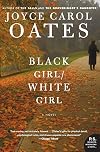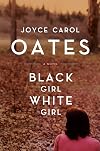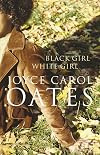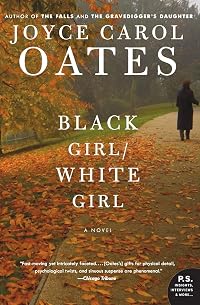
Black Girl/White Girl
by Joyce Carol Oates
On This Page
Description
Remembering Minette Swift, the talented, assertive, 19-year-old African-American girl enrolled as a scholarship student in an exclusive, mostly white liberal arts college near Philadelphia who died under mysterious circumstances fifteen years earlier, Genna, her former roommate, begins an unofficial inquiry into her death. As she reconstructs their tumultuous freshman year at the college in race-torn 1960s Philadelphia, Genna is led also to reconstruct her life as the daughter of a famous show more "radical-hippie-lawyer" of the 1960s. show lessTags
Recommendations














Member Reviews
This book should actually be titled "White Girl and Her Daddy Issues (oh and There's a Black Girl Who's Mostly Irrelevant To The Story)"; and that is the crux of my issues with this book. The title, the blurb, the media accolades all suggest that this book is about the contrast in lives of the white girl and the black girl in 1970s America. I expected an intelligent discourse on race, and I think the author really missed an opportunity here to write about post-Civil Rights America.
In actuality this book is about the white girl's relationship with her radical lawyer father(the white character even confesses this at the end of the book) . The black girl is merely a tool to explore this relationship rather than an active participant in show more the story, which is the book's greatest flaw. The main black character has no active voice (the book is entirely from the POV of the white girl), and is even unwilling to speak to the main white character. The black girl barely has a full sentence to say in the entire book, and her speech is reduced to a bunch of "scuse mes"!
Regardless of the race of the characters, one simply cannot write a book that claims to explore the relationship between two people if one of them is built in such a way that she barely acknowledges the existence of the other! show less
In actuality this book is about the white girl's relationship with her radical lawyer father
Regardless of the race of the characters, one simply cannot write a book that claims to explore the relationship between two people if one of them is built in such a way that she barely acknowledges the existence of the other! show less
Genna Meade is the well-meaning daughter of well-to-do, radical hippie parents. Her college roommate Minette, the daughter of an African American minister, is reserved, prickly, eccentric and unpopular. Genna is almost desperate to win Minette's friendship, but a series of racist incidents in their dorm complicates their relationship and sets the stage for a tragedy.
As always, Oates presents finely drawn characters and an engrossing story. My only criticism is that Genna seems too naive, politically and socially, considering her home environment. The college, too, seemed quaint and genteel, and I doubt even a Main Line women's college was genteel in the 1970s.
As always, Oates presents finely drawn characters and an engrossing story. My only criticism is that Genna seems too naive, politically and socially, considering her home environment. The college, too, seemed quaint and genteel, and I doubt even a Main Line women's college was genteel in the 1970s.
Black Girl / White Girl
Black Girl / White Girl is the story of two 1974 Schuyler College freshmen roommates who could not have possibly been more wrong for each other. Gemma Meade, on the one hand, is a descendant of the college founder and has been raised by ultra-liberal parents to feel somewhat guilty about the privileged circumstances of the Meade family. She feels compelled to prove that she does not consider herself to be better than her black roommate. Minette Swift, on the other hand, is a black teenager who has been raised by her ultra-conservative preacher father to be suspicious of the motives and objectives of whites who go out of their way to befriend her. She sees Gemma's offer of friendship as more condescending than show more genuine.
Both girls arrive at Schuyler College somewhat flawed by the families in which they were raised. Gemma's father, an attorney who not only defended Civil Rights activists and terrorists of the day but hid them when they were on the run and helped to fund their illegal activities, was away from home as much as he was there. Her mother, an alcoholic ex-hippie herself, was more a burden to Gemma than she was a parent. Minette's father, a "prominent" Washington D.C. preacher, raised her to disdain those who did not share her strong Christian beliefs and to find racist tendencies in others where they did not always exist. He was a proud and articulate man who spoke his mind at all times, quick to see "racism" in the words of others.
Reading Black Girl / White Girl is a bit like simultaneously watching two train wrecks. Predictably, Minette Swift becomes the victim of racist taunts despite the fact that she is not the only minority student living in her dormitory. She is so unlikable, in fact, that another black student is suspected of being involved in the incidents that occur. Gemma's efforts to shield Minette from the taunting ultimately backfire and cause as much harm as good for both girls. At the same time, Gemma's father is being pursued by the FBI who suspect him of being more than a defense attorney and who suspect that Gemma knows the details.
Joyce Carol Oates has created two memorable characters, unlikable as they may be, who reflect the times in which they lived. The 1970s were filled with guilt ridden whites who were very likely seen by blacks as naive and condescending when it came to the racial issues of the day. The two groups were a product of the '60s era that produced both peace loving,doper hippies and militant blacks and they found themselves working together in the '70s, not always comfortably, in the still relatively young Civil Rights movement. In the world of Joyce Carol Oates, good intentions and innocence can be a dangerous combination and Black Girl / White Girl is no exception to the rule
Rated at 3.5 show less
Black Girl / White Girl is the story of two 1974 Schuyler College freshmen roommates who could not have possibly been more wrong for each other. Gemma Meade, on the one hand, is a descendant of the college founder and has been raised by ultra-liberal parents to feel somewhat guilty about the privileged circumstances of the Meade family. She feels compelled to prove that she does not consider herself to be better than her black roommate. Minette Swift, on the other hand, is a black teenager who has been raised by her ultra-conservative preacher father to be suspicious of the motives and objectives of whites who go out of their way to befriend her. She sees Gemma's offer of friendship as more condescending than show more genuine.
Both girls arrive at Schuyler College somewhat flawed by the families in which they were raised. Gemma's father, an attorney who not only defended Civil Rights activists and terrorists of the day but hid them when they were on the run and helped to fund their illegal activities, was away from home as much as he was there. Her mother, an alcoholic ex-hippie herself, was more a burden to Gemma than she was a parent. Minette's father, a "prominent" Washington D.C. preacher, raised her to disdain those who did not share her strong Christian beliefs and to find racist tendencies in others where they did not always exist. He was a proud and articulate man who spoke his mind at all times, quick to see "racism" in the words of others.
Reading Black Girl / White Girl is a bit like simultaneously watching two train wrecks. Predictably, Minette Swift becomes the victim of racist taunts despite the fact that she is not the only minority student living in her dormitory. She is so unlikable, in fact, that another black student is suspected of being involved in the incidents that occur. Gemma's efforts to shield Minette from the taunting ultimately backfire and cause as much harm as good for both girls. At the same time, Gemma's father is being pursued by the FBI who suspect him of being more than a defense attorney and who suspect that Gemma knows the details.
Joyce Carol Oates has created two memorable characters, unlikable as they may be, who reflect the times in which they lived. The 1970s were filled with guilt ridden whites who were very likely seen by blacks as naive and condescending when it came to the racial issues of the day. The two groups were a product of the '60s era that produced both peace loving,doper hippies and militant blacks and they found themselves working together in the '70s, not always comfortably, in the still relatively young Civil Rights movement. In the world of Joyce Carol Oates, good intentions and innocence can be a dangerous combination and Black Girl / White Girl is no exception to the rule
Rated at 3.5 show less
An absolutely engaging look into the relationship between two young girls away from home for the first time.
Genna is almost painfully earnest in her attempts to befriend her Black roommate. The daughter of a notorious civil rights activist, she specifically requested to be in an "interracial" living situation and frequently daydreamed about the amazing friendship she would develop with her soon-to-be Black roommate.
Minette, however, is quite different than the woman Genna imagined. Unlike the "other" Black girls attending this all-women college in the 1970s, Minette is completely indifferent to her roommate and to her classmates. She is distinctly drawn by Oates -- a well-known mysterious figure on campus, who is always recognized, but show more still always apart.
As Minette unravels throughout the school year, Gemma continues to do whatever she can to please Minette, help Minette -- but it is pretty clear, despite (and perhaps because of) her liberal upbringing, that Genna has no idea who Minette is or what she needs. Oates does a fantastic job of leaving us uneasy with ourselves... it takes a lot of work to fully sympathize with Minette, no matter how much we may want to. You have to imagine Genna, despite her eagerness to love and understand, feels the same way.
A pageturner. One of my favorite Oates works. show less
Genna is almost painfully earnest in her attempts to befriend her Black roommate. The daughter of a notorious civil rights activist, she specifically requested to be in an "interracial" living situation and frequently daydreamed about the amazing friendship she would develop with her soon-to-be Black roommate.
Minette, however, is quite different than the woman Genna imagined. Unlike the "other" Black girls attending this all-women college in the 1970s, Minette is completely indifferent to her roommate and to her classmates. She is distinctly drawn by Oates -- a well-known mysterious figure on campus, who is always recognized, but show more still always apart.
As Minette unravels throughout the school year, Gemma continues to do whatever she can to please Minette, help Minette -- but it is pretty clear, despite (and perhaps because of) her liberal upbringing, that Genna has no idea who Minette is or what she needs. Oates does a fantastic job of leaving us uneasy with ourselves... it takes a lot of work to fully sympathize with Minette, no matter how much we may want to. You have to imagine Genna, despite her eagerness to love and understand, feels the same way.
A pageturner. One of my favorite Oates works. show less
O.K., I've thought about Black Girl/White Girl for a few days now. On the down side, I did not like anybody in this book. Genna was so spineless, her father was detestable, likewise her mother and Minette - aaargh! Minette was one of those people who, even though I knew that the things done to her were reprehensible, I could not help thinking that she brought on some of it herself. I'm not talking about the harassment, but she was just so unlikeable, self-involved and superior and she seemed to revel in her annoying qualities that it was easy to see why no one liked her and nobody outside of Genna, wanted to be her friend. I just wanted her to go away. And Genna was even worse. After a while I wanted to slap her. Get over it. Minette is show more not likeable and you do not have to spend so much time trying to like her or making excuses for her. Sure, having to fraternize with unpleasant people can't be helped some of the time, but beyond trying to make the best of it, time spent trying to convince yourself that you have to make a friend out of someone, when they've done nothing to merit the effort, is time wasted. On the other hand, in Genna's defense, she was raised with a giant helping of liberal left/guilt thinking, forcefed to her by her parents (her father especially), so she was, to some degree, unable to keep herself from acting as she did. It's hard to know yourself - to know what you think and feel - when raised by such people. And I'm not talking about liberal 60's parents only. I was raised by a 60's conservative parent of the same stripe, personality-wise, and it was some time before I was able to think for myself.
So - although I did not like the people, the time-period or much of the story, I still think this was a good book, if for no other reason than that I have continued to think about it since I finished it. For that I give it three and a half stars. I don't think that I will be reading Oates again for a while just yet. Maybe when I feel myself getting too happy I might try her again just to keep everything in balance. But for now - not so much. show less
So - although I did not like the people, the time-period or much of the story, I still think this was a good book, if for no other reason than that I have continued to think about it since I finished it. For that I give it three and a half stars. I don't think that I will be reading Oates again for a while just yet. Maybe when I feel myself getting too happy I might try her again just to keep everything in balance. But for now - not so much. show less
Genna and Minette are roommates during their first year in a prestigious colloge. Genna is white, the daughter of ex-hippie, idealistic parents, and Minette is black, the daughter of a preacher, able to attend the college thanks to a merit scholarship.
Genna believes strongly in the equalitarian principles her parents taught her, and she is determined to become Minette's friend and to do anything she can so that her roommate feels comfortable in this predominantly white college. Her determination only grows when Minette starts reporting anonymous harrassment (thefts, degradation of her belongings, ...). We feel all the more oppressed because we know right from the beginning of the book that Minette will die during this first year.
Genna show more is moving because of her goodwill, but also because she frequently blunders in her attempts to get close to Minette, and she sometimes seems to not want to see that these attempts are not welcome... While telling of her struggle to become Minette's friend, she also tells about herself, and little by little we realise that she may not have the nice childhood that you could expect given her parents' occupations and political ideas.
There were several occasions where I was annoyed by the style (Oh how many sentences without a verb and ending with an exclamation mark!) but my irritation quickly subsided when I got immersed in the book.
This is a touching, complex book, in which few things are what they first seem to be. show less
Genna believes strongly in the equalitarian principles her parents taught her, and she is determined to become Minette's friend and to do anything she can so that her roommate feels comfortable in this predominantly white college. Her determination only grows when Minette starts reporting anonymous harrassment (thefts, degradation of her belongings, ...). We feel all the more oppressed because we know right from the beginning of the book that Minette will die during this first year.
Genna show more is moving because of her goodwill, but also because she frequently blunders in her attempts to get close to Minette, and she sometimes seems to not want to see that these attempts are not welcome... While telling of her struggle to become Minette's friend, she also tells about herself, and little by little we realise that she may not have the nice childhood that you could expect given her parents' occupations and political ideas.
There were several occasions where I was annoyed by the style (Oh how many sentences without a verb and ending with an exclamation mark!) but my irritation quickly subsided when I got immersed in the book.
This is a touching, complex book, in which few things are what they first seem to be. show less
Blir förvånad över att många har gett denna bok så svag betyg, då jag älskar svart flicka vit flicka. Även om handlingen inte är händelserik så är personbeskrivningar fantastiska. Joyce Carol Oates målar upp allt och det känns som man är en del av college som flickorna går på
Members
- Recently Added By
Lists

Scolaire
11 works; 1 member

Swinging Seventies
255 works; 18 members
Author Information

481+ Works 62,294 Members
Joyce Carol Oates was born on June 16, 1938 in Lockport, New York. She received a bachelor's degree in English from Syracuse University and a master's degree in English from the University of Wisconsin. She is the author of numerous novels and collections of short stories. Her works include We Were the Mulvaneys, Blonde, Bellefleur, You Must show more Remember This, Because It Is Bitter, Because It Is My Heart, Solstice, Marya : A Life, and Give Me Your Heart. She has received numerous awards including the National Book Award for Them, the PEN/Malamud Award for Excellence in Short Fiction, and the F. Scott Fitzgerald Award for Lifetime Achievement in American Literature. She was a finalist for the 2015 Pulitzer Prize for Fiction with her title Lovely, Dark, Deep. She also wrote a series of suspense novels under the pseudonym Rosamond Smith. In 2015, her novel The Accursed became listed as a bestseller on the iBooks chart. She worked as a professor of English at the University of Windsor, before becoming the Roger S. Berlind Distinguished Professor of Humanities at Princeton University. She and her late husband Raymond J. Smith operated a small press and published a literary magazine, The Ontario Review. (Bowker Author Biography) Joyce Carol Oates is one of the most eminent and prolific literary figures and social critics of our times. She has won the National Book Award and several O. Henry and Pushcart prizes. Among her other awards are an NEA grant, a Guggenheim fellowship, the PEN/Malamud Lifetime Achievement Award, and the F. Scott Fitzgerald Award for Lifetime Achievement in American Literature. (Publisher Provided) show less
Some Editions
Common Knowledge
- Canonical title
- Black Girl/White Girl
- Original title
- Black Girl / White Girl
- Original publication date
- 2006
- People/Characters
- Genna Hewett-Meade; Minette Swift; Veronica Meade; Max Meade; Jewel Swift; Rev. Virgil Swift (show all 10); Mrs. Swift; Dana Johnson; Crystal Odom; Richard Meade
- Important places
- Schuyler College; Chadds Ford, Pennsylvania, USA; Follette Prison
- Dedication
- in memoriam, "Minette"
- First words
- I have decided to begin a text without a title.
- Last words
- (Click to show. Warning: May contain spoilers.)I lift my hand to signal to him, half-rise to greet him, my poor doomed father the former Maximilian Meade in rumpled green prison uniform who has no one else in his shrunken world but me as, I suppose, if I am to be truthful, I have no one but him.
Classifications
Statistics
- Members
- 757
- Popularity
- 37,074
- Reviews
- 25
- Rating
- (3.42)
- Languages
- 8 — English, French, Greek, Italian, Norwegian (Bokmål), Norwegian, Portuguese, Swedish
- Media
- Paper, Audiobook, Ebook
- ISBNs
- 25
- ASINs
- 5