The Sad Tale of the Brothers Grossbart
by Jesse Bullington
On This Page
Description
Hegel and Manfried Grossbart may not consider themselves bad men - but death still stalks them through the dark woods of medieval Europe. The year is 1364, and the brothers Grossbart have embarked on a naïve quest for fortune. Descended from a long line of graverobbers, they are determined to follow their family's footsteps to the fabled crypts of Gyptland. To get there, they will have to brave dangerous and unknown lands and keep company with all manner of desperate travelers-merchants, show more priests, and scoundrels alike. For theirs is a world both familiar and distant; a world of living saints and livelier demons, of monsters and madmen. The Brothers Grossbart are about to discover that all legends have their truths, and worse fates than death await those who would take the red road of villainy. show lessTags
Recommendations













Member Recommendations
Member Reviews
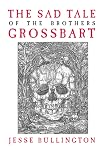
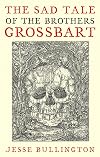
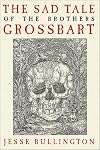
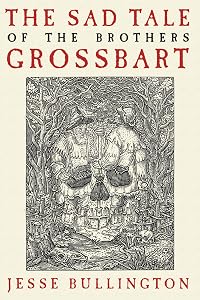
Let me just state that the reason I picked up this book was because of the amazing cover art--job well done.
On to the story--never have I been so shocked, horrified, disgusted, weirded out, or engrossed by a book before. Jesse Bullington is truly an amazing writer, especially where descriptions are involved. I've never pictured a story--granted, a quite disturbing one--so vividly before.
The Sad Tale follows two brothers, Hegel and Manfried Grossbart on their journey to 'Gyptland' to find gold and riches. Along the way they encounter all sorts of mythical creatures, make many enemies, and a few friends. I enjoyed the brother's twisted sense of morals and religion, even as I hated them. I didn't want them to succeed, yet at every hardship show more they encountered, I hope they progressed through to the next. They are definitely characters you love to hate. This was a very creative and epic tale, and though I hope I never have to read some of the scenes he described ever again, I really loved this book! The only reason I didn't give it 5 stars was because I really was incredibly grossed out during quite a few scenes in this book.
(There is a warning on the back of the book that says "Contains strong language and scenes of graphic violence." Let me just say, that statement didn't prepare me for some of the other strange, graphic things that were written.) show less
On to the story--never have I been so shocked, horrified, disgusted, weirded out, or engrossed by a book before. Jesse Bullington is truly an amazing writer, especially where descriptions are involved. I've never pictured a story--granted, a quite disturbing one--so vividly before.
The Sad Tale follows two brothers, Hegel and Manfried Grossbart on their journey to 'Gyptland' to find gold and riches. Along the way they encounter all sorts of mythical creatures, make many enemies, and a few friends. I enjoyed the brother's twisted sense of morals and religion, even as I hated them. I didn't want them to succeed, yet at every hardship show more they encountered, I hope they progressed through to the next. They are definitely characters you love to hate. This was a very creative and epic tale, and though I hope I never have to read some of the scenes he described ever again, I really loved this book! The only reason I didn't give it 5 stars was because I really was incredibly grossed out during quite a few scenes in this book.
(There is a warning on the back of the book that says "Contains strong language and scenes of graphic violence." Let me just say, that statement didn't prepare me for some of the other strange, graphic things that were written.) show less
For the dark, cold, unceasingly wet and utterly miserable winter that’s in it, here’s a little something that’ll brighten up your day, albeit by reassuring you that if you think YOU’VE got it bad, better think again. Hegel and Manfried, the brothers of the title are a despicable pair of medieval European rednecks, narcissistically convinced of their own righteousness, who make their dubious living by robbing graves. After taking revenge on an old neighbour by murdering his family and burning his house, the brothers flee south, headed or the fabulous tombs and riches of Egypt with a lynch mob baying at their heels. Doggedly determined, cunningly violent and utterly ruthless, they carve their way across the heart of Europe show more encountering monsters, witches, priests, innocents, charlatans, plague and soul crushing poverty, all the while expounding their own idiosyncratic views on life and religion.
There is a great deal of nastiness in this book, as well as horrorness and disgustingness, but that doesn’t stop it from being wildly entertaining and blackly, bleakly hilarious. It’s also an effective portrait of life in 1346, grimy, grim and ugly, full of religious awe and superstition and likely to be cut short with little notice by violence, pestilence, starvation or pure random bad luck. Bad and all as the Brothers Grossbart are, there are things lurking in the mountains and valleys and forests that make them look cuddly by comparison. Well, not really,
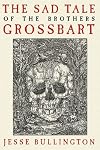
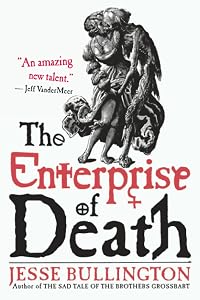
This is one for those with a strong stomach and a wicked humour, but it is well written and hugely enjoyable, and boasts one of the best covers for years; a clever, insanely detailed optical illusion-woodcut by Istvan Oros, and while you shouldn’t judge a book by its cover, this amazing image was what caught my eye initially. What I ended up with was a gleeful sort of mash up of Umberto Eco and Cormac McCarthy as written by Stephen King. So delve, if you dare, into the blasphemous, bloody, foul-mouthed world of the Brothers Grossbart. And their beards. show less
There is a great deal of nastiness in this book, as well as horrorness and disgustingness, but that doesn’t stop it from being wildly entertaining and blackly, bleakly hilarious. It’s also an effective portrait of life in 1346, grimy, grim and ugly, full of religious awe and superstition and likely to be cut short with little notice by violence, pestilence, starvation or pure random bad luck. Bad and all as the Brothers Grossbart are, there are things lurking in the mountains and valleys and forests that make them look cuddly by comparison. Well, not really,
This is one for those with a strong stomach and a wicked humour, but it is well written and hugely enjoyable, and boasts one of the best covers for years; a clever, insanely detailed optical illusion-woodcut by Istvan Oros, and while you shouldn’t judge a book by its cover, this amazing image was what caught my eye initially. What I ended up with was a gleeful sort of mash up of Umberto Eco and Cormac McCarthy as written by Stephen King. So delve, if you dare, into the blasphemous, bloody, foul-mouthed world of the Brothers Grossbart. And their beards. show less
It occurred to me while reading The Sad Tale of the Brothers Grossbart that Jesse Bulllington’s debut novel was very much a love-it-or-hate-it thing, and that it was likely to inspire strong reactions either way but would hardly leave anyone indifferent. A brief glance at various online reviews after having finished the book confirmed it – quite a few people (in fact, the majority) loved it, but there was also an uncommonly large number who hated it (and occasionally quite vociferously so), with just a few strays that were lukewarm about it.
While I am quite firmly in the former camp, I can see where people in the latter are coming from, and even understand them to some degree – Bullington obviously has set out to write a novel in show more the worst taste possible and to offend pretty much every sensibility there is, and he succeeds quite well in that undertaking. His protagonists must be the most unlikeable ones to ever stain the pages of a novel – Manfried and Hegel (! – I really wonder what made Bullington chose that particular name – some bad experience in philosophy lessons at college? or maybe he’s a disciple of Schopenhauer – his world view certainly seems grim enough for that) Grossbart are graverobbers by profession, killers by inclination, and they do not have a single redeeming feature – they commit heinous atrocity upon heinous atrocity with no regard whatsoever for their fellow beings, and really the only thing that might even be vaguely in their favour is that they have people pursuing them who are even more ruthlessly violent than they are (but then, the Grossbarts in a way created those people by their own crimes, so in the final analysis they are responsible for them, too).
And Jesse Bullington does not pull his punches either – he does not gloss over the violence or let the horror fade to black, his descriptions of the countless atrocities committed in the course of the novel are stark and graphic. They are not, however, torture porn – the novel does not wallow in the violence, it always keeps a detached, distanced perspective on things. Which works not always in its favour, as it often comes across as a rather cold affair that shuts the reader out – but I for one can not see how that could have been avoided. Certainly not by having the reader sympathize with any of the characters, because there is nobody here one would want to sympathize with.
Not everything in The Sad Tale of the Brothers Grossbart is grossness and crudity, though – it is quite often very funny, namely in those moments where the brothers who, utterly amoral redneck hicks that they may be, have a philosophical bend to their minds and are fond of discussing all kinds of obscure and abstruse subjects (and I suppose from this point, it makes perfect sense that one of them is called Hegel), like the question of what parts of a mermaid are edible before one descends from fish dinner into cannibalism. Apart from being very comical, those debates also give the author an excellent chance to show off his erudition, which is considerable (or else very well faked), all of which makes The Sad Tale of the Brothers Grossbart come across as the punk version of an Umberto Eco novel.
The Sad Tale of the Brothers Grossbart is a veritable witch’s brew of genres – picaresque novel and Italo Western, historical novel and horror, and I suspect that somewhere deep inside of this tale is an Epic Fantasy tale that is crying (or possibly whimpering) to be let out. It is emphatically not for everyone, but those who do not easily take offense and have a taste for the weird and unusual should find this novel highly enjoyable. show less
While I am quite firmly in the former camp, I can see where people in the latter are coming from, and even understand them to some degree – Bullington obviously has set out to write a novel in show more the worst taste possible and to offend pretty much every sensibility there is, and he succeeds quite well in that undertaking. His protagonists must be the most unlikeable ones to ever stain the pages of a novel – Manfried and Hegel (! – I really wonder what made Bullington chose that particular name – some bad experience in philosophy lessons at college? or maybe he’s a disciple of Schopenhauer – his world view certainly seems grim enough for that) Grossbart are graverobbers by profession, killers by inclination, and they do not have a single redeeming feature – they commit heinous atrocity upon heinous atrocity with no regard whatsoever for their fellow beings, and really the only thing that might even be vaguely in their favour is that they have people pursuing them who are even more ruthlessly violent than they are (but then, the Grossbarts in a way created those people by their own crimes, so in the final analysis they are responsible for them, too).
And Jesse Bullington does not pull his punches either – he does not gloss over the violence or let the horror fade to black, his descriptions of the countless atrocities committed in the course of the novel are stark and graphic. They are not, however, torture porn – the novel does not wallow in the violence, it always keeps a detached, distanced perspective on things. Which works not always in its favour, as it often comes across as a rather cold affair that shuts the reader out – but I for one can not see how that could have been avoided. Certainly not by having the reader sympathize with any of the characters, because there is nobody here one would want to sympathize with.
Not everything in The Sad Tale of the Brothers Grossbart is grossness and crudity, though – it is quite often very funny, namely in those moments where the brothers who, utterly amoral redneck hicks that they may be, have a philosophical bend to their minds and are fond of discussing all kinds of obscure and abstruse subjects (and I suppose from this point, it makes perfect sense that one of them is called Hegel), like the question of what parts of a mermaid are edible before one descends from fish dinner into cannibalism. Apart from being very comical, those debates also give the author an excellent chance to show off his erudition, which is considerable (or else very well faked), all of which makes The Sad Tale of the Brothers Grossbart come across as the punk version of an Umberto Eco novel.
The Sad Tale of the Brothers Grossbart is a veritable witch’s brew of genres – picaresque novel and Italo Western, historical novel and horror, and I suspect that somewhere deep inside of this tale is an Epic Fantasy tale that is crying (or possibly whimpering) to be let out. It is emphatically not for everyone, but those who do not easily take offense and have a taste for the weird and unusual should find this novel highly enjoyable. show less
In all my recent page turning I don’t think I’ve ever experienced a more adventurous, weirdly pensive and violently juicy work of speculative or historical fiction than I have from Jesse Bullington’s The Sad Tale of The Brothers Grossbart. As a chronically slow reader, I’m amazed with rapid rate at which I cannibalized the literature.
Most superficially, this tale is a bloody romp through the carnage that’s burned, crumbled, or spurted in the wake of a pair of medieval entrepreneurs, Hegel and Manfried Grossbart. Just two brothers sensibly trying to stay on task pursuing their utmost grave robbing quest. They’re not to be confused with those silly protagonists we call “heroes”, “honorable men”, or perhaps even show more “likable persons”. Nay, I think Bullington says it best when he aptly heralds his brothers as “bastards at large”. Their tale is as straightforward as gnawing roast mutton, or perhaps even live mutton, from its fleshy, dripping chop.
Bullington’s tale is settled within the fourteenth century, specifically the bubonic plague and it’s equally carnal wreckage across Europe. The Pestilence, vividly depicted through pulsating, pus-filled buboes and projectile vomiting, is fictionalized through the demoniac spirits initiating such attributes; the plague itself is not propped against the Grossbarts as some boring good vs. evil dualism, but possibly a metaphorical pondering for the reader, forced to consider which may be a greater evil, life’s external diseases or those internal ones exhibited in our worst manifestations. It’s a fleeting observation, to be sure, carried behind the entertainingly violent whimsy with which the story progresses, however looming and ultimately reaching its cathartic coda in the sands of Gyptland.
Progress it does though, mainly through unabashed beatings, cleaving, projectile spray of every fluid imaginable, and just about every other way to incur slow maiming. A refreshing touch of equanimity, as no one is spared from perpetual suffering in this spew-fest, not even the protagonists Grossbart. Just as engaging is Bullington’s clever use of dialogue, both between the brothers and outwardly directed. Sparse, rational musings brilliantly balanced between the almost piously pragmatic and the foul-mouthed; incidentally, the use of the curious term “mecky” is sure to cultivate a resurgence, if it truly ever existed prior. The narration is equally leveled between a quick pacing and an academic adherence to the milieu, as evidenced by an extensive bibliography. Similar to Jeff VanderMeer’s careful and documented treatment of his fictitious Ambergris, this trend of quasi-academic application within speculative fiction is something readers need more of, showing that authors actually care about the details and accuracy of their worldview. Finally, treatment of the fantastical is eerily earthy without falling upon ubiquitous or popular description. Possessed pigs, “mantiloups” and witches, especially the story of Nicolette, is tremendously unsettling though unavoidably engaging.
In sum, The Sad Tale of The Brothers Grossbart is literally, in every sense imaginable, a smashing, gross, and fun read. show less
Most superficially, this tale is a bloody romp through the carnage that’s burned, crumbled, or spurted in the wake of a pair of medieval entrepreneurs, Hegel and Manfried Grossbart. Just two brothers sensibly trying to stay on task pursuing their utmost grave robbing quest. They’re not to be confused with those silly protagonists we call “heroes”, “honorable men”, or perhaps even show more “likable persons”. Nay, I think Bullington says it best when he aptly heralds his brothers as “bastards at large”. Their tale is as straightforward as gnawing roast mutton, or perhaps even live mutton, from its fleshy, dripping chop.
Bullington’s tale is settled within the fourteenth century, specifically the bubonic plague and it’s equally carnal wreckage across Europe. The Pestilence, vividly depicted through pulsating, pus-filled buboes and projectile vomiting, is fictionalized through the demoniac spirits initiating such attributes; the plague itself is not propped against the Grossbarts as some boring good vs. evil dualism, but possibly a metaphorical pondering for the reader, forced to consider which may be a greater evil, life’s external diseases or those internal ones exhibited in our worst manifestations. It’s a fleeting observation, to be sure, carried behind the entertainingly violent whimsy with which the story progresses, however looming and ultimately reaching its cathartic coda in the sands of Gyptland.
Progress it does though, mainly through unabashed beatings, cleaving, projectile spray of every fluid imaginable, and just about every other way to incur slow maiming. A refreshing touch of equanimity, as no one is spared from perpetual suffering in this spew-fest, not even the protagonists Grossbart. Just as engaging is Bullington’s clever use of dialogue, both between the brothers and outwardly directed. Sparse, rational musings brilliantly balanced between the almost piously pragmatic and the foul-mouthed; incidentally, the use of the curious term “mecky” is sure to cultivate a resurgence, if it truly ever existed prior. The narration is equally leveled between a quick pacing and an academic adherence to the milieu, as evidenced by an extensive bibliography. Similar to Jeff VanderMeer’s careful and documented treatment of his fictitious Ambergris, this trend of quasi-academic application within speculative fiction is something readers need more of, showing that authors actually care about the details and accuracy of their worldview. Finally, treatment of the fantastical is eerily earthy without falling upon ubiquitous or popular description. Possessed pigs, “mantiloups” and witches, especially the story of Nicolette, is tremendously unsettling though unavoidably engaging.
In sum, The Sad Tale of The Brothers Grossbart is literally, in every sense imaginable, a smashing, gross, and fun read. show less
The Sad Tale of the Brother Grossbart is ostensibly a recent translation of an old medieval tale of the same name. To say that it is macabre and brutally violent only begins to describe it. The story of two ne’er-do-well oafish, murdering and thieving brothers, set in 14th century middle Europe features grave robbery, repeated torture and dismemberment, sorcery, religious superstition, mythological creatures, graphic sex and Bubonic Plague. So, what’s not to like?
Throughout the book and amongst the many adventures the brothers encounter, they are repeatedly able to rationalize their scandalous behavior and view themselves as pious Christians, worshipping the Mother Mary, and destined for salvation. It is amusing that despite cold show more bloodedly murdering a variety of men, women and children, the Grossbart brothers are actually seen in the sympathetic role of largely innocent bystanders, simply doing the best they can to survive almost intolerable conditions.
The premise of the story is potentially fascinating. An introduction to life in the Middle Ages, through the eyes of the colorful and adventurous Grossbart brothers. The execution falls flat, however, with constant introduction of ridiculous and just plain silly creatures and apparitions which literally hijack the story.
The opening chapter, in which the brothers, under the guise of settling an old score, murder the family of a yeoman farmer in a hideous and nauseating fashion turns out to be the high point of the book. After that, a parade of absurd creatures (many half human, some animals with human abilities) quickly caused me to lose interest. As long as the action remains focused on the brothers and the actual conditions faced by Middle Age peasants, the story works. When it devolves into the supernatural, as it too frequently does, it doesn’t. show less
Throughout the book and amongst the many adventures the brothers encounter, they are repeatedly able to rationalize their scandalous behavior and view themselves as pious Christians, worshipping the Mother Mary, and destined for salvation. It is amusing that despite cold show more bloodedly murdering a variety of men, women and children, the Grossbart brothers are actually seen in the sympathetic role of largely innocent bystanders, simply doing the best they can to survive almost intolerable conditions.
The premise of the story is potentially fascinating. An introduction to life in the Middle Ages, through the eyes of the colorful and adventurous Grossbart brothers. The execution falls flat, however, with constant introduction of ridiculous and just plain silly creatures and apparitions which literally hijack the story.
The opening chapter, in which the brothers, under the guise of settling an old score, murder the family of a yeoman farmer in a hideous and nauseating fashion turns out to be the high point of the book. After that, a parade of absurd creatures (many half human, some animals with human abilities) quickly caused me to lose interest. As long as the action remains focused on the brothers and the actual conditions faced by Middle Age peasants, the story works. When it devolves into the supernatural, as it too frequently does, it doesn’t. show less
The Sad Tale of the Brothers Grossbart
Jesse Bullington
Orbit
2009
Trade Paperback
464 pages
ISBN: 0316049344
Its 14th century Medieval Europe and the most despicable human beings to have ever graced the pages of historical fiction are given life and a certain morbid sense of humor by debut author Jesse Bullington. Manfried and Hegel Grossbart are far and away the most evil-incarnate and foul-mouthed creatures to have ever spilled from a pen. Base, sacrilegious, and merciless these men are destined to go down in history as more loathsome than any modern day serial killer, tougher than Vlad the Impaler or a Tarantino character, and in possession of more cons than a flat-broke hustler just before the weekend. And if that alone isn't enough show more incentive to immediately go out and buy this book then how about this? The story overflows with well-written scenes of abject brutality, acts of unimaginable inhumanity, ill-reasoned religious doggerel, heavy-handed gratuitous violence, demonic possession, blood and guts, gore and grey matter, vengeance, retribution, indifference to the suffering of others, and a smattering of the European countryside which would, under normal circumstances, keep one interested in the exploits of the twin Grossbart's throughout an entire novel. But get this… everything I just mentioned occurs in the first few chapters!!
The Sad Tale of the Brothers Grossbart is a quick and enjoyable read, full of wonderfully creative exposition, humorous banter, and dialogue loaded with swearing and cursing, both profane and blasphemous. But it also has a feel for the medieval way of life, how people lived and spoke and worshipped and is unlike any other historical fiction I've ever read. The Grossbart's tale will keep you turning pages and will make you miss a lot of sleep. Not only from reading late into the night to find out where the brothers quest next (and who or what they kill) but frightened by the shadows that the story conjures too.
Plague survivors, pocket philosophers, demon killers, grave robbers, mad monks, demons, witches, and more join the Brothers Grossbart on their quest to “Gyptland” and the fabled graves of kings rumored to be held by their grandfather. But forewarned is forearmed, keep an eye on your purse and a hand on your dagger. Now that I've told you this much here's the kicker... As savage and inhumane as the Grossbart’s are what pursues them is much, much worse. And in the end while we are not told of the Grossbart’s demise we are left with the feeling that they get what’s coming to them. Or so we would like to think.
Truly inspired The Sad Tale of the Brothers Grossbart is just that, a sad and cautionary story of evil, vengeance, cruelty, and gore and, in my opinion, definitely worth every minute of your time. Mr. Bullington? I’d stand in line for more. (And yes, that’s a hint.)
More about this unique writer can be found at his website:
http://jessebullington.com/
An interview with Manfried and Hegel Grossbart (and Jesse Bullington):
http://www.bscreview.com/2009/11/coffee-and-conversation-with-hegel-and-manfried...
4 1/2 stars out of 5
Also, the cover art, a facsimile of a medieval woodcut by Hungarian artist Orosz István, is brilliant.
István’s website is here:
http://www.gallerydiabolus.com/gallery/artist.php?id=utisz&page=133
The Alternative
Southeast Wisconsin show less
Jesse Bullington
Orbit
2009
Trade Paperback
464 pages
ISBN: 0316049344
Its 14th century Medieval Europe and the most despicable human beings to have ever graced the pages of historical fiction are given life and a certain morbid sense of humor by debut author Jesse Bullington. Manfried and Hegel Grossbart are far and away the most evil-incarnate and foul-mouthed creatures to have ever spilled from a pen. Base, sacrilegious, and merciless these men are destined to go down in history as more loathsome than any modern day serial killer, tougher than Vlad the Impaler or a Tarantino character, and in possession of more cons than a flat-broke hustler just before the weekend. And if that alone isn't enough show more incentive to immediately go out and buy this book then how about this? The story overflows with well-written scenes of abject brutality, acts of unimaginable inhumanity, ill-reasoned religious doggerel, heavy-handed gratuitous violence, demonic possession, blood and guts, gore and grey matter, vengeance, retribution, indifference to the suffering of others, and a smattering of the European countryside which would, under normal circumstances, keep one interested in the exploits of the twin Grossbart's throughout an entire novel. But get this… everything I just mentioned occurs in the first few chapters!!
The Sad Tale of the Brothers Grossbart is a quick and enjoyable read, full of wonderfully creative exposition, humorous banter, and dialogue loaded with swearing and cursing, both profane and blasphemous. But it also has a feel for the medieval way of life, how people lived and spoke and worshipped and is unlike any other historical fiction I've ever read. The Grossbart's tale will keep you turning pages and will make you miss a lot of sleep. Not only from reading late into the night to find out where the brothers quest next (and who or what they kill) but frightened by the shadows that the story conjures too.
Plague survivors, pocket philosophers, demon killers, grave robbers, mad monks, demons, witches, and more join the Brothers Grossbart on their quest to “Gyptland” and the fabled graves of kings rumored to be held by their grandfather. But forewarned is forearmed, keep an eye on your purse and a hand on your dagger. Now that I've told you this much here's the kicker... As savage and inhumane as the Grossbart’s are what pursues them is much, much worse. And in the end while we are not told of the Grossbart’s demise we are left with the feeling that they get what’s coming to them. Or so we would like to think.
Truly inspired The Sad Tale of the Brothers Grossbart is just that, a sad and cautionary story of evil, vengeance, cruelty, and gore and, in my opinion, definitely worth every minute of your time. Mr. Bullington? I’d stand in line for more. (And yes, that’s a hint.)
More about this unique writer can be found at his website:
http://jessebullington.com/
An interview with Manfried and Hegel Grossbart (and Jesse Bullington):
http://www.bscreview.com/2009/11/coffee-and-conversation-with-hegel-and-manfried...
4 1/2 stars out of 5
Also, the cover art, a facsimile of a medieval woodcut by Hungarian artist Orosz István, is brilliant.
István’s website is here:
http://www.gallerydiabolus.com/gallery/artist.php?id=utisz&page=133
The Alternative
Southeast Wisconsin show less
Holy crap this was awesome. I DEFINITELY recommend doing it on audio, the narrator is AMAZING!!!
It starts off REALLY brutal and you immediately want the main characters to all die. Then it gets funny. There were some parts that dragged for me, but they were outweighed by the brilliant dialogue and cool monsters. The Grossbarts give a new meaning to the words "Anti-Hero". This is a very unique book and I'm so glad I stumbled upon it.
If you don't mind gross, brutal, writing with lots of cursing and enjoy laughing your ass off, I would definitely give this a try.
It starts off REALLY brutal and you immediately want the main characters to all die. Then it gets funny. There were some parts that dragged for me, but they were outweighed by the brilliant dialogue and cool monsters. The Grossbarts give a new meaning to the words "Anti-Hero". This is a very unique book and I'm so glad I stumbled upon it.
If you don't mind gross, brutal, writing with lots of cursing and enjoy laughing your ass off, I would definitely give this a try.
Members
- Recently Added By
Lists

Historical Fiction Lovers
88 works; 4 members

Authors from the United States
245 works; 3 members
Author Information

18+ Works 1,839 Members
Awards and Honors
Distinctions
Common Knowledge
- Canonical title
- The Sad Tale of the Brothers Grossbart
- Original title
- The Sad Tale of the Brothers Grossbart
- People/Characters
- Hegel Grossbart; Manfried Grossbart
- Important places
- England, UK; Egypt; Germany
- Important events
- plagues (Bubonic Plague)
- Blurbers
- Vandermeer, Jeff
Classifications
Statistics
- Members
- 572
- Popularity
- 51,708
- Reviews
- 27
- Rating
- (3.28)
- Languages
- 5 — English, French, German, Italian, Polish
- Media
- Paper, Ebook
- ISBNs
- 12
- ASINs
- 3