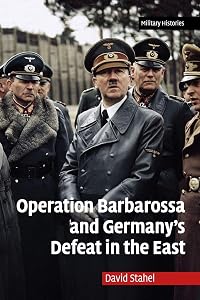
Operation Barbarossa and Germany's Defeat in the East
by David Stahel
Cambridge Military Histories (2009)
On This Page
Description
Operation Barbarossa, the German invasion of the Soviet Union, began the largest and most costly campaign in military history. Its failure was a key turning point of the Second World War. The operation was planned as a Blitzkrieg to win Germany its Lebensraum in the east, and the summer of 1941 is well-known for the German army's unprecedented victories and advances. Yet the German Blitzkrieg depended almost entirely upon the motorised Panzer groups, particularly those of Army Group Centre. show more Using archival records, in this book David Stahel presents a history of Germany's summer campaign from the perspective of the two largest and most powerful Panzer groups on the Eastern front. Stahel's research provides a fundamental reassessment of Germany's war against the Soviet Union, highlighting the prodigious internal problems of the vital Panzer forces and revealing that their demise in the earliest phase of the war undermined the whole German invasion. show lessTags
Recommendations












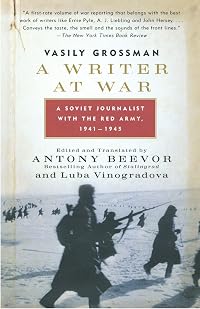
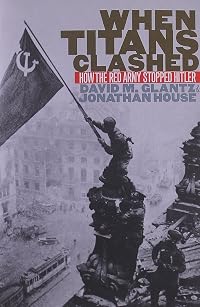

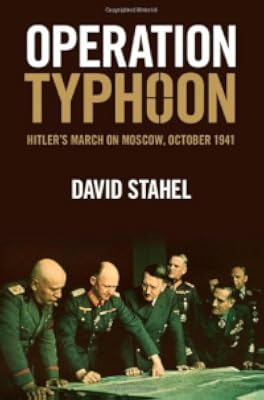



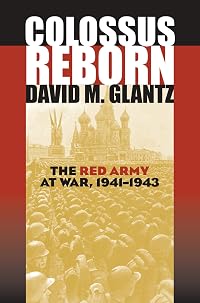



















Member Recommendations

Member Reviews
This study is an indication of how far we have come from the era of the "all hail the Wehrmacht" school of military history and the pretense of a German army that was relatively ethical (at least in regards to the Nazi regime). What Stahel does is factor in all the realities of moral connivance and professional incapacity that we now recognize in the conduct of the German military caste into a wide-ranging strategic and operational study of the first two months of the war with Russia. The bottom line is Stahel holds that with the battle of Smolensk the vision of Operation Barbarossa as a "shock and awe" war that would bring down the Soviet regime had reached its culmination point and that Germany was already out of good strategic show more options to win. Which is not to say that Joseph Stalin couldn't find new and interesting ways to lose the war. Apart from that what sticks with me is the vision of Franz Halder, chief of the German General Staff, as a man who seemed to operate in a dreamland, instead of the land of the possible; there were more centers of unreality in Hitler's Germany than the immediate presence of The Fuehrer. show less
An approachable and authoritative account that successfully pushes back against the portrayal of Barbarossa as largely a success for the Germans. Stahel argues that for a variety of reasons the war could never have been successful because it had unrealistic strategic goals, bad leadership, and most importantly, a flimsy logistical foundation.
Ratings
Members
- Recently Added By
Lists

r/History Recommended Reading List
603 works; 12 members

r/AskHistorians' Recommended Books
1,068 works; 18 members
Author Information

Series

Common Knowledge
- Canonical title
- Operation Barbarossa and Germany's Defeat in the East
- Important places
- USSR
- Important events
- World War II (1939 | 1945); World War II, Eastern Front (1941-06-22 | 1945-05-05); Operation Barbarossa (1941-06-22 | 1941-12-05)
Classifications
Statistics
- Members
- 130
- Popularity
- 251,218
- Reviews
- 2
- Rating
- (4.47)
- Languages
- English, Polish
- Media
- Paper, Audiobook, Ebook
- ISBNs
- 10
- ASINs
- 3