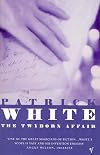
The Twyborn affair
by Patrick White
On This Page
Description
Eddie Twyborn is bisexual and beautiful, the son of a Judge and a drunken mother. With this androgynous hero - Eudoxia/Eddie/Eadith Twyborn - and through his search for identity, for self-affirmation and love in its many forms, Patrick White takes us on a journey into the ambiguous landscapes, sexual, psychological and spiritual, of the human condition.Tags
Recommendations


















Member Reviews
White is dense. Here you a book about a woman, who turns out to 'be' a man, who prefers to live as a woman, who decides to live as a man, who (plot spoiler) dies. By the time you've read the back cover, then, you'll know we're already in Tiresias and Orlando territory. The book is a triptych. In the two wings, Ms. Twyborn is in Europe; in the central panel, he's in Australia--so, an inverted Lost Illusions, in which the provincial (i.e., Australian) is in the centre (Europe) at the beginning and end of the book, and returns to the provinces in the middle portion. The individual sections also call to mind endless books: the first third could be a Henry James novel, only with Australian expats instead of American (and, you know, explicit show more gender trouble). The middle third is much the other big White novel I've read (Vivisector) in its attention to the Australian landscape and the business with Australian identity. The final third takes place in a brothel, and reminds me, at least, of Baron de Charlus towards the end of Proust.
I have no idea if White intended all of these echoes, but I enjoyed them.
Also dense: White's prose. Generally, I'm bored silly by physical descriptions, but White's a so musical and intricate that I compulsively re-read them. Consider this sentence, almost devoid of content, but still breathtaking:
"Where the villa was situated there opened a view of the sea, its hyacinth deepending to purple at that hour of evening, islands of amethyst nestling in tender feathers of foam, clouds too detached in every sense to suggest something physical, only a slash of brash sunset to warn of the menace invariably concealed in landscape and time."
or
"Note yet recovered from the storm of the night before, the whole landscape had remained withdrawn in its sombre self, the sea still streaked with oily black, except when throwing itself against the promontory of rock or the strip of gritty plage, it flashed a frill of underskirt which would have shown up white if it had not been dirtied, toning with grey concrete, black asphalt, the straggle of palms, saw-toothed blades parrying the last of the wind, a line of tamarisks, their cobweb-and-dustladen branches a dead green at the best of times, now harried to a kind of life, overall the coastal spine covered with a scurf of dead grass and network of black vines."
Crikey. As a whole, this book somehow combines the syntax of late James with the physicality (and repetitions) of D. H. Lawrence--while remaining pleasurable.
And the ideas are dense too. Twyborn's gender bending could have been gimmicky, but the Tiresias echoes help to focus on the most important question here: can one embody a myth? And is human sexuality an adequate one? In the first world war, Twyborn comes across a Captain who tells him about fucking a French woman. As he went at it, he had a vision, "like the wings of a giant cocky, soft, and at time explosive." Plainly, he sees the woman as an angel, but closes his story, "Don't know why I'm tellun yer this. About giant cockies. You'll think I"m a nut case... An' don't think I'm religious!... Because I believe in nuthun... NUTHUN!" This anecdote is followed by a passage about Mme. Twyborn's brothel, which is consistently described as a convent--here, "the brisk sound of [the assistant's] brown habit, the rustle of her bunch of keys, if not her rosary, could be heard in the corridors... and as they issued out of the individual cells under her charitable control."
Throughout the novel, the characters appeal to something that can work as their personal myth, but rarely ascend/descend to organized religion. Curiously the only survivor of the second world war is M/me. Twyborn's mother, who spends all of her time in church or reading a prayerbook. She doesn't know her son has died, but she sits, enjoying the birdsong as a bulbul "cocked his head at her, shook his little velvet jester's cap, and raised his beak towards the sun."
So, in sum: great prose, great thoughts, no silly existentialism. One of the best novels I've read this year, but certainly not for everyone. show less
I have no idea if White intended all of these echoes, but I enjoyed them.
Also dense: White's prose. Generally, I'm bored silly by physical descriptions, but White's a so musical and intricate that I compulsively re-read them. Consider this sentence, almost devoid of content, but still breathtaking:
"Where the villa was situated there opened a view of the sea, its hyacinth deepending to purple at that hour of evening, islands of amethyst nestling in tender feathers of foam, clouds too detached in every sense to suggest something physical, only a slash of brash sunset to warn of the menace invariably concealed in landscape and time."
or
"Note yet recovered from the storm of the night before, the whole landscape had remained withdrawn in its sombre self, the sea still streaked with oily black, except when throwing itself against the promontory of rock or the strip of gritty plage, it flashed a frill of underskirt which would have shown up white if it had not been dirtied, toning with grey concrete, black asphalt, the straggle of palms, saw-toothed blades parrying the last of the wind, a line of tamarisks, their cobweb-and-dustladen branches a dead green at the best of times, now harried to a kind of life, overall the coastal spine covered with a scurf of dead grass and network of black vines."
Crikey. As a whole, this book somehow combines the syntax of late James with the physicality (and repetitions) of D. H. Lawrence--while remaining pleasurable.
And the ideas are dense too. Twyborn's gender bending could have been gimmicky, but the Tiresias echoes help to focus on the most important question here: can one embody a myth? And is human sexuality an adequate one? In the first world war, Twyborn comes across a Captain who tells him about fucking a French woman. As he went at it, he had a vision, "like the wings of a giant cocky, soft, and at time explosive." Plainly, he sees the woman as an angel, but closes his story, "Don't know why I'm tellun yer this. About giant cockies. You'll think I"m a nut case... An' don't think I'm religious!... Because I believe in nuthun... NUTHUN!" This anecdote is followed by a passage about Mme. Twyborn's brothel, which is consistently described as a convent--here, "the brisk sound of [the assistant's] brown habit, the rustle of her bunch of keys, if not her rosary, could be heard in the corridors... and as they issued out of the individual cells under her charitable control."
Throughout the novel, the characters appeal to something that can work as their personal myth, but rarely ascend/descend to organized religion. Curiously the only survivor of the second world war is M/me. Twyborn's mother, who spends all of her time in church or reading a prayerbook. She doesn't know her son has died, but she sits, enjoying the birdsong as a bulbul "cocked his head at her, shook his little velvet jester's cap, and raised his beak towards the sun."
So, in sum: great prose, great thoughts, no silly existentialism. One of the best novels I've read this year, but certainly not for everyone. show less
Patrick White saved the best till last, The Twyborn Affair is his last great novel, written when he was in his late sixties and it proves to be a masterpiece. It has the structure, the form and the sensibility that some of his earlier work strived to attain. The passion is still there but the overly written sentences have been pared back and White takes his readers on an unforgettable journey, writing with more clarity and with more wisdom about his characters habitual struggle with their relationships and their sexuality.
Patrick White believed that his homosexuality was the key to his greatness as a writer. He felt that it gave him an intuitive approach to the art of writing and was at times at a loss to find himself being criticised show more as being too intellectual. White has been quoted as saying “My homosexuality gives me all the insights that make me a great writer” and David Marr in his biography [Patrick White: A life] says:
White was one of those homosexuals who see themselves as part woman and part man: not so much a woman as to be effeminate, but enough to understand and share feminine virtues. He admired in others signs of his own ambivalence: men of unexpected gentleness and women with masculine strength.”
Eddie Twyborn is the hero of Whites book, we meet him in part one as Eudoxia or Madame Vatatses a 25 year old woman in a relationship with a 60 year old Greek man Angelos Vatatses. In part 2 he is Eddie Twyborn a ranch hand or jackeroo working on a farm in rural Australia and in part 3 he is Mrs Trist the owner and madame of a fashionable brothel in Chelsea London. It is White’s skill as a writer that make the Eddie of these three incarnations totally believable. The character flows from one part to another searching for identity, for love perhaps, but finally reaching an acceptance of his own sexuality..
Part 1 starts with Joannie a very respectable woman married into the rich Australian Golson family who are temporarily living in the South of France. It is 1914 and the storm clouds of the coming war are making the Golsons prepare for their return to Australia. Joannie is struggling to write a letter to Eadie Twyford an old friend with whom she had a lesbian relationship, but while out for a drive she spies the Vatatses couple and becomes fascinated by Eudoxia. They meet in town and an uneasy social visit sparks with sexual tension. White continues the story from the first person perspective of Eudoxia who realise that her man smell had really shocked poor Joannie Golson. Angelos and Eudoxia leave town and Angelos dies in a shabby hotel, while Joannie completes her letter to Eadie Twyford.
Eudoxia has become Eddie Twyford in part 2, now a decorated war hero who has returned to his family in Australia. He soon leaves to take up a job as a farm hand at a remote sheep station. He is accepted as a hard working ranch hand and is seduced by the bosses wife. White recalls his own experience as a jackeroo to paint perhaps his best picture of life in a remote sheep station; the hard life, the unforgiving landscape in frosty winters and hot summers, the sexual tensions that exist between the men and with the women. A visit from the Golsons and an explosion of repressed sexuality causes Eddie to flee again.
Eddie’s third incarnation is as Mrs Trist, who has drifted into establishing a fashionable brothel in London. She takes her sexual pleasure vicariously now through the girls who work for her. She becomes well connected with the minor nobility many of them struggling to keep up standards in a time just before the second world war. White has taken his story back to the pre-war tensions of the first part, where Eddie is again an established woman, who is now wooed by Gravenor; a Lord and frequent visitor to the brothel. White brings his story round almost full circle, but now Eddie/Mrs Trist has come to terms with his/her sexuality, she has found love with Gravenor, but knows it is not for her, there is a poignant meeting with her mother Eadie Twyford, before the war brings her story to an end. White is equally at home with life in the brothel and the weekend visits to houses in the country, his ear for the speech patterns of this slightly desperate set is as assured as his farm hands rough conversations at the sheep station.
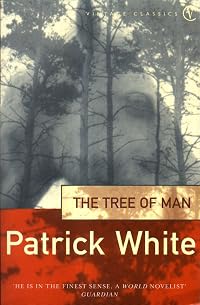
White has one of his characters say “Old men know more perhaps, but never grow as wise as they hope”. This pithy summary of the human condition serves White very well I think. All his novels are autobiographical to a certain extent. In [The Vivisector] he had explored the passions of an obsessional artist, in [The Eye of the Storm] he had worked through his difficult relationship with his mother and his love of the stage. [Voss] and [The Tree of Man] had been his love/hate relationship with Australia and its people; here in [The Twyborn Affair] he at last delves deeply into his own sexual identity and in doing so has created his finest novel. A must read for anyone interested in Patrick White, one of the literary greats of the 20th century. A five star read. show less
Patrick White believed that his homosexuality was the key to his greatness as a writer. He felt that it gave him an intuitive approach to the art of writing and was at times at a loss to find himself being criticised show more as being too intellectual. White has been quoted as saying “My homosexuality gives me all the insights that make me a great writer” and David Marr in his biography [Patrick White: A life] says:
White was one of those homosexuals who see themselves as part woman and part man: not so much a woman as to be effeminate, but enough to understand and share feminine virtues. He admired in others signs of his own ambivalence: men of unexpected gentleness and women with masculine strength.”
Eddie Twyborn is the hero of Whites book, we meet him in part one as Eudoxia or Madame Vatatses a 25 year old woman in a relationship with a 60 year old Greek man Angelos Vatatses. In part 2 he is Eddie Twyborn a ranch hand or jackeroo working on a farm in rural Australia and in part 3 he is Mrs Trist the owner and madame of a fashionable brothel in Chelsea London. It is White’s skill as a writer that make the Eddie of these three incarnations totally believable. The character flows from one part to another searching for identity, for love perhaps, but finally reaching an acceptance of his own sexuality..
Part 1 starts with Joannie a very respectable woman married into the rich Australian Golson family who are temporarily living in the South of France. It is 1914 and the storm clouds of the coming war are making the Golsons prepare for their return to Australia. Joannie is struggling to write a letter to Eadie Twyford an old friend with whom she had a lesbian relationship, but while out for a drive she spies the Vatatses couple and becomes fascinated by Eudoxia. They meet in town and an uneasy social visit sparks with sexual tension. White continues the story from the first person perspective of Eudoxia who realise that her man smell had really shocked poor Joannie Golson. Angelos and Eudoxia leave town and Angelos dies in a shabby hotel, while Joannie completes her letter to Eadie Twyford.
Eudoxia has become Eddie Twyford in part 2, now a decorated war hero who has returned to his family in Australia. He soon leaves to take up a job as a farm hand at a remote sheep station. He is accepted as a hard working ranch hand and is seduced by the bosses wife. White recalls his own experience as a jackeroo to paint perhaps his best picture of life in a remote sheep station; the hard life, the unforgiving landscape in frosty winters and hot summers, the sexual tensions that exist between the men and with the women. A visit from the Golsons and an explosion of repressed sexuality causes Eddie to flee again.
Eddie’s third incarnation is as Mrs Trist, who has drifted into establishing a fashionable brothel in London. She takes her sexual pleasure vicariously now through the girls who work for her. She becomes well connected with the minor nobility many of them struggling to keep up standards in a time just before the second world war. White has taken his story back to the pre-war tensions of the first part, where Eddie is again an established woman, who is now wooed by Gravenor; a Lord and frequent visitor to the brothel. White brings his story round almost full circle, but now Eddie/Mrs Trist has come to terms with his/her sexuality, she has found love with Gravenor, but knows it is not for her, there is a poignant meeting with her mother Eadie Twyford, before the war brings her story to an end. White is equally at home with life in the brothel and the weekend visits to houses in the country, his ear for the speech patterns of this slightly desperate set is as assured as his farm hands rough conversations at the sheep station.
White has one of his characters say “Old men know more perhaps, but never grow as wise as they hope”. This pithy summary of the human condition serves White very well I think. All his novels are autobiographical to a certain extent. In [The Vivisector] he had explored the passions of an obsessional artist, in [The Eye of the Storm] he had worked through his difficult relationship with his mother and his love of the stage. [Voss] and [The Tree of Man] had been his love/hate relationship with Australia and its people; here in [The Twyborn Affair] he at last delves deeply into his own sexual identity and in doing so has created his finest novel. A must read for anyone interested in Patrick White, one of the literary greats of the 20th century. A five star read. show less
In "Flaws in the Glass", his book about himself, White writes, "I never went through the agonies of choosing between this or that sexual way of life. I was chosen as it were, and soon accepted the fact of my homosexuality."
This novel offers glimpses at some of the distress, self-disgust, loneliness and self-pity he experienced living this life. It was as fiction that he was best able to express the conundrum between sensuality and sex. No more so than in this novel. The Twyborn Affair is one of White's best.
This novel offers glimpses at some of the distress, self-disgust, loneliness and self-pity he experienced living this life. It was as fiction that he was best able to express the conundrum between sensuality and sex. No more so than in this novel. The Twyborn Affair is one of White's best.
This book is worth reading simply because the central character is a person worth knowing. Eddie Twyborn was assigned “male” at birth but lived much of life as a woman. To the extent we come to know Eddie/Eudoxia/Eadith, we come to understand the complicated relationship between psyche and body in this individual who is at times care-free, careful, diffident, sensitive and solitary. While the book never focuses solely on the conflict of E’s internal feelings and external expression of gender, it is central to the story. It is a conflict of which only E (and eventually the reader) is aware. It is sometimes the driving force in decisions E makes and sometimes a secondary concern, but the incongruent gender expression is never show more entirely absent.
I appreciated that White never presented E as an object of contempt or pity. We see a person who is stuck in a life of compromise. E’s story contains no moments of wallowing in angst but there is also never a moment of unadulterated joy. The times of deepest contentment seem to be when the character is alone, working or recreating in the Australian outback. While not lacking for friends, the reader comes to see that however E chooses to live, as either male or female, s/he is never truly known to others. By the end of the book, I was yearning for E to find an intimate, to encounter that person who can be entrusted with her full sense of herself, with her past and her hopes for the future.
Instead of the writing transporting me into the story and the time and place of the telling, I felt instead that it was a barrier. The words seemed too laboriously chosen, too thoughtful. I could feel the author straining for the sentence, for the scene. Patrick White wanted to carry the reader away as much as I wanted to be transported. But I was always conscious of the author’s efforts to do so and in the end felt the burden and strain of the writing. I was intrigued by the construct of the book, however. The first part was told from a variety of points of view, most from what turned out to be minor characters, but this approach gave the reader an excellent idea of who E was to others. The second part of the book was entirely from E’s point of view, no shifts in the narrative. The third part of the book was still from E’s point of view, but in a more detached way. We weren’t close in like we were in the second part. We also didn’t see E from any external point of view and this, I think, contributed to the understanding of E’s isolation. Really rather a brilliant approach by Patrick White, but the strained writing made enough of an impression that I ended up with only a middling reading experience. show less
I appreciated that White never presented E as an object of contempt or pity. We see a person who is stuck in a life of compromise. E’s story contains no moments of wallowing in angst but there is also never a moment of unadulterated joy. The times of deepest contentment seem to be when the character is alone, working or recreating in the Australian outback. While not lacking for friends, the reader comes to see that however E chooses to live, as either male or female, s/he is never truly known to others. By the end of the book, I was yearning for E to find an intimate, to encounter that person who can be entrusted with her full sense of herself, with her past and her hopes for the future.
Instead of the writing transporting me into the story and the time and place of the telling, I felt instead that it was a barrier. The words seemed too laboriously chosen, too thoughtful. I could feel the author straining for the sentence, for the scene. Patrick White wanted to carry the reader away as much as I wanted to be transported. But I was always conscious of the author’s efforts to do so and in the end felt the burden and strain of the writing. I was intrigued by the construct of the book, however. The first part was told from a variety of points of view, most from what turned out to be minor characters, but this approach gave the reader an excellent idea of who E was to others. The second part of the book was entirely from E’s point of view, no shifts in the narrative. The third part of the book was still from E’s point of view, but in a more detached way. We weren’t close in like we were in the second part. We also didn’t see E from any external point of view and this, I think, contributed to the understanding of E’s isolation. Really rather a brilliant approach by Patrick White, but the strained writing made enough of an impression that I ended up with only a middling reading experience. show less
Patrick White has been one of the great discoveries I have made over the last couple of years. I now own copies of all his books, and I am working my way through them. Each book I read increases my admiration for this Nobel-Prize winning author. The Twyborn Affair is no exception. The splendid prose, the fascinating characters drawn with precision and a breathtaking depth, so absorbed my consciousness, I missed clues leading up to the climactic ending that exploded in the early days of the blitz of London.
This novel tells the story of three characters: Eudoxia, married to an elderly Greek aristocrat with delusions of grandeur; Eddie Twyborn, the son of a respected judge in Sydney, who takes a job as a hired hand on a farm in the show more outback; and Eadith, the mysterious madam of a posh brothel in London of the 1930s.
These three characters spin their lives in various directions, but the stunning conclusion brings them together. Eddie’s mother, Eadie, also plays a role in the ending.
As I have said before, White’s novels are thoroughly enjoyable, but the prose requires close attention and a second read. Once I get through all his novels, I will most definitely start all over again.
If you have never read anything by Patrick White, I urge you to remedy this major gap in your reading experience. Ten stars! No kidding.
--Jim, 10/16/08 show less
This novel tells the story of three characters: Eudoxia, married to an elderly Greek aristocrat with delusions of grandeur; Eddie Twyborn, the son of a respected judge in Sydney, who takes a job as a hired hand on a farm in the show more outback; and Eadith, the mysterious madam of a posh brothel in London of the 1930s.
These three characters spin their lives in various directions, but the stunning conclusion brings them together. Eddie’s mother, Eadie, also plays a role in the ending.
As I have said before, White’s novels are thoroughly enjoyable, but the prose requires close attention and a second read. Once I get through all his novels, I will most definitely start all over again.
If you have never read anything by Patrick White, I urge you to remedy this major gap in your reading experience. Ten stars! No kidding.
--Jim, 10/16/08 show less
A soft 5-stars (the first section, for all its deliberate mystery, was at times maddeningly opaque). But I look forward to re-reading this gem in the near future.
My second favorite of White's books (first is the extraoridinary _Riders in the Chariot_), this is a wonderful story about identity and is an attack on social convention.
Members
- Recently Added By
Lists

Books Read in 2021
5,361 works; 113 members
Talk Discussions
Past Discussions
The Twyborn Affair - discussion in Patrick White 100th Anniversary Challenge (December 2012)
Author Information

42+ Works 7,682 Members
Patrick White was born on May 28, 1912 in Knightsbridge, London, to Australian parents. He studied modern languages at King's College, Cambridge. During World War II, he served in the Royal Air Force. His first novel, Happy Valley, was published in 1939. His other works include The Tree of Man, Voss, Riders in the Chariot, The Solid Mandala, The show more Twyborn Affair, and The Hanging Garden. He also wrote several plays including The Season at Sarsaparilla, Night on Bald Mountain, and Signal Driver. They never met with the success his fiction had and have not been produced outside Australia. He won the Nobel Prize for Literature in 1973. He died on September 30, 1990. (Bowker Author Biography) show less
Some Editions
Awards and Honors
Notable Lists
Series
Belongs to Publisher Series
Common Knowledge
- Canonical title
- The Twyborn affair
- Original publication date
- 1979
- Important places
- London, England, UK; France; Australia
- Dedication
- To Jim Sharman
Classifications
Statistics
- Members
- 424
- Popularity
- 73,238
- Reviews
- 12
- Rating
- (3.94)
- Languages
- 5 — English, Estonian, French, German, Swedish
- Media
- Paper, Audiobook, Ebook
- ISBNs
- 15
- ASINs
- 7